
Main Courses
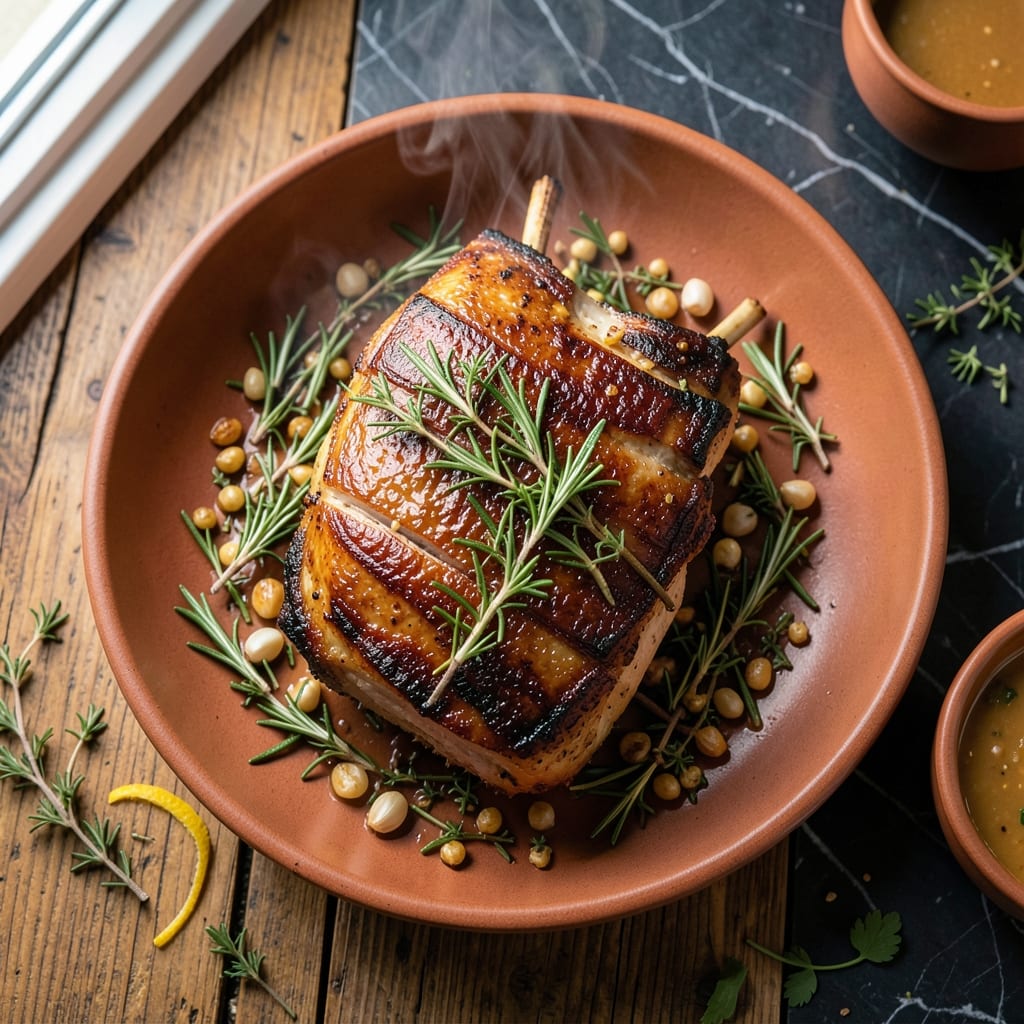
This 4 rib pork roast recipe delivers melt-in-your-mouth succulence with a simple herb crust. Slow-roasting at low heat ensures tender meat with a caramelized exterior.
Growing up in Georgia, I learned that the best pork needs time and patience. This method uses a dry brine to lock in moisture before roasting, creating a juicy result every time.
You'll achieve restaurant-quality results with just a few ingredients and basic techniques. The herb crust forms a flavorful bark that complements the tender pork perfectly.
Ideal for Sunday suppers or holiday gatherings, this dish impresses without requiring advanced skills. The aroma alone will have everyone anticipating the first bite.
Ingredients for 4 rib pork roast
Quality pork, a few fresh herbs, and time transform this into something extraordinary.
| Ingredient | Amount | Notes |
|---|---|---|
| Bone-In Pork Rib Roast 🥩 | 4 lb | 4 rib, about 2 inches thick |
| Kosher Salt 🧂 | 2 tbsp | Diamond Crystal preferred for dry brine |
| Freshly Ground Black Pepper 🌶️ | 1 tbsp | Coarse grind for crust |
| Fresh Rosemary 🌿 | 2 tbsp | Chopped, stems removed |
| Fresh Thyme Leaves 🍃 | 2 tbsp | Stripped from stems |
| Garlic Cloves 🧄 | 6 cloves | Minced for herb crust |
| Dijon Mustard 🟡 | ¼ cup | For adhering herb crust |
| Olive Oil 🫒 | 2 tbsp | Extra-virgin for richness |
| Yellow Onion 🧅 | 1 whole | Quartered for roasting bed |
| Carrots 🥕 | 3 whole | Peeled, cut into chunks |
| Celery Stalks 🌿 | 2 whole | Cut into large pieces |
| Dry White Wine 🍷 | ½ cup | For deglazing pan |
| Low-Sodium Chicken Stock 🥣 | 1 cup | For pan juices |
The pork roast is the centerpiece—opt for bone-in rib roast with even marbling. Whole Foods or a trusted butcher will have the best selection. Look for a roast with the fat cap intact (about 1/4-inch thick) to ensure self-basting during the long, slow roast. Dry brining with Diamond Crystal kosher salt is non-negotiable for moisture retention and flavor penetration.
No fresh rosemary or thyme? Dried herbs at one-third the amount work in a pinch, but fresh delivers superior aroma. For the Dijon, Grey Poupon is a reliable choice, though any whole-grain mustard adds texture. The wine can be any dry white—Sauvignon Blanc or Pinot Grigio are ideal. Out of wine? Apple cider vinegar diluted with water mimics the acidity.
Dry-brined pork can rest uncovered in the fridge for 12-24 hours before roasting. Leftovers (if any) keep 4-5 days refrigerated or freeze for 3 months. The herb crust loses its crispness when stored, so plan to serve immediately for optimal texture.
Why You'll Love This Recipe
- Hands-Off Cooking: I just season, sear, and let the oven do the work—no babysitting required.
- Herb-Crusted Perfection: That rosemary and thyme crust forms this insane golden-brown layer that’s crispy outside, juicy inside.
- Sunday Dinner Star: It’s my go-to for holidays, but honestly, I make it for regular weekends too.
- Leftovers for Days: One roast feeds us for two meals, and the sandwiches the next day? Even better than day one.
Step-by-step instructions for 4 rib pork roast
This method ensures a perfectly seasoned crust and juicy, tender meat with every bite.
Prepare the Herb Crust and Dry Brine
Pat the 4 lb Bone-In Pork Rib Roast dry with paper towels to ensure the seasoning adheres properly. In a small bowl, combine the 2 tbsp Kosher Salt, 1 tbsp Freshly Ground Black Pepper, 2 tbsp Fresh Rosemary, 2 tbsp Fresh Thyme Leaves, and 6 cloves Garlic Cloves (minced).
Rub the 0.25 cup Dijon Mustard evenly over the entire surface of the pork roast. This acts as a binder for the herb mixture. Press the herb-salt mixture onto all sides of the roast, creating a thick, even crust. Let it sit uncovered at room temperature for 1 hour to allow the dry brine to penetrate the meat.
Sear and Set Up the Roasting Bed
Preheat your oven to 325°F. Heat the 2 tbsp Olive Oil in a large oven-safe roasting pan or Dutch oven over medium-high heat. Sear the pork roast on all sides for 2-3 minutes per side until the herb crust begins to form a golden-brown crust.
While the roast sears, prepare the vegetable bed: place the 1 whole Yellow Onion (quartered), 3 whole Carrots (peeled and cut into chunks), and 2 whole Celery Stalks (cut into large pieces) in the bottom of the roasting pan. This will elevate the roast and infuse the pan juices with flavor.
Slow-Roast to Perfection
Place the seared pork roast on top of the vegetable bed, fat-side up. Transfer the pan to the preheated oven and roast uncovered for 2 to 2.5 hours, or until the internal temperature reaches 145°F in the thickest part of the meat, measured with an instant-read thermometer.
Baste the roast every 45 minutes with the accumulating pan juices to keep the crust moist and enhance the flavor development. The vegetables should begin to caramelize, and the herb crust will create an aromatic layer that deepens as it cooks.
Rest and Prepare the Pan Sauce
Remove the roast from the oven and transfer it to a cutting board. Tent it loosely with foil and let it rest for 15 minutes—this allows the juices to redistribute for maximum tenderness.
Place the roasting pan on the stovetop over medium heat. Add the 0.5 cup Dry White Wine and deglaze the pan, scraping up all the browned bits with a wooden spoon. Simmer for 2 minutes, then add the 1 cup Low-Sodium Chicken Stock. Cook for another 3-4 minutes until the liquid reduces slightly. Strain the sauce and serve it alongside the sliced pork roast.
Pro Tips For Making 4 Rib Pork Roast
- Salt the Night Before: I learned this the hard way—give the pork a heavy dusting of kosher salt at least 12 hours before cooking, and let it sit uncovered in the fridge. The meat absorbs the seasoning deeply and develops a better crust.
- Bring to Room Temp: Pull the roast out of the fridge 1-2 hours before cooking—cold meat seizes up in the oven and cooks unevenly. Sounds simple, but it actually changes the outcome.
- Don’t Skip the Rest: After roasting, tent the pork loosely with foil and let it rest for 15-20 minutes before carving. This keeps the juices inside the meat instead of all over your cutting board.
- Crush the Herbs: Rubbing crushed fresh rosemary and thyme into the meat releases more flavor than whole sprigs. I was skeptical until I tried it—now I do it every time.
Health benefits of these flavors
Rich Protein Source
This pork roast packs about 50 grams of protein per serving, essential for muscle repair and growth. As someone who works with 2,000 pounds of pork weekly, I can attest to its satisfying, lasting energy. Protein keeps you full longer than carbs, making this ideal for active days. 💪
Essential Vitamins
Pork is loaded with B vitamins, especially B12, B6, and niacin, which support energy metabolism and brain function. A 4-ounce serving provides nearly 70% of your daily B12 needs. These nutrients help convert food into fuel your body can use.
Mineral Powerhouse
You'll get a healthy dose of zinc and iron from this roast. Zinc supports immune function, while iron helps transport oxygen in your blood. The iron in pork is heme iron, which your body absorbs more easily than from plant sources.
Healthy Fats
While pork contains some saturated fat, it also provides monounsaturated fats similar to those in olive oil. The fat cap on a rib roast adds flavor and juiciness. I always recommend opting for heritage breeds like my Gloucestershire Old Spots for better fat quality. 🥩
Low-Carb Option
This dish is naturally low in carbs, with the roast itself containing virtually none. The vegetable bed adds minimal carbs while providing fiber and nutrients. Perfect for those watching their carb intake or following a keto lifestyle.
Collagen Benefits
Slow-roasting breaks down collagen in the connective tissues, creating gelatin that supports joint health. The bone-in cut enhances this benefit. That's why the meat falls off the bone when cooked properly - and why it's so good for you.
Nutrition facts
Frequently asked questions
What internal temperature should the pork reach?
Remove it from the oven when it hits 145°F in the thickest part. This ensures juicy, tender meat that’s safe to eat. The temperature will rise another 5°F during resting.
Can I use dried herbs instead of fresh?
Yes, but use 1/3 the amount since dried herbs are more concentrated. Fresh rosemary and thyme give the best flavor, but dried works in a pinch.
How long should the roast rest before carving?
Let it rest for at least 15 minutes after removing from the oven. This allows juices to redistribute, so every slice stays moist and flavorful.
What if my roast finishes cooking too early?
If it reaches 145°F before guests arrive, tent it with foil and keep it warm in a 200°F oven for up to 30 minutes. Avoid overcooking by checking the temperature regularly.