
Main Courses
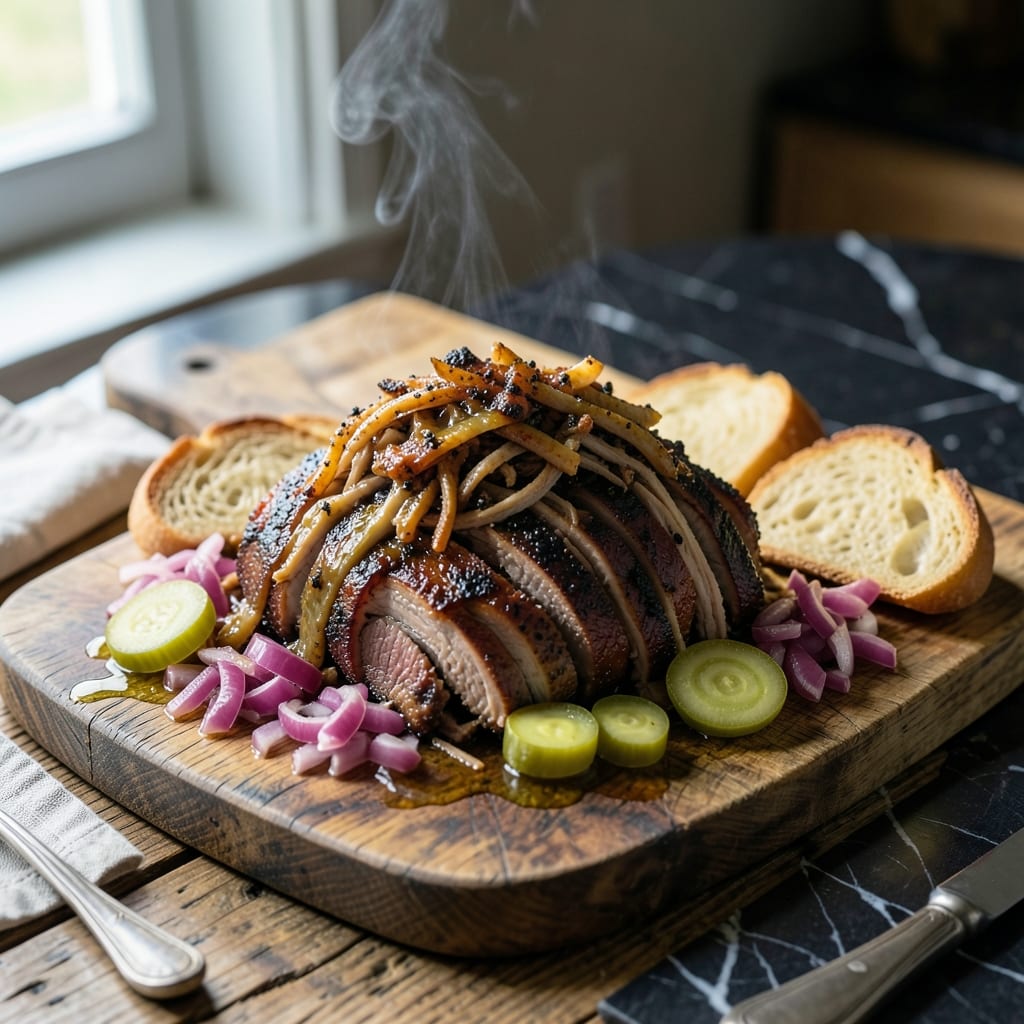
Aaron Franklin pulled pork recipe brings pitmaster-level BBQ to your backyard with a simple, proven technique. Growing up in Georgia, I learned that true pulled pork comes from patience and low heat.
This method uses a 225°F smoker to transform tough pork shoulder into tender, juicy strands. The key is maintaining consistent temperature and letting the meat rest before pulling.
You'll achieve fall-apart tender pork with a rich bark that's packed with smoky flavor. The process takes time but delivers restaurant-quality results every time.
Serve with classic BBQ sides like coleslaw and cornbread. This is the recipe that made me a believer in slow cooking.
Ingredients for aaron franklin pulled pork
Pitmaster-grade pork shoulder plus a bold dry rub. Nothing less than championship-worthy ingredients here.
| Ingredient | Amount | Notes |
|---|---|---|
| Pork Shoulder 🐖 | 8 lb | Bone-in, well-marbled preferred |
| Yellow Mustard 🟡 | ½ cup | Binder for dry rub adhesion |
| Coarse Kosher Salt 🧂 | ¼ cup | Diamond Crystal brand preferred |
| Black Pepper 🌶️ | ¼ cup | Freshly ground, coarse grind |
| Brown Sugar 🟤 | ½ cup | Light or dark variety |
| Paprika 🌶️ | 2 tbsp | Sweet or smoked variety |
| Garlic Powder 🧄 | 2 tbsp | Not garlic salt substitute |
| Onion Powder 🧅 | 2 tbsp | Fresh ground preferred |
| Chili Powder 🌶️ | 1 tbsp | Mild heat blend |
| Cumin 🌿 | 1 tbsp | Ground, toasted for depth |
| Apple Cider Vinegar 🍏 | ½ cup | For spritzing during cook |
| Hickory Wood Chunks 🪵 | 4 pieces | Or pecan for milder smoke |
| BBQ Sauce 🍯 | 2 cups | For serving, optional addition |
The pork shoulder is non-negotiable—bone-in, well-marbled is what you want. Costco or Sam's Club have the best prices for 8-pound cryovacs. Look for Boston butt (the upper shoulder) which has more fat than picnic shoulder. The fat cap should be at least 1/4-inch thick. If your butcher can leave the skin on, even better for bark formation.
No hickory? Pecan or oak are excellent alternatives—just avoid softwoods like pine. For the rub, turbinado sugar can replace brown sugar in a pinch. Missing a spice? Penzeys has the freshest blends. The vinegar spritz keeps the surface moist during the long cook—don't skip this step. Store-bought BBQ sauce works, but Franklin's own sauce is worth the effort.
The dry rub keeps in an airtight container for 6 months. Pork shoulder can be frozen in its cryovac for up to 1 year. Once cooked, pulled pork stays fresh in the fridge for 5 days or freezes beautifully for 3 months. Always wrap cooked meat tightly to prevent freezer burn.
Why You'll Love This Recipe
- Set and Forget: I coat the pork shoulder in mustard, salt, and sugar, then let the smoker do all the work for hours.
- Smoky Sweetness: The brown sugar caramelizes with the pork fat while the black pepper gives it a little kick.
- Crowd Pleaser: Honestly, this feeds a party and still leaves enough for sandwiches the next day.
- Budget Win: A whole pork shoulder is cheap, and this recipe turns it into something ridiculously good.
Step-by-step instructions for pulled pork
Master the low and slow technique that transforms pork shoulder into tender, smoky perfection.
Apply the Mustard and Dry Rub Foundation
Pat the 8 lb Pork Shoulder completely dry with paper towels to ensure maximum bark development. I coat the entire surface with 0.5 cup Yellow Mustard—this acts as a binder without imparting mustard flavor. The acidity also helps tenderize the meat during the long cook.
Immediately apply a generous layer of dry rub made from 0.25 cup Coarse Kosher Salt, 0.25 cup Black Pepper, 0.5 cup Brown Sugar, 2 tbsp Paprika, 2 tbsp Garlic Powder, 2 tbsp Onion Powder, 1 tbsp Chili Powder, and 1 tbsp Cumin. Press the rub into the meat firmly so it adheres completely. Let the seasoned pork rest at room temperature for 1 hour while you prepare your smoker.
Set Up Your Smoker for Optimal Heat and Smoke
Configure your smoker for indirect cooking at 225-250°F. I prefer using 4 pieces Hickory Wood Chunks for a robust, traditional smoke flavor that complements pork beautifully. Maintain consistent temperature throughout the cook—fluctuations can extend your cooking time significantly.
When your smoker reaches temperature and produces clean, thin blue smoke, place the pork shoulder fat-side up on the cooking grate. The fat cap will render down during cooking, basting the meat and protecting it from drying out. Close the lid and resist opening it unnecessarily—each peek adds 10-15 minutes to your total cook time.
Smoke Until Probe-Tender and Develop Bark
Smoke the pork undisturbed for 8-10 hours, spritzing with 0.5 cup Apple Cider Vinegar every 2-3 hours after the first 4 hours. The vinegar helps develop a beautiful bark while keeping the surface moist. You'll know it's ready for the next stage when the internal temperature reaches 165-170°F.
At this point, the pork will hit "the stall" where the temperature plateaus. Don't increase the heat—this is normal. Continue smoking until the internal temperature reaches 200-205°F and a probe slides in with no resistance, like butter. The bark should be dark, nearly black in some spots, and the meat should jiggle when moved.
Rest and Pull the Pork
Remove the pork from the smoker and wrap it tightly in butcher paper or aluminum foil. Let it rest for at least 1 hour (I prefer 2 hours wrapped in towels in a cooler). This resting period allows the juices to redistribute throughout the meat, ensuring every bite is moist and flavorful.
Unwrap the pork and use two forks or meat claws to pull it apart. The meat should separate easily with minimal effort, creating perfect strands. Discard any large fat chunks or the bone. For serving, mix in 2 cups BBQ Sauce if desired, or serve the sauce on the side to let everyone customize their plate. The pork is now ready to enjoy on sandwiches, tacos, or straight from the tray.
Pro Tips For Making Aaron Franklin Pulled Pork
- Salt the Night Before: I learned this the hard way—coat that pork shoulder with coarse kosher salt and let it sit uncovered in the fridge overnight. The dry brine penetrates deep and guarantees a flavorful, moist result.
- Use Cheap Mustard: Sounds weird, but it works: yellow mustard is just the binder for the rub, so skip the fancy Dijon. The cheap stuff clings better and doesn’t overpower the salt, pepper, and brown sugar.
- Don’t Rush the Rest: After pulling the pork, let it rest in a warm cooler or oven for at least an hour—yes, even if you're starving. Skipping this makes the juices run wild, and you’ll lose all that hard-earned moisture.
- Wrap in Butcher Paper: My first few attempts used foil, but butcher paper breathes just enough to keep the bark from turning to mush. It’s the thing that matters most for that perfect texture Franklin’s known for.
Storing and reheating this aaron franklin pulled pork
Refrigerator Storage
After your pulled pork cools to room temperature, store it in airtight containers or wrapped tightly in aluminum foil. It keeps beautifully in the fridge at 40°F or below for up to 5 days. I always separate it into meal-sized portions for easy access. ❄️
Freezer Storage
For longer storage, freeze pulled pork in heavy-duty freezer bags or vacuum-sealed bags. It maintains quality for 3 months at 0°F. I like to portion it into 1 lb bags for single-meal use. Squeeze out all air to prevent freezer burn.
Stovetop Reheating
Place pulled pork in a skillet with ¼ cup BBQ sauce or apple juice over medium-low heat. Cover and stir occasionally for 10-15 minutes until heated through to 165°F. This method preserves moisture better than others.
Oven Reheating
Spread pork on a baking sheet, drizzle with 2 tbsp apple cider vinegar, and cover with foil. Heat at 300°F for 20-25 minutes, stirring halfway. This works great for larger quantities. 🔥
Microwave Reheating
For quick meals, place portions in a microwave-safe dish with 1 tbsp water. Cover with a damp paper towel and heat on 70% power for 2-3 minutes, stirring halfway. Add more sauce after heating.
Pro Storage Tip
I learned from Chef Chen to store pulled pork in its cooking juices. This keeps it incredibly moist. Just pour the collected drippings from the smoker pan over the pork before sealing. It makes all the difference for leftovers.
Nutrition facts
Frequently asked questions
Why use yellow mustard in the rub?
It’s not for flavor—it’s the perfect binder to help the dry rub stick to the meat. The acidity also tenderizes the pork slightly during the long cook.
How long does the stall last?
The stall can last 1-5 hours, depending on the cut and smoker conditions. Resist the urge to crank up the heat—patience is key. The meat will push through naturally at 225°F.
Can I use a different wood for smoking?
Yes! While hickory is classic, pecan, oak, or fruitwoods like apple or cherry work well. Avoid softwoods like pine—they’ll make the meat bitter.
Is resting the pork really necessary?
Resting for 1-2 hours lets juices redistribute, ensuring every bite is moist. Skipping this step risks dry, uneven texture.