
Main Courses
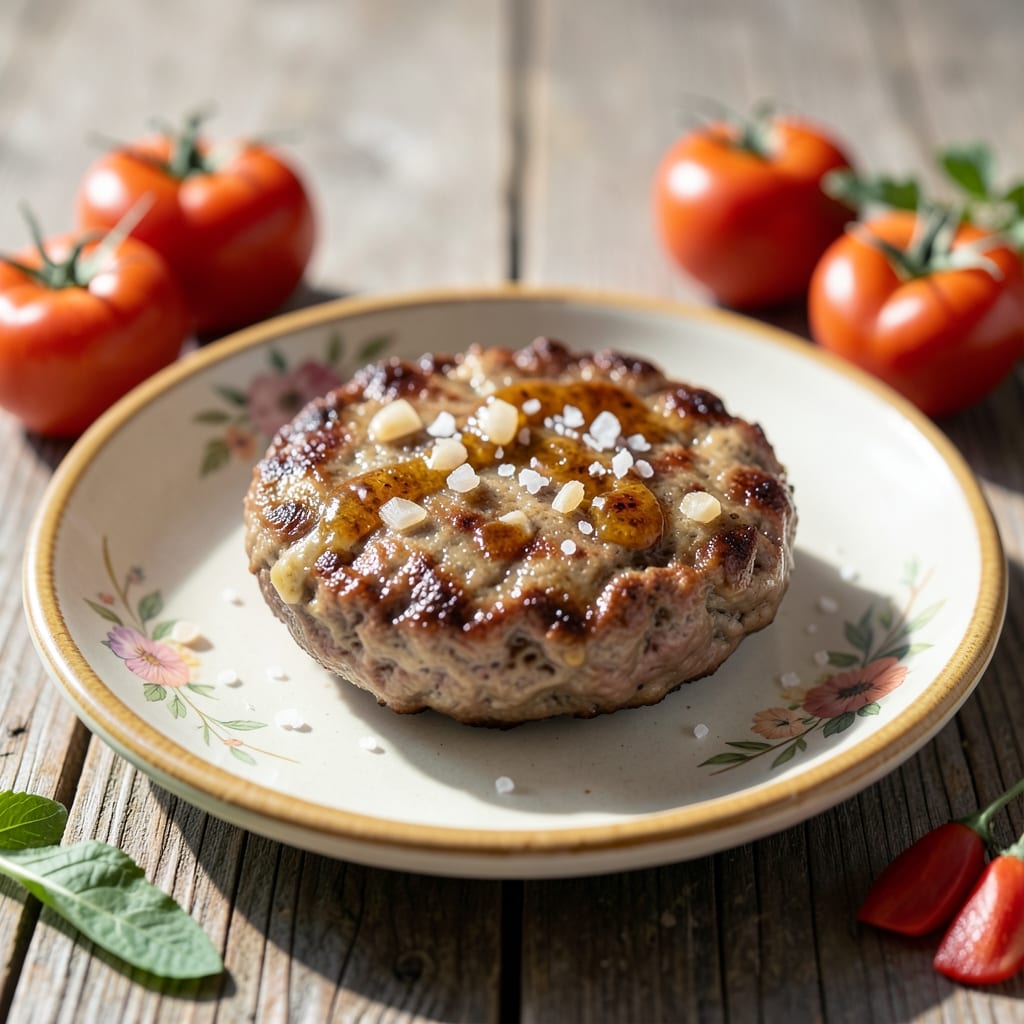
This beef and pork burger patty recipe delivers the juicy centers and crispy crust you crave in every bite. 🔥 After years of perfecting the balance between lean beef and fatty pork, I've created patties that stay tender while developing a flavorful bark. The secret lies in the right ratio of ground meats and proper handling to lock in moisture.
What makes these patties special is the combination of beef's richness and pork's juiciness, creating a texture that's impossible to resist. We'll use simple ingredients—just quality ground meats, a touch of binder, and classic seasonings—but the technique is what transforms them into restaurant-quality burgers. The key steps include gentle mixing, proper shaping, and precise cooking temperatures to ensure perfect doneness every time.
By following this method, you'll achieve burgers with golden-brown crusts that give way to succulent, flavorful meat inside. The pork adds fat that keeps the beef moist, while the beef provides structure and depth of flavor. This isn't just another burger recipe—it's a game-changer for anyone who's ever had a dry or bland patty.
Whether you're serving these on toasted buns with all the fixings or grilling them up for a backyard cookout, these dual-meat patties will impress every time. The recipe includes food safety tips to handle raw meat properly, ensuring your burgers are delicious and safe to eat. Let's get started on creating the perfect patty!
Ingredients for beef and pork burger patty
These 12 ingredients balance rich beef and juicy pork for burgers with perfect texture and flavor.
| Ingredient | Amount | Notes |
|---|---|---|
| Ground Beef (80% lean) 🥩 | 1 lb | Coarse grind preferred |
| Ground Pork 🐷 | ½ lb | Fatty cut for juiciness |
| Yellow Onion 🧅 | ¼ cup | Finely diced (about 1 medium) |
| Garlic Cloves 🧄 | 3 cloves | Minced (about 1 tbsp) |
| Worcestershire Sauce 🍶 | 1 tbsp | Classic umami depth |
| Dijon Mustard 🌶️ | 1 tbsp | For moisture retention |
| Kosher Salt 🧂 | 1 ½ tsp | Diamond Crystal preferred |
| Black Pepper 🌶️ | 1 tsp | Freshly ground |
| Smoked Paprika 🌶️ | ½ tsp | For subtle smokiness |
| Granulated Garlic 🧄 | ½ tsp | For extra flavor |
| Olive Oil 🫒 | 1 tsp | For binding |
| Ice Cubes ❄️ | 1 cup | For keeping meat cold |
The meat ratio is everything—80% lean ground beef provides structure while ground pork keeps things moist. Grab pre-ground meats from the butcher section for best texture, or buy whole cuts and grind them yourself. Kroger's or Whole Foods carry excellent quality, but any reputable grocery store works. Look for bright red beef with visible fat marbling in the pork. If you can't find coarse-ground beef, pulse pre-ground beef in a food processor for 10 seconds to break up the fibers—this mimics the texture of hand-ground meat.
No Worcestershire? A splash of soy sauce plus a pinch of sugar works in a pinch. Skip the Dijon? Mayonnaise (1 tbsp) adds moisture without altering flavor. For extra smokiness, swap smoked paprika for 1/4 tsp liquid smoke (but don't overdo it). The ice cubes aren't optional—they keep the meat cold during mixing, which prevents grease from melting and making your patties greasy. Pre-chill your mixing bowl too if you're working in a warm kitchen. Onion and garlic can be swapped for 1/4 cup finely chopped shallots if you prefer milder flavor, but the classic combo delivers the best depth.
Handle raw meat safely: Wash hands and surfaces before and after. Store prepped meat in an airtight container for up to 2 days in the fridge, or freeze for 3 months. For best results, shape patties 30 minutes before cooking—this lets them firm up slightly. If freezing, wrap individually in parchment to prevent sticking. Thaw overnight in the fridge, never at room temperature. These patties reheat beautifully—4 minutes in a skillet or 10 seconds in the microwave restores crispiness when serving leftovers.
Why You'll Love This Recipe
- No-Fuss Mixing: I swear by this combo—just toss the beef, pork, and finely diced onion in a bowl, no fancy techniques. The pork keeps it juicy while the Worcestershire sauce ties everything together with zero effort.
- Umami Bomb: That garlic and Worcestershire sauce? It’s the secret weapon. The pork adds richness, but the beef gives it structure—crispy outside, tender inside, with a flavor that lingers.
- Weeknight to BBQ: Make a double batch on Sunday and freeze half for lazy nights. Or shape them into sliders for game day—same recipe, totally different vibe. It’s the ultimate crowd-pleaser.
- Budget Powerhouse: Pork stretches the beef, so you get more patties for less. Plus, onions and garlic are cheap staples. I’ve fed four people for under $10 with this—no guilt, all satisfaction.
Step-by-step instructions for beef and pork burger patties
Here's how to craft patties with a crispy pork crust and beef center—juicy perfection every time.
👨🍳 Step 1: Prep Ingredients for Maximum Flavor
In a large mixing bowl, combine the 1 lb ground beef (80% lean) and 0.5 lb ground pork. This meat blend creates the signature crust-meets-center texture. Add the 0.25 cup finely diced yellow onion and 3 cloves minced garlic—these aromatics form the flavor base. Sprinkle in the 1.5 tsp kosher salt, 1 tsp black pepper, 0.5 tsp smoked paprika, and 0.5 tsp granulated garlic, mixing gently with your hands.
Next, add the 1 tbsp Worcestershire sauce and 1 tbsp Dijon mustard. These ingredients bind the meat and add depth without overpowering. Finally, drizzle in the 1 tsp olive oil and toss everything together just until combined—overmixing develops gluten, which makes patties tough. The mixture should hold together when pressed but still feel slightly loose.
🥘 Step 2: Chill the Mixture for Perfect Texture
Place the bowl in the freezer for 15 minutes while you prepare your work surface. This chilling step is critical—it firms up the fat, preventing greasy patties. Meanwhile, fill a medium bowl with the 1 cup ice cubes and set it nearby. The cold surface will help maintain the meat's temperature as you work.
After chilling, transfer the meat mixture to the ice bath. Spread it out into a single layer and let it sit for 5 minutes. This extra cold treatment ensures even cooking and prevents the patties from shrinking on the grill or skillet. The meat should feel cool but workable—like soft playdough.
🔥 Step 3: Shape Patties with Precision
Divide the chilled meat into 4 equal portions (about 6 ounces each for perfect burger size). Gently form each into a ¾-inch thick patty, using your fingers to create a slight dimple in the center. This prevents bulging while cooking. Place them on a parchment-lined tray and return to the fridge for 10 minutes to firm up.
Here's the pro tip: don't press too hard when shaping. The pork fat needs room to render and create that crispy crust. If the meat feels sticky, wet your hands slightly to prevent sticking. The patties should hold their shape but still feel soft enough to compress slightly with gentle pressure.
🍳 Step 4: Cook to Juicy Perfection
Heat a skillet over medium-high heat until hot but not smoking. Add the patties and cook for 3-4 minutes per side for medium doneness (internal temp 145°F). You'll know they're ready when the edges are deep golden brown and the pork crust develops a crispy texture while the beef centers remain juicy.
For even cooking, resist the urge to press down—this squeezes out juices. Instead, let the patties develop their own crust. In the last 30 seconds, add a slice of cheese if using, then cover the skillet to melt it. Transfer to a warm plate and let rest for 2 minutes before serving—this crucial step keeps the juices inside where they belong.
Pro Tips For Making Beef And Pork Burger Patty
- Chill the Mix: Pop that beef-pork blend in the fridge for 30 minutes before shaping—yes, even if you’re eager to cook. I used to skip this and ended up with greasy, uneven patties that fell apart. Cold meat holds together better and sears like a dream. ---
- Slice Onions Fine: Dice that yellow onion into tiny, even pieces—think rice-sized, not dice-sized. Big chunks burn unevenly and leave you chewing mystery textures. My grandmother swore by this, and she was right: fine onions melt into flavor without overpowering. ---
- Press Patties Flat: Use your palm to press each patty hard and evenly before cooking—no wobbly edges. I learned this the hard way after flipping patties that puffed up like sad soufflés. A flat base = better contact with the pan = that perfect crust. ---
- Use Two Spoons: Mix the Worcestershire sauce and minced garlic into the meat with a fork first, then fold in the onions with your hands. Stirring everything together makes the meat dense; this keeps it tender. (Yes, even if your hands get a little sticky.)
Storing and reheating your beef and pork burger patty
Fridge Storage
Store shaped patties in an airtight container on a tray lined with parchment paper to prevent sticking. I use glass Pyrex containers with snap-on lids—they keep the patties fresh and make reheating easier. Place them in the fridge for up to 3 days, but I recommend cooking within 2 days for best texture. The pork fat starts to render after 48 hours, so plan accordingly. 🥩
Let patties cool completely before refrigerating to prevent condensation buildup. I place them on a wire rack in the fridge for 1 hour after cooking to ensure they dry slightly on the outside. This helps maintain crispiness when reheated. Label the container with the date to track freshness—trust me, you'll forget otherwise!
Freezer Prep
For longer storage, wrap each patty individually in parchment paper (not plastic wrap) to prevent freezing burns. Place them in a freezer-safe zip-top bag, removing as much air as possible. I use quart-sized bags for 4 patties, which stack neatly in my chest freezer. These patties freeze beautifully for up to 3 months without losing quality. 🧊
When ready to cook, thaw overnight in the fridge—never at room temperature. I place the sealed bag in the fridge 12 hours before cooking. For a quick option, use the microwave's defrost setting for 1 minute, then let sit for 5 minutes before cooking. The patties should still be slightly cold when they hit the skillet for even cooking.
Reheating Methods
My favorite method is reheating in a cast iron skillet over medium heat for 4-5 minutes per side. The cast iron mimics the original cooking process, restoring that perfect crust. Add a splash of beef broth or water to prevent drying. I cover the skillet for the last 2 minutes to steam any lost moisture back into the patties. 🔥
For microwave reheating, place the patty on a microwave-safe plate and cover with a damp paper towel. Heat on 70% power for 1-1.5 minutes, then flip and repeat. This method works best for quick lunches but won't restore the same crispy crust. For sandwiches, I always finish with a quick 30-second pan sear to revive the texture.
Grill Revival
If you're grilling, preheat to medium-high heat (around 375°F) and cook the patties for 3-4 minutes per side. The high heat helps recreate that smoky, charred crust. I brush them lightly with olive oil before grilling to prevent sticking. For extra flavor, add a sprinkle of smoked paprika while they're hot. 🌶️
Pro tip: If your patties seem dry after reheating, brush them with a little beef tallow or butter while warm. This adds moisture and richness. I keep a small container of melted tallow in my fridge specifically for this purpose—it's a game-changer for leftovers. The fat from the pork in the original patties makes them surprisingly forgiving when reheating!
Nutrition facts
Frequently asked questions
Why mix beef and pork in burger patties?
The pork adds juiciness and fat that keeps the beef moist while cooking, while the beef provides structure and depth of flavor. This combo creates the perfect texture contrast—crispy pork crust with tender beef centers. The fat from pork also helps develop that beautiful golden-brown sear we all love!
Can I make these patties ahead of time?
Shape the patties and store them on a tray in the fridge for up to 2 days or freeze for 3 months. For best results, cook them within 48 hours of shaping—the pork fat starts to render after that. When reheating, use a skillet or grill to restore that crispy crust.
What's the best way to prevent patties from shrinking?
Chill the meat mixture before shaping and create a slight dimple in the center of each patty. This prevents bulging while cooking. Also, use medium-high heat and resist pressing down—this squeezes out juices. The pork fat needs room to render naturally for that perfect crust.
How do I know when the patties are fully cooked?
Use a meat thermometer to check for 145°F internal temperature. The edges should be deep golden brown with a crispy texture while the centers remain juicy. For medium doneness, cook for 3-4 minutes per side in a hot skillet. Never overcook—pork fat renders quickly, so watch closely!
Can I substitute chicken or turkey for the pork?
While you can try it, the texture and flavor won't be the same. Chicken or turkey lacks the fat content needed for that crispy crust and juicy center. If you must substitute, use ground pork shoulder (20% fat) instead—it mimics pork's fat content better. The beef-pork combo is what makes these patties special!