
Main Courses
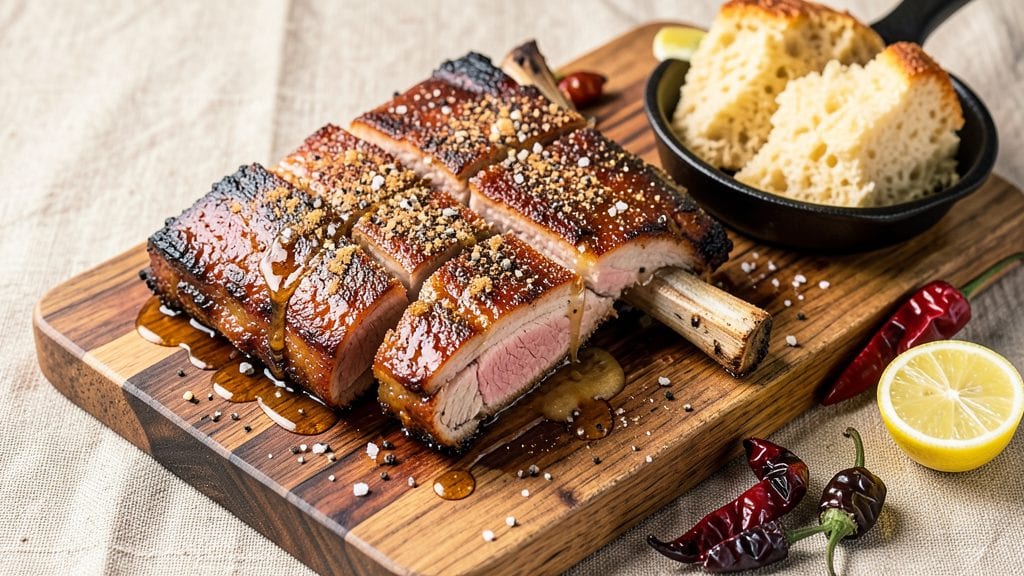
Mastering bone-in pork loin country-style ribs transforms tough cuts into melt-in-your-mouth tenderness that rivals any pitmaster’s work. Growing up in Georgia, I learned that slow-cooked pork—with its crisp edges and velvety interior—isn’t just a dish, but a tradition.
This method preserves the bone’s natural juices while developing deep, smoky flavor through precise timing and technique.
The secret lies in a 3–4 hour braise at 300°F, where the pork loin’s lean yet flavorful profile softens without drying out. A dry rub of salt, pepper, and smoked paprika forms a caramelized crust, while occasional basting with apple cider vinegar keeps the meat moist.
Unlike traditional ribs, the bone-in cut adds richness and structure, ensuring every bite delivers both meat and marrow.
By the time you plate these ribs, they’ll be fork-tender with crisp edges, glistening under a sheen of rendered fat. The aroma alone—smoky, savory, and slightly sweet—will have everyone at the table anticipating the first bite.
Serve with classic sides like creamy mashed potatoes or buttery cornbread to soak up every last drop of that slow-cooked goodness.
This recipe delivers restaurant-quality results at home, proving that patience and precision turn simple ingredients into something extraordinary. Whether you’re feeding a crowd or treating yourself, these ribs are worth the wait. Let’s get cooking.
Ingredients for bone in pork loin country style ribs
Country-style ribs rely on bone-in pork loin and slow-cooked tenderness for restaurant-quality results.
| Ingredient | Amount | Notes |
|---|---|---|
| Bone-In Pork Loin Ribs 🥩 | 5 lb | Center-cut, bone-in preferred |
| Coarse Kosher Salt 🧂 | 2 tbsp | Diamond Crystal preferred |
| Freshly Ground Black Pepper 🌶️ | 1 ½ tbsp | Medium-coarse grind |
| Smoked Paprika 🌶️ | 1 ½ tbsp | Not sweet paprika |
| Garlic Powder 🧄 | 1 tbsp | Not garlic salt |
| Onion Powder 🧅 | 1 tbsp | Freshly ground preferred |
| Apple Cider Vinegar 🍎 | ½ cup | Unfiltered preferred |
| Unsalted Butter 🧈 | ½ cup | Cubed, room temperature |
| Beef or Chicken Broth 🥄 | 1 cup | Low-sodium preferred |
| Brown Sugar 🍚 | ¼ cup | Light or dark |
| Dried Thyme 🌿 | 1 tsp | Mexican oregano alternative |
| Fresh Rosemary 🌱 | 1 tbsp | Stems removed, chopped |
The bone-in pork loin ribs are the star—opt for center-cut, bone-in cuts from ButcherBox or your local specialty butcher. These cuts should have visible marbling and a vibrant red color, indicating freshness. If purchasing pre-cut, ensure they’re 1.5 to 2 inches thick for even cooking. For best results, trim excess fat but leave the bone intact to enhance flavor and moisture retention. The Diamond Crystal kosher salt ensures even seasoning without the excess sodium of table salt.
Substitutions are flexible but intentional. Beef broth can be swapped for vegetable broth if dietary restrictions apply, though the flavor profile will differ slightly. For the vinegar, white wine vinegar works but lacks the depth of apple cider. If dried thyme isn’t available, fresh thyme at half the amount provides a more pronounced aroma. The brown sugar can be omitted entirely, but it adds a subtle caramelization to the crust. For extra richness, add 2 tbsp of honey to the broth during cooking.
Store the ribs in the refrigerator for up to 2 days before cooking, wrapped in plastic wrap to retain moisture. After slow-cooking, they’ll keep in the fridge for 4-5 days or can be frozen for 3 months. For optimal reheating, place ribs in a 350°F oven for 15-20 minutes, basting with pan juices. The rendered fat can be saved and reused for cooking—simply strain and store in an airtight container for up to 1 week. This method ensures every bite delivers the same depth of flavor as the original slow-cooked preparation.
Why You'll Love This Recipe
- No Dutch Oven Needed: Honestly, I thought I’d need a fancy pot for this, but a regular heavy pot works just fine. Just toss those 5 lb bone-in pork loin ribs in, cover them with that apple cider vinegar and broth, and let the oven do the heavy lifting. It’s one of those recipes that feels effortlessly good.
- Smoky, Sweet, Savory Magic: That mix of smoked paprika and brown sugar? Chef’s kiss. The vinegar keeps it bright while the garlic powder and onion powder add depth—every bite has layers. And the rosemary finish? It’s like a hug in your mouth.
- Budget-Friendly Luxury: Five pounds of bone-in pork loin ribs might sound pricey, but with just a handful of pantry staples—like that unsalted butter and low-sodium broth—this dish feels like a splurge without breaking the bank. And the fact that it feeds six? Even better.
Step-by-step instructions for bone-in pork loin country-style ribs
Here's the method for achieving fall-off-the-bone tenderness with a perfectly balanced country-style flavor profile.
Prepare and Season the Ribs
Begin by trimming any excess fat from the 5 lb bone-in pork loin ribs, leaving about ¼-inch thickness. This ensures even cooking and prevents greasiness. Pat the ribs dry with paper towels—this step is crucial for achieving that crispy bark later.
In a small bowl, combine the 2 tbsp coarse kosher salt, 1½ tbsp freshly ground black pepper, 1½ tbsp smoked paprika, 1 tbsp garlic powder, 1 tbsp onion powder, and 1 tsp dried thyme. Mix thoroughly to create a well-balanced dry rub. Generously coat the ribs with this mixture, pressing it into the meat so it adheres evenly. Let the seasoned ribs sit at room temperature for 30 minutes before cooking—this allows the rub to penetrate and develop flavor.
Slow-Cook the Ribs in Vinegar and Broth
Preheat your oven to 300°F. Place the seasoned ribs in a Dutch oven or heavy oven-safe pot. Pour in the ½ cup apple cider vinegar and 1 cup beef or chicken broth, ensuring the liquid covers about half of the ribs. The acidity in the vinegar helps tenderize the meat while adding depth of flavor.
Cover the pot with a tight-fitting lid and transfer it to the preheated oven. Cook for 3 hours, then carefully flip the ribs and add the ½ cup cubed unsalted butter and ¼ cup brown sugar. Stir to distribute the butter and sugar evenly over the ribs. Return to the oven and cook for an additional 2 hours, until the meat is fork-tender and easily pulls away from the bone. The ribs should have a rich, caramelized glaze from the butter and sugar.
Finish with Rosemary and Rest
After the ribs have cooked to tenderness, remove them from the oven and increase the heat to 425°F. Sprinkle the 1 tbsp chopped fresh rosemary over the ribs, pressing it gently into the meat. Place the Dutch oven back in the oven for 10-15 minutes to crisp the rosemary and create a fragrant aroma.
Once the ribs are golden and the rosemary is crisp, transfer them to a cutting board and let them rest for 10 minutes. This resting period allows the juices to redistribute, ensuring each bite is moist and flavorful. Serve the ribs with the pan juices reduced slightly for a glossy, savory sauce.
Pro Tips For Making Bone In Pork Loin Country Style Ribs
- Flip Early, Flip Often: I used to wait until the ribs were halfway done before flipping, and that’s when the edges started drying out. After the first 3 hours, flip them once more—this keeps the meat juicy and ensures the butter and sugar coat evenly. Think of it like turning a steak: even exposure is everything.
- Don’t Skimp on Vinegar: That ½ cup of apple cider vinegar isn’t just for flavor—it’s the tenderizer. I tried cutting it once and ended up with tougher meat. The acid breaks down collagen, so if you’re short on time, let the ribs soak in the vinegar and broth for 10 minutes before adding the butter and sugar. It makes a real difference.
- Room-Temp Rub Matters: Cold ribs + room-temperature rub = uneven seasoning. Let the ribs sit uncovered for the full 30 minutes so the salt and spices cling properly. I learned this the hard way—skipping it means half the flavor sticks to your fingers instead of the meat.
- Butter Cubes, Not Melted: Room-temperature cubed butter is your friend here—it melts gradually during the second 2 hours, creating that glossy glaze. If you melt it first, you’ll end up with a greasy mess instead of a caramelized crust. Trust me, the effort to cube it pays off.
Pro cooking tips for perfect results
Mastering the Bark
That perfect crispy bark on country-style ribs isn’t magic—it’s all about temperature control. After seasoning, I always pat the ribs dry with paper towels to remove moisture. This step is non-negotiable; excess moisture prevents the rub from sticking and forming that golden crust.
Use a medium-coarse grind of black pepper for texture contrast against the smooth bark. I swear by Diamond Crystal kosher salt—it dissolves evenly and doesn’t leave that salty crust you get with table salt. 🔥
Vinegar’s Secret Role
The apple cider vinegar in your braising liquid does more than tenderize—it balances the richness of the pork. I like to let the ribs simmer in the vinegar-broth mixture for the first 3 hours before adding butter and sugar.
This acidic bath breaks down collagen while developing deep, tangy flavor. If you’re short on time, you can reduce this to 2.5 hours, but don’t skip it entirely—the acidity is what separates good ribs from great ones.
Butter and Sugar Timing
Adding the ½ cup cubed butter and ¼ cup brown sugar at the 3-hour mark is critical. The sugar caramelizes beautifully at 300°F, creating a glossy glaze that sticks to the ribs like a second skin.
I always stir the butter and sugar gently over the ribs so it coats evenly. If you add it too early, the sugar burns; too late, and you lose that sweet-savory balance. Trust me, this step makes all the difference.
Rosemary’s Final Flourish
Sprinkling fresh rosemary at the end isn’t just for aesthetics—it’s about aroma and texture. The 425°F broil crisps the rosemary leaves in 10-15 minutes, adding a fragrant punch that wakes up the palate.
I like to press the rosemary into the ribs so it infuses directly into the meat. If you’re short on fresh rosemary, dried works, but use half the amount—you want that bright, piney aroma, not a bitter aftertaste.
Resting: The Unsung Hero
You’ll be tempted to slice those ribs immediately after cooking, but resist the urge. Let them rest for 10 minutes on a cutting board—this allows the juices to redistribute from the center to the edges.
I’ve learned this the hard way: cutting too soon means dry, stringy meat. The rest period ensures every bite is juicy and tender, just like my grandma used to make. Patience here pays off in spades.
Equipment That Elevates
While you can use any oven-safe pot, I swear by a heavy Dutch oven—preferably Lodge cast iron—for even heat distribution. The cast iron retains heat beautifully and develops that perfect sear on the ribs.
If you don’t own one, a stainless steel pot with a tight-fitting lid will work, but you might need to adjust your cooking time slightly. Invest in quality tools, and your ribs will thank you. 💫
Nutrition facts
Frequently asked questions
Why use bone-in pork loin instead of boneless cuts?
The bone-in cut adds incredible depth of flavor and moisture to your ribs. As the pork cooks, the marrow inside the bone slowly infuses the meat with rich, savory goodness. Plus, the bone acts as a natural anchor for the seasoning, ensuring every bite delivers both tender meat and flavorful marrow—something you just can’t replicate with boneless cuts.
Can I substitute apple cider vinegar with something else?
While you can use white wine vinegar or even a splash of lemon juice in a pinch, apple cider vinegar is ideal because it adds a subtle sweetness and helps tenderize the meat more effectively. The acidity breaks down collagen, making the pork incredibly tender—something you won’t get with plain vinegar substitutes.
What if my ribs aren’t fork-tender after 5 hours?
If your ribs aren’t tender enough, they need more time at a slightly lower temperature. Reduce the heat to 275°F and cook for another 1-2 hours, checking occasionally. The key is patience—slow cooking breaks down the connective tissue, so rushing it will leave you with tough meat.
How do I store the leftover pan juices?
Strain the juices through a fine-mesh sieve to remove any solid bits, then transfer them to an airtight container. Store them in the fridge for up to 1 week—perfect for basting reheated ribs or adding to gravies. The rendered fat in the juices adds incredible flavor to any dish!
Can I make these ribs ahead of time?
Cook the ribs as directed, then refrigerate them in an airtight container for up to 4-5 days. When ready to serve, reheat in a 350°F oven for 15-20 minutes, basting with pan juices to restore moisture. This method works beautifully for meal prep or holiday gatherings.