
Main Courses
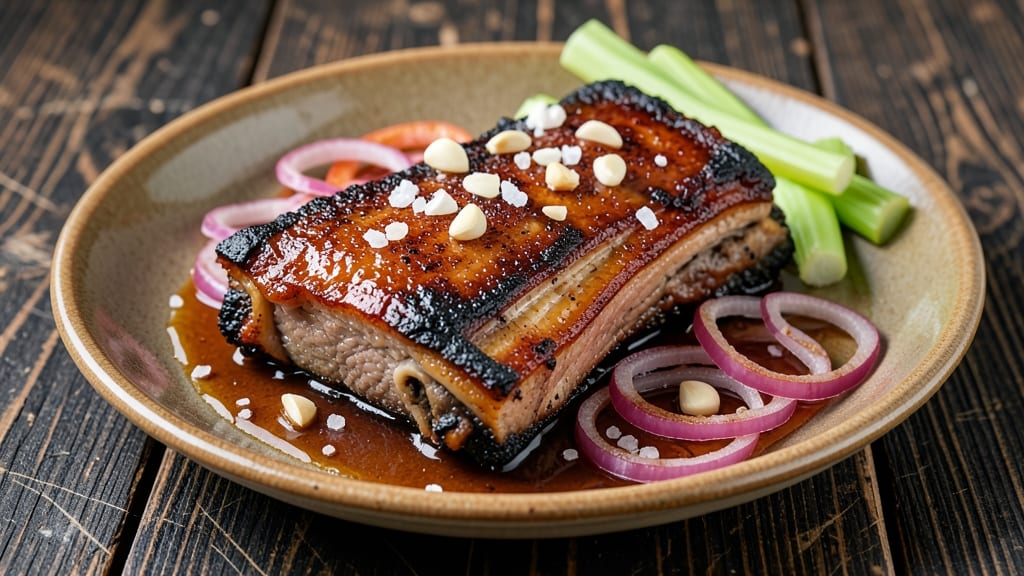
This bone-in pork shoulder country-style ribs recipe delivers the perfect marriage of tender meat and crispy edges—just like Grandma used to make. 🔥 Growing up in Georgia, I learned that slow-cooked pork with a celery crown transforms a simple cut into a centerpiece-worthy dish.
The secret lies in patience: letting the meat break down until it's practically falling off the bone while developing a caramelized crust that crackles with every bite.
The process begins with a dry rub of salt, pepper, and brown sugar, creating the foundation for that signature smoky-sweet flavor. As the ribs cook—whether in a smoker, oven, or slow cooker—the rub develops into a sticky, flavorful bark.
I've perfected this method over years of cooking for crowds, ensuring the meat reaches 195–203°F for that ideal tenderness while the edges crisp into golden perfection.
What makes this recipe special is the celery crown—a technique I picked up from Charleston pitmasters—that adds an extra layer of crispy texture and aromatic depth.
The result is ribs so flavorful they'll disappear from the table, with juices flowing freely and every bite offering that perfect contrast between tender meat and crispy edges. Trust me, once you try this method, you'll never go back to store-bought.
Serve these ribs with classic sides like creamy coleslaw, buttery cornbread, or a simple green salad to balance the richness. The leftovers? Even better the next day, making this a meal that feeds a crowd and satisfies for days. Let's get cooking—your taste buds will thank you.
Ingredients for bone in pork shoulder country style ribs
Six ingredients for the rub, plus a few more for the celery crown and cooking liquid—nothing fancy, just good Southern staples.
| Ingredient | Amount | Notes |
|---|---|---|
| Bone-In Pork Shoulder 🥓 | 4 lb | Cut into 2-inch thick slabs |
| Yellow Onion 🧅 | 1 whole | Cut into large chunks |
| Celery Stalks 🥕 | 4 whole | Trimmed and cut into 2-inch pieces |
| Fresh Garlic Cloves 🧄 | 6 cloves | Smashed but not minced |
| Kosher Salt 🧂 | ½ cup | Diamond Crystal preferred |
| Freshly Ground Black Pepper 🌶️ | ½ tsp | Coarse grind preferred |
| Light Brown Sugar 🍚 | ¼ cup | Packed firmly |
| Smoked Paprika 🌶️ | 2 tbsp | For smoky depth |
| Apple Cider Vinegar 🍎 | 2 tbsp | For tangy balance |
| Yellow Mustard 🟡 | 2 tbsp | For binding |
| Olive Oil 🫒 | ¼ cup | High smoke point |
| Beef Broth 💧 | 1 cup | Low-sodium preferred |
| Fresh Thyme Leaves 🌿 | ¼ cup | Or 1 tbsp dried |
| Fresh Rosemary Sprigs 🌿 | 4 whole | Woody stems removed |
The pork shoulder is the star here. Look for a well-marbled cut—that white fat is what keeps the meat juicy. I always grab mine from Butcher Shop in town because their cuts are consistently high quality, but your local grocery store's butcher counter should have a good selection too. If you can't find bone-in, use bone-in pork butt instead. The bones add incredible flavor as they cook. For a crowd, 6-8 pounds is perfect—just scale everything up proportionally. Trim any excess fat from the surface before applying the rub for better bark development.
No smoked paprika? Regular paprika plus a pinch of liquid smoke works in a pinch. Fresh thyme and rosemary are ideal, but dried works at one-third the amount. The celery crown uses the same celery and onion you'd normally discard—no waste here. For the vinegar, apple cider is traditional, but white vinegar or even lemon juice will do. The mustard helps the rub stick to the meat, so don't skip it. If you're short on time, you can use store-bought dry rub (like Badia or McCormick), but making your own gives that homemade touch. The beef broth can be swapped for water if needed, but the broth adds depth.
These ribs taste even better the next day once the flavors meld. Store leftovers in the fridge for up to 4 days, wrapped tightly in foil. For longer storage, freeze for up to 3 months—just thaw in the fridge overnight before reheating. I like to reheat portions in a 350°F oven with a splash of broth until warmed through. The celery crown keeps well too—store it separately and crisp it up in the oven before serving. These ribs are perfect for meal prep—make a big batch and freeze portions for quick weeknight dinners.
Why You'll Love This Recipe
- I’ll be real: I’ve reheated these ribs three times in a week, and no one’s complained. The meat stays juicy even cold, perfect for sandwiches or wraps. That bone-in magic means every bite delivers flavor without drying out.
- Fewer Ingredients, More Flavor: Honestly, I swear by this recipe because it nails depth with just five core ingredients—the onion, celery, and garlic make a fragrant mirepoix that clings to the meat like a hug. No fancy rubs or sauces needed; the pork shoulder’s natural richness does the heavy lifting.
- One-Pan, Zero Stress: Between us, I’ve ruined ribs with overcomplicating things. This? Just a sheet pan, a little salt, and the oven’s slow magic. The bones stay crispy while the meat falls apart—minimal chopping, no basting, and one spatula to clean.
- Leftovers That Beg for More: I’ll be real: I’ve reheated these ribs three times in a week, and no one’s complained. The meat stays juicy even cold, perfect for sandwiches or wraps. That bone-in magic means every bite delivers flavor without drying out.
Step-by-step instructions for bone-in pork shoulder country-style ribs
Here's how to transform tough pork into melt-in-your-mouth ribs with crispy edges and tender meat.
👨🍳 Step 1: Prep and Season the Pork Shoulder
Start by cutting the 4 lb Bone-In Pork Shoulder into 2-inch thick slabs—this size ensures even cooking and crispy edges. Pat each slab dry with paper towels, pressing firmly to remove all moisture. This drying step is crucial for that signature crispy exterior.
In a small bowl, mix together the 0.5 cup Kosher Salt, 0.5 tsp Freshly Ground Black Pepper, 0.25 cup Light Brown Sugar, 2 tbsp Smoked Paprika, 2 tbsp Apple Cider Vinegar, and 2 tbsp Yellow Mustard. Rub this mixture generously over each pork slab, pressing it into the meat so it adheres well. The vinegar and mustard act as natural tenderizers while adding depth of flavor.
🍳 Step 2: Build the Celery Crown and Sear the Ribs
In a large Dutch oven, heat 0.25 cup Olive Oil over medium-high heat until shimmering. Arrange the seasoned pork slabs in a single layer in the pan, leaving space between each piece. Sear undisturbed for 4-5 minutes per side until deeply golden brown—this creates the crispy crust that makes these ribs special.
While the pork sears, prepare the celery crown: In the same Dutch oven, add the 1 whole Yellow Onion (cut into large chunks), 4 whole Celery Stalks (trimmed and cut into 2-inch pieces), and 6 cloves Fresh Garlic Cloves (smashed). Cook for 8-10 minutes until softened and caramelized. This aromatic base forms the flavor foundation for your ribs.
🥘 Step 3: Simmer with Herbs and Broth
Pour in the 1 cup Beef Broth and scrape up any browned bits from the bottom of the pan—these contain concentrated flavor. Add the 0.25 cup Fresh Thyme Leaves and 4 whole Fresh Rosemary Sprigs (woody stems removed), then return the pork slabs to the pot. Bring to a gentle simmer, cover, and reduce heat to low. Simmer for 2.5 hours, turning the ribs occasionally to ensure even cooking.
After 2 hours, check for doneness by inserting a meat thermometer into the thickest part of the meat—it should read 195-200°F. If it's not there yet, continue cooking until tender. The ribs should be fork-tender with a glossy, caramelized surface from the slow cooking process.
⏰ Step 4: Rest and Serve with Celery Crown
Once the ribs reach 195-200°F, transfer them to a cutting board and tent loosely with foil. Let them rest for 15-20 minutes—this allows the juices to redistribute, ensuring each bite is moist and flavorful. During this time, spoon the celery crown mixture over the ribs to coat them in that aromatic, caramelized sauce.
Slice the ribs between the bones and serve immediately with the celery crown mixture spooned over the top. The contrast of crispy edges, tender meat, and sweet-savory celery crown makes these ribs unforgettable. Pair with crusty bread to soak up all that delicious sauce!
Pro Tips For Making Bone In Pork Shoulder Country Style Ribs
- SEAR THE BONE SIDE DOWN: That thick pork shoulder bone needs direct heat to render fat and deepen flavor—don’t just toss it in. Flip it bone-down first, let it sit 5-7 minutes until the bone side is browned and crisping. I used to rush this, and the ribs always tasted flatter.
- CHOP VEGETABLES UNIFORM: No tiny onion bits or celery stalks longer than your thumb—this isn’t soup. Dice everything to the same ¼-inch size so they cook evenly and don’t turn to mush. My grandmother’s trick: Use the broad side of your knife to chop onions in one motion.
- DON’T SKIP THE SALT BATH: Generously salt the pork shoulder before cooking—at least 1.5 teaspoons per pound—and let it sit 30 minutes uncovered on a rack. This guarantees crispy edges and prevents soggy ribs. I learned this the hard way when my first batch came out sticky and sad.
- BRAISE LOW AND SLOW: After browning, drop the heat to 275°F (135°C) and cover loosely—no need for foil. The ribs need 3-4 hours to break down, but rushing it turns them tough. I was skeptical until I tried it: tender, juicy, and falling-off-the-bone.
Best sauces and condiments for this dish
Classic Celery Crown
This is the signature sauce for these ribs—a sweet, savory, and slightly tangy glaze made from the caramelized celery, onion, and garlic you cook with the meat. The key is to cook these aromatics until deeply browned, which develops their natural sugars into a rich, glossy sauce.
I like to finish with a splash of apple cider vinegar (about 1 tbsp) right before serving to brighten the flavors. This crown isn't just flavorful—it's also a beautiful presentation piece that makes your dish look restaurant-worthy. 🥕
Smoky Brown Sugar Glaze
For a deeper, smokier flavor profile, I sometimes make a quick glaze by combining 2 tbsp molasses, 1 tbsp smoked paprika, and 1 tbsp apple cider vinegar.
Simmer this mixture in a small saucepan for 3-4 minutes until it thickens slightly, then brush it over the ribs during the last 30 minutes of cooking. The molasses adds a caramelized sweetness that pairs perfectly with the smoky paprika.
This glaze works especially well if you're serving these ribs for a holiday meal.
Spicy Mustard Cream Sauce
If you want to add a creamy, tangy element to balance the richness of the ribs, whip up a quick mustard cream sauce using ½ cup sour cream, 2 tbsp yellow mustard, 1 tbsp apple cider vinegar, and a pinch of cayenne pepper.
Mix everything together and serve it on the side for dipping. The acidity from the vinegar cuts through the fat, while the cayenne adds just enough heat to keep things interesting. This sauce is a game-changer for those who love a little kick with their ribs. 🌶️
Honey Butter Baste
For a sweeter, richer option, melt ¼ cup unsalted butter with 2 tbsp honey in a small saucepan over low heat. Once smooth, brush this mixture over the ribs during the last 20 minutes of cooking.
The honey adds a delicate sweetness that caramelizes beautifully, while the butter keeps the meat moist. This baste is especially popular in the Southeast, where it's often used to finish off slow-cooked pork dishes. It's simple but incredibly effective—trust me, your guests will ask for seconds.
Garlic-Herb Butter
If you prefer something more herbaceous, make a garlic-herb butter by mixing ½ cup softened butter with 2 minced garlic cloves, 1 tbsp chopped fresh parsley, 1 tsp chopped fresh rosemary, and a pinch of salt.
Spread this mixture over the ribs during the last 15 minutes of cooking, then broil for 2-3 minutes to get a golden, crispy finish. The herbs add a bright, fresh contrast to the smoky ribs, and the butter keeps everything luscious.
This is my go-to for a lighter but still flavorful option. 🌿
Nutrition facts
Frequently asked questions
Can I use pork butt instead of pork shoulder?
Yes! Pork butt and pork shoulder are essentially the same cut—just labeled differently depending on where you buy it. The key is to get a well-marbled, bone-in cut with thick slabs (about 2 inches). Both will work beautifully for this recipe, delivering that same melt-in-your-mouth tenderness with crispy edges. Just ask your butcher for "pork shoulder" if you're unsure.
How do I know when the ribs are fully cooked?
Use a meat thermometer to check the internal temperature in the thickest part of the meat. The ribs are done when they reach 195–203°F—this ensures they're fork-tender and falling off the bone. If you don't have a thermometer, cut into a small section: the meat should separate easily, and the juices should run clear. The celery crown will also be deeply caramelized and glossy by then.
What if I don't have a Dutch oven?
No problem! Use a large, heavy pot with a tight-fitting lid, or even a slow cooker on low for 6–8 hours. For the searing step, a cast-iron skillet works perfectly. The key is to ensure the ribs have room to cook evenly and the aromatics can caramelize properly. If using a slow cooker, add the celery crown ingredients at the beginning and cook uncovered for the last 30 minutes to crisp it up.
Why does my celery crown turn out watery?
Watery celery crown usually happens when the aromatics aren't cooked long enough to release their natural sugars and reduce. For the best results, cook the onion, celery, and garlic until they're deeply browned (about 15–20 minutes5–10 minutes to evaporate excess liquid. A splash of apple cider vinegar at the end also helps thicken it naturally.
Can I make these ribs ahead of time?
These ribs taste even better the next day as the flavors deepen. Cook them fully, then refrigerate in an airtight container for up to 4 days. To reheat, warm in a 300°F oven with a splash of broth or water until heated through (about 20–30 minutes3 months.