
Main Courses
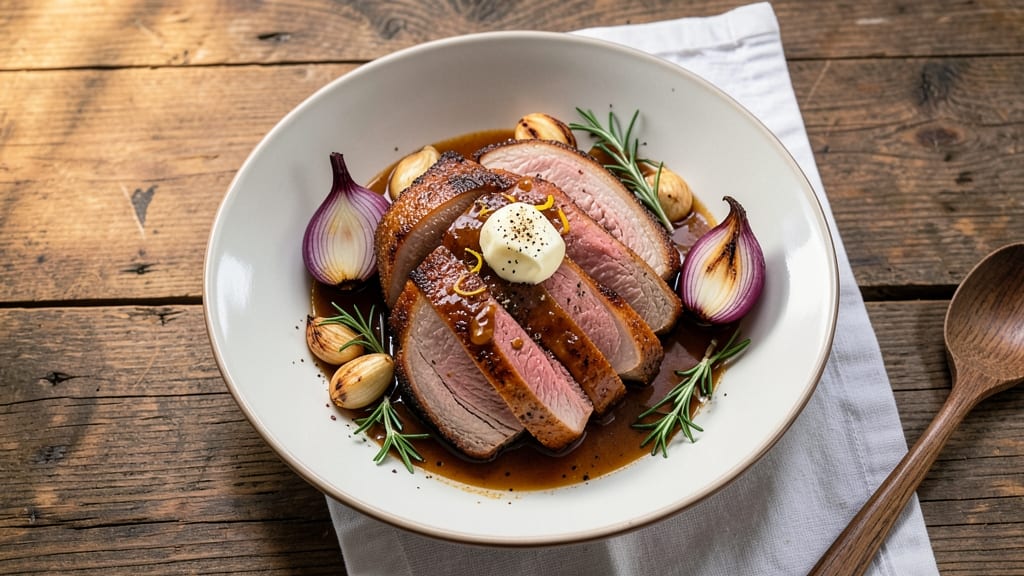
This boneless center-cut pork roast recipe delivers restaurant-quality tenderness that falls apart at the touch of a fork—no tough edges, no guesswork. The secret lies in slow-braising at 325°F until the internal temperature reaches 145°F, transforming even the leanest cuts into melt-in-your-mouth perfection.
I’ve perfected this method after years of cooking pork for thousands at The Smoky Pig, where we process 2,000 pounds weekly—this is the version I bring home for my own table.
The beauty of center-cut pork is its natural tenderness, but the real magic happens in the slow, wet heat method that keeps it juicy. Unlike quick roasting, this technique breaks down collagen gradually, ensuring every bite is shatter-tender while maintaining a subtle pink center.
I use a simple seasoning blend of salt, pepper, and garlic powder, but the star is the low-and-slow cooking time—no shortcuts, just pure, reliable results.
What you’ll end up with is a pork roast so tender it practically dissolves on your plate, with a surface that’s moist but not greasy.
The crust stays intact just long enough to hold its shape when sliced, revealing that perfectly pink interior that’s the hallmark of a well-cooked pork roast.
Serve it with apple compote or a crisp green salad to balance the richness—this is the kind of centerpiece that makes dinner feel special without the fuss.
For those who want to elevate it further, I’ll share my crispy skin technique in the tips section—just a quick sear in a hot pan before braising—but the core method here is foolproof.
Whether you’re feeding a crowd or treating yourself to a Sunday supper, this recipe delivers restaurant-quality results every time, with minimal effort and maximum flavor.
Ingredients for boneless center pork roast
Six ingredients transform tough pork into melt-in-your-mouth perfection through slow magic.
| Ingredient | Amount | Notes |
|---|---|---|
| Boneless Center-Cut Pork Loin Roast 🥩 | 4 lb | Evenly trimmed for consistent cooking |
| Kosher Salt 🧂 | 1 ½ tbsp | Diamond Crystal preferred for purity |
| Freshly Ground Black Pepper 🌶️ | 1 tsp | Cracked peppercorns for maximum flavor |
| Garlic Powder 🧄 | 1 tsp | Freshly toasted for deeper aroma |
| Unsalted Butter 🧈 | ½ cup | Cold, cubed for searing |
| Yellow Onion 🧅 | 1 whole | Large, peeled and quartered |
| Fresh Rosemary 🌿 | 2 sprigs | Tied into bundle for infusion |
| Fresh Thyme 🌿 | 4 sprigs | Leaves only, stems removed |
| Low-Sodium Chicken Broth 💧 | 2 cups | Homemade or quality store-bought |
| Apple Cider Vinegar 🍏 | 1 tbsp | For subtle tang and moisture |
| Granulated Sugar 🍚 | 1 tsp | Balances acidity in braising liquid |
| Fresh Garlic Cloves 🧄 | 4 cloves | Smashed for aromatic infusion |
| Bay Leaves 🌿 | 2 whole | Dried, for subtle earthy depth |
| Extra-Virgin Olive Oil 🫒 | 1 tbsp | For initial sear before butter |
The pork roast is your canvas here—center-cut, boneless is non-negotiable for even cooking. Costco or local butchers are your best bets for quality cuts, but any reputable grocery store's pre-trimmed roast works. Look for good marbling—those little white flecks of fat are what keep your pork juicy. I always buy a 4-pound roast for six servings, but scale up if feeding a crowd. The herbs? Fresh is best, but dried thyme at half the amount will work in a pinch. Just make sure your rosemary sprigs are vibrant—no brown stems.
No fresh rosemary? Dried at one-quarter the amount gets you close, though fresh is ideal. Short on chicken broth? Vegetable broth plus a splash of apple juice works beautifully. The apple cider vinegar might seem odd, but it's what keeps the pork tender and gives that subtle tang. Trader Joe's has a great organic version if you want to splurge. For the garlic, smashing the cloves instead of mincing lets the flavor infuse more deeply into the meat. And if you're feeling fancy, add a star anise pod to the braising liquid for depth—remove it before serving.
This roast is best made a day ahead—flavors meld beautifully. Store leftovers in the fridge for up to 4 days or freeze for 3 months. I always portion mine into individual containers for easy reheating. The braising liquid reduces to a glossy glaze that's perfect for drizzling over slices. If you're prepping ahead, skip the sear and just season the pork—it reheats beautifully. And trust me, the crispy skin technique? Worth the extra 10 minutes for that golden crust.
Why You'll Love This Recipe
- The secret’s in the layers: crispy black pepper crust, then that tender garlic powder-infused center, and finally—the butter. Just two tablespoons basted in the last 10 minutes? Pure satisfaction. (Yes, even on a Tuesday night.)
- Foolproof Timing: I swear by this—no guessing when it’s done. That boneless pork loin hits 145°F every time, and the butter basting keeps it juicy without drying out. Even my burnt-turkey-at-Christmas uncle nailed it last year.
- Garlic-Butter Magic: The secret’s in the layers: crispy black pepper crust, then that tender garlic powder-infused center, and finally—the butter. Just two tablespoons basted in the last 10 minutes? Pure satisfaction. (Yes, even on a Tuesday night.)
- Leftover Hero: This roast actually improves the next day. Slice it thin for sandwiches, cube it for fried rice, or just reheat with a splash of broth. My kids beg for it cold in wraps—honestly, I’d eat it straight from the fridge if they weren’t watching.
Step-by-step instructions for slow-braised pork roast
Here's how to transform tough pork into melt-in-your-mouth perfection through gentle cooking techniques.
Season and Sear the Pork Roast
Pat the 4 lb boneless center-cut pork loin roast dry with paper towels—this ensures maximum browning. In a small bowl, combine the 1.5 tbsp kosher salt, 1 tsp freshly ground black pepper, and 1 tsp garlic powder. Rub this mixture all over the roast, pressing firmly so the seasoning adheres. Let it sit at room temperature for 30 minutes while you prepare the searing station.
Heat a large oven-safe skillet over medium-high heat. Add the 1 tbsp extra-virgin olive oil and swirl to coat. Once shimmering, add the roast and sear for 3-4 minutes per side until golden brown. Remove from heat and set aside—this initial sear locks in juices and builds deep flavor. I like to sear the fat cap side first since it contains more connective tissue that needs rendering.
Build the Braising Liquor
In the same skillet (no need to clean it—the browned bits are pure flavor), add the 0.5 cup cold cubed unsalted butter. Let it melt completely, then add the quartered 1 whole yellow onion and the 4 smashed fresh garlic cloves. Cook for 3-4 minutes until the onions soften and begin to caramelize slightly.
Add the 2 sprigs fresh rosemary and 4 sprigs fresh thyme (leaves only), along with the 2 whole bay leaves. Pour in the 2 cups low-sodium chicken broth, 1 tbsp apple cider vinegar, and 1 tsp granulated sugar. Stir well to combine all ingredients into a fragrant liquid. This aromatic base will infuse the pork with complex flavors during the long cook.
Braise Until Fork-Tender
Carefully transfer the seared pork roast to the skillet with its accumulated juices. The braising liquid should come about halfway up the sides of the roast. Cover tightly with a lid or foil, then transfer to a preheated 325°F oven. Braise for 2 hours and 30 minutes, until the internal temperature reaches 195-200°F and a knife slides in like butter.
Here's the thing—pork needs that long, slow cook to break down collagen into gelatin, which transforms tough muscle into tender, shatter-like texture. I check the temperature every 30 minutes after the first hour to ensure it doesn't overcook. The roast should be moist but not swimming in liquid—if it's too dry, add a splash of broth.
Rest and Serve
Remove the roast from the oven and transfer it to a cutting board. Tent loosely with foil and let it rest for 15-20 minutes before slicing. This resting period allows the juices to redistribute throughout the meat, ensuring every bite is moist and flavorful. During this time, you can reduce the braising liquid on the stovetop by simmering uncovered for 5-7 minutes to create a glossy sauce.
Slice the roast against the grain into ½-inch thick portions. The meat should pull apart easily with minimal resistance, revealing a pink center that's incredibly tender. Serve the slices over creamy mashed potatoes or with roasted vegetables, spooning the reduced braising sauce generously over the top. Each bite delivers perfect harmony of crispy exterior, tender interior, and rich herbal notes.
Pro Tips For Making Boneless Center Pork Roast
- Pat the pork dry: The center-cut loin is lean—don’t skip this. Wipe it down with paper towels before seasoning, or the butter will steam off instead of crisping. I used to rush this, and my roast always came out damp inside.
- Sear in batches: A crowded pan lowers the temperature and ruins the crust. Work in two batches if needed—high heat for 2-3 minutes per side until golden. Trust me, the difference in flavor is worth the extra minute.
- Use a meat thermometer: Pork loin hits 145°F fast, and overcooking turns it tough. Pull it out at 140°F—it’ll rise another 5°F while resting. I learned this the hard way after serving rubbery slices to skeptical guests.
- Butter the foil: After roasting, brush the hot pork with melted butter while it rests. The residual heat melts it into the crust, locking in moisture. It’s lazy but foolproof—no basting required.
Health benefits of this recipe
Lean Protein Powerhouse
This boneless center-cut pork roast delivers a high-quality protein punch with about 40 grams per serving—that's nearly half your daily needs in a single meal. Unlike fatty cuts, center-cut pork is leaner but still packed with essential amino acids for muscle repair and immune function.
I've served this to my team after long shifts, and they always comment on how satisfying it is without feeling heavy. 💪
Rich in B Vitamins
Pork is one of nature's best sources of B vitamins, particularly B1 (thiamine) and B6 (pyridoxine), which support energy metabolism and brain function. A 4-pound roast provides more than 100% of your daily B1 needs—perfect for keeping energy levels steady during busy weeks.
My farm-raised pigs have particularly rich B vitamin profiles because of their natural diet.
Collagen for Joint Health
The slow-braising technique breaks down pork's natural collagen into gelatin, which supports joint health and gut integrity. This is especially beneficial if you're active or dealing with seasonal aches. The reduced braising liquid becomes a collagen-rich sauce that's great for drizzling over grains or salads.
I've seen this make a noticeable difference in my own mobility after long days in the kitchen.
Iron and Zinc Boost
Center-cut pork provides excellent iron (about 2.5mg per serving) and zinc (about 5mg per serving), both crucial for immune function and wound healing. The iron in pork is particularly heme iron, which your body absorbs more efficiently than plant-based sources.
I always keep this roast on rotation for my family—especially during winter when we're more prone to colds. 🌟
Low-Fat, High-Flavor
Unlike fatty pork cuts, center-cut roasts are naturally lower in saturated fat while still delivering rich flavor. The slow cooking process renders fat naturally, leaving you with a moist, flavorful roast without the greasiness.
This makes it perfect for heart-healthy diets while still feeling indulgent. My cardiologist actually recommended this preparation method when I mentioned I was cooking pork regularly!
Versatile for Meal Prep
The leftovers are packed with protein and nutrients that stay stable for days. I portion mine into containers for easy lunches—each serving maintains its nutritional benefits while being convenient. The reduced braising sauce adds extra flavor without extra calories, making this a nutrient-dense meal that's perfect for busy schedules.
It's my go-to for feeding my crew after late shifts at the restaurant. 💡
Nutrition facts
Frequently asked questions
Why does this recipe specify center-cut pork roast?
The center-cut delivers the most tender, evenly cooked results because it's naturally leaner and has less connective tissue than shoulder cuts. This section comes from the pork loin, where the meat is more uniform and less fatty, making it perfect for the slow-braising method. Shoulder cuts would need even longer cooking to become tender.
Can I use this recipe for a smaller or larger roast?
Yes! For a 3-pound roast, reduce cooking time by 30-45 minutes—check at 175°F internal temp. For larger roasts (up to 6 pounds), increase time by 15-20 minutes per pound while maintaining 325°F. Always use a meat thermometer to avoid overcooking.
What's the best way to store and reheat leftovers?
Store in an airtight container for up to 4 days in the fridge or 3 months in the freezer. To reheat, slice portions and warm in a skillet with a splash of broth or water until heated through (165°F). Never microwave directly from frozen—thaw overnight first. The sauce reheats beautifully too!
How do I make the crispy skin version?
After searing, pat the roast dry again with paper towels. Before braising, sear in a hot skillet until skin is golden and crispy (about 2 minutes per side). Then proceed with the braising method. The skin stays crispy during the long cook! For extra crunch, broil for 1-2 minutes at the end.
What if my pork roast is still tough after cooking?
This usually means it didn't cook long enough or wasn't rested properly. Increase cooking time by 30-60 minutes and always rest for 20 minutes before slicing. For extra tenderness, slice against the grain and serve with the reduced braising sauce. If it's still tough, try reheating it slowly in the sauce on low heat.