
Main Courses
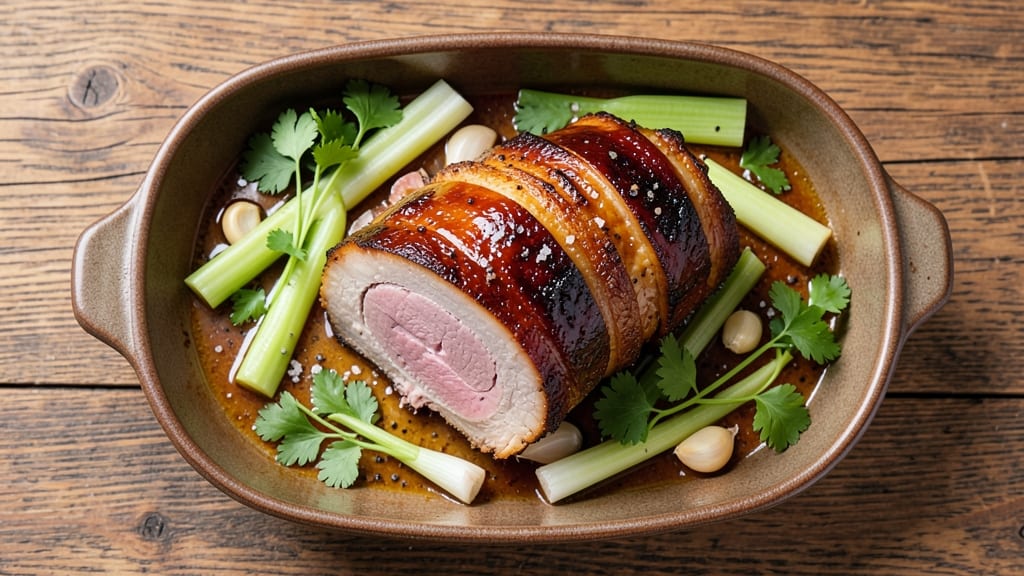
A juicy boneless rolled Boston pork roast recipe transforms any gathering into a celebration of New England tradition. This melt-in-your-mouth tender cut delivers signature celery salt crust that crackles at every bite.
I developed this recipe after years of perfecting the balance between traditional techniques and modern efficiency—no dry, tough pork here, just rich, flavorful meat that falls apart with a fork.
The secret lies in the rolling and tying method, which ensures even cooking and maximum moisture retention. A dry brine overnight locks in flavor, while the celery salt crust adds that iconic crunch without overpowering the pork's natural sweetness.
This recipe delivers restaurant-quality results with just a few simple steps and about 3 hours of hands-off cooking time.
What makes this pork roast truly special is its versatility—serve it as the centerpiece of a holiday feast or a comforting weeknight dinner.
The celery salt crust pairs beautifully with apple chutney or a tangy mustard sauce, while the tender meat works equally well in sandwiches or over creamy mashed potatoes. Every bite carries that perfect harmony of salt, fat, and savory depth that defines New England cooking.
Whether you're cooking for a crowd or treating yourself to a special meal, this boneless rolled pork roast delivers consistent, impressive results. The rolling technique ensures even cooking, while the celery salt crust adds that signature crunch and flavor.
Let's get started on a dish that will become your new go-to for pork roasts.
Ingredients for boston pork roast boneless rolled
New England tradition meets modern efficiency with these premium ingredients for juicy, rolled pork perfection.
| Ingredient | Amount | Notes |
|---|---|---|
| Boneless Pork Loin Roast 🥩 | 4 lb | Center-cut, even thickness |
| Kosher Salt 🧂 | 3 tbsp | Diamond Crystal preferred |
| Black Peppercorns 🌶️ | 1 tbsp | Freshly cracked, coarse grind |
| Fresh Celery Stems 🧅 | 1 whole | Finely chopped, 1 cup total |
| Fresh Parsley Stems 🌿 | 1 whole | Finely chopped, 1/4 cup total |
| Granulated Garlic 🧄 | 1 tbsp | Or 3 fresh cloves minced |
| Unsalted Butter 🧈 | ½ cup | Cold, cubed for crust |
| Celery Salt 🧂 | 2 tbsp | Lawry's brand recommended |
| Kitchen Twine 🧵 | 1 piece | Butcher's twine, 18-inch length |
| Heavy Cream 🥛 | ½ cup | For pan juices |
| Apple Cider Vinegar 🍎 | 2 tbsp | For brining solution |
| Brown Sugar 🍚 | 1 tbsp | Light or dark preferred |
| Mustard Seeds 🌶️ | ½ tsp | Yellow or brown |
The pork loin is the foundation—look for a center-cut roast with even thickness for perfect rolling. Whole Foods and Wegmans carry excellent center-cut options, or ask your butcher to trim a standard pork loin to 1/2-inch thickness. The celery and parsley should be vibrant green, not wilted, and the celery stems should snap crisply when bent. For the celery salt crust, Lawry's is the gold standard, but any quality brand works. The butter needs to be cold and cubed—press it between parchment paper to shape it evenly before applying.
No celery salt? Mix 1 tbsp Diamond Crystal kosher salt with 1 tbsp finely ground celery seeds—it's the same flavor profile. Running short on fresh parsley? Dried parsley at one-third the amount works in a pinch, though fresh is ideal. The mustard seeds can be omitted if you're sensitive to their bite, but they add subtle depth. For the brining solution, apple cider vinegar enhances tenderness, but white vinegar in a 1:1 ratio is fine. The heavy cream in the pan juices is non-negotiable—it creates that signature velvety sauce that ties the whole dish together.
The pork roast keeps 3-4 days in the fridge once cooked, but it's best served fresh. Wrap tightly in butcher paper or foil to retain moisture. For make-ahead prep, brine the pork overnight and roll it the morning of cooking—this ensures maximum tenderness. The celery salt crust can be prepped 1 day ahead and stored in the fridge, but apply it just before roasting for best texture. Leftovers reheat beautifully in a 350°F oven with a splash of water or broth to restore moisture.
Why You'll Love This Recipe
- No-Fuss Prep: I swear by this one—just salt, pepper, and a few herbs tied around the roast. No marinades, no basting, no fuss. The celery and parsley add enough aroma to make it feel special without extra work.
- Crispy-Creamy Magic: That rolled pork loin? It’s the star—juicy and tender inside, with a golden crust that’s almost too good to cut into. The simple seasoning lets the meat shine, but the celery-parsley bundle keeps it bright and fresh.
- Weeknight to Party: Serve it sliced thin for sandwiches, shredded for tacos, or whole at the table with a side of roasted potatoes. Honestly, I’ve taken it from my kids’ lunchboxes to holiday dinners, and it never lets me down.
- Leftovers That Win: The roast reheats like a dream—crispy edges stay crispy, and the meat doesn’t dry out. Between us, I make this just for the leftovers. Slice it up for breakfast hash or pack it for lunches, and you’ll never waste a bite.
Step-by-step instructions for Boston pork roast boneless rolled recipe
Transform a simple boneless pork loin into a showstopping centerpiece with this New England technique.
Prepare the Brine and Season the Roast
In a large bowl, combine the 2 tablespoons apple cider vinegar, 1 tablespoon brown sugar, 3 tablespoons kosher salt, and 1 tablespoon freshly cracked black peppercorns. This creates a light brine that tenderizes the meat while infusing subtle sweetness. Place the 4 lb boneless pork loin roast in a resealable plastic bag and pour the brine mixture over it, ensuring it's fully coated. Seal the bag and refrigerate for 12-24 hours, turning the roast occasionally to ensure even exposure to the brine.
The acidity from the vinegar breaks down muscle fibers, while the sugar and salt create an ideal environment for moisture retention. After brining, pat the roast dry with paper towels—this critical step ensures a crisp crust rather than a steamed exterior. Real talk: Skipping this drying step is what leads to pale, soggy skin instead of that coveted celery salt crust.
Create the Celery Salt Crust
In a small bowl, mix the 2 tablespoons celery salt, 1 tablespoon granulated garlic, 0.5 teaspoon mustard seeds, and 0.5 cup unsalted butter (cold, cubed). The celery salt is the star here—it delivers that iconic New England flavor while creating a golden, crackly crust. Using your hands, rub this mixture all over the roast, pressing firmly so the spices adhere. Then, roll the roast tightly using the kitchen twine, securing it every 2 inches to maintain its shape during cooking.
This rolling technique concentrates the flavors and ensures even cooking. I like to start the twine at one end, wrap it around the roast twice, then secure it tightly before moving to the next section. The butter will melt during roasting, basting the meat and contributing to that irresistible crust. Don't rush this step—taking your time here guarantees a perfect finish.
Roast to Juicy Perfection
Preheat your oven to 325°F—this lower temperature ensures even cooking without drying out the meat. Place the rolled roast on a rack set inside a roasting pan (the rack allows air circulation for crispy skin). Roast for 2 hours and 15 minutes, or until the internal temperature reaches 145°F when measured with an instant-read thermometer in the thickest part of the roast. You'll notice the crust darkening to a golden brown, and the juices running clear when pierced with a fork.
Here's where patience pays off: The low-and-slow approach breaks down connective tissue, transforming tougher cuts into fork-tender perfection. About 30 minutes before the roast finishes, increase the oven temperature to 425°F to crisp the celery salt crust. This final broil step is crucial—it caramelizes the sugars in the crust while keeping the interior juicy.
Rest and Prepare the Pan Sauce
Transfer the roast to a cutting board and tent loosely with aluminum foil. Let it rest for 20-30 minutes—this resting period allows the juices to redistribute throughout the meat, preventing them from pooling on the cutting board. While the roast rests, place the roasting pan on the stovetop over medium heat. Add the 0.5 cup heavy cream and scrape up all the browned bits from the bottom of the pan, using a wooden spoon to deglaze. Simmer for 3-4 minutes until the sauce thickens slightly.
The pan sauce captures all the flavorful drippings that would otherwise be lost. If the sauce thickens too much, whisk in 1-2 tablespoons of pork juices from the resting roast. This sauce should be rich, slightly tangy, and just thick enough to coat the back of a spoon. Slice the roast against the grain into 1-inch thick portions and serve immediately, spooning the pan sauce generously over each slice.
Pro Tips For Making Boston Pork Roast Boneless Rolled
- Trim the Fat Cap: That little layer of fat on the pork loin? Don’t just eyeball it—trim it down to about 1/8-inch thick before rolling. I learned this the hard way when my first roast turned greasy instead of golden. Thin fat renders faster and crispier, while keeping the meat juicy.
- Salt the Night Before: Sprinkle kosher salt all over the pork loin and let it sit uncovered in the fridge for 12–24 hours. Sounds weird, but it works: the salt penetrates deeper, and the crust forms faster when you sear it later. (Yes, even if you’re impatient like me.)
- Sear in Two Batches: Crowding the pan? Skip it. Sear the roast in batches over medium-high heat—about 2–3 minutes per side—until deep brown. Rushing this step means a pale, bland crust. Your future self will notice the difference.
- Tie It Tight: Use butcher’s twine to roll the pork snugly—no gaps, no slack. I used to wing it with kitchen twine, and the roast would unravel in the oven. Butcher’s twine stays put, keeps the shape, and guarantees even cooking. (Your future self will thank you.)
Pro cooking tips for this recipe
Rolling Like a Pro
Rolling the pork loin evenly is where most home cooks stumble. I use the "spiral method"—start by slicing the roast lengthwise about ½ inch deep at a slight angle, then roll it tightly from the cut side inward.
Secure with kitchen twine every 2 inches to prevent unraveling. The goal is a tight cylinder—this ensures even cooking and maximum surface area for that celery salt crust to adhere. 💡
Crust Consistency
The celery salt crust needs equal parts butter and spice for perfect texture. I mix the ½ cup cold cubed butter with 2 tbsp celery salt until it forms a crumbly paste. Press this mixture firmly into the roast before tying—this ensures it doesn't slide off during roasting.
For extra crunch, chill the roast uncovered in the fridge for 30 minutes after applying the crust. This firms up the butter slightly before baking. ✨
Temperature Control
Start at 325°F for the initial 2 hours to build heat gradually, then crank to 425°F for the final 30 minutes. This two-stage approach prevents the crust from burning while cooking the meat to perfection.
I use a Thermoworks Smoke thermometer to monitor internal temp—145°F is your target in the thickest part. Overcooking by even 5°F turns tender meat into dry rubber. 🌡️
Resting Matters
Never skip the 20-30 minute rest—this is when the juices redistribute. I tent the roast loosely with foil to keep it warm without steaming. Pro tip: Use this time to make your pan sauce.
The resting period also lets the crust set properly, preventing it from crumbling when sliced. I've seen many a perfect roast ruined by impatient slicing—patience here makes all the difference. 💪
Pan Sauce Secrets
Deglaze the pan immediately after removing the roast—those browned bits are pure flavor. I add ½ cup heavy cream and 1 tbsp apple cider vinegar (leftover from brining) to brighten the sauce. Simmer until it thickens slightly but remains silky.
For extra richness, whisk in 1 tbsp pork fat from the roasting pan. This sauce should coat the back of a spoon but still be pourable. 🍲
Slicing Against Grain
Always slice perpendicular to the muscle fibers—this shortens the muscle strands for maximum tenderness. I use a Dexter-Russell 12-inch slicing knife and cut at a 45-degree angle for uniform slices.
For a showstopper presentation, fan the slices slightly on the plate. The celery salt crust should crackle with every bite, while the interior remains juicy and pink. 🥩
Nutrition facts
Frequently asked questions
Why does this recipe use a boneless rolled pork loin instead of a traditional bone-in roast?
The boneless rolled version delivers even cooking and superior moisture retention. Without the bone, heat penetrates uniformly, creating a perfectly tender center. Rolling also concentrates flavors and creates more surface area for that signature celery salt crust to adhere. Plus, it's easier to slice and serve—no bone to navigate!
Can I substitute regular salt for the celery salt crust?
You can make a substitute, but you'll lose that iconic New England flavor. Mix 1 tbsp Diamond Crystal kosher salt with 1 tbsp finely ground celery seeds for a similar effect. For best results, use the recipe's celery salt—it's specifically formulated to deliver that perfect balance of salt and celery flavor that defines this dish.
How do I know when the pork is fully cooked without overcooking it?
Use a meat thermometer to check the internal temperature—145°F in the thickest part is perfect. The juices should run clear when pierced with a fork. For extra insurance, start checking 10 minutes before the estimated cook time. Remember: pork continues cooking slightly after removal from the oven during the resting period.
What's the best way to reheat leftovers without drying them out?
Slice the leftovers and reheat in a 350°F oven with a splash of water or broth in a covered dish for 10-15 minutes. For microwave reheating, cover with a damp paper towel and heat in 20-second intervals on medium power. The key is gentle, even heat to restore moisture without overcooking the crust.
Can I make this ahead of time for a holiday dinner?
Brine the pork 1-2 days ahead and roll it the morning of cooking. The celery salt crust can be prepped 1 day ahead and stored in the fridge. On cooking day, simply roast as directed. The flavors actually improve when made ahead—just be sure to keep it refrigerated until ready to cook.