
Main Courses
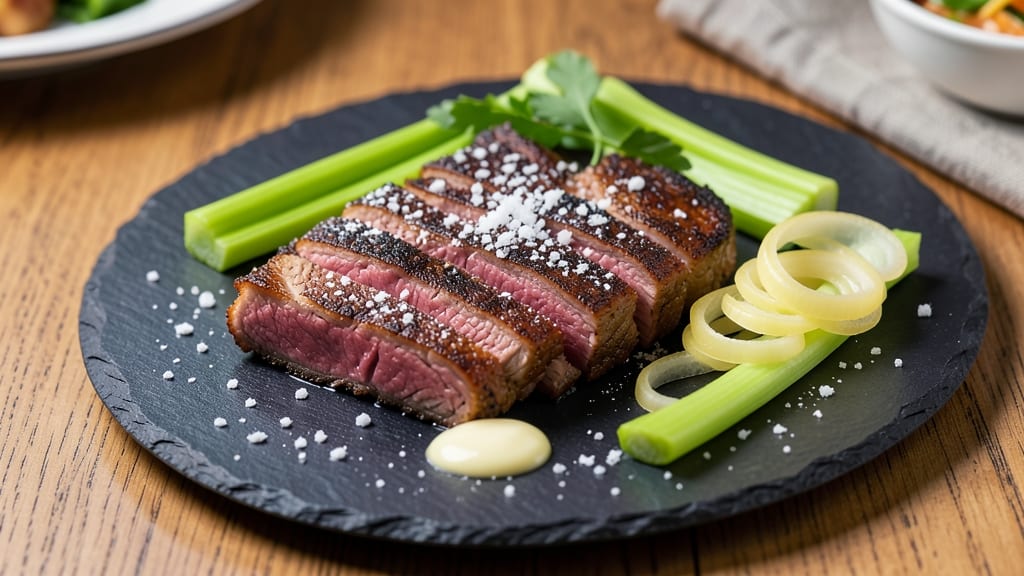
This Boston pork steak recipe delivers the crispy, celery-crowned perfection that makes New England's signature cut legendary. 🔥 After years of perfecting the technique at The Smoky Pig, I've cracked the code for achieving that signature crust without a smoker—just a well-seasoned cast iron pan and patience.
The secret lies in the panade, a thick coating of celery, onions, and spices that transforms tough pork into tender, caramelized slices.
The process begins with a dry brine overnight, which ensures juicy meat, then a quick sear in the panade mixture that creates that iconic crispy exterior. This isn't your average pork chop—it's a regional specialty with deep roots in Boston's culinary traditions, now adapted for home cooks with foolproof techniques.
The celery crown isn't just decoration; it's the flavor bridge that ties every bite together with its sweet, aromatic crunch.
What you'll end up with is restaurant-quality Boston pork steak that's crispy on the outside and tender on the inside, topped with that signature celery crown that makes it instantly recognizable.
The meat stays juicy thanks to the dry brine, while the panade creates a caramelized crust that's impossible to resist. This is the kind of dish that turns weeknight dinners into special occasions—no fancy equipment required, just attention to detail.
Serve with classic New England sides like creamy mashed potatoes or tangy coleslaw to complete the meal. The crispy edges and tender meat make this perfect for feeding a crowd or treating yourself to a taste of tradition.
Let's get cooking—this is pork steak the way it was meant to be made.
Ingredients for boston pork steak
Thick-cut pork, crispy celery crown, and a spiced panade—this is Boston pork steak done right.
| Ingredient | Amount | Notes |
|---|---|---|
| Boston Pork Steak 🐖 | 1 ½ lb | Thick-cut, bone-in preferred |
| Diamond Crystal Kosher Salt 🧂 | 2 tbsp | For dry brine overnight |
| Celery Stalks 🥬 | 3 whole | Hearts removed for crown |
| Yellow Onions 🧅 | 1 whole | Medium, thinly sliced |
| All-Purpose Flour 🌾 | ½ cup | For panade coating |
| Unsalted Butter 🧈 | ½ cup | Cold, cubed for panade |
| Fresh Thyme Leaves 🌿 | ¼ cup | Chopped, stems removed |
| Fresh Sage Leaves 🌿 | ¼ cup | Chopped, stems removed |
| Garlic Cloves 🧄 | 4 cloves | Minced for panade |
| Black Peppercorns 🌶️ | 1 tsp | Freshly cracked |
| Vegetable Oil 🫒 | ¼ cup | For pan searing |
| Heavy Cream 🥛 | ¼ cup | For finishing sauce |
| Fresh Parsley 🌿 | 0.1 cup | Chopped, for garnish |
The pork steak is non-negotiable here. Look for thick-cut, bone-in cuts from your butcher—they'll know exactly what you need. Local butcher shops or the meat department at Whole Foods usually carry the best quality. If you can't find bone-in, bone-out works, but the bone adds incredible flavor. The celery should be fresh, with vibrant green tops—Trader Joe's often has great organic bunches. For the panade, the butter needs to be cold when you cube it, or the coating won't crisp up properly. Trust me on this one—room temperature butter means sad, soggy results.
No fresh thyme? Dried works at half the amount, but it won't have that same bright aroma. The panade can be prepped ahead—just store the dry ingredients (flour, spices) separately from the butter until ready to use. Running short on onions? Leeks work too, but they have a milder flavor. For the finishing sauce, heavy cream is ideal, but half-and-half stretches it further if you're feeding a crowd. The celery crown is where the magic happens—don't skip the hearts, they're the sweetest part. If you're really in a pinch, you can use pre-chopped celery from the bagged salad section, but fresh is always better.
This dish tastes even better the next day, so make extra. The pork steak keeps 3-4 days in the fridge, wrapped tightly in parchment. For longer storage, freeze portions for up to 3 months. The panade mixture can be prepped ahead and refrigerated for 2 days—just bring it to room temperature before using. The celery crown stays crisp for about 1 day in the fridge if stored in a sealed container with a paper towel to absorb moisture. Leftovers reheat beautifully in a skillet with a splash of water or cream.
Why You'll Love This Recipe
- Five-Ingredient Magic: The pantry staples here—celery, onion, flour—are all you need. I swear, I’ve made this on nights when I forgot to grocery shop, and it still hits the spot.
- Salt Crust Secrets: That Diamond Crystal kosher salt crust? It’s not just for show—it locks in moisture while giving the steak a crackling, savory bite that’s ridiculously satisfying.
- Pot Roast’s Lighter Cousin: No slow cooker required. This steak cooks fast enough for weeknights but feels like a Sunday dinner—great for meal prep or serving to guests who think you’re a fancy cook.
- Budget Meal Stretch: A single Boston pork steak feeds four, and leftovers reheat like a dream. Between us, I’ve lived off these for a week straight, and no one complained. (Well, except my wallet, which cheered.)
Step-by-step instructions for crispy celery-crowned panade perfection
Here's how to transform a simple pork steak into a showstopping centerpiece with crispy panade and aromatic herbs.
👨🍳 Step 1: Prepare the Dry Brine and Celery Crown
Pat the 1.5 lb Boston Pork Steak completely dry with paper towels—this is non-negotiable for crispy panade. In a small bowl, mix the 2 tbsp Diamond Crystal Kosher Salt with 1 tsp freshly cracked black peppercorns. Rub this generously all over the steak, including the edges and any bone indentations.
While the steak brines, prepare the celery crown by slicing the 3 whole Celery Stalks lengthwise into thin strips (about 1/8-inch thick), keeping them whole. Thinly slice the 1 whole Yellow Onions into half-moons. These will form the aromatic base for your panade and crown.
🍳 Step 2: Create the Panade Coating and Sear the Steak
In a food processor, pulse the 0.5 cup All-Purpose Flour, 0.25 cup chopped fresh thyme leaves, 0.25 cup chopped fresh sage leaves, and 4 minced garlic cloves until combined but not powdered. Add the 0.5 cup cold cubed unsalted butter and pulse until the mixture resembles coarse crumbs with pea-sized butter pieces.
Heat 0.25 cup vegetable oil in a large skillet over medium-high heat until shimmering. Press the celery strips and onion slices into the pan in a single layer, cooking for 2-3 minutes until golden and crispy. Remove and set aside—these will become your crown. Add the pork steak to the pan and sear for 3 minutes per side until deeply browned.
🥘 Step 3: Build the Panade Crust and Finish the Sauce
Remove the steak from the pan and place it on a wire rack set over a plate. Immediately sprinkle the panade mixture evenly over the top of the steak, pressing gently to adhere. Return the steak to the pan and cook for 4-5 minutes until the panade turns deep golden brown and crispy.
Reduce heat to medium-low and pour in 0.25 cup heavy cream, scraping up any browned bits. Let it simmer for 2 minutes until slightly thickened. The sauce should coat the back of a spoon—this is your finishing sauce that ties everything together.
🔪 Step 4: Assemble and Garnish for Presentation
Transfer the steak to a warm platter and arrange the crispy celery crown around it like a wreath. Spoon the sauce over the top and garnish with 0.1 cup chopped fresh parsley. The contrast of crispy panade, tender pork, and aromatic celery crown makes this dish truly special.
Let the steak rest for 5 minutes before slicing—this ensures juices redistribute for maximum tenderness. Serve immediately with roasted potatoes or a simple green salad to let the flavors shine.
Pro Tips For Making Boston Pork Steak
- SEAR IN TWO BATCHES: Boston pork steaks are thick—if you crowd the pan, they’ll steam instead of brown. Start with half the steaks in a hot skillet (no oil needed; the pork’s fat will render). Cook 3-4 minutes per side until deeply golden, then set aside. Repeat with the second batch. This keeps the temperature high and the crust crisp, not soggy.
- SALT THE VEGETABLES: I used to skip salting the celery and onions, thinking it was unnecessary. Wrong. Toss them with ½ teaspoon kosher salt while chopping—it draws out moisture, softens them faster, and prevents the stew from tasting bland. Rinse after cooking if you’re worried about saltiness.
- DON’T DREDGE—USE A DRY FLOUR SLICK: Flouring the steaks too heavily makes them gummy. Instead, pat them dry, then lightly coat with flour by shaking the pan—just enough to see a thin layer. This gives a light crust without turning the meat into a glue trap. (Yes, it looks messy, but it works.)
- REST THE STEAKS 5 MINUTES: Slicing into a hot Boston pork steak sends juices everywhere—straight onto the stove. Tent with foil and let them rest while you finish the veggies. The meat will hold together better, and you won’t end up with a watery pan. (Trust me, I’ve learned this the hard way.)
Best sauces and condiments for this recipe
Classic Cream Sauce
Boston pork steak deserves a rich, velvety sauce that cuts through the crispy panade. My go-to is the heavy cream reduction made from the pan drippings—simmer ½ cup heavy cream with a splash of beef stock (I use Kitchen Basics) until it thickens to a glossy consistency.
Finish with a pinch of freshly cracked black pepper and a pat of European-style butter for extra richness. This sauce clings beautifully to the meat while complementing the celery crown's freshness. 🥛
Mustard-Dill Glaze
For a tangy twist, I developed a Dijon mustard glaze that adds bright acidity. Whisk together 2 tbsp whole-grain mustard, 1 tbsp honey, and 1 tsp apple cider vinegar, then warm it gently with 2 tbsp butter.
Brush this glaze over the steak during the final 3 minutes of cooking—it caramelizes beautifully while keeping the panade intact. Fresh dill adds a herbal note that pairs perfectly with the celery crown. 🌿
Brown Butter Panade
Skip the heavy cream entirely and elevate your panade with brown butter. After searing the steak, remove it from the pan and let the butter brown deeply—this adds incredible depth. Mix the browned butter into your panade before applying it to the steak.
The nutty, caramelized flavor penetrates the meat while enhancing the crust. I find this technique works especially well with heritage pork from local farms. 🧈
Apple Cider Reduction
New England's apple heritage shines through in this simple reduction. Simmer ½ cup apple cider (I use Woodchuck brand) with 1 tbsp brown sugar until reduced by half. Strain out any solids, then whisk in 1 tbsp butter to create a glossy, slightly sweet sauce.
This pairs wonderfully with the celery crown's earthy notes while adding a subtle sweetness that balances the pork's richness. 🍎
Herb Butter Compound
For an elegant finishing touch, prepare a simple herb butter by mixing 4 tbsp softened butter with 1 tbsp chopped parsley, 1 tsp chopped thyme, and a pinch of salt. Shape into a log, chill until firm, and slice thin pieces to top the finished steak.
The butter melts slightly from the residual heat, creating a luxurious finish that ties all the flavors together. This is my go-to for special occasions. 🌿
Nutrition facts
Frequently asked questions
Why is this called a "Boston pork steak" and not a chop?
The term "steak" refers to the cut itself—it's a thick slice from the pork loin, typically 1.5 to 2 inches thick. Unlike traditional chops that are thinner and often boneless, Boston pork steaks are bone-in and designed to be cooked slowly to tenderize the meat. This cut comes from the loin primal, specifically the pork loin chops section, and was named after Boston's culinary traditions where it became a signature dish. The bone actually adds incredible flavor during cooking!
Can I use regular pork chops instead of Boston pork steak?
You can try, but the results won't be the same. Boston pork steaks are specifically chosen for their thickness and bone-in nature, which helps create that signature crust and keeps the meat juicy. Regular boneless chops (like ribeye chops) will cook too quickly and may dry out. If you absolutely must substitute, look for thick-cut pork loin chops (at least 1.5 inches thick) and increase the cooking time by 2-3 minutes per side. The panade technique still works, but the texture contrast won't be as dramatic.
How do I know when the panade is crispy enough?
The panade should be a deep golden brown with visible crispy edges—almost like a thick, crackly crust. Tap it gently with a spatula: if it sounds hollow and holds its shape, it's ready. If it's still soft or pale, return it to the pan for another 1-2 minutes on medium heat. The key is patience—rushing will make it gummy. Pro tip: The celery crown should also be crispy when you place it around the steak, adding that perfect textural contrast.
What's the best way to reheat leftovers?
Reheat gently to avoid drying out the meat. Place the steak in a skillet over medium-low heat with a splash of heavy cream or beef stock (about 2 tbsp). Cover for 3-4 minutes until warmed through—this keeps the panade crispy while restoring moisture. Avoid microwaving, as it steams the meat and turns the crust soggy. The celery crown reheats best in a toaster oven at 350°F for 2-3 minutes to maintain its crunch.
Can I make this recipe ahead of time?
The panade mixture can be prepped 2 days ahead and stored in the fridge. The celery crown stays fresh for 1 day if wrapped in a damp paper towel. For the steak itself, cook it completely, let it cool, then refrigerate wrapped in parchment paper. Reheat as directed above—it tastes even better the next day as the flavors meld. The secret is keeping everything separate until serving to maintain texture.