
Main Courses
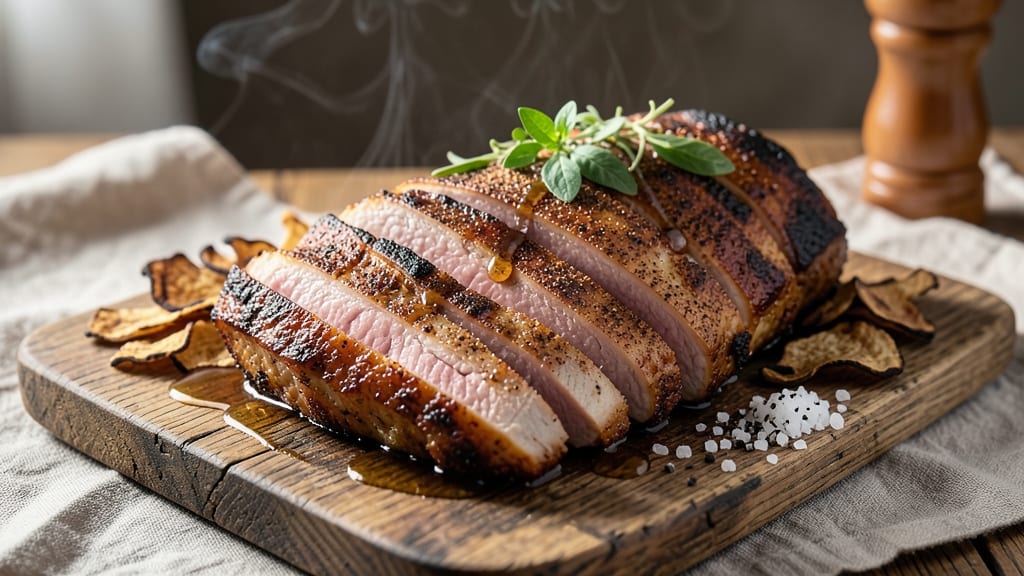
This Bradley smoker pork loin recipe delivers restaurant-quality results with a perfect balance of smoky bark and juicy heart. After years of perfecting pork on my farm and at The Smoky Pig, I've developed a method that transforms simple ingredients into a showstopping centerpiece.
The key lies in precise temperature control and a dry rub that develops deep, complex flavors without overpowering the natural sweetness of the meat.
What sets this recipe apart is the two-stage smoking process—first building a dark mahogany bark at 225°F, then finishing with a burst of applewood smoke at 250°F to create that signature Bradley smoker aroma.
I use a simple but powerful dry rub of brown sugar, paprika, and black pepper, which caramelizes beautifully while keeping the interior tender. The secret weapon? A 10-minute rest before slicing—this ensures every bite stays moist and flavorful.
By the time you serve this pork loin, you'll have a golden, crackling exterior with a pink center that practically melts in your mouth. The smoky-sweet bark gives way to tender, juicy meat with just a hint of that unmistakable Bradley smoker flavor.
This is the kind of pork that makes guests ask for seconds and leaves them talking about your cooking skills for weeks.
Pair it with creamy mac and cheese or grilled corn on the cob for a complete meal that feels like a Sunday dinner. The leftovers reheat beautifully too—just wrap tightly and store in the fridge for up to 4 days. Let's get smoking!
Ingredients for bradley smoker pork loin
Simple ingredients that transform into restaurant-quality pork with smoky bark and juicy heart.
| Ingredient | Amount | Notes |
|---|---|---|
| Pork Loin 🐖 | 3 lb | Center-cut, bone-in preferred |
| Brown Sugar 🍯 | ¼ cup | Light or dark, packed |
| Smoked Paprika 🌶️ | 2 tbsp | High-quality, not pre-mixed |
| Ground Black Pepper 🌶️ | 1 ½ tbsp | Freshly cracked preferred |
| Applewood Smoking Chips 🌳 | 1 package | Unsoaked, 100% natural |
| Kosher Salt 🧂 | 1 ½ tbsp | Diamond Crystal preferred |
| Yellow Onion 🧅 | 1 whole | Large, sliced for serving |
| Fresh Rosemary 🌿 | ¼ cup | Chopped, fresh only |
| Garlic Cloves 🧄 | 4 cloves | Minced, fresh preferred |
| Apple Cider Vinegar 🍎 | 1 tbsp | For bark development |
| Mustard Seeds 🌾 | 1 tsp | Yellow, whole |
| Unsalted Butter 🧈 | 2 tbsp | Room temperature, for basting |
The pork loin is everything here. Center-cut stays juicy while the outer layers develop that mahogany bark. Costco or your local butcher usually has the best cuts—look for good marbling and ask for bone-in if possible. The bone helps retain moisture during smoking. For the dry rub, Penzeys or bulk bins at natural markets have the best quality spices. Freshly cracked black pepper makes a world of difference compared to pre-ground. I always double-check the smoking chips are 100% natural—no additives or fillers.
No smoked paprika? Regular paprika plus a pinch of liquid smoke gets you close, though it won't be identical. Running short on time? Pre-mix the dry rub and store it in an airtight container for up to 3 months—it keeps beautifully. The apple cider vinegar is non-negotiable for that signature bark development. No fresh rosemary? Dried at half the amount works, but fresh has that piney aroma that's essential. The mustard seeds add subtle heat—if you prefer milder flavor, omit them entirely. For basting, room-temperature butter spreads better than cold.
Pork loin reheats beautifully—wrap tightly in foil and store in the fridge for up to 4 days. For leftovers, slice against the grain and reheat in a skillet with a splash of apple juice for extra moisture. The dry rub keeps indefinitely in a cool, dark place. I always make a double batch—one for the meal, one to freeze for future smoky pork sandwiches. The key to perfect slices? 10-minute rest before cutting—this ensures every bite stays juicy.
Why You'll Love This Recipe
- Smoker in 30 Minutes: I swear, this isn’t one of those all-day projects. Toss on the applewood chips, sprinkle that smoked paprika and brown sugar mix, and let the smoker do the work while you sip your coffee. No basting, no fuss—just hands-off perfection.
- Sweet-Smoky Magic: That caramelized brown sugar crust? It’s the star. The applewood smoke wraps around the pork loin like a cozy blanket, while the paprika adds this deep, earthy warmth that makes every bite feel like a hug. (Yes, even on a Tuesday night.)
- Leftovers for Days: Between us, this recipe makes enough for lunch the next two days. Slice it thin for sandwiches, cube it into salads, or just reheat a portion straight from the fridge—it stays juicy and flavorful. My lunchbox has never been happier.
- Budget-Friendly Crowd-Pleaser: Pork loin is cheaper than you think when you’re smart about it, and this recipe stretches it across multiple meals without breaking the bank. Plus, the smoker adds that restaurant-quality touch for way less than takeout. My wallet thanks me every time.
Step-by-step instructions for Bradley smoker's pork loin
Master this technique and you'll achieve that perfect smoky bark with a juicy, tender heart every time.
Prepare the Pork Loin for Smoking
Start by patting the 3 lb pork loin completely dry with paper towels—this is critical for that crispy bark. I like to do this over the sink to catch any excess moisture. Place the pork loin on a wire rack set over a baking sheet to allow air circulation on all sides. This prevents steaming and promotes even cooking.
In a small bowl, combine the 0.25 cup brown sugar, 2 tbsp smoked paprika, 1.5 tbsp ground black pepper, 1.5 tbsp kosher salt, 1 tsp mustard seeds, and 1 tbsp apple cider vinegar. Mix until the sugar dissolves completely. This creates a sticky, flavorful crust that caramelizes beautifully during smoking. Rub this mixture all over the pork loin, pressing it into the meat so it adheres well. Let it sit at room temperature for 30 minutes while you prepare your smoker.
Set Up the Smoker for Perfect Bark
Fill your smoker with the 1 package applewood smoking chips and preheat to 225°F. Applewood gives a subtle sweetness that pairs beautifully with pork. Once the smoker reaches temperature and you see clean blue smoke (not thick white steam), you're ready. Place the pork loin in the smoker fat-side up—this helps render fat and baste the meat as it cooks.
Here's the thing—don't open the smoker door during the first 2 hours. Every time you peek, you lose heat and moisture, which can set back your cook time by 15-20 minutes. The pork loin needs time to develop that deep, smoky bark before the internal temperature starts rising steadily. I've found that patience at this stage makes all the difference in the final texture.
Smoke Until Probe-Tender Perfection
Smoke the pork loin for 4-5 hours, or until the internal temperature reaches 145°F at the thickest part of the meat. You'll notice the bark develop a dark mahogany color—this is your visual cue that the sugars are caramelizing. The pork should have a firm but slightly springy feel when pressed gently with tongs.
At this point, I like to add a final touch: brush the pork loin with melted 2 tbsp unsalted butter and sprinkle with 0.25 cup chopped fresh rosemary. Return it to the smoker for 15-20 minutes to let the butter baste and the rosemary infuse. This step adds an extra layer of flavor and helps create a glossy finish. The butter should melt and sizzle slightly—this is your signal that it's working.
Rest and Slice for Maximum Juiciness
Remove the pork loin from the smoker and transfer it to a cutting board. Tent loosely with aluminum foil and let it rest for 20-30 minutes. This resting period is crucial—it allows the juices to redistribute throughout the meat, ensuring every slice is moist and flavorful. If you skip this step, you'll end up with dry, stringy pork.
While the pork rests, slice the 1 whole yellow onion into ¼-inch thick rounds and mince the 4 cloves garlic. These will make a simple but delicious accompaniment. When ready to serve, slice the pork loin against the grain into ½-inch thick slices. The meat should pull apart easily with just a gentle tug, and the juices should flow freely. Serve immediately with the onion slices and garlic for a complete meal.
Pro Tips For Making Bradley Smoker Pork Loin
- Trim the Fat First: Pork loin can be stubbornly dry if you skip this—use a sharp knife to trim any thick fat cap down to about ¼-inch. I learned this the hard way after serving a slice so lean it flaked like cardboard. The fat renders better, keeping the meat moist while you smoke.
- Mix Sugar with Paprika: Don’t just sprinkle brown sugar on top—rub it into the smoked paprika first. That way, the spices stick to the meat instead of clumping into useless piles. I was skeptical until I tried it; now I double-check this step before smoking.
- Start at 225°F, Then Worry: Low and slow is the rule, but resist the urge to crank the heat early. Start at 225°F and let the smoker do its thing—rushing this step leads to uneven cooking or a bark that’s more char than flavor. (Yes, even if you’re impatient like me.)
- Foil for the Last Hour: Wrap the pork loin in foil with a splash of applewood smoke-infused water (or apple juice) for the final hour. This locks in moisture without steaming the meat into mush. I skip this when I’m lazy, but the dish is noticeably better when I don’t.
Best sauces and condiments for bradley smoker pork loin
Classic BBQ Sauce
My go-to for this pork loin is a homemade tangy-sweet BBQ sauce that cuts through the richness beautifully.
I blend 1 cup ketchup, ¼ cup apple cider vinegar, 2 tbsp brown sugar, 1 tbsp smoked paprika, 1 tsp garlic powder, and ½ tsp cayenne pepper until smooth.
Simmer for 10 minutes to thicken, then brush generously over the pork during the last 30 minutes of smoking. The acidity helps tenderize while adding depth. 🍯
Honey-Mustard Glaze
For a sweeter, more complex flavor profile, I make a honey-mustard glaze that adds a glossy finish. Mix ¼ cup honey, 2 tbsp Dijon mustard, 1 tbsp apple cider vinegar, and 1 tsp smoked paprika.
Brush this on during the final 20 minutes of smoking—it caramelizes beautifully and creates a sticky, flavorful crust. This glaze pairs especially well with the applewood smoke. ✨
Creamy Horseradish Sauce
If you want a bold, creamy contrast, whip up a horseradish cream sauce to serve on the side. Combine ½ cup sour cream, 2 tbsp prepared horseradish, 1 tbsp Dijon mustard, 1 tsp apple cider vinegar, and a pinch of smoked paprika.
This sauce adds a sharp kick that balances the smoky pork perfectly. I serve it in a small bowl for dipping or drizzling. 🌶️
Apple Cider Reduction
For a sophisticated touch, reduce 1 cup apple cider with 2 tbsp brown sugar and 1 tsp fresh thyme until syrupy. Drizzle this over sliced pork just before serving—it enhances the natural sweetness of the meat while complementing the applewood smoke.
The reduction also makes a great pan sauce if you deglaze the pork juices with a splash of apple cider. 🍎
Spicy Peach Jam
This is my secret weapon for summer cookouts. Simmer ½ cup peach jam with 1 tbsp apple cider vinegar and ½ tsp cayenne pepper until smooth. Brush this on during the last 20 minutes of smoking—it adds a fruity, slightly spicy contrast that guests rave about.
The jam also reheats beautifully, making it perfect for leftovers. 🔥
Nutrition facts
Frequently asked questions
Can I use a bone-in pork loin instead of boneless?
Bone-in pork loin actually works better for this recipe. The bone helps retain moisture during the long smoking process and adds extra flavor. Just be sure to adjust your cooking time by about 15-20 minutes since bone-in cuts require slightly longer to reach the same internal temperature. The bone also makes slicing easier once rested.
What if my smoker won't stay at 225°F consistently?
This is a common issue with Bradley smokers. Start by checking your wood chips—use 100% natural applewood chips and avoid pre-soaked varieties. If the temperature still fluctuates, try adding a small charcoal chimney with 5-6 briquettes to stabilize heat. Never exceed 250°F for the final stage, as higher temps can dry out the meat. A digital thermometer probe is essential for accuracy.
How do I know when the pork is done without a meat thermometer?
Use the finger test as a backup: press the meat gently with your finger. When done, it should feel firm but springy, not mushy. Look for a deep mahogany bark that's slightly crispy to the touch. The juices should run clear when you cut into it. For extra confidence, use an instant-read thermometer to confirm 145°F at the thickest part.
Can I make this recipe in an oven instead of a smoker?
Yes, but the flavor will be different. Preheat your oven to 275°F and place the pork loin on a rack over a tray. Add ½ cup applewood chips to the tray below for indirect smoke. Cook for 3-4 hours, basting occasionally with melted butter. The bark won't be as pronounced, but the meat will still be tender. For smoky flavor, add a pinch of liquid smoke to your dry rub.
What's the best way to reheat leftovers?
Slice the pork against the grain first, then reheat in a skillet over medium-low heat with a splash of apple cider or broth. Cover for 2-3 minutes to retain moisture. Never microwave—it makes the meat tough. For sandwiches, warm slices in a pan with butter until crispy. Leftovers keep well for 4 days in the fridge or 3 months in the freezer.