
Main Courses
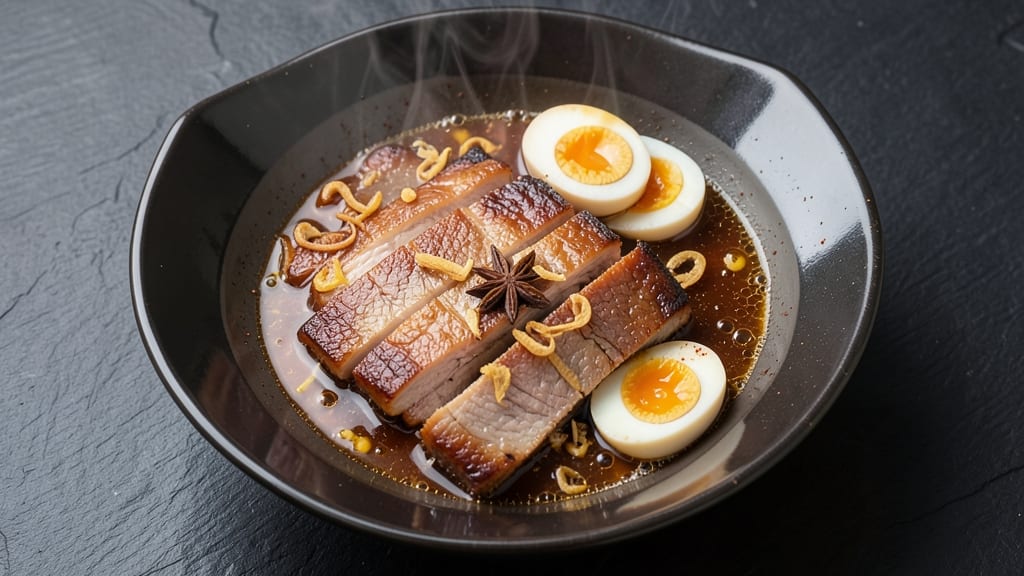
This Chinese braised pork belly and egg recipe brings the soul of a Cantonese home kitchen to your table, where tender pork belly meets delicate egg ribbons in a five-spice glaze that balances sweet and savory.
I first tasted this dish in a dim sum restaurant in Hong Kong, where the pork was so tender it practically melted in your mouth—now I've perfected the technique at home.
The secret lies in slow braising with rock sugar and star anise, which transforms tough belly into silky layers that absorb the aromatic sauce perfectly.
The magic happens in layers: first, the pork belly is braised until fork-tender, then sliced to reveal its glossy, caramelized surface. Soft-boiled eggs are carefully sliced into delicate ribbons that curl beautifully when served, adding both visual appeal and a satisfying texture contrast.
This dish is traditionally served with congee or stir-fried greens, but it stands strong enough as a main course on its own.
What makes this recipe special is the harmony of flavors—sweet from the rock sugar, umami from the soy and star anise, and a subtle warmth from the five-spice blend. The result is a dish that's rich yet balanced, with each bite offering a perfect marriage of textures and tastes.
It's the kind of meal that feels both comforting and celebratory, perfect for family gatherings or special occasions.
For those who love pork but want to make this dish their own, you can adjust the sweetness level or add a splash of Shaoxing wine for depth. The technique is straightforward but requires patience—the slow braising is what creates that restaurant-quality tenderness.
Let's create this dish that's as much about tradition as it is about flavor.
Ingredients for braised pork belly and egg chinese
Pork belly, eggs, and aromatic spices create this Cantonese comfort dish.
| Ingredient | Amount | Notes |
|---|---|---|
| Pork Belly 🥓 | 1 ½ lb | Skin-on, cut into 1-inch slices |
| Large Eggs 🥚 | 4 whole | Room temperature for even cooking |
| Rock Sugar 🍯 | ¼ cup | Or granulated sugar in pinch |
| Light Soy Sauce 🍶 | ½ cup | High-quality for umami depth |
| Shaoxing Wine 🍷 | ¼ cup | Substitute dry sherry if unavailable |
| Star Anise 🌿 | 2 whole | Whole pods for infusion |
| Five-Spice Powder 🌶️ | 1 tbsp | Homemade or store-bought blend |
| Fresh Ginger 🧅 | 1 ½ oz | Peeled, sliced into thin coins |
| Garlic Cloves 🧄 | 6 cloves | Minced for aromatic base |
| Green Onions 🧅 | 4 whole | White and green parts separated |
| Vegetable Oil 🫒 | ½ cup | High smoke point for searing |
| Water 💧 | 1 cup | For braising liquid |
| Sesame Oil 🫒 | 1 tsp | For finishing touch |
| Salt 🧂 | 1 tsp | Kosher for seasoning |
The pork belly is the star—look for thick-cut pieces with good marbling at Asian markets or your local butcher. Costco often has pre-sliced options if you're short on time. Fresh ginger and garlic should smell vibrant, not musty. Star anise pods? Whole Foods or bulk spice shops carry them—just make sure they're intact. Shaoxing wine adds depth, but a good dry sherry works in a pinch. I always double-check the five-spice blend for freshness—if it smells dull, toast it lightly in a dry pan to wake up the flavors.
No Shaoxing wine? Dry sherry or even mirin brings similar sweetness. Fresh ginger too fibrous? Substitute with 1 tbsp grated ginger—just don't overdo it. The rock sugar can be swapped for brown sugar if that's what you've got, though it won't caramelize as beautifully. For the eggs, room temperature is key—they'll cook more evenly. If you're feeling fancy, use duck eggs for richer yolks, but chicken eggs work perfectly fine. The pork belly slices should be about 1-inch thick—thinner pieces will overcook while thicker ones stay chewy.
Pork belly keeps 3-4 days in the fridge wrapped tightly—it's fatty, so air exposure speeds up spoilage. The braising liquid? Freeze extras in ice cube trays for future stir-fries. Eggs should be used within 2 weeks for best texture. Store the five-spice blend in a dark jar away from heat—it loses potency fast. This dish actually tastes better the next day as flavors meld, so make extra if you're feeding a crowd. I always reheat portions gently in a steamer basket to keep the pork tender.
Why You'll Love This Recipe
- One-Pan Magic: I swear by this recipe when I need zero cleanup—just slice the pork belly, crack eggs into the same pot, and let the soy sauce and Shaoxing wine do the rest. The rock sugar caramelizes into a glossy glaze that takes care of itself while you’re doing other things.
- Caramelized Crunch: That crispy pork belly with the runny yolk pooling underneath? It’s the kind of bite that makes you pause mid-bite. The rock sugar turns the edges golden and sticky, while the pork stays tender—like a cheat code for restaurant-quality comfort food.
- Weeknight Workhorse: Between us, this is my go-to when I’m too tired to plan. Double the batch on Sunday, and you’ve got breakfast-for-dinner, lunch leftovers, or a last-minute potluck dish. The eggs add protein, the pork belly makes it feel special, and it reheats like a dream.
- Budget Luxury: Pork belly might sound fancy, but it stretches further than you’d think—especially when braised. A single cut feeds four, and the eggs make it feel like a full meal without breaking the bank. Honestly, it’s the kind of dish that makes me feel like I’m treating myself without actually splurging.
Step-by-step instructions for braised pork belly and egg
Here's how to create this rich, aromatic dish with tender pork and silky egg ribbons.
Prepare the Pork Belly for Braising
Cut the 1.5 lb pork belly into 1-inch thick slices, leaving the skin on. In a small bowl, mix together the 1 tbsp five-spice powder, 1 tsp salt, and 0.25 cup rock sugar. Rub this mixture all over the pork slices, pressing it into the meat and fat. This seasoning blend will create that signature five-spice aroma while helping to render the fat beautifully.
Let the seasoned pork rest at room temperature for 30 minutes while you prepare the braising liquid. This resting period ensures even cooking and prevents the pork from releasing too much liquid into the braising pot initially. The pork should feel cool to the touch before you start cooking—this is your cue that it's ready.
Sear the Pork and Build the Braising Base
Heat 0.5 cup vegetable oil in a heavy-bottomed pot or Dutch oven over medium-high heat. Once the oil shimmers, add the pork slices skin-side down and let them sear for 4-5 minutes until the skin becomes golden brown and crispy. You'll hear a satisfying sizzle as the fat begins to render—this is when the pork develops its rich, caramelized flavor.
Remove the pork from the pot and set it aside. In the same pot, add 1.5 oz fresh ginger (sliced into thin coins) and 6 cloves garlic cloves (minced). Sauté for 30 seconds until fragrant, then add 2 whole star anise and 0.25 cup shaoxing wine. Let the wine simmer for 1 minute until it reduces by half, releasing its aromatic essence into the pot.
Braise the Pork Until Tender
Return the pork to the pot, skin-side up. Pour in 1 cup water and 0.5 cup light soy sauce. Bring the liquid to a gentle simmer, then reduce the heat to low. Cover the pot and let the pork braise for 1.5 to 2 hours, turning the slices occasionally, until the meat is fork-tender and easily pulls apart. You'll know it's ready when the pork reaches an internal temperature of 200°F—this is the sweet spot for tender, melt-in-your-mouth texture.
During the braising process, the pork will release its own fat, creating a glossy sauce. If the liquid reduces too much before the pork is tender, add 1-2 tablespoons of water to maintain a gentle simmer. The skin should remain crispy while the meat becomes incredibly tender—this contrast is what makes this dish so special.
Prepare the Egg Ribbons
While the pork is braising, separate the 4 whole large eggs into a bowl. Whisk them lightly with a fork—just enough to combine the yolks and whites without creating too many bubbles. The eggs should be at room temperature, so if they're straight from the fridge, let them sit out for 10 minutes before whisking. This ensures they cook evenly and create those signature silky ribbons.
In a separate small bowl, mix together 1 tsp sesame oil and the white and green parts of 4 whole green onions, chopped separately. This mixture will add a final burst of aroma and color to the dish. Keep this mixture aside until you're ready to serve.
Cook the Eggs and Finish the Dish
When the pork is tender, carefully remove the star anise from the braising liquid. Increase the heat to medium-high and let the liquid reduce slightly until it coats the back of a spoon. This will create a glossy, flavorful sauce that clings beautifully to the pork.
Pour the lightly whisked eggs into the braising pot, stirring gently to distribute them evenly. Let the eggs cook undisturbed for 2-3 minutes until they form silky ribbons—this is the moment you've been waiting for. The eggs should look like delicate strands rather than fully cooked curds. Remove the pot from heat immediately once the eggs reach this stage, as they'll continue to cook slightly from residual heat.
To serve, spoon the pork and egg ribbons onto plates, drizzling the braising sauce generously over the top. Garnish with the sesame oil and green onion mixture, and serve immediately while everything is hot. The contrast of the crispy pork skin, tender meat, and silky egg ribbons makes this dish truly unforgettable.
Pro Tips For Making Braised Pork Belly And Egg Chinese
- Sear the Belly First: I learned this the hard way—skipping the sear means bland, gray pork belly. Hit that pork belly with high heat in a dry pan until it’s deep golden, then finish with Shaoxing wine and soy sauce. The crust locks in flavor and keeps it from turning mushy later.
- Score the Belly Deeply: Use a sharp knife to cut the pork belly into 1-inch thick slices, then make deep crosshatch marks (about ¼-inch deep) on the fat. This lets the braising liquid penetrate faster and renders the fat more evenly—no more greasy surprises when you slice it.
- Don’t Overcrowd the Eggs: When poaching the eggs in the braising liquid, keep it to one at a time. I used to toss in two at once, and they’d turn out rubbery. A single egg in simmering liquid (just below a boil) gives you that perfect silky yolk every time—no waiting for a second batch.
- Use Rock Sugar Sparingly: My grandmother swore by this, and she was right—but only a teaspoon or two. Too much rock sugar makes the pork belly cloyingly sweet and masks the soy and wine flavors. Sprinkle it in after the pork is mostly tender, then stir gently to dissolve.
Perfect pairings for this recipe
Congee Comfort
This dish pairs beautifully with steamed congee—the perfect vessel for soaking up the rich braising sauce. I like using jasmine rice cooked with chicken broth and a pinch of salt, then topped with the pork and egg ribbons.
The soft, milky texture of congee contrasts wonderfully with the crispy pork skin and silky egg strands. For extra richness, stir in a spoonful of the braising sauce directly into the congee before serving. 💛
Stir-Fried Greens
Bright, crisp greens cut through the richness of the pork belly. Gai lan (Chinese broccoli) or bok choy are classic choices—I recommend stir-frying them with 1 tsp sesame oil, 1 clove minced garlic, and a splash of light soy sauce until just tender-crisp.
The slight bitterness balances the sweet-savory pork beautifully. For a quick version, simply blanch spinach or bok choy in boiling water for 30 seconds, then shock in ice water to preserve color. Toss with 1 tsp toasted sesame seeds before serving.
Pickled Vegetables
Add a tangy crunch with quick-pickled cucumbers or radishes. Thinly slice ½ cup cucumber or daikon radish and toss with 2 tbsp rice vinegar, 1 tsp sugar, and a pinch of red pepper flakes. Let sit for 15 minutes before serving alongside the pork.
The acidity brightens the dish and adds a refreshing contrast to the fatty pork. I also love using pickled red onions—just thinly slice 1 small red onion, soak in ¼ cup vinegar with 1 tsp sugar for 10 minutes.
Steamed Buns
For a more traditional Cantonese spread, serve with steamed bao buns or mantou. The soft, pillowy texture makes an excellent companion to the rich pork and eggs.
I often make a batch of plain steamed buns using store-bought dough or homemade mantou dough (flour, water, yeast, and a touch of sugar). Brush the tops with egg wash before steaming for that golden finish.
These buns can be made ahead and reheated in a steamer for 5 minutes before serving.
Tea Pairings
Green tea is the classic pairing for this dish—its fresh, grassy notes cleanse the palate between rich bites. I recommend Dragon Well (Longjing) or Jasmine Pearl tea for their delicate floral aroma. For a more robust option, Oolong tea complements the five-spice flavors beautifully.
Avoid heavy black teas like Assam, as their strong tannins can clash with the dish's sweet-savory profile. Serve tea at 160-170°F for the best balance of aroma and flavor. ☕
Wine Alternatives
If you prefer wine, a dry Riesling from Germany or a light-bodied Pinot Noir from China's Yangtze River Valley works wonders. The Riesling's acidity cuts through the fat, while the Pinot Noir's red fruit notes complement the pork's richness.
For a non-alcoholic option, sparkling yuzu soda adds a citrusy brightness that pairs surprisingly well with the dish's sweet-savory balance. Just chill the soda to 40°F before serving for the best experience.
Nutrition facts
Frequently asked questions
Can I substitute regular sugar for rock sugar in this recipe?
Yes, you can use granulated sugar as a substitute, but the dish won't develop the same caramelized depth. Rock sugar dissolves more slowly, creating a glossy sauce that coats the pork beautifully. For best results, use ½ cup brown sugar instead—it will add a subtle molasses flavor that complements the five-spice blend. If using white sugar, add 1 tsp corn syrup to help with caramelization.
Why do the eggs need to be at room temperature?
Room-temperature eggs cook more evenly and create those signature silky ribbons instead of firm curds. Cold eggs release heat unevenly, causing uneven cooking. Let them sit for 10 minutes before whisking. Pro tip: Separate the eggs into a bowl while they warm up—this makes whisking easier and prevents overmixing.
How do I know when the pork belly is fully tender?
Use the fork test: The pork should easily pull apart with minimal resistance. It should reach an internal temperature of 200°F. If the skin starts to look too dry, add 1-2 tablespoons of water to the pot to maintain moisture. The braising time varies—some cuts may need up to 2.5 hours depending on thickness. Never rush this step!
Can I make this dish ahead of time?
The flavors actually improve overnight. Braise the pork completely, then refrigerate it in the sauce for up to 3 days. Reheat gently in a steamer basket over simmering water for 10-15 minutes. For the eggs, cook them fresh when reheating—they won't hold their ribbon texture well when reheated. The pork can be reheated without eggs and served with freshly cooked egg ribbons.
What's the secret to getting perfect egg ribbons?
Three things: room temperature eggs, gentle heat, and minimal stirring. Whisk just until combined, then pour into the hot braising liquid. Let it cook undisturbed for exactly 2-3 minutes—any longer and they'll curdle. The sauce should be at a gentle simmer, not boiling. Remove immediately when strands form, as they'll continue cooking from residual heat.