
Main Courses
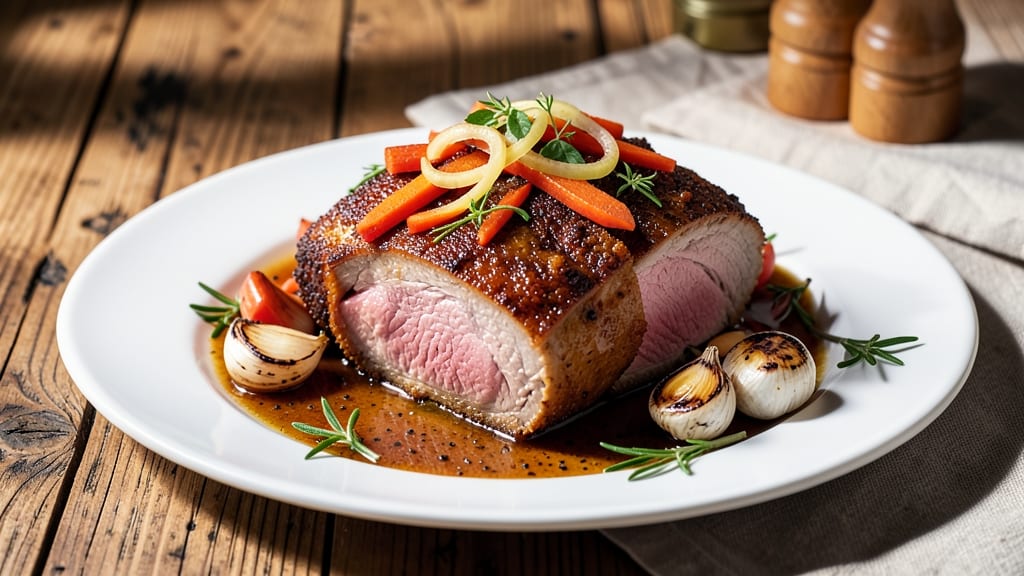
This braised pork loin roast recipe transforms tough cuts into melt-in-your-mouth perfection through slow simmering and caramelized crust development. I perfected this technique after years of working with heritage pork—where the difference between good and exceptional lies in patience and precise temperature control. The result? A dish that feels like a restaurant centerpiece but belongs on your family table.
What sets this recipe apart is the balance of searing for depth and braising for tenderness. We start with a high-heat sear to develop that coveted crust, then slow-cook in a rich liquid that infuses every fiber of the meat.
The key ingredients—red wine, aromatics, and a touch of tomato—create a sauce that's both elegant and deeply flavorful, perfect for soaking up with crusty bread.
By the time your pork emerges from the oven, you'll have a roast with a caramelized exterior that shatters at the touch and a tender interior that falls apart effortlessly. The sauce reduces to a glossy finish that clings beautifully, making every bite rich and satisfying.
This is the kind of dish that becomes a weekly staple once you master it.
Whether you're feeding a crowd or meal prepping for the week, this recipe scales effortlessly. The technique works equally well in a Dutch oven or slow cooker, giving you flexibility without sacrificing quality. Let's get started on creating pork that rivals your favorite restaurant's signature dish.
Ingredients for braised pork loin roast
Six aromatics, one bold wine, and patience transform simple pork into restaurant-quality perfection.
| Ingredient | Amount | Notes |
|---|---|---|
| Pork Loin Roast 🥩 | 3 lb | Bone-in, center-cut preferred |
| All-Purpose Flour 🌾 | ½ cup | For dredging sear crust |
| Olive Oil 🫒 | ¼ cup | Extra-virgin for high-heat sear |
| Yellow Onion 🧅 | 1 whole | Medium, sliced into half-moons |
| Garlic Cloves 🧄 | 6 cloves | Smashed, skin-on for flavor |
| Carrots 🥕 | 4 whole | Medium, cut into thick rounds |
| Dry Red Wine 🍷 | 1 ½ cups | Bold Cabernet or Merlot |
| Tomato Paste 🍅 | ¼ cup | Squeeze tube preferred |
| Beef Broth 💧 | 1 ½ cups | Low-sodium preferred |
| Fresh Thyme 🌿 | ¼ cup | Stems removed, chopped |
| Fresh Rosemary 🌿 | 1 tbsp | Chopped, plus sprigs for garnish |
| Salt 🧂 | 1 ½ tsp | Diamond Crystal preferred |
| Black Peppercorns 🌶️ | 1 tsp | Freshly cracked |
| Balsamic Vinegar 🍷 | 1 tbsp | For deglazing |
| Crusty Bread 🍞 | 6 slices | For serving |
The pork loin is your canvas here—bone-in, center-cut delivers the best texture and flavor. Costco or Whole Foods carry excellent heritage pork loins, but any quality butcher will have what you need. Look for good marbling and vibrant color. If you can't find bone-in, a thick-cut boneless roast works too (just add 15 minutes to the braise time). The carrots and onions should be firm and fresh—store-brand is fine, but avoid anything rubbery or shriveled. For the wine, any bold, dry red works here—Cab Sauv, Merlot, whatever's open. I've even used Zinfandel for extra depth.
No red wine? Beef broth with a splash of balsamic gets you close—just add an extra tablespoon of vinegar for acidity. Fresh thyme is ideal but dried works at one-third the amount. If tomato paste feels like overkill for one-quarter cup, those squeeze tubes at Trader Joe's are perfect—no waste, keeps for months. The beef broth can be store-bought (I recommend Pacific Foods or Swanson for quality), but homemade is better if you've got the time. For the crusty bread, baguettes from the bakery section are ideal—look for ones with a crisp exterior and soft interior. If you're prepping ahead, toast the slices before storing to keep them fresh longer.
This dish tastes even better the next day—honestly, the flavors meld into something magical. Keeps 4-5 days in the fridge, freezes for 3 months if you portion it properly. I like to store the roast and sauce separately in airtight containers. For serving, reheat the roast in the oven at 325°F until warmed through (about 20 minutes), then pour the reduced sauce over the top. The bread? Toast it fresh so it stays crispy. Leftovers make killer sandwiches the next day—just layer the pork, sauce, and bread with a sprinkle of fresh herbs.
Why You'll Love This Recipe
- One-Pan Magic: I swear by this—just sear the pork in olive oil, toss in onions and garlic, then let the slow cooker do the work. No chopping boards left to clean, no pots to stack. That’s my kind of dinner.
- Garlic-Glazed Richness: The flour creates this golden crust, but the real star? The garlic and onions caramelizing into the meat until it’s fall-apart tender with just a hint of sweetness. Honestly, I’ve had worse restaurant pork.
- Weeknight to Party Upgrade: Same recipe, different vibes. Serve it sliced over mashed potatoes for a lazy Tuesday or as a whole roast for guests—just add a sprinkle of parsley. My husband never knows when I’m “trying” and when I’m not.
- Leftovers That Don’t Suck: This stuff actually improves the next day. Cold slices in sandwiches? Yes. Reheated with a splash of broth? Even better. I make a double batch on Sundays because I’m lazy, and it never disappoints.
Step-by-step instructions for braised pork loin roast
Here's how to transform a simple pork loin into melt-in-your-mouth perfection with a caramelized crust and rich, wine-infused sauce.
Create the Perfect Sear Crust
Pat the 3 lb pork loin roast completely dry with paper towels—this is critical for that golden crust. Place it in a large skillet and sprinkle evenly with 1.5 tsp salt and 1 tsp freshly cracked black peppercorns. Let it sit at room temperature for 15 minutes while you prepare the next steps.
Heat 0.25 cup olive oil in the same skillet over medium-high heat until shimmering. Add the pork loin and sear for 4-5 minutes per side until deeply golden brown. Don't move it during this time—you want maximum crust development. The pork will release easily when ready. Transfer to a plate and set aside.
Build Flavor with Aromatics and Wine
In the same skillet (no need to wipe it clean—those browned bits are flavor gold), add 1 whole yellow onion sliced into half-moons and 4 whole carrots cut into thick rounds. Cook for 5-6 minutes until softened but not browned. Add 6 smashed garlic cloves (skin-on for extra flavor) and cook for 30 seconds until fragrant.
Pour in 1.5 cups dry red wine and scrape up all those delicious browned bits from the bottom with a wooden spoon. Let the wine simmer for 3-4 minutes until reduced by half. This step develops the sauce's depth and complexity—don't skip it.
Develop the Braising Sauce
Stir in 0.25 cup tomato paste and cook for 1 minute until it darkens slightly. Add 1.5 cups beef broth, 0.25 cup chopped fresh thyme, and 1 tbsp chopped fresh rosemary. Bring to a gentle simmer, then return the pork loin to the skillet, fat-side up.
Cover with a tight-fitting lid and transfer to a 325°F oven for 2 hours. The pork should be fork-tender by this point, with the internal temperature reaching 195-200°F. If the sauce reduces too much before then, add a splash of water or broth to maintain moisture.
Finish with Balsamic and Rest
Remove the pork from the oven and uncover the skillet. Stir in 1 tbsp balsamic vinegar and let it simmer uncovered for 5-7 minutes to reduce slightly and deepen the sauce's flavor. The sauce should coat the back of a spoon but still be saucy enough to spoon over the pork.
Transfer the pork to a cutting board and tent loosely with foil. Let it rest for 15 minutes before slicing—this crucial step ensures juicy, tender meat that won't fall apart. Skim any excess fat from the braising liquid before serving.
Serve with Crusty Bread
Slice the pork loin into ½-inch thick slices against the grain for maximum tenderness. Spoon the rich braising sauce over the top and serve immediately with 6 slices crusty bread for soaking up every last drop. The combination of caramelized crust, tender meat, and wine-infused sauce makes this dish unforgettable.
Pro Tips For Making Braised Pork Loin Roast
- SEAR FIRST, LOW AND SLOW: That initial sear in olive oil isn’t just for looks—it locks in juices and builds flavor. After coating the pork loin in flour, hit the pan on medium-high until deep golden (about 3-4 minutes per side). Then immediately drop the heat to 300°F (150°C) for braising. I learned this the hard way when I rushed the sear and ended up with a pale, bland roast.
- TRIM THE FAT, NOT THE FLAVOR: Pork loin can be lean, so don’t strip it bare—leave a thin layer of fat if it’s there. For extra richness, rub the trimmed edges with a little olive oil before flouring. My grandmother swore by this, and she was right: the fat renders into the braise, keeping the meat tender without making it greasy.
- DON’T SKIP THE DEGLAZE: After searing, those browned bits stuck to the pan are pure flavor gold. Splash in ½ cup of whatever liquid you’re using (broth, wine, or even water) and scrape aggressively with a wooden spoon. Let it simmer 1-2 minutes to dissolve the fond before adding onions and garlic—this makes a real difference in depth.
- REST IT UNDER FOIL: Braised pork loin needs time to reabsorb juices after cooking. As soon as it hits 145°F (63°C) internally, transfer it to a warm plate, tent loosely with foil, and let it sit for 5-10 minutes. I know, I know—you want to cut into it immediately—but skipping this step means dry, stringy meat. (Your future self will thank you.)
Pro cooking tips for perfect results
Sear Like a Pro
That initial sear is where all the magic begins—don't rush it. I use a Lodge cast iron skillet because it retains heat like a dream, but any heavy-bottomed pan works.
Heat your oil until it's smoking hot before adding the pork, then let it sit undisturbed for those 4-5 minutes per side. The key is patience: moving it too soon will give you a pale, sad crust instead of that beautiful caramelized armor. 🔥
Pro tip: Pat the pork bone-dry with paper towels before seasoning. Any moisture will steam the meat instead of browning it. I like to season with Diamond Crystal kosher salt—it dissolves more easily than table salt, so you get better flavor distribution.
And always use freshly cracked peppercorns—pre-ground pepper loses its punch quickly.
Wine Reduction Secrets
The wine reduction is where home cooks often cut corners, but this is where the sauce gets its depth. After deglazing with wine, let it reduce by half—this concentrates the flavors and removes the alcohol.
I use a bold Cabernet Sauvignon because its tannins pair beautifully with pork, but Merlot works too. If you're using a lighter wine, add ½ tsp instant espresso powder to deepen the flavor profile.
Don't be afraid to taste as you go! After adding the tomato paste, give it a quick taste—this is your chance to adjust seasoning before the pork goes in. If it needs more acidity, add a splash of lemon juice or another ½ tsp balsamic vinegar.
The goal is a sauce that's rich but balanced, not cloyingly sweet.
Oven vs. Stovetop Braise
While I love the hands-off convenience of oven braising, stovetop works beautifully if you're short on time. For stovetop, reduce your oven time to 1.5 hours and maintain a gentle simmer (small bubbles, not a rolling boil).
The key is to keep the lid on tight—this traps steam and tenderizes the meat faster. I use a heavy Dutch oven for stovetop braising because it distributes heat evenly and prevents scorching.
If you're using a slow cooker, set it to Low for 6-8 hours or High for 4-5 hours. The meat will be even more tender, but you'll lose some of that caramelized crust.
To compensate, sear the pork in a separate pan before transferring it to the slow cooker with the braising liquid. This gives you the best of both worlds.
Resting: The Unsung Hero
Skipping the rest is the #1 mistake I see home cooks make. That 15-minute rest lets the juices redistribute throughout the meat, ensuring every bite is moist and flavorful. I like to tent the pork loosely with foil to keep it warm without trapping steam.
If you're serving a crowd, use this time to warm your plates and arrange your serving dishes—it's the perfect built-in pause in the cooking process. ✨
For extra restaurant-style presentation, I like to drizzle the sliced pork with a little more reduced sauce and garnish with fresh rosemary sprigs. A sprinkle of flaky sea salt (like Maldon) adds a final elegant touch.
The contrast between the tender meat and crisp herbs makes the dish look as good as it tastes.
Equipment Upgrades
While you can make this recipe with basic pots and pans, a few upgrades make life easier. My Meater thermometer is a game-changer for tracking internal temperature—it alerts me when the pork hits 195°F without me having to check constantly.
For the Dutch oven, I swear by Le Creuset's 6-quart version—it's heavy enough to handle stovetop-to-oven transitions without scorching.
If you're braising frequently, consider a stand mixer with a saute attachment—it gives you precise temperature control and even heat distribution. And for those who love their cast iron, a Lodge 12-inch skillet is my go-to for searing large cuts of meat.
The investment pays off in restaurant-quality results every time.
Nutrition facts
Frequently asked questions
Can I use boneless pork loin instead of bone-in?
Yes, boneless pork loin works perfectly! Just increase the braising time by 15-20 minutes (to 2 hours 15 minutes) since it lacks the bone's natural insulation. The meat will still become fork-tender, though you'll lose the flavor depth from the bone. For extra richness, add 1 extra smashed garlic clove and ½ tsp smoked paprika to the braising liquid.
What's the best wine substitute if I don't have red wine?
Use 1.5 cups beef broth plus 1 tbsp balsamic vinegar for acidity. For deeper flavor, add ½ tsp instant espresso powder or 1 tsp Worcestershire sauce. If you have white wine, it works in a pinch (just add ½ tsp red wine reduction from a bottle for color). The key is balancing acidity and richness—don't skip the vinegar!
How do I know when the pork is fully tender?
Use a meat thermometer for accuracy—the pork should reach 195-200°F internally. The fork test works too: pierce the thickest part with a fork—if it slides in effortlessly and the meat flakes apart, it's ready. If you're unsure, add 15 more minutes covered. Overcooking won't ruin the dish, just make it slightly drier.
Can I make this in a slow cooker instead?
Sear the pork first in a separate pan, then transfer it to the slow cooker with all braising ingredients. Cook on Low for 6-8 hours or High for 4-5 hours. The meat will be extra tender but lose some crust. For best results, finish with 5 minutes under a broiler to caramelize the top before serving.
Why did my sauce turn out too thin?
This usually happens when the liquid doesn't reduce enough. After braising, remove the pork and simmer the sauce uncovered for 10-15 minutes to thicken. If it's still too thin, mix 1 tbsp cornstarch with 2 tbsp cold water, stir it in, and simmer for 2 more minutes. For next time, reduce the broth by ½ cup or add 1 extra carrot to absorb excess liquid.