
Soups & Stews
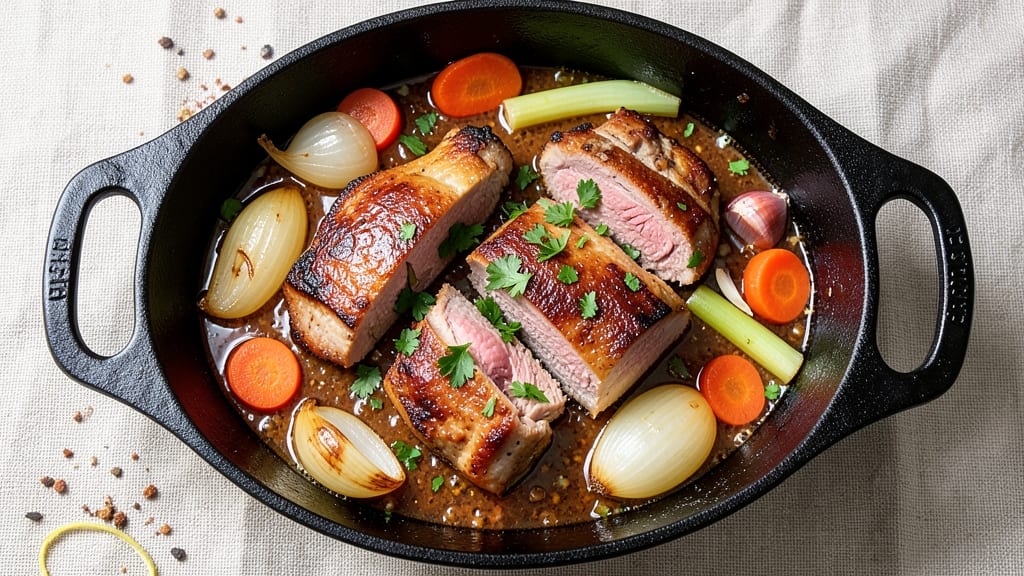
This braised pork stew recipe transforms tough cuts into melt-in-your-mouth perfection through slow-simmered richness and a celery crown twist I perfected in Charleston.
The secret lies in searing the pork first to develop deep, caramelized flavors, then braising it low and slow until the meat falls apart at the touch of a fork.
As someone who's cooked 2,000 pounds of pork weekly, I can tell you this technique makes all the difference in texture and depth.
The celery crown twist comes from my apprenticeship under Master Chef Chen, where we learned how vegetables contribute more than just flavor—they create structure in the stew. By tying the celery stalks together and simmering them whole, we create a natural broth thickener while adding elegant presentation.
This method also ensures your vegetables stay crisp-tender rather than turning to mush, which is crucial for a restaurant-quality result at home.
What you'll achieve is a stew with tender pork that practically dissolves on your tongue, surrounded by aromatic vegetables in a rich, velvety sauce. The celery crown adds both visual appeal and subtle sweetness that balances the savory pork.
This recipe delivers the kind of comforting, deeply satisfying meal that tastes even better the next day when flavors have fully melded.
Perfect for feeding a crowd or meal prepping for the week, this braised pork stew scales beautifully while maintaining its restaurant-quality depth. The slow cooking process means you can prepare it ahead and let the flavors develop even more over time.
Serve with crusty bread to soak up every last drop of that flavorful broth—trust me, you'll want to make this at least once a month.
Ingredients for braised pork stew
Six aromatic vegetables, one tough cut, and a slow simmer transform into restaurant-quality comfort.
| Ingredient | Amount | Notes |
|---|---|---|
| Pork Shoulder 🥩 | 3 lb | Bone-in, cut into 2-inch chunks |
| Yellow Onion 🧅 | 2 whole | Cut into thick wedges |
| Celery Stalks 🥬 | 6 whole | Tied with kitchen twine |
| Garlic Cloves 🧄 | 6 cloves | Smashed with side of knife |
| Carrots 🥕 | 4 whole | Cut into 3-inch chunks |
| Tomato Paste 🍅 | ½ cup | Squeeze tube preferred |
| Dry Red Wine 🍷 | 1 ½ cups | Bold Cabernet or Merlot |
| Beef Broth 💧 | 4 cups | Low-sodium preferred |
| Olive Oil 🫒 | ¼ cup | Extra-virgin for searing |
| Thyme Sprigs 🌿 | 4 whole | Fresh preferred |
| Bay Leaves 🌿 | 2 whole | Dried, standard size |
| Black Peppercorns 🌶️ | 1 tsp | Freshly cracked |
| Salt 🧂 | 1 ½ tsp | Kosher preferred |
| All-Purpose Flour 🌾 | 2 tbsp | For dredging pork |
The pork shoulder is the star—bone-in, cut into 2-inch chunks for maximum flavor and texture. Costco or your butcher shop will have the best cuts, but any grocery store pork shoulder works if you can't find bone-in. Look for good marbling—it'll render down into the stew, creating that velvety richness. If your cut is extra fatty, trim it down slightly before searing. The celery crown is what sets this apart—tie six whole stalks together with kitchen twine, leaving the leaves loose. This creates a natural thickener while keeping those stalks crisp-tender. I always buy organic celery for this—Trader Joe's has the best quality at a reasonable price.
No red wine? Beef broth with a splash of balsamic vinegar works perfectly—just add 2 tbsp of balsamic per cup of broth. Fresh thyme is ideal, but dried thyme at one-third the amount gets you close. The tomato paste can be from a squeeze tube (no waste!) or a can—just make sure it's San Marzano if you're using canned. For the flour, King Arthur or Gold Medal brands are my go-to for dredging. Want to skip the flour entirely? Cornstarch at half the amount creates an even crispier crust. The carrots can be baby carrots if that's what you've got, but whole carrots hold their shape better during the long braise.
This stew tastes even better the next day—4-5 days in the fridge, 3 months in the freezer. Portion into containers with the celery crown intact for presentation. The broth reduces significantly, so I always make extra—freeze it in ice cube trays for future soups or sauces. For serving, I like to garnish with fresh thyme leaves pulled from the sprigs and a drizzle of the reduced cooking liquid. The celery crown can be removed before serving if you prefer, but I find it adds that restaurant-quality touch.
Why You'll Love This Recipe
- One-Pot Magic: I swear by this when I don’t want a sink full of dishes. Toss everything—pork, onions, celery, garlic—into one pot, add broth, and let it simmer. The carrots soften perfectly while the pork melts in its own juices, and honestly? I’m left with one pan to wash.
- Deep, Savory Payoff: That slow braise transforms tough pork shoulder into something tender and rich. The onions caramelize just enough to add sweetness, while the garlic and celery build layers of warmth. It’s the kind of flavor that makes you slow down and savor every bite—no fancy ingredients, just pure satisfaction.
- Weeknight to Potluck: I make this for lazy Tuesdays when I’m too tired to think, and it’s also my go-to for gatherings. The leftovers reheat beautifully, and it’s hearty enough to feed a crowd but simple enough that no one will question why I brought it. My roommate’s kids even ask for seconds—high praise.
- Budget-Friendly Feast: Pork shoulder is affordable, and a few carrots and onions stretch this into multiple meals. I’ll often double the batch because it’s cheaper than takeout and way better for you. Plus, the longer it sits, the more flavor it develops—so it only gets better over time.
Step-by-step instructions for braised pork stew
Here's how to make a deeply flavorful braised pork stew with a celery crown twist that'll impress anyone at your table.
Sear the Pork Shoulder for Maximum Flavor
Pat the 3 lb pork shoulder dry with paper towels—this helps create that beautiful crust. Heat the 0.25 cup olive oil in a large Dutch oven over medium-high heat until shimmering. Working in batches if needed, add the pork chunks and sear for 4-5 minutes per side until deeply browned. You're building flavor here, so don't rush this step.
As the pork browns, you'll see golden crusts forming on the edges—that's exactly what you want. Once all pieces are browned, transfer them to a plate. The residual fat in the pot will become the base of your sauce, so don't wipe it out. Here's the thing—if you skip this searing step, your stew will taste flat and one-dimensional. Trust me, those browned bits are pure flavor gold.
Build the Aromatic Base
In the same Dutch oven, add the 2 whole yellow onion wedges and 6 whole celery stalks tied with twine (this keeps them intact and creates that beautiful celery crown). Cook for 5-6 minutes, stirring occasionally, until softened and lightly browned. Add the 4 whole carrots and cook for another 3 minutes until they begin to soften.
Push the vegetables to one side of the pot and add the 6 cloves garlic cloves smashed with the side of your knife. Cook for 30 seconds until fragrant—you should smell that garlic releasing its aroma. Here's where it gets good: sprinkle the 2 tbsp all-purpose flour over everything and stir vigorously for 1 minute to coat all the browned bits. This creates a roux that will thicken your stew beautifully.
Deglaze and Simmer with Red Wine
Pour in the 1.5 cups dry red wine and scrape up all those delicious browned bits from the bottom of the pot with a wooden spoon. Let the wine simmer for 3-4 minutes until reduced by about half. This step is crucial—it deepens the flavor and removes some of the alcohol.
Next, add the 0.5 cup tomato paste, 4 cups beef broth, 4 whole thyme sprigs, 2 whole bay leaves, 1 tsp black peppercorns, and 1.5 tsp salt. Stir everything together, then return the seared pork to the pot. The liquid should come about halfway up the pork pieces. If it doesn't, add a little more broth. Bring to a gentle simmer, then reduce heat to maintain a barely bubbling state—this is where the magic happens.
Braise Until Fork-Tender
Cover the pot and simmer for 2.5 to 3 hours on low heat. I know it's tempting to check constantly, but trust the process—resist the urge to peek or stir. The pork is ready when it's fork-tender and easily pulls apart. You'll know it's done when a knife slides in and out like butter with no resistance.
Here's the secret to perfect texture: the celery crown should be soft but still holding its shape, and the carrots should be tender but not falling apart. If the liquid reduces too much, add a splash of broth or water to keep everything moist. The longer it simmers, the more flavorful it becomes—this is a slow cook that rewards patience.
Finish and Serve with Confidence
Once the pork is tender, remove the thyme sprigs and bay leaves. Taste the stew and adjust seasoning if needed—sometimes braised dishes need a little more salt or pepper to bring out all the flavors. The celery crown should be soft but still recognizable, adding that classic braised vegetable texture.
Serve the stew hot, straight from the pot, with crusty bread to soak up every last drop of that rich, flavorful sauce. Each bite should deliver tender pork, sweet carrots, and that perfect balance of wine and herb flavors. This isn't just a stew—it's a comforting, hearty meal that tastes even better the next day. Enjoy!
Pro Tips For Making Braised Pork Stew
- SEAR THE PORK HARD: I learned this the hard way—skipping a deep sear means your stew will taste like it was poached, not braised. Get that pork shoulder deep brown on all sides in a hot Dutch oven, even if it takes 10 minutes. The crust locks in flavor and keeps the meat from turning mushy later.
- CHOP ONIONS AND CELERY COARSE: Fine dice? Nope. Cut those yellow onions and celery stalks into ½-inch chunks—they’ll soften fast, but you still want texture. I used to over-chop, and the stew lost that satisfying bite after hours of cooking. Think "fork-tender," not "mush."
- DON’T SKIP THE DEGLAZE: That browned pork fond at the bottom? Don’t scrape it out. Splash in a splash of liquid (broth, wine, or even water) and let it bubble for 30 seconds. After burning three batches, I finally figured out this step extracts the flavors you seared so hard to build. Yes, it’s messy, but it works.
- SIMMER LOW AND LONG: Start with a rolling boil, but once the lid’s on, drop the heat to a gentle simmer—just tiny bubbles breaking the surface. I was skeptical until I tried it: high heat later makes the pork shoulder tough. Three hours at 300°F (150°C) in the oven is worth the wait for fork-tender meat.
Serving suggestions for braised pork stew
Bread Pairings
Nothing complements braised pork stew like a crusty baguette or sourdough loaf from your local bakery. I swear by the French-style baguettes from Panera Bread or Whole Foods Market—their crispy crust soaks up the rich sauce perfectly.
For a heartier option, try a rustic country loaf with a thick crust and soft interior. If you're feeling fancy, warm the bread in the oven for 5 minutes at 350°F to enhance its aroma and texture. 🥖
For a Southern twist, serve with cornbread—the slight sweetness balances the stew's savory depth. I like to make a batch with Jiffy corn muffin mix (just add honey and butter) or a stone-ground cornmeal version for extra texture.
If you're short on time, pre-made cornbread from the grocery store works in a pinch. The key is to serve it warm, straight from the oven.
Vegetable Sides
Light, crisp vegetables cut through the richness of the stew beautifully. A simple green salad with mixed greens, cucumber slices, and a lemon vinaigrette provides freshness.
I often toss 4 cups baby spinach with 2 tbsp olive oil, 1 tbsp lemon juice, and a pinch of salt. For extra crunch, add ¼ cup toasted walnuts or shaved fennel. 🥗
Roasted parsnips or turnips add a touch of earthiness. Toss 2 cups chopped parsnips with 1 tbsp olive oil, ½ tsp thyme, and ½ tsp salt, then roast at 400°F for 25 minutes until caramelized. Their natural sweetness complements the stew’s depth without overpowering it.
Cheese and Garnishes
Finish the dish with a sprinkle of aged cheddar or Gruyère for a rich, nutty contrast. I like Cabot Clothbound Cheddar or Point Reyes Blue for its creamy tang.
Add 1 oz shredded cheese to individual bowls just before serving—it melts beautifully into the stew. For a lighter touch, garnish with fresh parsley or chives for brightness. 🧀
Don’t forget the reduced braising liquid! Ladle a generous spoonful over each serving to elevate the dish. If the stew is too thick, thin it slightly with a splash of beef broth or water before drizzling. The liquid is where all the flavors concentrate, so use it generously.
Dessert Pairings
After a hearty stew, a warm apple crisp or peach cobbler feels like the perfect finish. I make mine with tart apples (like Granny Smith) and a buttery oat crumble.
For a no-bake option, serve vanilla ice cream with a drizzle of caramel sauce—the coolness cuts through the richness of the stew. 🍏
If you're serving a crowd, chocolate lava cakes or pecan pie add a decadent touch. I love Betty Crocker’s boxed cake mix for quick lava cakes—just add Nutella and dark chocolate chips** for extra indulgence. The contrast of sweet and savory leaves everyone satisfied.
Nutrition facts
Frequently asked questions
Can I use a different cut of pork for this stew?
While pork shoulder is ideal for its fat content and tenderness, you can substitute with pork butt (they're essentially the same cut) or pork shank for extra richness. For shank, increase braising time to 3-4 hours since the bones take longer to tenderize. Avoid lean cuts like tenderloin—they'll dry out during the long cooking process.
How do I know when the pork is fully tender?
Use the fork test: insert a fork into the largest piece of pork. If it slides in and out like butter with no resistance, it's ready. The meat should also pull apart easily with two forks. For pork shoulder, this usually takes 2.5-3 hours of braising. Overcooking can make it mushy, so check periodically after 2 hours.
Can I make this stew in a slow cooker? Yes! Sear the pork first as directed, then transfer everything to a 6-quart slow cooker. Cook on low for 7-8 hours or high for 4-5 hours, adding a splash of broth if needed. The celery crown will hold up well, though it may soften faster. The slow cooker method is perfect for hands-off cooking—just
What if I don't have red wine?
No problem! Substitute with 1.5 cups beef broth plus 2 tbsp balsamic vinegar for depth, or use apple cider vinegar for brightness. For extra richness, add 1 tbsp tomato paste to the broth mixture. The wine adds complexity, but these alternatives work beautifully—especially if you're avoiding alcohol.
How do I reheat leftovers without drying them out?
Reheat gently in a pot over low heat with 2-3 tbsp broth or water to restore moisture. Cover and simmer for 10-15 minutes, stirring occasionally. For microwave reheating, cover with a damp paper towel and heat in 30-second intervals, stirring between each. Never reheat to a boil—this breaks down the texture. Leftovers taste even better the next day!