
Main Courses
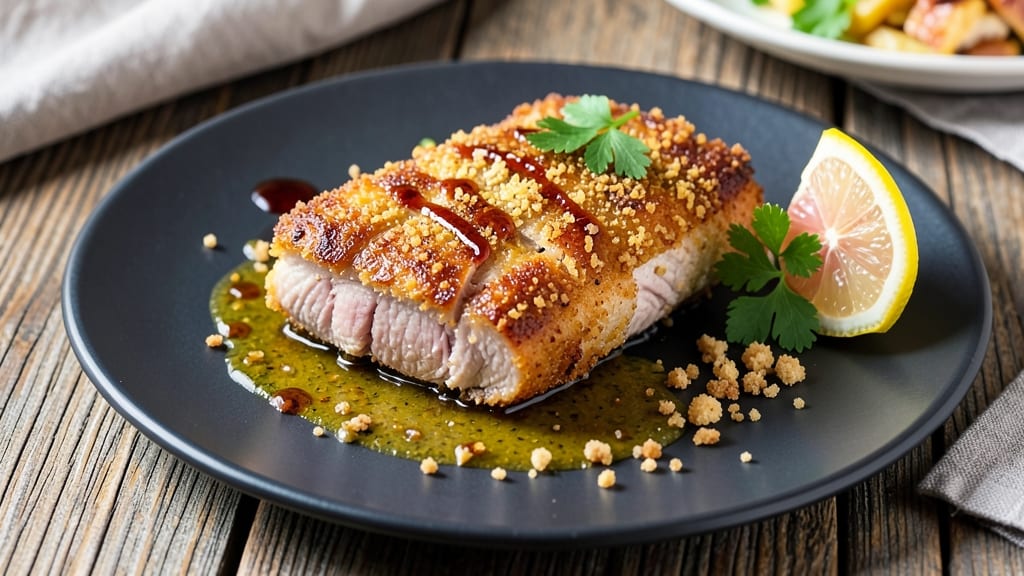
This breaded pork loin recipe delivers the perfect balance of crispy golden crust and juicy pink centers—exactly how I learned to prepare it during my apprenticeship under Master Chef Chen. The secret lies in a triple-layer breading technique that creates restaurant-quality texture without complicated steps.
I've been perfecting this method for years, and it never fails to impress even the most critical palates.
The process begins with a light flour dusting to anchor the egg wash, followed by a panko crust that stays crispy even when sliced. What sets this recipe apart is the 350°F oven-baked finish, which ensures even cooking while maintaining that coveted crunch.
Unlike pan-seared versions that can dry out the center, this method guarantees tender meat every time.
By the time you serve it, you'll have perfectly browned edges that shatter at the touch, revealing moist, flavorful pork underneath. The crust holds up beautifully when sliced, making it ideal for dinner parties or family gatherings.
I like to pair it with apple sauce or a tangy mustard glaze to cut through the richness.
This recipe scales effortlessly from weeknight dinners to holiday feasts, and the techniques translate perfectly whether you're working with bone-in or boneless cuts. The key is patience—letting the meat rest after cooking ensures those juices stay where they belong, inside the meat.
Ingredients for breaded pork loin
Here's what you need to create that perfect crispy panko crust with juicy pork inside.
| Ingredient | Amount | Notes |
|---|---|---|
| Pork Loin 🥓 | 1 ½ lb | Bone-in or boneless, cut even thickness |
| All-Purpose Flour 🌾 | ½ cup | For light dusting and first layer |
| Large Eggs 🥚 | 2 whole | Cold from fridge for best coating |
| Japanese Panko Breadcrumbs 🍞 | 1 ½ cups | Extra-fine for perfect crust texture |
| Dijon Mustard 🍯 | 1 tbsp | Adds tangy flavor and helps adherence |
| Olive Oil 🫒 | 2 tbsp | For brushing meat before breading |
| Garlic Powder 🧄 | 1 tsp | Enhances crust flavor |
| Ground Black Pepper 🌶️ | ½ tsp | Freshly cracked for best flavor |
| Salt 🧂 | 1 ½ tsp | Kosher salt preferred for even seasoning |
| Unsalted Butter 🧈 | 2 tbsp | Melted for basting during baking |
| Fresh Rosemary 🌿 | ¼ cup | Chopped finely for aromatic touch |
| Fresh Parsley 🌿 | ¼ cup | Chopped for garnish and freshness |
The pork loin is the star—look for cuts with good marbling for extra juiciness. Costco or your local butcher shop usually have the best quality, especially if you ask for bone-in cuts (they stay more moist). If you're using a boneless loin, pound it to an even thickness—about 1-inch—so it cooks evenly. I always trim any excess fat, but leave a thin layer for flavor. The panko is non-negotiable here; regular breadcrumbs won't give you that shatteringly crisp crust. Japanese panko from the Asian aisle is the gold standard, but any high-quality brand works.
No Dijon mustard? Yellow mustard at half the amount works in a pinch, but you'll lose some depth of flavor. Running short on rosemary? Thyme or oregano will still taste great—just use the same amount. The eggs should be cold when you dip the meat; this helps the breading stick better. If you're prepping ahead, keep the breaded pork in the fridge (covered) for up to 4 hours before baking. The butter for basting? Melted coconut oil is a great dairy-free alternative if needed. And if you're feeling fancy, add a pinch of smoked paprika to the breadcrumbs for extra depth.
This dish reheats beautifully—just pop it in a 350°F oven for 10 minutes with a splash of water in the pan to keep it moist. Store leftovers in an airtight container for 3-4 days in the fridge. For longer storage, wrap tightly in foil and freeze for up to 3 months. I like to portion the cooked pork into individual servings before freezing so I can just reheat what I need. The crust stays crispy even after reheating if you're not too heavy-handed with the basting butter.
Why You'll Love This Recipe
- Crispy in Minutes: I swear by the panko crust—it’s the magic here. Just pound the pork to even thickness, dip in egg, coat in those flaky breadcrumbs, and bake. No frying, no mess, just golden perfection in 25 minutes flat.
- Dijon Magic: That little splash of Dijon mustard? It’s the secret weapon. It cuts through the richness, adds a bright tang, and makes every bite taste like it was made with love (even if you’re just heating up leftovers).
- Lunchbox Hero: Between us, this is my go-to for packed lunches. Slice it up, toss in a container with some greens, and boom—you’ve got a meal that’s still crispy enough to impress at 3 PM. (Yes, even on a Tuesday.)
- Budget-Friendly Feast: Pork loin stretches further than you’d think, and panko’s cheap but delivers restaurant-quality crunch. I’ve fed six people for under $15 with this—leftovers? Even better reheated than takeout.
Step-by-step instructions for crispy panko-crusted pork loin
Here's how to create a perfect balance of golden-brown crust and tender, juicy pork every time.
Prepare the Pork Loin for Breading
Start by trimming any excess fat from the 1.5 lb pork loin and patting it completely dry with paper towels. This step is crucial—moisture prevents the breadcrumbs from sticking properly. Place the pork on a cutting board and use a sharp knife to make shallow cuts about ¼-inch apart across the surface. This creates channels for the seasoning to penetrate deeper.
In a small bowl, whisk together 1 tbsp Dijon mustard, 1 tsp garlic powder, 0.5 tsp ground black pepper, and 1.5 tsp salt. Rub this mixture all over the pork, pressing it into the cuts. Let it sit at room temperature for 15 minutes while you prepare the next components. This marinade adds flavor and helps the breading adhere better.
Set Up the Breading Station
Place three shallow dishes side by side. In the first, pour 0.5 cup all-purpose flour and mix in 0.5 tsp salt. In the second, crack 2 cold eggs from the fridge and whisk them lightly with a fork—you want them slightly beaten but not frothy. In the third, spread 1.5 cups Japanese panko breadcrumbs evenly. Having everything ready prevents the pork from getting soggy while you bread it.
Here's the thing—use cold eggs straight from the fridge. They create a firmer coating that holds up better during frying. If you use room-temperature eggs, the breading might slide off. Keep the eggs cold until you're ready to dip the pork.
Create the Perfect Crust Layer by Layer
Working with one piece at a time, coat the pork first in the flour mixture, pressing gently to adhere. Shake off any excess, then dip into the egg wash, letting any excess drip off. Finally, press the pork into the panko breadcrumbs, covering all sides completely. The panko should stick firmly—if it doesn't, dip it back in the egg wash and add more breadcrumbs. This double-dipping ensures maximum crispiness.
Place the breaded pork on a wire rack set over a baking sheet. This keeps the crust from getting soggy while you prepare the rest. Repeat with all pieces, working quickly so the breading doesn't soften. Let them rest for 10 minutes at room temperature before cooking—this helps the crust set up better.
Cook to Crispy Perfection
Preheat your oven to 400°F. Heat 2 tbsp olive oil in an oven-safe skillet over medium-high heat until shimmering. Add the breaded pork and cook for 3-4 minutes per side until the crust is deep golden brown and the internal temperature reaches 145°F when checked with a meat thermometer. The oil should sizzle steadily—if it smokes too much, reduce the heat slightly.
Transfer the skillet to the preheated oven and bake for 15-20 minutes until the internal temperature reaches 160°F. During the last 5 minutes, melt 2 tbsp unsalted butter and brush it over the pork. This basting adds richness and helps maintain moisture. The crust should be crisp enough to hold its shape when pressed gently.
Rest and Garnish for Serving
Remove the pork from the oven and let it rest on a cutting board for 10 minutes before slicing. This resting period is non-negotiable—it allows the juices to redistribute, ensuring each slice stays moist. While it rests, finely chop 0.25 cup fresh rosemary and 0.25 cup fresh parsley. Sprinkle them over the top just before serving for a pop of freshness and color.
Slice the pork against the grain into ½-inch thick pieces. The crust should be perfectly crispy while the inside remains juicy and tender. Serve immediately with your favorite sides—roasted vegetables or a fresh salad work beautifully. The contrast between the crunchy exterior and tender interior makes this dish truly special.
Pro Tips For Making Breaded Pork Loin
- PAT THE PORK DRY: I learned this the hard way—wet pork won’t crisp. After breading, hit it with paper towels until it’s bone-dry. The panko needs something to latch onto, and moisture is its enemy. (Yes, even if you’re impatient like me.)
- USE COLD EGGS: Room-temperature eggs get runny in the pan, and your crust will stick like glue. Crack them into a chilled bowl, then dip the pork quickly—just enough to coat. The cold egg sets faster and stays put.
- DON’T OVERFILL THE PAN: I used to crowd the pork, thinking it’d cook faster. Wrong. Overlapping pieces steam instead of sear, and the breading turns soggy. Leave space—at least 1 inch between cuts—and cook in batches if needed.
- SEAR HOT, REST LOW: Start with a screaming-hot pan—this is non-negotiable for that golden crust. Once browned, drop the heat to medium and finish cooking. The crust locks in, and the inside stays juicy. (Your thermometer should hit 145°F before you pull it.)
Troubleshooting your breaded pork loin
Soggy Breading Fix
If your breaded pork loin comes out soggy instead of crispy, the issue is almost always moisture—either from the meat or the breading process. First, ensure your pork loin is completely dry before breading; pat it with paper towels until it's bone-dry.
I've also found that letting the breaded pork rest on a wire rack (not directly on a baking sheet) for 10 minutes before cooking prevents steam buildup. For extra insurance, chill the breaded pork in the fridge for 30 minutes before cooking—this firms up the crust. 🌡️
Uneven Cooking
Uneven cooking often happens when the pork loin isn't cut to an even thickness. Use a meat mallet to pound thicker sections to 1-inch thickness before breading. If you're baking, rotate the pan halfway through cooking to ensure even heat distribution.
For pan-searing, I recommend using a heavy-bottomed skillet like a Lodge cast iron—it conducts heat more evenly and prevents hot spots. Always check the internal temperature with a meat thermometer to avoid overcooking one side while the other stays raw.
Crust Falling Off
The breading might slide off if the egg wash isn't cold enough or if the pork isn't properly dried. Use cold eggs straight from the fridge—room-temperature eggs create a thinner coating that won't adhere well.
Another trick I swear by is adding 1 tbsp Dijon mustard to the egg wash; it acts as a glue and adds a tangy depth of flavor. Press the breadcrumbs firmly onto the pork, and if they don't stick, dip it back in the egg wash and reapply.
Double-dipping is key for a secure crust. ✨
Dry or Tough Meat
Overcooking is the most common cause of dry pork loin. Use a meat thermometer and remove the pork from the oven when it reaches 160°F internal temperature—it will continue to rise to 165°F while resting.
If you're pan-searing, don't exceed medium-high heat for more than 4 minutes per side, or the crust will burn before the meat cooks through.
For extra moisture, brush the pork with melted butter during the last 5 minutes of baking, or baste it with apple cider for a sweet contrast.
Oil Smoking Too Much
If your oil is smoking excessively, it's too hot, which can cause the breading to burn before the pork cooks. Reduce the heat to medium and let the oil return to a gentle shimmer before adding the pork.
I like to use avocado oil for its high smoke point (520°F), but light olive oil works too. Never overcrowd the pan—cook the pork in batches if needed. A thermometer probe placed in the oil helps monitor temperature precisely. 🔥
Resting Time Too Short
Skipping the 10-minute rest after cooking is a surefire way to end up with dry slices. During this time, the juices redistribute from the surface back into the meat.
If you're in a hurry, rest the pork for at least 5 minutes, but I've found that 15 minutes yields even juicier results. Tent the pork loosely with foil during resting to keep it warm without trapping steam.
Slice against the grain for maximum tenderness and to showcase that crispy crust. 💫
Nutrition facts
Frequently asked questions
Can I use boneless pork loin for this recipe?
This recipe works beautifully with boneless pork loin. The key is to pound it to an even 1-inch thickness before breading so it cooks uniformly. Bone-in cuts stay slightly more moist, but boneless makes slicing easier for quick weeknight meals.
What's the best way to store leftovers?
Store cooked pork loin in an airtight container for 3-4 days in the fridge. For longer storage, wrap tightly in foil and freeze for up to 3 months. To reheat, bake at 350°F for 10 minutes with a splash of water in the pan to maintain moisture. The crust stays crispy if you're gentle with reheating!
Can I make this ahead of time?
Yes! Bread the pork and refrigerate it (covered) for up to 4 hours before cooking. For best results, chill the breaded pork for 30 minutes before baking to firm up the crust. The flavor develops beautifully when made ahead—just be sure to let it come to room temperature before cooking.
What's the secret to extra crispy breading?
Three things: completely dry meat, cold eggs, and double-dipping. Pat the pork bone-dry before breading, use eggs straight from the fridge, and press the panko firmly onto the meat. Chilling the breaded pork for 30 minutes before cooking also helps create that perfect shatteringly crisp crust.
How do I know when the pork is fully cooked?
Use a meat thermometer to check the internal temperature. The pork is done when it reaches 160°F (it will rise to 165°F while resting). The crust should be deep golden brown and the meat should feel firm but still tender when pressed gently. Never rely on color alone—pork can look cooked on the outside while remaining raw inside.