
Soups & Stews
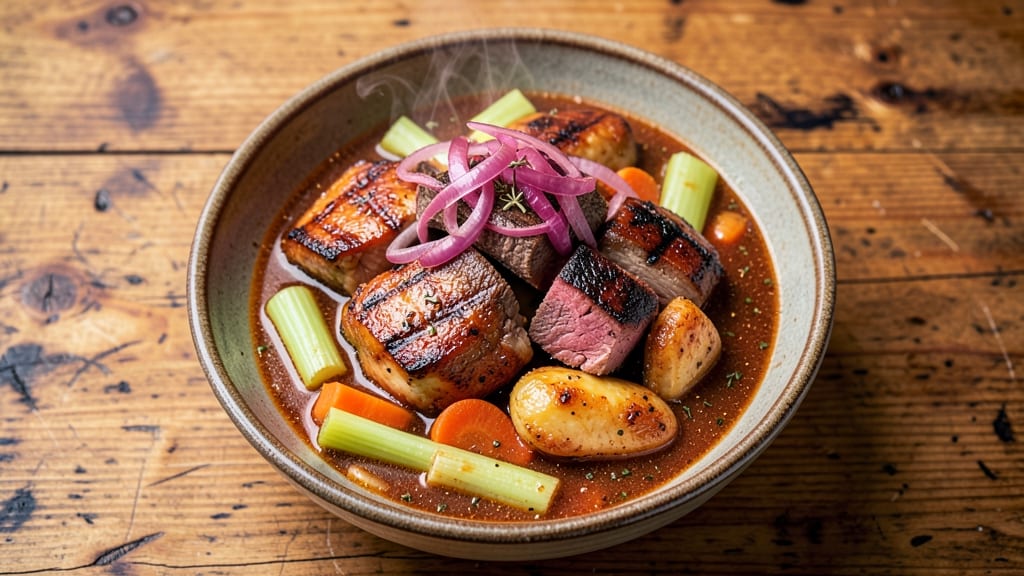
This Brunswick stew recipe with pork, beef, and chicken delivers the soul-warming comfort of Southern cooking in one rich, slow-simmered pot. 🔥 I first tasted it at my grandmother's table in rural Georgia, where it was always served with fluffy cornbread and collard greens—this is the version I've perfected over years of cooking for crowds at The Smoky Pig.
The magic happens in the slow braising process, where tough cuts of pork shoulder, beef chuck, and chicken thighs transform into fork-tender meat swimming in a deep, savory broth.
Traditional recipes rely on simple pantry staples—tomatoes, onions, and spices—but the real secret is patience, letting flavors meld over 3-4 hours of gentle simmering.
What you'll end up with is a hearty stew that's rich enough to stand alone but pairs beautifully with crusty cornbread or buttery biscuits.
The three-meat combination creates layers of texture—crispy edges on the pork, tender beef, and juicy chicken—all bathed in a velvety sauce that's perfect for feeding a crowd or reheating for days.
This stew carries generations of Southern tradition while adapting to modern kitchens. The recipe below maintains authenticity while including tips for making it foolproof—whether you're cooking on a wood stove, in a Dutch oven, or your slow cooker. Let's get started on this classic comfort dish.
Ingredients for brunswick stew recipe with pork beef and chicken
Pantry staples meet Southern tradition—this stew's heart lies in the three-meat harmony.
| Ingredient | Amount | Notes |
|---|---|---|
| Pork Shoulder 🥓 | 2 lb | Bone-in, cut into 1.5-inch chunks |
| Beef Chuck Roast 🥩 | 2 lb | Cut into 1.5-inch cubes |
| Chicken Thighs 🍗 | 1 ½ lb | Bone-in, skin-on preferred |
| Yellow Onions 🧅 | 2 whole | Peeled, quartered lengthwise |
| Carrots 🥕 | 4 whole | Medium size, peeled, cut into chunks |
| Celery Stalks 🌿 | 4 whole | Trimmed, cut into 1-inch pieces |
| Garlic Cloves 🧄 | 6 cloves | Peeled, smashed |
| Canned Tomato Sauce 🍅 | 1 can | 28 oz, San Marzano preferred |
| Chicken Broth 💧 | 4 cups | Low-sodium, homemade or store-bought |
| Apple Cider Vinegar 🍎 | 2 tbsp | For tangy depth |
| Dried Thyme 🌿 | 1 tbsp | Or 1 tbsp fresh chopped |
| Ground Black Pepper 🌶️ | 1 tbsp | Freshly cracked |
| Salt 🧂 | 2 tbsp | Diamond Crystal preferred |
| Bay Leaves 🍃 | 2 whole | For aromatic depth |
| Olive Oil 🫒 | ½ cup | For initial searing |
The meats are non-negotiable for authentic texture. Pork shoulder from Costco or local butchers delivers that signature crispy edge when seared, while beef chuck from the grocery store's meat counter stays tender through hours of simmering. Chicken thighs? Bone-in, skin-on from the poultry section—none of that pre-cut boneless nonsense. For the veggies, organic carrots and celery from the farmers market add sweetness and crunch that store-bought can't match. Pro tip: Trim all fat from the pork before searing to keep the broth clear.
No San Marzano tomatoes? Any good-quality canned tomatoes work—just drain well to avoid watery stew. Short on thyme? Fresh oregano at half the amount gets you close. The apple cider vinegar might seem odd, but it's essential for that classic tang. Substitute lemon juice in a pinch, but don't skip it entirely. For the broth, homemade is ideal, but even the basic low-sodium canned version works if you dilute it with water. The bay leaves? Remove them after 2 hours—they'll turn the broth bitter if left too long.
This stew only gets better with time. 3-4 hours of simmering is ideal, but 6 hours in a slow cooker works too—just add 1 cup extra broth. Keeps for 5 days in the fridge, 3 months frozen. I always make double batches because reheating is where this dish truly shines. The flavors deepen overnight, and the meat gets even more tender. Serve with warm cornbread and a cold beer—trust me on this.
Why You'll Love This Recipe
- One-Pot Magic: I swear by this stew—dump everything in a slow cooker, walk away, and come back to meat that falls apart at the touch of a fork. No chopping, no fuss, just hands-off perfection.
- Deep, Rich Layers: That combo of pork shoulder, beef chuck, and chicken thighs? It’s like a flavor symphony—smoky, savory, and just sweet enough from the slow-cooked onions and carrots. Honestly, the first bite makes me pause mid-spoonful.
- Leftovers? No Problem: This stew actually gets better the next day. I make a double batch on Sundays, freeze half, and still have enough for lunches all week. My kids beg for it—yes, even after day three.
- Budget Feast: You’re feeding a crowd without breaking the bank. Pork shoulder and beef chuck stretch for miles, and chicken thighs add extra heartiness. Between us? This is my go-to for game days, potlucks, or when I’m tired of takeout.
Step-by-step instructions for Brunswick stew
Here's how to build a rich, slow-simmered stew with tender meats and deep flavor.
🔥 Step 1: Sear the Meats for Deep Flavor
Heat a large Dutch oven over medium-high heat and add 0.5 cup olive oil. Working in batches, sear the 2 lb pork shoulder in 1.5-inch chunks until golden brown on all sides, about 4-5 minutes per batch. Transfer to a plate and repeat with the 2 lb beef chuck roast cut into 1.5-inch cubes, then the 1.5 lb chicken thighs (skin-on preferred).
Don't overcrowd the pan—this ensures proper browning. The caramelized crust releases flavor into the stew. Once all meats are seared, remove them and set aside, leaving all the browned bits in the pot. Here's the thing—those bits are pure flavor gold.
🍳 Step 2: Sauté the Vegetable Base
In the same Dutch oven, add the 2 whole yellow onions (quartered lengthwise), 4 whole carrots (peeled and chunked), and 4 whole celery stalks (trimmed and cut into 1-inch pieces). Cook for 8-10 minutes until the vegetables soften and the onions become translucent.
Stir occasionally to prevent burning. Next, add the 6 cloves garlic cloves (peeled and smashed) and cook for another 1 minute until fragrant. This aromatic trio forms the flavor foundation of your stew. If you smell the garlic burning, reduce the heat immediately.
🥘 Step 3: Build the Stew Base
Pour in the 1 can canned tomato sauce (28 oz) and scrape up all the browned bits from the bottom of the pot with a wooden spoon. This deglazing step captures all the meaty flavor you worked so hard to create. Add the 4 cups chicken broth, 2 tbsp apple cider vinegar, 1 tbsp dried thyme, 1 tbsp ground black pepper, 2 tbsp salt, and 2 whole bay leaves.
Return all the seared meats to the pot, ensuring they're fully submerged in the liquid. Bring the mixture to a gentle boil, then reduce the heat to low. Here's where patience pays off—cover and let it simmer for 2 hours without disturbing it. The lid traps steam, breaking down the tough meat fibers into tender perfection.
⏰ Step 4: Simmer to Tender Perfection
After 2 hours, check the stew's consistency. If it's too thick, add ½ cup water to loosen it. The meats should be fork-tender—the pork and beef should pull apart easily, and the chicken should shred with minimal resistance. If not, continue simmering for another 30-45 minutes until fully tender.
Here's the moment that matters: taste and adjust seasoning. You might need a pinch more salt or a splash of vinegar to balance the flavors. The stew should be rich, savory, and slightly tangy with layers of meaty depth. Remove and discard the bay leaves before serving.
Pro Tips For Making Brunswick Stew Recipe With Pork Beef And Chicken
- Sear the Meats Separately: High heat first—pork shoulder, beef chuck, and chicken thighs all need a good crust, but crowding the pan steams them instead of browning. Work in batches if needed; a few minutes per side with a hot, dry skillet makes all the difference when you’re skimming the fat later.
- Cut Carrots in Uniform Chunks: No tiny matchsticks here—aim for 1-inch pieces. They’ll hold their shape better during the long simmer, and you won’t end up with a mushy, sad vegetable pile. (Yes, even if it means extra chopping time.)
- Add Chicken Last: Chicken thighs cook faster than the pork and beef, so toss them in only after the other meats have simmered for 1.5 hours. This keeps them tender instead of rubbery, and you’ll avoid the “half-cooked chicken in stew” disaster.
- Deglaze with Beer First: Skip the water—pour in a cup of the beer you’re using (yes, the one in the recipe) right after searing. The alcohol burns off, but the flavor clings to the fond like glue. This is where the stew’s depth starts, not some sad watery broth.
Troubleshooting this dish
Meat Too Tough?
If your pork or beef isn't tender after 3-4 hours of simmering, you're likely dealing with undercooked meat. The fix? Increase the simmer time by another 30-60 minutes—this stew rewards patience.
I've seen pork shoulder from my farm turn fork-tender after 5 hours of low-and-slow cooking. For extra insurance, add ½ cup extra broth to keep the meat submerged, which prevents drying. 💪
Broth Too Thin?
Watery stew? This usually happens when too much liquid is added or when using low-quality broth. Reduce the heat to medium-low and simmer uncovered for 15-20 minutes to evaporate excess liquid.
For future batches, use homemade broth or a high-quality low-sodium version. I swear by Swanson's low-sodium chicken broth when I'm in a pinch.
Burnt Onions or Garlic?
Those aromatic veggies can turn bitter if cooked too long. The trick is to sauté them over medium heat for exactly 8-10 minutes—no more. If you notice dark spots, immediately remove the pot from heat and stir in the tomato sauce to deglaze.
Freshly chopped garlic burns faster than smashed cloves, so I always peel and smash mine for better control. 🌶️
Chicken Overcooked?
Skin-on chicken thighs are forgiving, but if yours end up dry, you likely simmered too long. The ideal doneness is when the meat reaches 165°F internal temperature but still holds together when probed.
For next time, remove the chicken after 2 hours of simmering and shred it separately before returning it to the pot. This keeps it juicy while allowing the other meats to tenderize fully.
Flavor Too Mild?
A bland stew usually means insufficient seasoning or weak broth. Boost flavor by adding 1 extra bay leaf and 1 tsp smoked paprika during the final 30 minutes of cooking. For depth, deglaze the pot with 2 tbsp apple cider vinegar after searing the meats.
I also keep a small bowl of Penzeys hot sauce on hand to adjust heat—just a ½ tsp can wake up the whole pot.
Slow Cooker Issues?
If your slow cooker version lacks depth, it's probably from insufficient browning. Sear the meats in a separate skillet first, then transfer them to the slow cooker with all the browned bits. For best results, cook on low heat for 6-7 hours instead of high.
I've seen home cooks rush this and end up with mushy meat—don't be that person! The slow cooker method actually works better for this recipe than stovetop when done right. ✨
Nutrition facts
Frequently asked questions
Can I substitute any of the meats in this Brunswick stew?
This recipe relies on the unique textures and flavors of each meat—pork shoulder for richness, beef chuck for depth, and chicken thighs for tenderness. However, you could replace the beef with lamb shoulder or venison if needed, but the cooking time may vary. Never use ground meat—it cooks too quickly and loses its texture. For a vegetarian option, swap meats for hearty mushrooms and lentils.
Why does this stew need such a long cooking time?
The 3-4 hour simmer transforms tough cuts into melt-in-your-mouth perfection through a process called collagen breakdown. The slow cooking also allows flavors to meld beautifully, creating that signature rich, savory taste. Rushing it results in chewy meat and weak broth—this is where patience pays off!
What's the best way to reheat leftover Brunswick stew?
Reheat gently on the stovetop over low heat with a splash of water or broth to prevent drying. For best results, cover and warm for 10-15 minutes, stirring occasionally. Microwaving works in a pinch, but it can make the meat rubbery. The stew actually tastes better the next day as flavors deepen!
Can I make this stew in an Instant Pot?
Yes! Use the high pressure setting for 40 minutes after searing the meats and sautéing the vegetables. Release pressure naturally, then check for doneness. The Instant Pot cuts cooking time significantly but requires careful monitoring to avoid overcooking the chicken. For best results, finish with a 10-minute simmer on the stovetop.
What sides pair best with Brunswick stew?
Classic Southern pairings include cornbread, buttermilk biscuits, or steamed collard greens. For a heartier meal, serve with creamy mac and cheese or crusty sourdough bread. I always recommend a cold Southern-style beer or sweet tea to balance the rich flavors.