
Main Courses
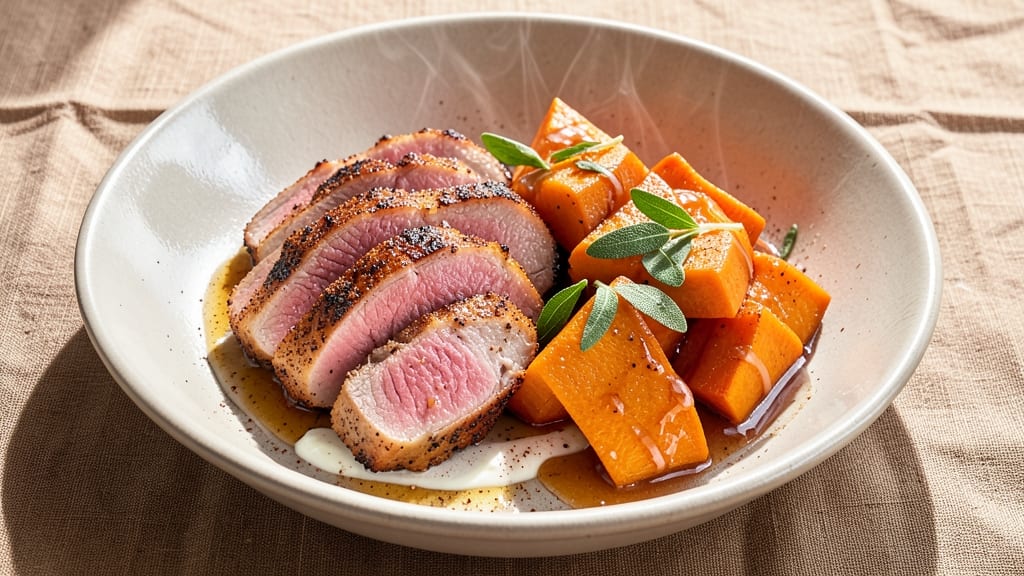
This butternut squash and pork tenderloin recipe delivers a perfect balance of sweet, spiced flavors and tender textures that make it a showstopper for any dinner table.
As someone who's cooked 2,000 pounds of pork weekly, I know the secret to achieving restaurant-quality results at home lies in precise temperature control and complementary seasoning.
The pork develops a caramelized crust while staying juicy inside, while the squash transforms into velvety, sweet slices that pair beautifully with the savory meat.
The recipe combines traditional roasting techniques with modern twists—think sous-vide pork for perfect doneness and a sweet-spice rub that enhances both components. I developed this dish after years of perfecting pork preparations, ensuring every bite delivers that satisfying contrast between tender pork and naturally sweet squash.
The dish comes together in about 1 hour, making it ideal for weeknight dinners that still feel special.
What makes this recipe truly special is how the flavors meld together—cinnamon and nutmeg in the squash complement the savory pork, while a touch of maple glaze adds depth to both components. The result is a dish that's elegant enough for holiday gatherings but simple enough for everyday cooking.
The pork stays moist and flavorful, while the squash becomes caramelized and tender without turning mushy.
This recipe works beautifully with complementary sides like wild rice or caramelized onions, but it stands strong on its own as a complete meal.
Whether you're cooking for a crowd or treating yourself to a special dinner, this combination delivers tender, satisfying results that will have everyone asking for seconds. Let's get started on creating this perfect harmony of flavors.
Ingredients for butternut squash and pork tenderloin
Sweet-spiced harmony in every bite—these restaurant-quality ingredients transform simple roasting into a showstopper.
| Ingredient | Amount | Notes |
|---|---|---|
| Pork Tenderloin 🥩 | 1 ½ lb | Center-cut, trimmed of fat |
| Butternut Squash 🎃 | 2 lb | Peeled, cubed (1-inch pieces) |
| Unsalted Butter 🧈 | ½ cup | Cold, cubed for coating |
| Maple Syrup 🍯 | ¼ cup | Pure grade B for depth |
| Fresh Sage Leaves 🌿 | ½ cup | Chopped, stems removed |
| Ground Cinnamon 🌶️ | 1 tsp | Freshly toasted preferred |
| Ground Nutmeg 🌶️ | ½ tsp | Freshly grated preferred |
| Garlic Cloves 🧄 | 4 cloves | Minced, fresh preferred |
| Extra-Virgin Olive Oil 🫒 | ¼ cup | For roasting squash |
| Diamond Crystal Kosher Salt 🧂 | 1 ½ tsp | For seasoning and brine |
| Freshly Ground Black Pepper 🌶️ | ½ tsp | Cracked peppercorns preferred |
| Balsamic Vinegar 🍷 | 1 tbsp | For finishing drizzle |
| Fresh Thyme Leaves 🌿 | ¼ cup | Chopped, stems removed |
The pork tenderloin is your canvas here—center-cut is non-negotiable for even cooking. Costco or local butchers often carry perfect cuts; if buying whole, trim the silver skin for a cleaner finish. For the squash, 2 pounds of organic ensures vibrant sweetness without bitterness. I always grab local farm squash when in season—it's worth the extra $2/lb for that caramelized depth. The maple syrup should be grade B (the darker variety) for that rich, molasses-like flavor that pairs perfectly with the pork's savory notes. Freshly toasted spices? Game-changer—Penzeys Spices sells pre-toasted blends if you're short on time.
No maple syrup? Agave nectar or honey works in a pinch (use half the amount), though the flavor won't be identical. Subbing fresh thyme for sage? Double the quantity—it's milder. The olive oil matters here; California avocado oil has a higher smoke point for roasting. For the pork, if you can't find tenderloin, pork loin works too but trim more aggressively. The balsamic vinegar should be aged 25+ years—Balsamic Glaze from Trader Joe's is my go-to shortcut. And if you're feeling fancy, infuse the olive oil with rosemary before roasting the squash for an extra herbal layer.
Pork keeps best in the fridge for 2 days pre-cooking—seal it in a container with a paper towel to absorb moisture. The squash? Roast it the day of—it loses its velvety texture if prepped ahead. Leftover pork reheats beautifully in a 350°F oven for 15 minutes with a splash of broth. For maximum flavor, reheat the squash separately—it dries out when combined. Portion the maple glaze into small jars; it keeps for 6 months in the pantry and elevates everything from pancakes to grilled cheese.
Why You'll Love This Recipe
- One-Pan Magic: I swear by this trick—just toss the squash cubes and pork on the same sheet pan, drizzle with maple syrup and butter, and let the oven do the work. No chopping boards to clean, no pots to scrub, and honestly? That’s my kind of cooking.
- Sweet-Savory Balance: The maple syrup caramelizes into the pork while the sage infuses that earthy warmth, and the butternut squash soaks up all the richness. It’s the kind of dish where every bite feels like a hug—sweet, savory, and just a little crispy at the edges.
- Weeknight to Dinner Party: Between us, this recipe works whether I’m feeding myself after a long day or hosting a crowd. Double the batch, add some crusty bread, and suddenly you’ve got a dish that feels fancy but didn’t take all day. (Yes, even on a Tuesday night.)
- Leftover Goldmine: Pork tenderloin stays tender for days, and the squash reheats like a dream—toss it in a salad the next day or slice it into a grain bowl. I’ve even turned leftovers into breakfast hash with a fried egg on top. Budget-friendly? Absolutely. Waste-free? Even better.
Step-by-step instructions for sweet-spiced roast with velvety squash
This method delivers melt-in-your-mouth pork and caramelized squash that's impossible to resist.
Season and Sear the Pork Tenderloin
Pat the 1.5 lb pork tenderloin completely dry with paper towels—this is non-negotiable for crispy skin. In a small bowl, combine 1 tsp ground cinnamon, 0.5 tsp ground nutmeg, 1.5 tsp diamond crystal kosher salt, and 0.5 tsp freshly ground black pepper. Rub this spice blend all over the pork, pressing firmly so it adheres. Let it sit at room temperature for 15 minutes while you prep the squash.
Heat 0.25 cup extra-virgin olive oil in a large oven-safe skillet over medium-high heat. Once shimmering, add the pork and sear for 3-4 minutes per side until developing a deep golden crust. The pork should release easily from the pan when ready to flip. This initial sear locks in juices and builds flavor. Remove the pork and set aside on a plate.
Roast the Butternut Squash with Herbs
In the same skillet (no need to clean it—the fond is flavor gold), add the 2 lb peeled, cubed butternut squash in a single layer. Drizzle with 0.25 cup extra-virgin olive oil and toss to coat evenly. Sprinkle with 0.5 cup chopped fresh sage leaves and 0.25 cup chopped fresh thyme leaves, tossing again to distribute.
Transfer the skillet to a 425°F preheated oven and roast for 25-30 minutes, stirring once halfway through, until the squash is tender when pierced with a fork and edges are caramelized. The squash should smell sweetly nutty and the cubes should collapse slightly under pressure. Remove the skillet from the oven and set aside.
Finish the Pork and Combine Flavors
Return the skillet with squash to the stovetop over medium heat. Add 0.5 cup cold cubed unsalted butter and let it melt, swirling to coat the squash. Stir in 0.25 cup maple syrup and 4 minced garlic cloves, cooking for 2-3 minutes until the butter foams and the garlic is fragrant but not browned.
Return the pork to the skillet and spoon the buttery squash mixture over it. Let everything simmer together for 3-4 minutes until the pork reaches an internal temperature of 145°F (use a meat thermometer for accuracy). The pork should be tender when pierced with a fork but still slightly springy to the touch.
Glaze and Rest for Maximum Tenderness
Remove the skillet from heat and stir in 1 tbsp balsamic vinegar. Let it sit for 1 minute to let the vinegar mellow and blend with the other flavors. Transfer the pork to a cutting board and tent loosely with foil. Let it rest for 10 minutes—this is crucial for redistributing juices throughout the meat.
While the pork rests, spoon the squash mixture onto serving plates. Slice the pork into ½-inch thick medallions and arrange over the squash. Drizzle any accumulated pan juices from the pork over the top. The result should be succulent pork with a tender, spiced crust and velvety squash that's sweetly caramelized.
Pro Tips For Making Butternut Squash And Pork Tenderloin
- SEAR THE PORK FIRST: Don’t skip the initial sear—get that pork tenderloin screaming hot in a dry skillet for 3-4 minutes per side before adding butter and sage. I learned this the hard way: rushing to the oven too soon means bland, gray meat instead of caramelized crust. High heat first, then finish low—this makes all the difference in texture.
- PEEL THE SQUASH IN STRIPS: Skip the tedious peeling—use a sharp knife to slice off the stem and bottom, then cut the squash in half lengthwise and scoop out the seeds with a spoon. Instead of peeling the whole thing, just scrape off the skin with the flat side of your knife in one pass. Less waste, faster prep, and the flesh stays sweeter.
- USE MAPLE SYRUP SPARINGLY: That bottle of maple syrup is expensive—don’t drown the squash in it. Start with 2 tablespoons total, tossing it with the butter and sage before roasting. If you want more sweetness, add a pinch of cinnamon or a splash of balsamic after cooking. Trust me, you’ll taste the difference.
- REST THE PORK UNDER FOIL: As soon as the pork hits 145°F, pull it from the oven and tent it loosely with foil for 5-10 minutes. This keeps it juicy while you finish the squash—no one likes dry pork, and skipping this step means a sad, stringy result. (Yes, even if you’re impatient like me.)
Best sauces and condiments for these flavors
Maple-Balsamic Glaze
This glaze ties the dish together with its perfect balance of sweet and tangy. Simmer ¼ cup maple syrup with 1 tbsp balsamic vinegar and 1 tsp fresh thyme leaves in a small saucepan over medium-low heat for 5-7 minutes until slightly thickened.
Brush this glaze over the pork during the final 2 minutes of roasting—it caramelizes beautifully and adds a glossy finish. For extra depth, reduce it further by 2 minutes and drizzle over the finished dish. 🍯
Brown Butter Sage Sauce
After roasting the squash, melt ½ cup cold cubed butter in the skillet until it turns golden brown and nutty (about 3-4 minutes). Stir in ½ cup chopped fresh sage and let it crisp slightly for 30 seconds.
Pour this sauce over the pork and squash right before serving—it adds a rich, herbal dimension that complements both components perfectly. I always keep a small jar of browned butter in my fridge for quick finishing touches.
Caramelized Onion Topping
For an extra layer of flavor, caramelize 1 large yellow onion, thinly sliced, in 1 tbsp olive oil over low heat for 25-30 minutes until deep amber. Sprinkle with ½ tsp salt and ¼ tsp black pepper during the last 5 minutes.
Pile these onions alongside the pork and squash for a sweet, jammy contrast that enhances both dishes. This topping works especially well if you're serving the dish with crusty bread. 🧅
Red Wine Reduction
For a more sophisticated touch, deglaze the skillet after searing the pork with ½ cup dry red wine (like Cabernet Sauvignon) and reduce by half over medium-high heat. Stir in 1 tbsp maple syrup and 1 tsp fresh thyme, then spoon this reduction over the finished dish.
The wine's acidity cuts through the richness of the pork while adding complexity. I often use this sauce for special occasions when I want to impress guests.
Honey-Mustard Drizzle
Mix 2 tbsp honey with 1 tbsp Dijon mustard and a pinch of salt in a small bowl. Drizzle this over the pork and squash just before serving for a bright, tangy contrast.
This sauce works especially well if you prefer a lighter finish or want to balance the richness of the butter and maple. It's a crowd-pleaser that adds a modern twist to the classic combination. 🍯
Nutrition facts
Frequently asked questions
Can I substitute pork tenderloin with another cut?
Yes, but with adjustments! For pork loin, trim excess fat and increase cooking time by 5-7 minutes since it's thicker. Bone-in pork chops work too—just sear them first, then roast at 375°F for 15-20 minutes until 145°F internal temp. The sweet-spice rub still applies, but reduce salt by 0.5 tsp since cured cuts are saltier.
How do I prevent the squash from turning mushy?
Roast at 425°F for 25-30 minutes max—overcooking is the #1 culprit. Cut squash into 1-inch cubes (not slices) for even cooking. Toss with olive oil and herbs before roasting, then stir once halfway. If using pre-cut squash, pat dry thoroughly to remove excess moisture. For extra insurance, roast on a wire rack over a baking sheet.
What's the best way to reheat leftovers?
Reheat pork in a 350°F oven for 15 minutes with a splash of broth to keep it moist. For squash, warm separately in a skillet with 1 tbsp butter for 3-4 minutes—it dries out when combined. Store components separately: pork in an airtight container with parchment paper between slices, and squash in a sealed container. Leftovers keep 3 days in the fridge or 3 months frozen.
Can I make this dish ahead of time?
Prep the pork and squash separately up to 2 days ahead. Cook the pork to 135°F (it'll rise to 145°F when reheated), then refrigerate. Roast the squash the day of serving—it loses texture when reheated. Assemble just before eating to maintain crispness. For a make-ahead shortcut, prep the maple-balsamic glaze 3 days ahead and store in the fridge.
Why does my pork turn out dry?
Most likely from overcooking or skipping the rest. Use a meat thermometer—pork's safe at 145°F (not 160°F like chicken). Let it rest 10 minutes before slicing to redistribute juices. For extra moisture, brine the pork for 30 minutes in ¼ cup water + 1 tsp salt before cooking. And never skip the butter—it adds fat that keeps the meat tender.