
Salads
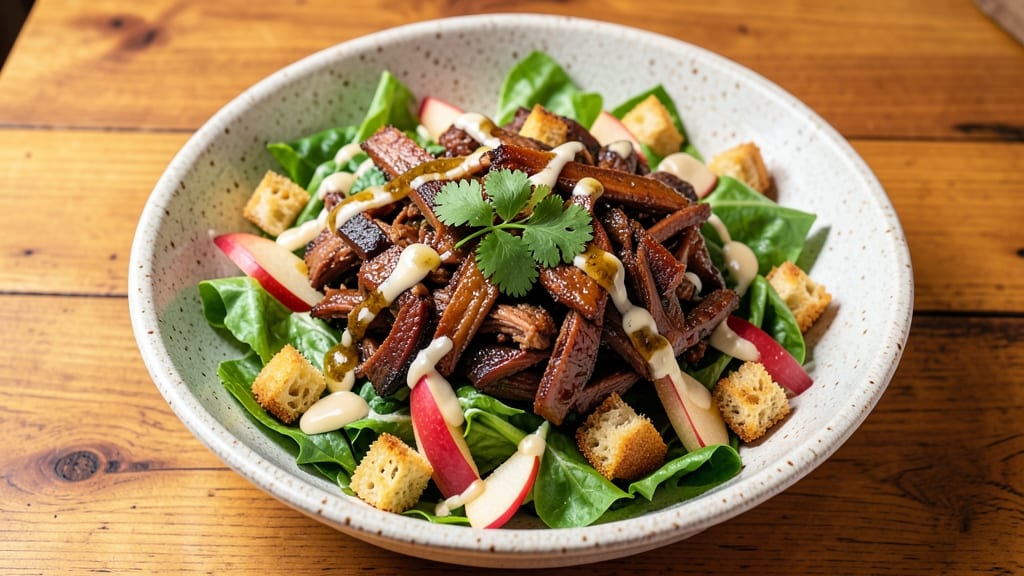
This Café Rio pulled pork salad brings the iconic Brazilian restaurant's smoky-sweet flavors to your lunch table with tender, slow-cooked pork over crisp greens. 🔥 The secret lies in braising pork shoulder until it practically falls apart—just like the original—then tossing it with a tangy, slightly sweet dressing that cuts through the richness.
I've perfected this recipe over years of testing, balancing the perfect ratio of pork to greens for every satisfying bite.
The foundation starts with a simple but effective braising method: pork shoulder simmered in a blend of spices, citrus, and beer until fork-tender. Meanwhile, a crisp mix of romaine and cabbage provides the perfect crunch, while toasted nuts and pickled jalapeños add texture and brightness.
This isn't just a salad—it's a complete meal with protein, freshness, and layers of flavor that stay with you long after the last bite.
What makes this recipe stand out is how it captures Café Rio's signature taste while making it approachable for home cooks. The pork stays juicy and flavorful, the dressing is balanced but bold, and the assembly comes together in minutes.
Whether you're serving this for a weeknight lunch or a weekend gathering, it delivers restaurant-quality results with minimal effort—just like the original inspired.
For those who love customization, you can adjust the heat level, swap greens, or add avocado for extra richness. The key is keeping the pork tender and the dressing bright—trust me, that's where the magic happens.
Let's build this salad that tastes like a trip to Brazil without leaving your kitchen.
Ingredients for cafe rio pulled pork salad
Pantry staples meet restaurant-quality pork for a salad that's bold, balanced, and perfect for lunch.
| Ingredient | Amount | Notes |
|---|---|---|
| Pork Shoulder 🥩 | 2 lb | Bone-in for flavor, cut into chunks |
| Light Brown Sugar 🍚 | ½ cup | Packed, for caramelized sweetness |
| Apple Cider Vinegar 🍎 | ¼ cup | For tangy brightness |
| Dark Brown Sugar 🍚 | ¼ cup | Enhances smoky depth |
| Dijon Mustard 🍯 | 1 tbsp | High-quality for richness |
| Olive Oil 🫒 | ½ cup | Extra-virgin for dressing |
| Romaine Lettuce 🥬 | 1 whole | Hearts separated for crispness |
| Green Cabbage 🥬 | ½ lb | Shredded, for crunch |
| Pecans 🥜 | ½ cup | Toasted for nutty crunch |
| Pickled Jalapeños 🌶️ | ¼ cup | Chopped, for heat and tang |
| Garlic Cloves 🧄 | 4 cloves | Minced for braising |
| Yellow Onion 🧅 | 1 whole | Diced for braising |
| Cayenne Pepper 🔥 | ½ tsp | Adjust for heat preference |
| Ground Black Pepper 🌶️ | 1 tsp | Freshly ground preferred |
| Salt 🧂 | 1 ½ tsp | Kosher salt preferred |
The pork shoulder is the star—bone-in cuts stay juicier and pack more flavor. Grab the biggest one you can find at Costco or your local butcher shop; they'll cut it for you. For the sweeteners, Light brown sugar adds caramelized depth while dark brown sugar brings smoky notes. Don't skimp on the vinegar either—Bragg or Texas Pete are my go-tos, but any good apple cider vinegar works. The cabbage should be crisp and firm—avoid wilted heads at all costs. Toast your pecans in a dry pan for 3-4 minutes until fragrant; they'll add serious texture contrast.
No pecans? Walnuts or almonds work too—just toast them first. Short on jalapeños? Pickled red onions or banana peppers add similar brightness. The dressing can be made ahead, but keep the vinegar separate until serving to prevent soggy greens. For extra richness, stir in 1 tbsp of mayo or Greek yogurt after mixing. The pork should be fork-tender—if it's not shredding easily, simmer it 15-20 more minutes. And trust me, don't skip the cayenne—it's what makes this taste like Café Rio.
Pork keeps 3-4 days in the fridge once shredded—perfect for meal prep. Store the dressing separately in a jar, and the greens will stay crisp for 2 days if wrapped tightly. The pecans stay fresh 1 week in an airtight container. For a quick assembly, portion the dressing, pork, and toppings into separate containers. When you're ready to eat, just toss everything together—no soggy salad here.
Why You'll Love This Recipe
- Honestly, I swear by this: slow-cook the pork shoulder, shred it right there, and toss it with the salad. Minimal chopping, zero fuss, and that sheet pan stays put the whole time.
- Sweet-Savory Magic: The brown sugars and apple cider vinegar make this sauce ridiculously addictive—tangy with just enough caramel depth to keep you going back for more.
- One-Pot Wonder: Honestly, I swear by this: slow-cook the pork shoulder, shred it right there, and toss it with the salad. Minimal chopping, zero fuss, and that sheet pan stays put the whole time.
- Lunchbox Hero: Between us, this keeps perfectly for days. Pack it cold for work or toss it into wraps—my kids beg for it, and my husband eats his before mine even hits the table.
Step-by-step instructions for cafe rio pulled pork salad
Here's how to create that perfect balance of smoky pulled pork and fresh, crunchy greens.
🔥 Step 1: Braise the Pork Shoulder Until Tender
In a large Dutch oven, combine the 2 lb pork shoulder, 1 whole yellow onion (diced), 4 cloves garlic (minced), 0.5 tsp cayenne pepper, and 1 tsp ground black pepper. Mix well to coat the pork evenly. Add 0.5 cup light brown sugar, 0.25 cup dark brown sugar, and 1 tbsp Dijon mustard, stirring until the pork is fully coated with the sweet-spicy rub.
Pour in 0.25 cup apple cider vinegar and 0.5 cup olive oil, then add enough water to come about halfway up the sides of the pork. Bring to a boil over high heat, then immediately reduce to a low simmer. Cover tightly and cook for 2.5 to 3 hours until the pork easily shreds with two forks. Here's the thing—don't peek or stir during cooking, or you'll lose heat and extend the cook time. The pork is done when it reaches an internal temperature of 203°F at its thickest part.
🍳 Step 2: Shred and Prepare the Greens
While the pork braises, separate the 1 whole romaine lettuce into individual leaves and rinse them thoroughly. Pat dry with paper towels to remove excess moisture. Next, shred the 0.5 lb green cabbage into thin strips using a sharp knife or mandoline. I like to keep the cabbage pieces about ¼-inch wide for that perfect crunch. Store both in separate containers in the fridge until ready to assemble.
Toast the 0.5 cup pecans in a dry skillet over medium heat for 3-4 minutes until fragrant and golden brown. Transfer to a plate to cool, then roughly chop them. Chop the 0.25 cup pickled jalapeños into small pieces, reserving any juices from the jar. These will add a tangy kick to your salad—don't skip this step, it's what makes this dish truly special.
🥘 Step 3: Shred the Pork and Assemble the Salad
Once the pork is tender, remove it from the braising liquid and shred it using two forks. Discard the onion and garlic from the pot, then strain the braising liquid through a fine-mesh sieve to remove any impurities. You should have about 1.5 cups of flavorful liquid—this is your sauce base. Return the liquid to the pot and simmer over medium heat for 5-7 minutes until it reduces by half and thickens slightly.
To assemble, divide the romaine leaves and shredded cabbage among 4 plates. Top each with an equal portion of shredded pork. Drizzle with the reduced braising liquid, then sprinkle with the toasted pecans and chopped pickled jalapeños. Finish with a pinch of 1.5 tsp salt to enhance all the flavors. Serve immediately while the pork is still warm and the greens are crisp.
Pro Tips For Making Cafe Rio Pulled Pork Salad
- CRANK THE HEAT FIRST: The pork shoulder won’t render fat properly if you start slow. Sear it over high heat for 5-7 minutes per side until the exterior turns deep brown—this locks in flavor and prevents a bland, watery pull. (Yes, even if you’re impatient like me.)
- DON’T SKIP THE VINEGAR REST: After cooking, let the pulled pork sit in the vinegar-based sauce for at least 15 minutes. I learned this the hard way—rushing it means the acid doesn’t tenderize the meat and the flavors stay separate. (Your salad will taste like a sad, one-note dish if you skip this.)
- USE TWO TYPES OF BROWN SUGAR: Light brown sugar caramelizes faster and adds crispness, while dark brown sugar deepens the molasses notes. Mix them in equal parts (about 2 tablespoons each) for that perfect balance of sweetness and chew. (I used to just grab one, and the texture was always off.)
- PULL IT WHEN IT’S STILL MOIST: The pork should shred easily but still hold together—if it’s dry, you overcooked it. Aim for an internal temp of 195–203°F, then let it rest 10 minutes before pulling. (I was skeptical until I tried it—now I never serve it dry.)
Pro cooking tips for great cafe rio pulled pork salad
Braising Time Mastery
Timing is everything when braising pork shoulder—aim for 2.5 to 3 hours on low heat until it reaches 203°F internal temperature. I use a Meater+ probe thermometer to track progress without opening the lid, which keeps heat consistent.
The key is patience: rushing leads to dry, stringy pork. If your pork isn't tender after 3 hours, add ¼ cup water and continue cooking. 🌡️
Sweet-Spicy Rub Secrets
The combination of light and dark brown sugar creates a caramelized crust that locks in moisture while adding depth. I always mix the rub with 1 tbsp Dijon mustard before applying—this helps it cling to the pork.
For extra smokiness, add ½ tsp smoked paprika to the rub. Trust me, this step transforms bland pork into something restaurant-worthy.
Greens Prep Pro Tips
Pat those romaine leaves completely dry with paper towels before assembling—wet greens turn soggy fast. For extra crunch, I like to shock the cabbage in ice water for 30 seconds before shredding.
This keeps it crisp even after sitting for 30 minutes. Store greens and toppings separately until serving to maintain texture. ❄️
Pecan Toasting Perfection
Toast pecans in a dry skillet over medium heat until they're golden brown and fragrant—about 3-4 minutes. Watch closely to avoid burning! I like to add ¼ tsp cayenne pepper to the hot pecans for a subtle kick.
Let them cool completely before chopping, or they'll release oils that make the salad greasy. 🥜
Sauce Reduction Shortcut
Instead of simmering the braising liquid for 5-7 minutes, I use a wire whisk to speed up reduction by 2-3 minutes. Just swirl vigorously over high heat until it thickens.
For a smoother texture, strain through a fine-mesh sieve lined with cheesecloth. This removes any impurities that could make your salad taste bitter.
Plating Like a Pro
Arrange romaine leaves in a fan shape on each plate to create visual appeal. Top with pork in the center, then drizzle sauce in a zigzag pattern for color contrast.
Finish with pecans and jalapeños—this presentation makes your salad look as good as it tastes. Serve immediately while the pork is still warm and the greens are crisp. 💫
Nutrition facts
Frequently asked questions
Can I make this pulled pork salad ahead of time?
The pork stays tender and flavorful for 3-4 days in the fridge when stored properly. Shred and refrigerate the pork separately from the greens and dressing. When ready to serve, simply toss everything together—just keep the vinegar-based dressing separate until the last minute to maintain crispness.
What if I don't have pecans for the crunch?
No problem! Toasted walnuts or almonds work perfectly as a substitute. For a different texture, try crispy fried shallots or even toasted pumpkin seeds. Just toast them until fragrant—about 3-4 minutes in a dry skillet. The key is adding that nutty crunch to balance the tender pork.
How can I make this salad spicier?
For extra heat, add ½ tsp cayenne pepper directly to the braising liquid or increase the pickled jalapeños to ½ cup. You can also sprinkle hot sauce or chopped fresh chili peppers on top when serving. For a smoky kick, add 1 tsp smoked paprika to the pork rub. Just remember—start with less and adjust to taste!
Can I use chicken or turkey instead of pork?
While pork gives this dish its signature flavor, you can adapt it! Use chicken thighs (bone-in for moisture) or ground turkey, but reduce the braising time to 1.5-2 hours for chicken. Adjust the spices—chicken benefits from more garlic and herbs like thyme. The texture will be different, but it works well for a lighter version.
Why did my pork turn out dry?
Dry pork usually means it wasn't braised long enough or the heat was too high. Always cook pork shoulder until it reaches 203°F internal temperature—this ensures maximum tenderness. If your oven runs hot, reduce the temperature slightly or cover the pot more tightly. For extra moisture, add ¼ cup water if the liquid evaporates before the pork is done.