
Main Courses
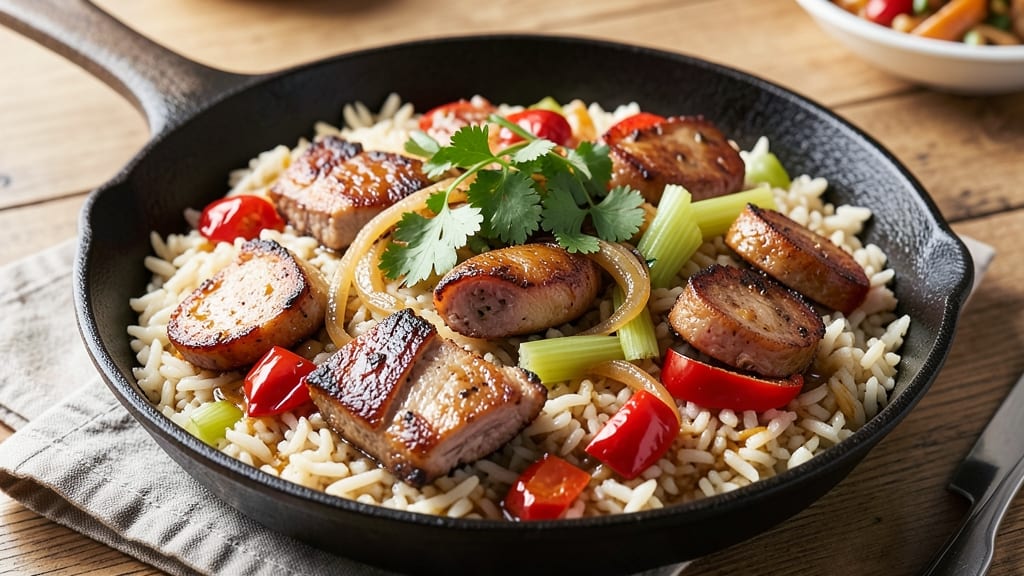
This Cajun pork and sausage jambalaya recipe delivers the bold, spiced flavors of Louisiana in one satisfying pot. The secret lies in building layers of flavor through the holy trinity—onions, bell peppers, and celery—while balancing heat with smoky sausage and tender pork.
After years of perfecting this dish in my Atlanta kitchen, I've developed a method that ensures perfectly cooked rice and deeply flavorful meat every time.
The beauty of this recipe is its simplicity: just one pot, minimal prep, and a method that works for both weeknight dinners and weekend gatherings. I use a proper rice-to-liquid ratio (1:1.5) to achieve that ideal texture—neither mushy nor dry—while letting the spices infuse deeply through slow cooking.
The combination of andouille sausage and pork shoulder creates rich, complex flavors that stand up to the heat.
What you'll end up with is a steaming pot of jambalaya where each bite delivers crisp-tender sausage, juicy pork, and perfectly seasoned rice. The aromatic blend of Cajun spices—paprika, cayenne, and thyme—creates a dish that's both comforting and exciting, with just the right balance of heat and smokiness.
This is the kind of meal that brings people together, whether it's a family dinner or a celebration with friends.
Serve with crusty bread to soak up every last bit of that flavorful broth, or pair it with a simple green salad to cut through the richness.
The leftovers reheat beautifully, making this an excellent make-ahead option for busy weeks. Let's get cooking—this jambalaya is worth every minute of the wait.
Ingredients for cajun pork and sausage jambalaya
Sixteen ingredients for a one-pot masterpiece that captures Louisiana's bold Cajun spirit.
| Ingredient | Amount | Notes |
|---|---|---|
| Andouille Sausage 🌭 | 1 ½ lb | Smoked variety for authentic flavor |
| Pork Shoulder 🥩 | 2 lb | Cut into 1-inch cubes |
| Long-Grain White Rice 🍚 | 2 cups | Uncooked, medium grain preferred |
| Yellow Onion 🧅 | 1 whole | Diced, medium size |
| Green Bell Pepper 🌶️ | 1 whole | Diced, green or red |
| Celery Stalks 🥬 | 3 whole | Diced, fresh and crisp |
| Garlic Cloves 🧄 | 4 cloves | Minced, fresh preferred |
| Cajun Seasoning 🌶️ | 2 tbsp | Homemade or store-bought blend |
| Smoked Paprika 🌶️ | 1 tbsp | For deep smoky flavor |
| Dried Thyme 🌿 | 1 tsp | Or 1 tbsp fresh thyme |
| Bay Leaves 🍃 | 2 whole | Fresh or dried |
| Chicken Broth 💧 | 3 cups | Low-sodium preferred |
| Tomato Paste 🍅 | 2 tbsp | Smooth, not chunky |
| Olive Oil 🫒 | 2 tbsp | Extra-virgin for richness |
| Salt 🧂 | 1 ½ tsp | Diamond Crystal preferred |
| Black Pepper 🌶️ | ½ tsp | Freshly ground |
The holy trinity—onions, bell peppers, and celery—forms the flavor foundation, so choose fresh, crisp vegetables. For the sausage, Johnsonville brand is my go-to; it delivers consistent smoky flavor without overpowering. Pork shoulder should have visible fat marbling for juiciness—ask your butcher to cut it into 1-inch cubes if buying whole. The rice-to-liquid ratio is critical: 2 cups rice to 3 cups broth ensures perfect texture. For Cajun seasoning, Tony Chachere's is reliable, but homemade blends with cayenne, paprika, and thyme work beautifully too. Don't skip the tomato paste—it deepens the sauce's richness without overpowering the dish.
No andouille sausage? Spicy kielbasa or chorizo works in a pinch, though the flavor will differ slightly. Substituting pork shoulder with chicken thighs? Use half the cooking time since chicken cooks faster. Fresh thyme is ideal, but dried at one-third the amount suffices. For the bell pepper, red adds sweetness while green brings brightness—mix both for complexity. The olive oil matters here; California avocado oil has a neutral flavor that won't compete with the spices. If your Cajun seasoning lacks cayenne, add a pinch of red pepper flakes for heat. The bay leaves are non-negotiable—they add aromatic depth that dried blends often miss.
This jambalaya tastes even better the next day as flavors meld, so make a double batch for leftovers. Store in an airtight container for 4-5 days in the fridge, or freeze for 3 months in portioned containers. Reheat gently on the stove with a splash of broth to restore moisture. For meal prep, cook the rice separately and assemble the jambalaya just before serving—this keeps the grains from becoming mushy. The sausage and pork can be pre-cooked and refrigerated for 3 days before assembly, saving time on busy weeknights.
Why You'll Love This Recipe
- One-Pot Magic: I swear by this recipe when I’m too tired to scrub pots—just brown the pork shoulder and sausage, dump everything in one deep skillet, and let it simmer. The rice absorbs all that smoky, spicy goodness without needing a separate pot.
- Smoky-Spicy Symphony: That first bite? Pure flavor payoff. The andouille sausage brings deep, smoky heat, while the pork shoulder melts into tender shreds—all wrapped in a sauce that’s got the perfect kick from Cajun seasoning and a touch of sweetness from the bell pepper.
- Lunchbox Hero: Between us, this is my go-to for meal prep. It reheats beautifully, and I swear my kids (even the picky ones) will eat it cold straight from the fridge. Pack it with a side of pickles or hot sauce, and you’ve got a lunch that’ll make someone’s day.
- Budget Stretch: Here’s what sold me—pork shoulder and sausage are affordable, and a single batch feeds four (or five if you’re like me and sneak extra portions). Plus, leftovers taste just as good the next day, so you’re not wasting a thing.
Step-by-step instructions for Cajun pork and sausage jambalaya
A rich, spiced one-pot masterpiece where tender pork and smoky sausage meld with aromatic rice.
Brown the Meat and Sauté the Holy Trinity
Heat the 2 tablespoons olive oil in a large, heavy-bottomed pot over medium-high heat. Add the 1.5 lb andouille sausage, sliced into rounds, and cook for 4-5 minutes until the casings are browned and the sausage begins to crisp. Remove the sausage and set aside, leaving the rendered fat in the pot.
In the same pot, add the 2 lb pork shoulder, cut into 1-inch cubes, and brown on all sides for 5-6 minutes. This step develops deep, meaty flavor through the Maillard reaction. Once browned, remove the pork and set aside with the sausage.
With the meat removed, reduce heat to medium and add the 1 whole yellow onion, 1 whole green bell pepper, and 3 whole celery stalks, all diced into ¼-inch pieces. Cook for 5-6 minutes until softened but not browned. Stir in the 4 cloves minced garlic and cook for 30 seconds until fragrant. This aromatic base forms the flavor foundation of jambalaya.
Build the Spice Base and Toast the Rice
Return the pork and sausage to the pot. Stir in the 2 tablespoons Cajun seasoning, 1 tablespoon smoked paprika, 1 teaspoon dried thyme, 1.5 teaspoons salt, and 0.5 teaspoon black pepper, coating the meat evenly. Cook for 1 minute to toast the spices and infuse them into the meat.
Add the 2 cups long-grain white rice, stirring to coat each grain with the spiced meat and aromatics. Toast the rice for 2 minutes, stirring frequently, until the grains become translucent at the edges. This step prevents mushy rice and builds nutty depth in flavor.
Pour in the 3 cups chicken broth and 2 tablespoons tomato paste, scraping up any browned bits from the bottom of the pot. Stir well to combine. The broth should just cover the rice—this ratio ensures perfectly cooked grains without excess liquid.
Simmer Until Tender and Flavorful
Bring the mixture to a boil, then reduce heat to low, cover the pot, and let it simmer for 30 minutes. After 30 minutes, stir gently and add the 2 whole bay leaves. Continue simmering for another 20-25 minutes, or until the rice is tender and the liquid has been absorbed.
If the jambalaya appears dry before the rice is fully cooked, add ¼ cup water at a time, stirring gently to distribute. The rice should be tender with a slight bite, and the pork should pull apart easily with a fork. The sausage should be fully heated through and the flavors should be deeply integrated.
Real talk: Your jambalaya might look dry at first glance, but the rice will continue absorbing moisture as it rests. If it's still slightly undercooked, cover and let it sit off the heat for 5 minutes before checking again.
Rest and Serve with Confidence
Remove the pot from heat and let the jambalaya rest, covered, for 10 minutes. This resting period allows the rice to finish absorbing any remaining liquid and the flavors to meld completely. Remove and discard the bay leaves before serving.
Garnish with additional Cajun seasoning or smoked paprika if desired. Serve immediately with crusty bread or a simple green salad to complement the rich, spiced flavors. Each bite should deliver a perfect balance of smoky sausage, tender pork, and aromatic rice infused with the holy trinity of onions, peppers, and celery.
Pro Tips For Making Cajun Pork And Sausage Jambalaya
- CRANK THE HEAT FIRST: Don’t let those onions and peppers sweat—they’ll turn to mush before they caramelize. Start with the pan on high heat, then add the onions and bell peppers, stirring constantly until they sizzle and soften in 5-6 minutes. I used to rush this, and my jambalaya always tasted dull.
- SALT THE SAUSAGE BEFORE SEARING: Skip the pre-seasoned packet on andouille—it’s already salty. Instead, cut the sausage into ½-inch slices, pat them dry, and toss with ½ teaspoon of salt per pound. This ensures crisp edges without overpowering the dish later.
- DON’T STIR THE RICE: Once the rice hits the pot, resist the urge to poke it. Stirring releases starch too early, making the rice gummy. Just give it a gentle shake to distribute the liquid, then let it steam undisturbed for 15 minutes before fluffing.
- USE COLD RICE FOR LATER BATCHES: Making jambalaya ahead? Cook the rice separately, spread it on a tray to cool completely, then refrigerate. Reheat with a splash of broth or water—it absorbs flavors better and avoids that sad, dry texture. (Yes, even if you’re impatient like me.)
Essential equipment for cajun pork and sausage jambalaya
Heavy-Bottomed Pot
You'll need a large, heavy-bottomed Dutch oven (I swear by my Le Creuset 5.5-quart) to handle the high heat and long simmer without scorching. The thick base distributes heat evenly, preventing hot spots that can burn your holy trinity or rice.
A 5- to 6-quart pot is ideal for this recipe—big enough to hold all ingredients without crowding but not so large that the rice cooks unevenly. 🔥
Cast Iron Skillet
For browning the sausage and pork, I prefer a 12-inch cast iron skillet (my trusty Lodge) because it conducts heat better than stainless steel and develops deeper Maillard flavors.
Cast iron retains heat well, ensuring even browning without flaming. If you don’t have cast iron, a heavy stainless steel skillet works in a pinch—just monitor the heat more closely.
Sharp Chef's Knife
A high-quality 8-inch chef’s knife (I use my Wüsthof) is essential for dicing the holy trinity into ¼-inch pieces—this ensures even cooking and maximum flavor release. A dull knife crushes vegetables instead of cutting cleanly, leading to uneven textures.
Keep your knife sharp with a Whetstone or honing steel between uses. Precision here makes all the difference in jambalaya’s texture.
Wooden Spoon
Use a heat-resistant wooden spoon (like my Oxo Good Grips) to stir the jambalaya without scratching your pot. Wood distributes heat gently and won’t react with acidic ingredients like metal can. Avoid plastic spoons—they melt under high heat.
A wooden spoon also helps scrape up those flavorful browned bits (fond) from the bottom of the pot, which are packed with umami goodness. ✨
Measuring Cups & Spoons
Precision matters for the rice-to-broth ratio (1:1.5) and spices, so invest in stainless steel measuring cups (like OXO’s) and spice spoons. I measure my 2 cups rice and 3 cups broth by volume for consistency—rice expands when cooked, so don’t pack it down.
For spices, use level spoons to avoid over-salting or under-seasoning. A gram scale (like OXO’s) is ideal for spices but not mandatory.
Instant-Read Thermometer
While not mandatory, an instant-read thermometer (I love the ThermoWorks Thermapen) helps ensure the pork reaches 165°F and the sausage is fully heated through. Insert it into the thickest piece of pork—if it’s undercooked, return the jambalaya to low heat for 5-10 more minutes.
This step prevents foodborne illness and ensures tender, juicy meat. Pro tip: Check the temp after the 30-minute simmer before adding bay leaves. 🌡️
Nutrition facts
Frequently asked questions
Can I substitute chicken or shrimp for the pork and sausage?
For a seafood version, swap the pork shoulder for 1.5 lbs shrimp and use 1 lb smoked sausage. Cook the shrimp separately for just 2-3 minutes before adding to the finished jambalaya. For chicken, use 2 lbs boneless thighs (they stay juicier than breasts) and reduce cooking time by 15-20 minutes since chicken cooks faster than pork.
How do I adjust the spice level for kids or sensitive eaters?
Start by reducing the Cajun seasoning to 1 tablespoon and omitting the cayenne if your blend contains it. For extra mildness, use ½ teaspoon less smoked paprika and add a pinch of sugar (¼ teaspoon) to balance any remaining heat. Always taste as you go—you can always add more spice later, but you can't take it out!
What's the best way to reheat jambalaya?
Reheat jambalaya gently on the stove over low-medium heat with 2-3 tablespoons of water or broth per cup of jambalaya. Cover and heat for 5-7 minutes, stirring occasionally, until everything is warmed through. Avoid microwaving—it makes the rice mushy. For leftovers, store in an airtight container for 4-5 days or freeze for 3 months in portioned containers.
Why does my jambalaya turn out dry or mushy?
Dry jambalaya usually means too much rice or not enough liquid. Stick to the 1:1.5 rice-to-broth ratio and let the rice rest 10 minutes off heat—it continues absorbing liquid. Mushy rice happens when you stir too much during cooking or use the wrong rice (long-grain is key). For extra insurance, use 1 cup uncooked rice to 1.5 cups broth and check doneness at 35-40 minutes total cooking time.
Can I make jambalaya in an Instant Pot or slow cooker?
Yes! For an Instant Pot, brown the meat and holy trinity first, then add all ingredients except broth. Use 2 cups broth (adjust ratio to 1:1) and cook on High Pressure for 10 minutes, then natural release for 10 minutes. For a slow cooker, follow the same steps but cook on Low for 6-7 hours or High for 3-4 hours, adding broth gradually if needed. The rice may need 10 extra minutes of resting time off heat.