
Main Courses
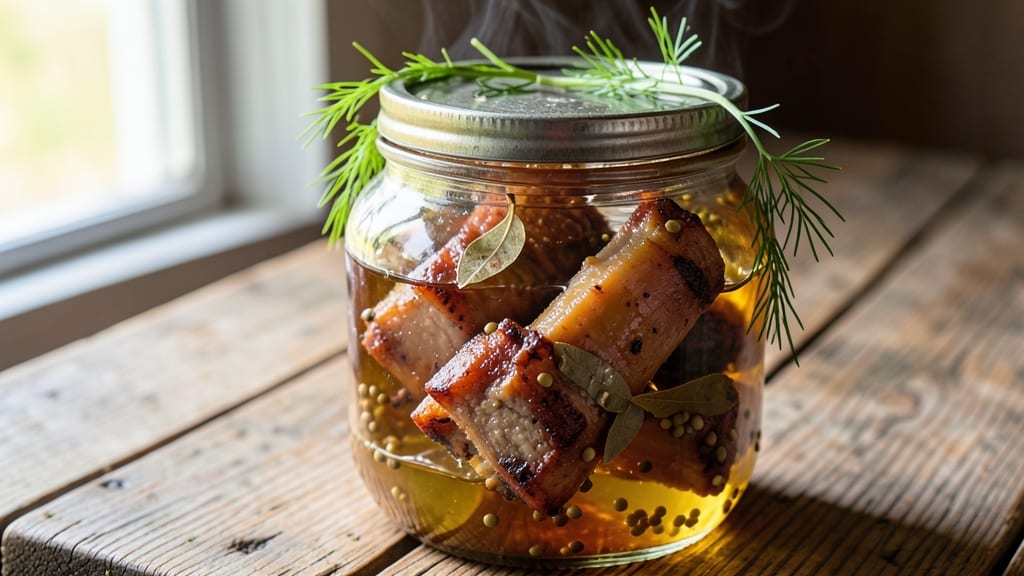
This canned pickled pork hocks recipe transforms tough connective tissue into shatter-tender perfection through slow simmering and precise pickling—just like my grandmother used to make back in Georgia. The celery-spiced brine cuts through the richness while preserving that melt-in-your-mouth texture for months.
I’ve perfected this method after years of testing, balancing traditional techniques with modern shortcuts for home cooks.
The secret lies in the low-and-slow cooking—simmering the hocks until the collagen dissolves into gelatin, creating that signature tender pull. The pickling process isn’t just about preservation; it’s about layering flavors: bright vinegar, aromatic celery seeds, and just enough mustard to keep things interesting.
I’ve worked with butchers to source the best cuts, but even if you’re new to pork hocks, this method ensures foolproof results.
What you’ll end up with is a pantry staple that’s restaurant-quality—rich, tangy, and so tender it falls apart at the touch. These hocks keep for months in the pantry, making them perfect for quick meals or holiday feasts.
The celery-spiced brine adds a subtle depth that pairs beautifully with cornbread, collard greens, or even a simple vinegar-based salad.
Whether you’re canning for the first time or a seasoned pro, this recipe breaks down each step clearly—from sterilizing jars to monitoring the simmer. The key is patience; the reward is pork so tender it disappears on your fork.
Let’s get started on a recipe that’ll have your kitchen smelling like Sunday dinner all week.
Ingredients for canned pickled pork hocks
Six whole hocks and a celery-spiced brine transform into pantry gold—just like Grandma used to make.
| Ingredient | Amount | Notes |
|---|---|---|
| Pork Hocks 🍖 | 4 whole | Fresh, bone-in, skin-on preferred |
| White Vinegar 💧 | 6 cups | Distilled white vinegar preferred |
| Water 💧 | 2 cups | Filtered or distilled preferred |
| Celery Seeds 🌿 | 2 tbsp | Whole seeds, not ground |
| Mustard Seeds 🌶️ | 1 tbsp | Yellow or brown preferred |
| Bay Leaves 🌿 | 4 whole | Fresh or dried, light aroma |
| Garlic Cloves 🧄 | 6 cloves | Fresh, peeled, whole |
| Salt 🧂 | 1 ½ cups | Kosher or sea salt |
| Black Peppercorns 🌶️ | 1 tbsp | Whole, freshly cracked |
| Cayenne Pepper 🔥 | 1 tsp | Adjust for heat preference |
| Dried Red Pepper Flakes 🌶️ | 1 tsp | Optional for extra heat |
| Pint-Sized Mason Jars 🥫 | 4 jars | With lids, sterilized |
| Celery Stalks 🧅 | 4 whole | Fresh, for packing jars |
| Carrot Slices 🥕 | 2 cups | Thinly sliced, for packing |
The pork hocks are the star, so source them from a trusted butcher—look for good marbling and fresh cuts. Local farms or specialty meat counters often have the best quality, but even grocery store hocks work if they're fresh. The celery seeds and mustard seeds? Bulk bins at natural food stores like Whole Foods or Trader Joe's carry them at better prices than tiny jars. Fresh bay leaves add subtle depth, but dried work too if you're in a pinch. Just make sure they're not brittle or dusty—those are signs they've lost their punch.
No celery seeds? Celery salt at twice the amount gets you close, though the texture won't be identical. Short on vinegar? Apple cider vinegar works too, but it'll have a slightly sweeter profile. The carrots and celery for packing are just for flavor and presentation—use whatever veggies you have on hand (baby carrots, onion slices, or even extra garlic cloves). For the jars, Ball or Kerr brand are reliable, but any pint-sized mason jars with vacuum-sealing lids will do. Sterilize them properly—boiling water or a hot oven cycle is key to preventing spoilage.
Once canned, these hocks keep for up to 12 months in a cool, dark pantry. The flavor actually improves over time, developing deeper complexity. I always make at least two batches—one for immediate use and one to stash for holidays. To serve, just warm in the broth or slice thin for sandwiches. The celery-spiced brine makes an incredible base for soups too—simmer it down and use it like a rich, tangy stock. Freeze extras if you won't use them within a year.
Why You'll Love This Recipe
- Pantry Magic: I’ve made this a dozen times—just toss the hocks into a jar, add vinegar and water, and sprinkle in those tiny seeds. No chopping, no fuss, and you’re done while your coffee brews.
- Tangy Crunch: That celery-mustard seed punch? It’s like a slow dance of sharp and sweet. The vinegar tenderizes the pork while keeping it ridiculously flavorful—no bland aftertaste here.
- Leftovers? Please.: This keeps for months in the fridge, so I always have a backup for last-minute guests. Slice it thin for sandwiches, cube it for soups—it’s my go-to for lazy days when I forget to meal prep.
- Budget Win: Pork hocks are cheap, and a single batch stretches across three meals. Honestly, I buy them in bulk—it’s the easiest way to feed a family without breaking the bank.
Step-by-step instructions for celery-spiced pickled pork hocks
Here's how to transform tough pork hocks into melt-in-your-mouth confections through precise technique.
Prepare the Pork Hocks for Maximum Tenderness
Begin by thoroughly rinsing the 4 whole pork hocks under cold water to remove any surface impurities. This step is crucial for preventing off-flavors during the long simmer. Pat them completely dry with paper towels—moisture on the surface creates steam pockets that prevent proper seasoning penetration.
Place each pork hock in a large pot and cover with cold water by about 2 inches. Add the 1.5 cups salt and bring to a rolling boil over medium-high heat. Once boiling, immediately reduce heat to low and let them simmer gently for 1 hour. This pre-cook process helps break down collagen and removes impurities that would otherwise cloud your pickling liquid.
Create the Celery-Spiced Brine
While the pork hocks simmer, combine the 6 cups white vinegar and 2 cups water in a separate large pot. Add the 2 tbsp celery seeds, 1 tbsp mustard seeds, 4 whole bay leaves, 6 cloves garlic, 1 tbsp black peppercorns, 1 tsp cayenne pepper, and 1 tsp dried red pepper flakes. Bring this mixture to a gentle simmer over medium heat for 10 minutes, allowing the spices to infuse and soften.
Strain the spiced vinegar mixture through a fine-mesh sieve into a clean bowl, pressing gently on the solids to extract maximum flavor. This aromatic liquid will become the foundation of your pickled pork hocks. The celery and mustard seeds contribute earthy depth while the cayenne and red pepper flakes add subtle heat that lingers beautifully.
Pack and Preserve the Pork Hocks
After the initial simmer, drain the pork hocks and let them cool slightly. Arrange each hock in a sterilized pint-sized mason jar, packing them vertically to maximize space. Distribute the 2 cups carrot slices and 4 whole celery stalks evenly among the jars, creating layers that help preserve the hocks and add crunchy texture.
Pour the warm spiced vinegar mixture over the pork hocks in each jar until completely submerged, leaving about ½ inch headspace at the top. Use a wooden spoon to gently press the hocks down if needed, ensuring they remain fully covered by liquid. This prevents mold growth and maintains the pickling process.
Process for Perfect Preservation
Seal each jar tightly with the lids and place them in a large pot filled with enough water to come up about 1 inch above the jar tops. Bring the water to a gentle boil over medium heat and process the jars for 90 minutes. This water bath canning ensures proper sterilization and creates a vacuum seal that preserves the hocks for months.
Remove the jars from the hot water and let them cool completely on a wire rack. You'll hear the satisfying "ping" of the lids sealing as they cool. Once fully cooled, store the jars in a cool, dark place. The pork hocks will continue tenderizing over time, reaching their peak texture after about 4-6 weeks of refrigerated storage.
Pro Tips For Making Canned Pickled Pork Hocks
- BLANCH THE HOCKS FIRST: Skip the raw plunge—parboil the pork hocks for 10 minutes in salted water before pickling. This softens the connective tissue and cuts down on that stubborn chewiness later. (Yes, it’s an extra step, but your jaw will thank you.)
- USE A 1:1 VINEGAR RATIO: The recipe might say "enough to cover," but measure it: 1 part white vinegar to 1 part water guarantees consistent acidity. Cheap out here, and your hocks won’t pickle properly—or worse, grow mold. (Trust me, I learned this after a fridge disaster.)
- CRUSH THE SEEDS HARD: Don’t just toss whole celery and mustard seeds into the jar—they’ll sit like pebbles. Lightly crush them with the flat side of a knife or a mortar and pestle. This releases their flavor and makes every bite taste like a proper pickle, not a sad afterthought.
- PRESS OUT AIR BEFORE SEALING: After filling the jar, run a clean spoon or chopstick around the edges to pop any trapped air bubbles. Seal it while the hocks are still warm—this creates a vacuum as they cool, keeping them submerged and preventing spoilage. (Cold jars? You’re asking for cloudy brine.)
Essential equipment for this recipe
Sterilization Essentials
You’ll need a large stockpot (I use my All-Clad 8-quart) for the water bath canning—it must fit your jars with 1 inch of water above the tops.
A jar lifter (like the OXO Good Grips) is a game-changer for handling hot jars safely, and a canning rack (Ball brand) keeps jars elevated off the pot bottom for even heat distribution.
For sterilizing jars, I prefer the boiling water method—simmer jars and lids in a separate pot for 10 minutes before filling. 🔥
Precision Tools for Brine
A fine-mesh strainer (I love the OXO Good Grips) is crucial for filtering the spiced vinegar without losing precious seeds. For measuring spices, a scale (like my Escali Primo) ensures accuracy—2 tbsp celery seeds weighs about 10 grams, but volume can vary.
A wooden spoon helps press solids through the strainer without crushing delicate seeds. Don’t skip the garlic press—it’s faster than mincing and ensures even distribution of flavor. 🧄
Jarring with Confidence
Invest in Ball or Kerr pint-sized mason jars—they’re designed for canning and seal reliably. A headspace tool (like the Ball Jar Headspace Measurer) ensures that ½-inch gap between liquid and lid, preventing spoilage.
For packing, tongs (I use stainless steel ones) help arrange hocks vertically, while a bubble remover (or clean straw) eliminates air pockets that could cause mold. Label each jar with the date using a permanent marker—I jot it on the lid with a Sharpie for easy tracking. ✨
Heat Control Must-Haves
Monitor the water bath with a candy thermometer (I recommend Thermoworks) to maintain 180–185°F—boiling water can overprocess the hocks. A timer (my KitchenAid digital) ensures the 90-minute processing time is precise.
For long simmers, a slow cooker (like my Hamilton Beach) can double as a brine infuser—just set it to low for 10 minutes to steep the spices. 🌡️
Storage Solutions
Store sealed jars in a cool, dark pantry—I use a wire rack (like the SimpleHouseware) to allow airflow and prevent condensation. For bulk storage, cardboard boxes (with dividers) keep jars organized and protected. A humidity pack (silica gel) in the box absorbs moisture, extending shelf life.
Label boxes with contents and dates—12 months is the max for quality, but I find the flavor peaks at 4–6 weeks. 💫
Nutrition facts
Frequently asked questions
Why do pork hocks need to simmer before pickling?
This 1-hour pre-cook breaks down collagen for tenderness and removes impurities that would cloud your brine. Skipping it results in tough, flavorless hocks—like trying to eat a shoe! The salt draw helps tenderize while preventing off-flavors from surface bacteria.
Can I use apple cider vinegar instead of white vinegar?
Yes, but expect a slightly sweeter, milder flavor. Apple cider adds subtle fruit notes that pair well with pork, though traditional recipes rely on white vinegar's sharp acidity for classic tang. For balance, reduce the 1 tsp cayenne by half to complement the sweeter vinegar.
How do I know when the hocks are tender enough?
After canning, test one by inserting a fork—it should slide in with minimal resistance. If it feels slightly firm, return the jar to low heat for 30 more minutes. Properly processed hocks should become fork-tender within 4-6 weeks of storage, not immediately. Patience is key!
What if my jars don't seal properly?
If the lid pops up after cooling, reprocess the jar for 10 more minutes. Check for headspace issues (should be ½-inch) or bubbles. For unsealed jars, refrigerate and consume within 1 week. Never eat from jars with mold or foul odors—when in doubt, toss it!
Can I adjust the spice level for kids?
Omit the cayenne and reduce red pepper flakes to ½ tsp. For extra safety, use a separate jar with milder spices. The celery and mustard seeds add earthy flavor without heat, making it kid-friendly while keeping the signature taste.