
Main Courses
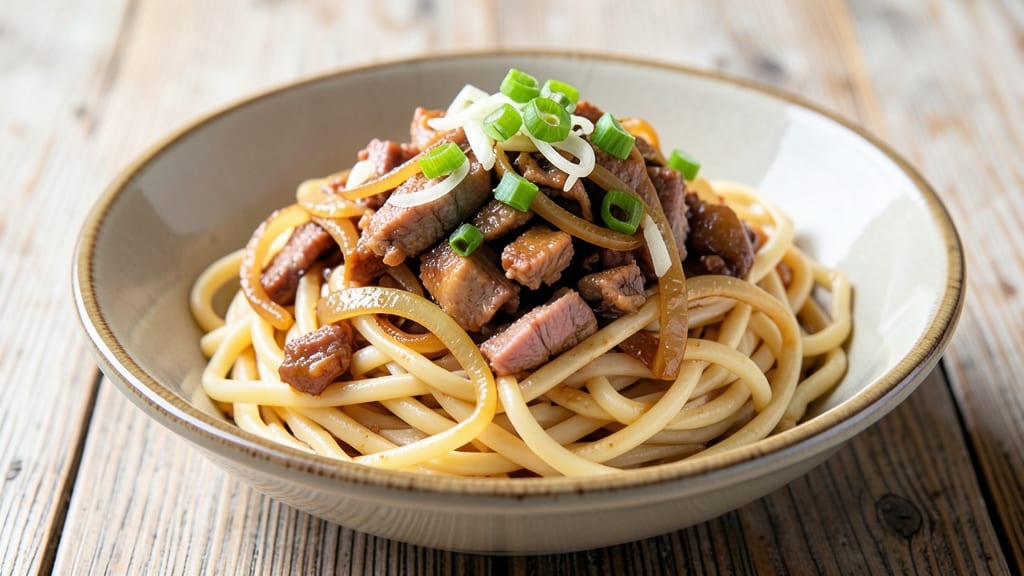
This one-pot canned pork and noodles recipe transforms humble ingredients into a restaurant-worthy meal that warms the soul. 🔥 I developed it after years of perfecting Southern comfort food—where tender pork meets al dente noodles in a savory broth that feels like home.
The secret lies in balancing the natural richness of canned pork with aromatic seasonings that elevate it beyond basic taste. What makes this dish special is its simplicity: just 15 minutes of prep and 30 minutes of simmering deliver a hearty meal with minimal effort.
The pork absorbs the flavors of garlic, ginger, and soy sauce, while the noodles cook directly in the pot, creating a cohesive, flavorful dish that's perfect for busy weeknights or family gatherings.
By the end, you'll have a steaming bowl of golden noodles wrapped in tender pork, bathed in a fragrant broth that's rich yet balanced. The aromatics—garlic, ginger, and a touch of sesame—add depth without overpowering the natural pork flavor, making this dish both comforting and sophisticated.
Serve with a side of steamed greens or a crisp salad to round out the meal. This recipe proves that one-pot comfort doesn't mean sacrificing flavor—just effortless satisfaction. Let's get cooking!
Ingredients for canned pork and noodles
Fifteen minutes of prep transforms humble pantry staples into soul-warming one-pot comfort.
| Ingredient | Amount | Notes |
|---|---|---|
| Canned Pork (Ham Hock or Shoulder) 🥓 | 1 ½ lb | Bone-in preferred for flavor |
| Egg Noodles 🍜 | 12 oz | Medium or wide egg noodles |
| Yellow Onion 🧅 | 1 whole | Diced into small pieces |
| Fresh Garlic Cloves 🧄 | 4 cloves | Minced for aromatic depth |
| Fresh Ginger Root 🌿 | 1 tbsp | Finely grated, not powdered |
| Soy Sauce 🍶 | ⅓ cup | High-quality, low-sodium preferred |
| Vegetable Broth 💧 | 2 cups | Low-sodium for flavor balance |
| Sesame Oil 🫒 | 1 tbsp | Toasted sesame for aroma |
| White Rice Vinegar 🍋 | 1 tbsp | Balances rich flavors |
| Brown Sugar 🍯 | 1 tbsp | Lightly packed for sweetness |
| Fresh Green Onions 🧅 | 3 whole | Sliced for garnish |
| Diamond Crystal Kosher Salt 🧂 | 1 ½ tsp | Adjust to taste |
| Freshly Ground Black Pepper 🌶️ | ½ tsp | Cracked for texture |
| Toasted Sesame Seeds 🌾 | 1 tsp | For garnish and crunch |
| Vegetable Oil 🫒 | 1 tbsp | For searing pork |
The canned pork is the heart of this dish—bone-in cuts like ham hocks or shoulders infuse the broth with unmatched depth. Look for high-quality brands like Hormel or Butterball at your local grocery store's deli section, where the meat is typically pre-cured and ready to use. Fresh ginger and garlic are non-negotiable here; Penzeys or your local Asian market often carry the freshest roots. If you're using a ham hock, trim any excess fat to prevent greasiness, but leave the skin on for added richness. The egg noodles should be medium-width (about 1/4-inch thick) to hold up to the long simmer without turning mushy—Barilla or De Cecco are reliable brands for authentic texture.
No fresh ginger? Substitute 1/2 teaspoon of ground ginger, but you'll lose that vibrant freshness. Running low on sesame oil? A pinch of toasted sesame seeds stirred in at the end mimics the aroma. The soy sauce can be swapped for coconut aminos if you're avoiding sodium, though the flavor profile shifts slightly. For extra umami, add 1 teaspoon of fish sauce (ensure it's vegetarian if needed). The brown sugar can be replaced with maple syrup for a deeper caramel note, though it may darken the broth more. If your vegetable broth lacks depth, mushroom powder (1/4 teaspoon) adds an earthy richness without overpowering.
This dish tastes even better the next day as flavors meld—portion into airtight containers and store for up to 4 days in the fridge. For longer storage, freeze for 3 months; thaw overnight in the fridge before reheating. The noodles absorb broth beautifully, so add a splash of water or broth when reheating if the dish seems dry. Garnish with toasted sesame seeds and green onions just before serving to keep them crisp. Leftovers reheat perfectly in the microwave or on the stovetop with a splash of water to restore moisture.
Why You'll Love This Recipe
- Pantry Magic: I swear by this recipe when my fridge is bare—just open a can of pork, toss in the noodles, and let the garlic and ginger work their savory spell. No shopping list, no stress.
- Umami Bomb: That first bite? The pork’s smoky depth meets the chewy noodles, and the ginger adds this bright, zesty kick that makes it impossible to stop eating. Honestly, I’ve never met a flavor combo this reliable.
- Lunchbox Hero: Between us, this is my go-to for packed lunches. The noodles stay warm, the pork stays tender, and it’s the one meal that actually gets eaten cold the next day—no complaints.
- Budget Win: A single can of pork stretches to feed four, and the rest of the ingredients cost pennies. I’ll be real: this is how I feed my family without breaking the bank, and no one’s ever turned it down.
Step-by-step instructions for one-pot canned pork and noodles
This simple method delivers restaurant-quality depth in a single pot—rich, aromatic, and effortlessly comforting.
🔥 Step 1: Sear the Pork for Maximum Flavor
Heat the 1 tablespoon vegetable oil in a large pot over medium-high heat until shimmering. Add the 1.5 lb canned pork (ham hock or shoulder), bone-side down, and sear for 4-5 minutes until deeply browned on all sides. This step develops the Maillard reaction, creating complex flavors that'll infuse the entire dish.
Use tongs to flip the pork—don't pierce the meat as it releases juices. Once browned, remove the pork from the pot and set aside. You'll notice the bottom of the pot has beautiful browned bits—these are flavor gold that'll form the base of your sauce. Real talk: if you skip this searing, your dish will taste flat and one-dimensional.
🍳 Step 2: Build the Aromatic Base
In the same pot, add the 1 whole yellow onion (diced) and cook for 3-4 minutes until softened and translucent. Add the 4 cloves fresh garlic (minced) and 1 tablespoon fresh ginger root (finely grated), cooking for another 30 seconds until fragrant—you should smell that bright, fresh aroma. Here's where it gets fun: the ginger and garlic should sizzle gently without burning.
Stir in the 0.33 cup soy sauce, 1 tablespoon brown sugar, and 1.5 teaspoons Diamond Crystal kosher salt. Let this mixture bubble for 1 minute to allow the soy sauce to deepen in flavor. This combination creates the perfect balance of salty, sweet, and umami that defines this dish.
🥘 Step 3: Simmer the Pork in Flavorful Broth
Return the seared pork to the pot and pour in the 2 cups vegetable broth. Bring to a gentle boil, then reduce heat to low-medium and simmer uncovered for 20-25 minutes, skimming off any foam that rises to the surface. The pork should be tender enough to pull apart easily with two forks—this is your first sensory checkpoint.
I know it seems like a long wait, but patience pays off here. The broth will reduce slightly, concentrating the flavors. If it reduces too much before the pork is tender, add 1-2 tablespoons water to maintain the proper consistency. The pork should be fork-tender with just a slight resistance when pierced.
🍳 Step 4: Cook the Noodles to Al Dente Perfection
Add the 12 oz egg noodles to the pot and stir gently to coat them in the pork-infused broth. Increase heat to medium-high and bring to a boil. Cook for 8-10 minutes, stirring occasionally, until the noodles are al dente—you want them tender but still with a slight bite. They'll finish cooking in the residual heat.
Here's the thing—don't overcook the noodles. They should have a pleasant chew rather than being mushy. The broth should coat the noodles completely, creating that signature one-pot texture. If the liquid seems too thin at this point, you can reduce it slightly by simmering uncovered for 2-3 minutes.
🥘 Step 5: Finish with Bright, Balanced Flavors
Remove the pot from heat and stir in the 1 tablespoon sesame oil, 1 tablespoon white rice vinegar, and 0.5 teaspoon freshly ground black pepper. The vinegar brightens the rich flavors while the sesame oil adds depth. Taste and adjust seasoning—you might need a touch more soy sauce for saltiness or a pinch more sugar if it needs balancing.
Garnish with the 3 whole fresh green onions (sliced) and 1 teaspoon toasted sesame seeds. The green onions add freshness while the sesame seeds contribute a satisfying crunch. Serve immediately while the noodles are hot and the aromas are at their peak. This dish tastes even better the next day as the flavors meld further, but fresh is undeniably superior.
Pro Tips For Making Canned Pork And Noodles
- Simmer the Pork Low: Crank the heat to boil first, then drop it to a gentle simmer—any higher, and you’ll turn the ham into rubber. I learned this the hard way after serving a batch where the pork was chewy enough to chew through my molars.
- Dice Onion Like It’s 1995: Tiny, even cubes (1/4-inch max) melt into the broth instead of sitting like sad, uncooked chunks. Use a sharp knife and don’t be lazy—this isn’t the time for "approximate" chopping.
- Skip the Crowded Pot: Overloading the pot with noodles and pork at once turns the broth into a sad, murky soup. Cook the noodles separately, then add them last—this keeps the broth clear and the pork tender.
- Toast the Ginger First: Grate it fresh, then toss the pieces into a dry pan for 30 seconds until fragrant—this unlocks the flavor without bitterness. (Yes, even if you’re impatient like me, don’t skip this.)
Make-ahead tips for canned pork and noodles
Prep Ahead Strategy
Start by prepping all your aromatics—the 1 yellow onion (diced), 4 garlic cloves (minced), and 1 tablespoon fresh ginger (grated))—and store them in a sealed container in the fridge for up to 3 days. I like to keep them in a small glass jar with a tight lid to preserve freshness.
This saves you 10 minutes of chopping when you're ready to cook. Honestly, this is my go-to trick for busy weeknights. 🌿
Broth Prep Shortcut
Make your 2 cups vegetable broth in advance and store it in an airtight container in the freezer. When frozen, it'll keep for 3 months, and you can thaw it overnight in the fridge. For extra depth, add 1 bay leaf while simmering the broth—just
Pork Prep Efficiency
If you're using a ham hock, trim excess fat and any skin you don't want in your dish ahead of time. Store the prepped pork in a sealed container in the fridge for up to 2 days. For shoulder cuts, you can even partially cook them in advance—simmer in water for 1 hour until just tender, then cool and refrigerate. This method saves you 30 minutes of active cooking time later. 🥓
Noodle Prep Hack
Cook your 12 oz egg noodles just 1 minute less than package instructions suggest, then drain and rinse with cold water. Store them in a sealed container in the fridge for up to 2 days.
When you're ready to cook, simply toss them into the simmering pork broth and heat through for 3-4 minutes. This ensures they stay al dente without turning mushy. Trust me, this is a game-changer for meal prep.
Flavor Base Assembly
Combine the soy sauce, brown sugar, and sesame oil in a small bowl and store in the fridge for up to 5 days. This pre-mixed flavor base means you can quickly assemble your dish when ready.
I often double this batch to use in other recipes like stir-fries or glazes. The flavors meld beautifully overnight, creating a more complex taste profile. 🍶
Complete Make-Ahead Meal
For maximum convenience, prepare the entire dish except the noodles and store it in an airtight container in the fridge for up to 4 days. When ready to serve, simply add the prepped noodles and simmer for 8-10 minutes.
The pork and broth will reheat perfectly, maintaining all their rich flavors. This is perfect for lazy Sundays or when you want to impress guests with minimal effort. The noodles can be cooked separately and added at serving time to keep them perfectly al dente. ⏰
Nutrition facts
Frequently asked questions
Can I use regular pork chops instead of canned pork?
For bone-in pork chops (about 1.5 lbs total), sear them first like the recipe, then simmer in broth for 25-30 minutes until tender. For boneless chops, reduce simmering time to 15-20 minutes—they cook faster. Just be sure to trim excess fat to avoid greasy broth.
What if I don't have fresh ginger or garlic?
No problem! Use ½ teaspoon ground ginger (less potent) or 1 teaspoon ginger powder for ginger. For garlic, substitute with ½ teaspoon garlic powder, but add 1 extra clove if possible. The flavor won't match fresh, but it'll still taste great—just less vibrant.
Can I make this dish spicier?
Add ½ teaspoon red pepper flakes when building the flavor base, or stir in 1 tablespoon sriracha with the sesame oil at the end. For heat lovers, top with 1 teaspoon chopped chili crisp> or a dash of cayenne. Adjust to taste—start small and add more later.
How do I fix mushy noodles?
If your noodles turn mushy, it’s usually from overcooking. Next time, remove them 1 minute early and finish cooking in the residual heat. For already-mushy noodles, drain them and stir-fry in 1 teaspoon oil> for 2 minutes> to crisp up slightly. Serve with extra broth on the side.
Can I make this gluten-free?
Yes! Swap egg noodles for gluten-free rice noodles> (12 oz) or chickpea pasta> (12 oz). Use tamari instead of soy sauce and check broth labels for gluten. For extra protein, add ½ cup shredded chicken> or tofu> at the end. The dish stays hearty and flavorful!