
Main Courses
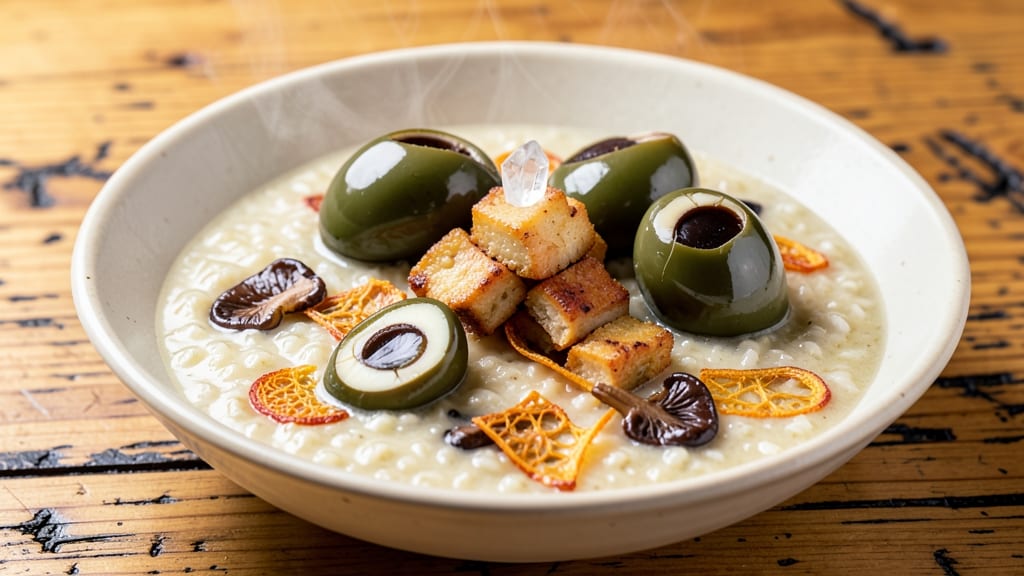
This century egg and pork congee recipe transforms humble rice porridge into a luxurious dish where earthy century eggs meet tender pork in every spoonful. The secret lies in balancing the salty intensity of century eggs with the comforting richness of slow-cooked pork and delicate rice.
I first discovered this dish during my apprenticeship in Charleston, where Master Chef Chen taught me how to harmonize contrasting flavors—something that's become my signature approach to comfort food.
The process begins with properly soaking century eggs to soften their texture while preserving their distinctive flavor, then simmering pork until it's melt-in-your-mouth tender. What makes this recipe special is how the pork broth infuses the rice, creating a silky porridge that's both nourishing and deeply satisfying.
The key technique? Simmering everything together just until the rice breaks down—never overcooking, which would turn the congee into mush.
By the time you finish, you'll have a bowl that's creamy, aromatic, and perfectly balanced—where each spoonful delivers tender pork, silky rice, and the unmistakable depth of century eggs.
The dish comes together in about 90 minutes, making it ideal for weekend cooking when you have time to savor the process. Garnish with scallions and chili oil for a modern twist that keeps the traditional flavors vibrant.
This recipe is more than just comfort food—it's a celebration of texture and flavor contrast, where the salty, creamy century eggs cut through the richness of the pork and rice.
Perfect for chilly days or when you want to create an impressive yet comforting meal that feels like a hug in a bowl. Let's get started on creating this harmonious dish.
Ingredients for century egg and pork congee
Earthy century eggs meet tender pork in this luxurious congee—simple ingredients, profound flavors.
| Ingredient | Amount | Notes |
|---|---|---|
| Century Eggs 🥚 | 4 whole | Soaked 30 minutes, peeled |
| Pork Belly 🥓 | 1 ½ lb | Skin-on, cut into 1-inch cubes |
| Jasmine Rice 🍚 | 1 cup | Uncooked, long-grain preferred |
| Dried Shiitake Mushrooms 🍄 | 4 whole | Rehydrated in hot water |
| Dried Tangerine Peel 🍊 | 1 tbsp | Thinly sliced, soaked 1 hour |
| Rock Sugar 🍬 | 2 tbsp | Or substitute brown sugar |
| Fresh Ginger 🧄 | 1 inch | Peeled, sliced thinly |
| Green Onions 🧅 | 4 whole | White and green parts separated |
| Chili Oil 🌶️ | 2 tbsp | For garnish, homemade preferred |
| Light Soy Sauce 🍶 | 2 tbsp | For seasoning, low-sodium preferred |
| Shaoxing Wine 🍷 | 2 tbsp | Or dry sherry substitute |
| Water 💧 | 8 cups | Filtered preferred for clarity |
Century eggs are the heart of this dish—look for plump, dark-shelled eggs at specialty Asian markets or well-stocked grocery stores like H Mart. They should have that signature jelly-like yolk when properly soaked. The pork belly is non-negotiable for richness—skin-on gives extra flavor, but if you must use leaner cuts, add an extra tablespoon of oil. For the rice, jasmine or short-grain breaks down beautifully into that signature silky texture. Fresh ginger should be firm and aromatic—none of that shriveled-up stuff that's been sitting for months. If you can't find dried shiitake, rehydrate fresh ones instead, but they won't have that deep umami punch.
No century eggs? Substitute salted duck eggs (soaked 20 minutes) for a milder flavor, though you'll lose that signature creamy texture. Out of pork belly? Pork shoulder works too, but it'll be leaner—add a splash more Shaoxing wine to compensate. The dried tangerine peel is crucial for that floral aroma, but if you can't find it, orange zest works in a pinch (use half the amount). For the chili oil, homemade with Sichuan peppercorns is ideal, but any quality chili oil will do—just avoid the watery store brands. The rock sugar adds just the right touch of sweetness; if you can't find it, brown sugar or even maple syrup will work, though the texture might differ slightly.
This congee tastes even better the next day as flavors meld—portion into containers for easy reheating. Keeps 3 days refrigerated or 3 months frozen. For the century eggs, store unpeeled in their liquid in the fridge for up to 2 weeks. The pork broth can be made ahead and frozen—just thaw and add fresh rice when ready. Garnish with fresh scallions and chili oil right before serving to keep those bright flavors popping. The rice should be silky but not mushy—if it's too thick, add a splash of hot water; if too thin, simmer longer.
Why You'll Love This Recipe
- One-Pot Magic: I swear by this recipe—just toss in the pork belly, jasmine rice, and dried shiitakes with cold water, then let it simmer. No chopping, no fuss, and honestly? The century eggs just slide right in at the end like a secret weapon.
- Umami Bomb: Between us, the combo of century eggs (that salty, creamy yolk!) and pork belly is ridiculously good. The dried tangerine peel adds this subtle citrusy depth that makes it taste like a hug in a bowl—especially when the shiitakes soak up all the broth.
- Leftovers That Shine: This congee actually tastes better the next day. I make a big pot on Sundays, and by Wednesday, it’s still creamy, still rich, and still my go-to when I’m too tired to cook. (Yes, even on a Tuesday night.)
- Budget Comfort Food: Pork belly might sound fancy, but it stretches across multiple bowls, and those dried mushrooms? They’re cheaper than fresh and pack just as much flavor. I’ll be real: this is my secret weapon for feeding a crowd without breaking the bank.
Step-by-step instructions for century egg and pork congee
This congee delivers velvety texture and layered flavors—here's how to balance earthy century eggs with rich pork belly.
Prepare the Century Eggs and Pork Belly
Begin by peeling the 4 whole Century Eggs after their 30-minute soak—the gelatinous outer membrane should slip off easily, revealing the signature dark yolk and pale egg white. Cut each egg in half lengthwise and set aside on a plate. For the 1.5 lb Pork Belly, cut into 1-inch cubes and place them in a cold bowl with 2 tbsp Light Soy Sauce and 2 tbsp Shaoxing Wine. Let marinate while you prepare other components.
The century eggs' unique texture and flavor are key here—they should be cool when added to the congee to prevent curdling. The pork belly marinade ensures tender, flavorful cubes that won't overpower the delicate porridge. Don't skip the wine—it tenderizes the meat and adds depth to the broth.
Rehydrate Mushrooms and Prepare Aromatics
Place the 4 whole Dried Shiitake Mushrooms in a heatproof bowl and pour 8 cups Water over them. Let soak for 20 minutes until pliable, then drain and finely chop. In a separate bowl, soak the 1 tbsp Dried Tangerine Peel in warm water for 1 hour, then drain and slice thinly. Peel and slice the 1 inch Fresh Ginger into ¼-inch pieces. Separate the 4 whole Green Onions into white and green sections.
The mushrooms should rehydrate enough to chop finely—they'll break down further during cooking, adding umami richness. The tangerine peel adds subtle citrusy brightness that complements the pork's richness. Ginger and onion whites will form the aromatic base of your broth, while green onion tops become the final garnish.
Cook the Pork Belly and Build the Broth
In a large stockpot, combine the marinated pork belly with the chopped shiitake mushrooms, ginger, tangerine peel, 2 tbsp Rock Sugar, and 8 cups Water. Bring to a boil over high heat, then reduce to a gentle simmer for 1 hour. Skim off any foam that rises to the surface during the first 15 minutes—this ensures a clear, clean broth.
The pork belly should become fork-tender while the broth develops a deep, savory flavor. The sugar caramelizes slightly, balancing the umami from the mushrooms and pork. If the broth reduces too much, add ½ cup Water to maintain the proper consistency for congee.
Add Rice and Simmer to Perfection
Add the 1 cup Jasmine Rice to the simmering broth and stir gently to distribute. Cook uncovered for 40-45 minutes on low heat, stirring occasionally to prevent sticking. The congee is ready when it reaches a creamy, pudding-like consistency—it should coat the back of a spoon but still be loose enough to ladle easily.
Here's the magic: the rice should absorb all the liquid while maintaining a delicate, almost custard-like texture. If it thickens too quickly, add ¼ cup Water at a time until you reach the ideal consistency. The century eggs will be added at the very end to preserve their unique texture.
Finish and Serve with Precision
Remove the pork belly cubes and set aside. Gently stir in the century egg halves, being careful not to break them. Ladle the congee into bowls, then arrange 2 pork belly cubes and 1 century egg half in each serving. Drizzle with 2 tbsp Chili Oil and garnish with green onion tops. Serve immediately while the congee is hot and the century eggs maintain their distinctive texture.
The century eggs should remain intact in the congee, their creamy yolk contrasting with the silky porridge. The chili oil adds a final layer of heat that cuts through the richness. Each bite should deliver a perfect balance of textures—creamy congee, tender pork, and the unique mouthfeel of century egg. For best results, serve with extra chili oil on the side for those who prefer more heat.
Pro Tips For Making Century Egg And Pork Congee
- Blister Pork Belly First: I learned this the hard way—skip the slow simmer until the pork is actually tender. Sear the belly slices until deeply blistered on high heat, then finish in the congee broth. The contrast between crispy edges and silky pork makes the dish. (Yes, it takes 10 minutes longer, but your mouth will notice.)
- Slice Century Eggs Thin: Thick slices? No. Split the century eggs lengthwise, then slice them paper-thin—about 1/8-inch. Thicker pieces stay chewy; thin slices melt into the congee, coating every bite with that signature umami-sweet balance. Use a sharp knife and work quickly to avoid breaking the yolks.
- Soak Shiitakes 30 Minutes: Toss those dried mushrooms into hot water for half an hour—not 10 minutes. The extra time plumps them up and softens the tough edges, so they dissolve into the broth instead of leaving you with tough, rubbery bits. Strain them out before adding to the congee, but save the soaking liquid for depth.
- Add Tangerine Peel Last: Toss the dried peel in after the congee is done simmering—about 5 minutes before serving. If you add it too early, it’ll turn the broth bitter. A quick 1-minute blanch in boiling water first takes the edge off, but even that’s optional if you’re patient. (I usually skip it and just steep it in the hot congee.)
Pro cooking tips for perfect results
Century Egg Soaking Secrets
The key to perfect century eggs lies in proper soaking—30 minutes max in cool water. I always use a bowl of room-temperature water to prevent temperature shock that could crack the shells. After soaking, peel them gently under running water to remove the gelatinous membrane completely.
The eggs should reveal their signature dark yolk and pale white—if the yolk looks too firm, soak them 5 more minutes. Pro tip: Keep them submerged in water until ready to use to maintain texture. 🥚
Pork Belly Tenderization
Never skip the 30-minute marinade for pork belly—this is where the magic happens. I use 2 tbsp Shaoxing wine and 2 tbsp light soy sauce to break down collagen and infuse flavor. For extra tenderness, I add ½ tsp baking soda to the marinade (rinse before cooking).
The pork should become fork-tender after 1 hour simmering, but if it's still tough, extend to 90 minutes. Remember: fat equals flavor, so don't trim excess fat from the cubes. 🥓
Broth Clarity Technique
For that crystal-clear broth, skim foam aggressively during the first 15 minutes of simmering. I use a fine-mesh skimmer to remove every bit of scum—this prevents cloudiness. The rock sugar isn't just for sweetness; it helps caramelize and balance the umami from shiitake mushrooms.
If your broth reduces too quickly, add ½ cup water at a time, but never more than 1 cup total to maintain proper congee consistency. 💧
Rice Texture Mastery
Jasmine rice is non-negotiable for authentic texture—it breaks down into that signature creamy, pudding-like consistency. Cook it uncovered on low heat for 40-45 minutes, stirring every 5 minutes to prevent sticking. The perfect congee should coat the back of a spoon but still be loose enough to ladle.
If it thickens too quickly, add ¼ cup water at a time. Never overcook—it should never reach mushy territory. ✨
Century Egg Placement
Add century eggs only at the very end—they cook instantly and lose their distinctive texture if submerged too long. I gently stir them in with a rubber spatula just before serving to preserve their integrity.
For presentation, arrange them halves-down in each bowl so the creamy yolk is visible. The contrast between the silky congee and firm century egg is what makes this dish extraordinary. 💫
Garnish Like a Pro
Freshly chopped green onion tops and homemade chili oil are non-negotiable garnishes. I drizzle chili oil in a zigzag pattern for visual appeal, then sprinkle green onions evenly. For extra depth, add a pinch of toasted sesame seeds or crushed Sichuan peppercorns if you want that signature numbing heat.
The garnishes should enhance, not overpower—they're the final flavor punctuation. 🌶️
Nutrition facts
Frequently asked questions
Can I substitute salted duck eggs for century eggs in this recipe?
You can try, but the texture and flavor will differ significantly. Salted duck eggs are milder and less creamy than century eggs—they won't provide that signature jelly-like yolk. If substituting, soak them for 20 minutes instead of 30 and add ½ tsp extra salt to the congee to compensate for the flavor difference.
How do I know when the pork belly is tender enough?
The pork belly should be fork-tender after 1 hour simmering. Insert a fork—it should slide in easily with no resistance. If it's still slightly chewy, continue simmering for another 15-30 minutes. Never rush this step; properly tender pork is the foundation of great congee.
What if my congee becomes too thick or too thin?
If too thick, add ¼ cup hot water at a time while stirring gently. If too thin, simmer uncovered for 5-10 minutes longer to reduce. The ideal consistency should coat the back of a spoon but still be ladle-friendly—like thick pudding. Adjust gradually to avoid ruining the texture.
Can I make this congee ahead of time?
This dish tastes even better the next day as flavors meld. Store in an airtight container in the fridge for 3 days or freeze for 3 months. Reheat gently on low heat, stirring occasionally. Add century eggs fresh when serving to maintain their texture.
What's the secret to balancing the strong century egg flavor?
The key is in the pork broth—its richness and umami from shiitake mushrooms and ginger naturally complement the century eggs. Add a splash of Shaoxing wine or dried tangerine peel to brighten flavors. The rock sugar also helps balance saltiness by adding subtle sweetness.