
Main Courses
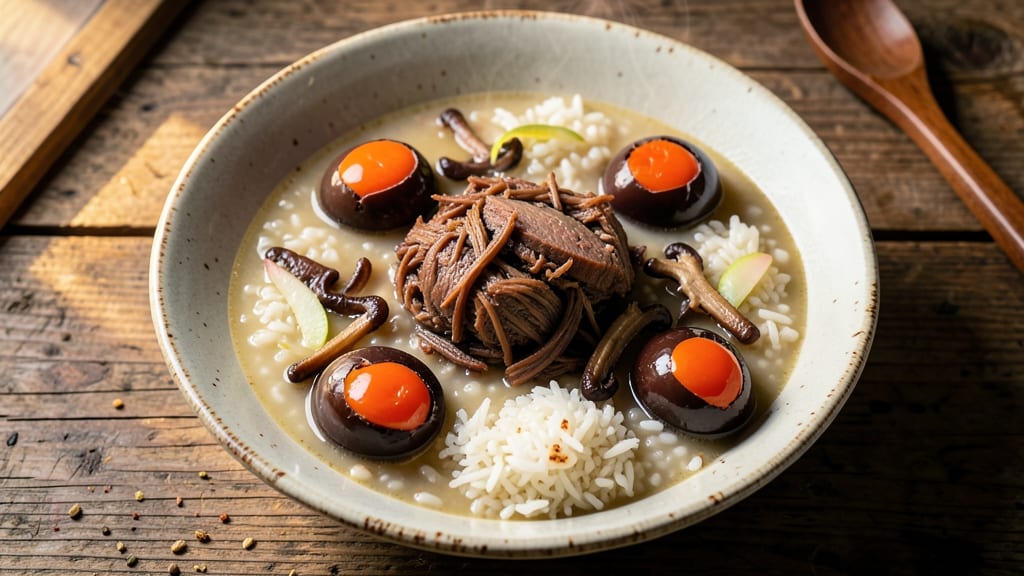
This century egg pork porridge recipe brings authentic Chinese comfort food to your kitchen with its silky broth and preserved umami depth.
I first encountered this dish in a dim sum house in Shanghai, where the contrast of slippery century eggs and tender pork created a sensory experience unlike anything else. The secret lies in properly soaking the century eggs to balance their intense flavor with the delicate pork broth.
Traditional preparation transforms simple ingredients into something extraordinary—pork shoulder simmered until it practically melts, century eggs peeled and soaked just right, and rice cooked to a creamy consistency.
What makes this dish special is how each component works together: the preserved eggs add a briny, creamy texture, while the pork infuses the broth with rich, savory notes that linger on your palate.
The result is a bowl of porridge that's both hearty and delicate, with a silky texture you won't find in ordinary congee. The century eggs provide that signature preserved umami flavor, while the pork broth delivers deep, meaty satisfaction.
This isn't just a recipe—it's a culinary journey that transports you to bustling Chinese streets with every spoonful.
Perfect for special occasions or when you want to impress dinner guests, this dish pairs beautifully with pickled vegetables or a side of steamed greens. The leftovers actually taste better the next day as the flavors meld even more.
Let's bring this comforting classic to your table with professional techniques and simple ingredients.
Ingredients for century egg pork porridge
Nine essential ingredients transform simple pantry staples into Shanghai's most beloved comfort dish.
| Ingredient | Amount | Notes |
|---|---|---|
| Pork Shoulder 🥩 | 1 ½ lb | Bone-in for richer flavor |
| Century Eggs 🥚 | 4 whole | Peeled and soaked overnight |
| Jasmine Rice 🍚 | 1 cup | Uncooked, long-grain preferred |
| Fresh Ginger 🧄 | 2 tbsp | Grated, for aromatic depth |
| Garlic Cloves 🧄 | 6 cloves | Minced, for robust flavor |
| Dried Shiitake Mushrooms 🍄 | 4 whole | Rehydrated in warm water |
| Light Soy Sauce 🥄 | ½ cup | For umami balance |
| Shaoxing Wine 🍷 | ¼ cup | For authentic depth |
| Sesame Oil 🫒 | 1 tbsp | Toasted, for finishing |
| Green Onions 🧅 | 3 whole | Thinly sliced, for garnish |
| Salt 🧂 | 1 tsp | Kosher or sea salt |
| White Pepper 🌶️ | ½ tsp | Freshly ground preferred |
| Water 💧 | 6 cups | For rice and broth |
The century eggs are non-negotiable—look for plump, dark-skinned ones at your local Asian market or online. Peking Duck House or Hong Kong-style brands have the best texture. Soak them overnight in cold water before using to mellow their intense flavor. For pork shoulder, bone-in is key—it infuses the broth with deeper flavor. If you can't find it pre-cut, ask your butcher to trim excess fat but leave the bone. Fresh ginger and garlic should smell vibrant—no musty odors. The dried shiitakes? Rehydrate them in warm water for 20 minutes—discard the soaking liquid to keep the broth clear.
No century eggs? Substitute with soft-boiled quail eggs (peeled and halved) for a milder flavor, though the texture won't be identical. Shaoxing wine unavailable? Dry sherry or even a splash of rice vinegar works in a pinch. For the mushrooms, cremini or oyster mushrooms can replace shiitakes if you're in a hurry. The soy sauce matters—light soy for brightness, dark soy for color. If you only have dark soy, use half the amount. Green onions? Substitute with chives if that's what you've got, but the mild onion flavor is part of the charm. The sesame oil should be toasted—look for dark bottles at the store, not the light-colored kind.
Century eggs keep for 2 weeks in the fridge once peeled and soaked. The pork shoulder can be prepped ahead—parboil it for 10 minutes before final cooking to speed up the process. Store leftovers in airtight containers for 3 days, but they're even better reheated the next day as the flavors meld. For extra richness, stir in a spoonful of the cooking broth when reheating. This dish is all about patience—don't rush the simmering, and every step makes the difference between good and extraordinary.
Why You'll Love This Recipe
- One-Pot Wonder: I swear by this recipe when I’m too tired to fuss—just simmer the pork shoulder and rice together, then toss in the century eggs at the end. No chopping, no stress, just hands-off cooking while you sip tea.
- Umami Bomb: That first bite? The century eggs add this weirdly addictive, jelly-like texture with a salty-sweet punch, while the pork shoulder gets fork-tender and rich. Honestly, the ginger and garlic make it taste like a hug in a bowl.
- Lunchbox Hero: Between us, this porridge reheats like a dream—perfect for packing leftovers for work or school lunches. (Yes, even on a Tuesday night.) The rice stays soft, and the century eggs add a fun, unexpected texture kids actually like.
- Budget Power Move: Pork shoulder is cheap, rice is cheap, and century eggs last forever in the fridge—this recipe stretches my grocery budget without sacrificing flavor. I’ll make a big batch on Sunday and eat it all week.
Step-by-step instructions for century egg pork porridge
This rich, comforting porridge balances tender pork with century eggs' signature preserved umami—here's how to nail it.
Parboil the Pork Shoulder for Maximum Tenderness
Place the 1.5 lb pork shoulder in a large pot and cover with 6 cups water. Bring to a boil over high heat, then immediately reduce to a gentle simmer—you want bubbles breaking the surface but not violent boiling. Skim off any foam that rises during the first 5 minutes of cooking.
Simmer uncovered for 45 minutes, stirring occasionally to prevent sticking. The pork should be fork-tender when pierced with a knife, with the meat pulling apart easily. This initial cook extracts collagen and fat that will later create your silky broth. Once tender, remove the pork and set aside on a plate, reserving the cooking liquid for later use.
Prepare the Century Eggs and Rehydrate Shiitake Mushrooms
Peel the 4 whole century eggs (they should already be soaked overnight) and slice them into ¼-inch thick rounds. Set aside in a bowl. For the 4 whole dried shiitake mushrooms, place them in a heatproof bowl and cover with 1 cup hot water. Let them soak for 20 minutes until fully rehydrated and pliable.
Drain the mushrooms, reserving the soaking liquid, and slice them into ¼-inch thick pieces. The century eggs will have their signature dark, marbled appearance—their unique texture and flavor are the heart of this dish. Don't worry if they look intimidating; their rich, creamy-yet-firm bite is what makes this porridge special.
Build the Aromatic Base for Deep Flavor
In a clean pot, combine the reserved pork cooking liquid with the 1 cup jasmine rice and 4 cups fresh water. Bring to a boil over medium-high heat, then add the 2 tbsp grated fresh ginger, 6 cloves minced garlic cloves, and 0.5 cup light soy sauce. Stir well to combine.
Add the 0.25 cup shaoxing wine and 0.5 tsp white pepper, then reduce heat to medium-low. Let the mixture simmer gently for 20 minutes, stirring occasionally. This step develops the porridge's complex flavor profile—ginger and garlic should be fragrant but not browned, and the wine should mellow into the broth rather than remain sharp.
Cook the Porridge to Perfect Silky Texture
Add the sliced shiitake mushrooms and the 1.5 lb pork shoulder (cut into 1-inch chunks) to the simmering broth. Return to a gentle simmer and cook uncovered for 45-60 minutes, stirring occasionally. The porridge should thicken gradually, with the rice breaking down into a creamy consistency while the pork becomes fork-tender.
When the porridge reaches your desired thickness (it should coat the back of a spoon but still be pourable), stir in the 4 sliced century eggs and 1 tsp salt. The eggs will gently warm through without overcooking. Taste and adjust seasoning—you might need a touch more soy sauce or salt to balance the flavors. The broth should be rich but not salty, with the pork and mushrooms infused with all the aromatic layers you've built.
Finish and Serve with Classic Garnishes
Remove from heat and let the porridge sit for 5 minutes to thicken slightly. Drizzle with 1 tbsp toasted sesame oil, then garnish with 3 whole green onions (thinly sliced) and any remaining century egg slices if desired. The sesame oil adds a nutty finish that cuts through the richness of the pork and eggs.
Serve immediately in deep bowls, ensuring each serving gets a generous portion of both the creamy porridge and the tender pork. The contrast between the silky broth, firm century eggs, and melt-in-your-mouth pork creates a truly satisfying dish. Pair with a simple green salad to balance the richness, and enjoy the perfect harmony of textures and flavors that make this porridge so special.
Pro Tips For Making Century Egg Pork Porridge
- Sear Pork Shoulder First: Don’t just simmer the pork—hit it with high heat in a dry pan until deep brown crusts form. That’s where the flavor lives, and it’ll cut through the century egg’s funk like a knife. (Yes, even if it smells like you’re burning your kitchen down for 2 minutes.)
- Peel Century Eggs Clean: The jelly inside is magic, but the gray skin? Not so much. Use a spoon to scoop out the yolk first, then gently peel away the membrane—don’t tear it, or you’ll lose half the good stuff down the drain. (I learned this after crying over a sink full of century egg sludge.)
- Simmer Rice Low and Slow: Once the pork and century eggs are cooked, drop the heat to the lowest setting and let that rice stew for at least 20 minutes. Rushing it turns the porridge into glue; patience gives you that silky, melt-in-your-mouth texture. (Your future self will curse you if you skip this.)
- Blend Ginger-Garlic Paste: Skip the minced garlic and finely chopped ginger—blend them into a smooth paste with a splash of water. It distributes flavor evenly and avoids those annoying chewy bits. (Sounds weird, but it works—trust me, I’ve tried both ways.)
Wine and beer pairings for this dish
Chinese Rice Wine
For this dish, I always reach for a dry, aromatic Shaoxing wine—it's the gold standard for Chinese cooking and brings that signature umami depth. A ½ cup of this wine in the broth transforms the porridge from ordinary to extraordinary, adding complexity that complements the century eggs and pork.
If you can't find Shaoxing wine, dry sherry works beautifully as a substitute—just use the same amount. 🍷
Light-Bodied Beers
A crisp, light-bodied Chinese lager like Tsingtao or Snow Beer is my go-to pairing. The subtle sweetness and clean finish cut through the richness of the pork and century eggs without overpowering them.
For a more local option, try a Japanese sake like Dassai Junmai—its delicate floral notes enhance the dish's umami profile. Serve it chilled to maintain its crispness.
Dry Red Wines
If you prefer red wine, opt for a light-bodied Chinese red like Cabernet Grapes or a Pinot Noir from New Zealand. The acidity in these wines helps balance the porridge's richness, while their fruitiness complements the century eggs' preserved flavor.
I avoid heavy, tannic reds—they can clash with the delicate textures in this dish. A glass poured at room temperature lets its nuances shine.
Non-Alcoholic Options
For a non-alcoholic pairing, I recommend jasmine tea—its floral notes mirror the dish's aromatic profile. Brew it lightly to avoid overpowering the porridge's flavors. Alternatively, a sparkling green tea lemonade made with Longjing tea and fresh lemon adds a refreshing contrast.
The effervescence cleanses the palate between bites of the rich porridge. 💧
Garnish with Wine
Here's a pro tip: Drizzle a small amount of Shaoxing wine over the finished porridge just before serving. The alcohol will slightly reduce, intensifying the wine's flavor and adding a glossy sheen to the dish.
This technique is inspired by my time in Shanghai, where street vendors used it to elevate simple dishes. Just 1 teaspoon per serving is all you need—it's a subtle but impactful touch.
Nutrition facts
Frequently asked questions
How do I properly soak century eggs for this recipe?
Soak 4 whole century eggs in cold water for 8-12 hours (overnight works best) before peeling. This reduces their intense flavor while maintaining their signature creamy texture. Change the water twice during soaking to remove excess salt and preservatives. Never use hot water—it can cause the eggs to crack.
Can I make this porridge in a slow cooker?
Yes! Parboil the pork first, then transfer everything to your slow cooker on low heat for 6-8 hours. The key difference is the texture—slow cookers create a thicker, more custard-like consistency. Add ½ cup water if it gets too thick, and stir in century eggs during the last 30 minutes of cooking to prevent overcooking.
What's the secret to getting the perfect silky broth?
The secret lies in two-stage cooking: First, parboil the pork to extract collagen, then simmer gently with rice and aromatics. The collagen breaks down into gelatin, creating that signature silky texture. Never boil vigorously—keep it at a gentle simmer throughout. Patience is key; rushing results in a gluey, rather than silky, consistency.
How do I store leftovers without drying them out?
Store in an airtight container with a splash of the cooking broth (about 2 tbsp per serving) to maintain moisture. Reheat gently on low heat with a lid slightly ajar, stirring occasionally. For extra richness, add 1 tsp sesame oil when reheating. Leftovers actually improve as flavors meld—reheat until just warm, then let sit 5 minutes before serving.
What if I can't find century eggs?
For a milder alternative, use 4 soft-boiled quail eggs (peeled and halved) or 2 large duck eggs (poached). While the texture won't be identical, the umami depth comes from the pork broth and soy sauce. For extra preservation flavor, add 1 tbsp fish sauce to the broth. The dish will still be delicious, just with a different character.