
Main Courses
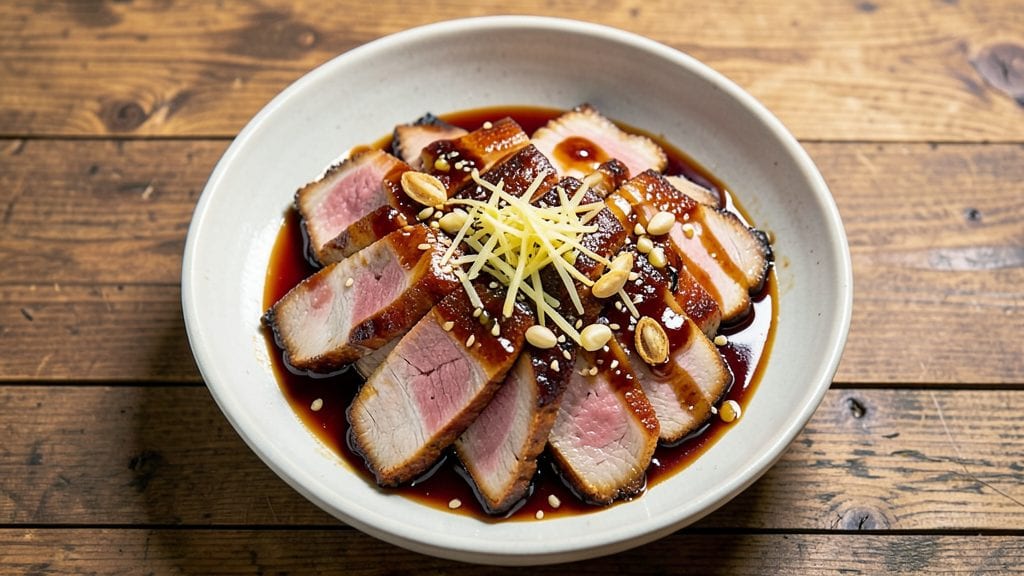
This char siew pork belly recipe delivers the perfect balance of crispy crackling and tender meat that rivals any Cantonese restaurant. Growing up in small-town Georgia, I learned early that pork transforms into something extraordinary with the right technique—slow braising followed by a high-heat sear.
The secret lies in the marinade, where soy sauce, ginger, and garlic work together to create that signature sweet-savory flavor profile.
The process begins with a foolproof marinade that penetrates the thick pork belly, ensuring every bite is infused with flavor. After braising for hours at low heat, the meat becomes fork-tender while developing a rich, caramelized crust.
The final sear is where the magic happens—crispy crackling forms on the outside, locking in all those juices. This method guarantees restaurant-quality results without requiring a wok or specialized equipment.
By the time you slice into those golden-brown slabs, you’ll uncover meat that’s melt-in-your-mouth tender with a crackling exterior that shatters at the slightest touch. Serve it over steamed rice, stir-fried greens, or with pickled vegetables for a complete meal that’s as satisfying as it is impressive.
The aroma alone will have everyone gathering around your table.
Perfect for family dinners, holiday feasts, or when you want to impress guests with authentic Cantonese flavors. Here’s how to make it—step by step—so you can achieve the same results I’ve perfected over years of cooking and testing.
Ingredients for char siew pork belly
Sweet, savory, and perfectly crispy—this char siew pork belly delivers restaurant-level results at home.
| Ingredient | Amount | Notes |
|---|---|---|
| Pork Belly (thinly sliced) 🐷 | 3 lb | Skin-on, cut into 1-inch thick slices |
| Light Soy Sauce 🧂 | ½ cup | Low sodium preferred for balance |
| Dark Soy Sauce 🧂 | ¼ cup | For color and depth |
| Hoisin Sauce 🍯 | ¼ cup | Sweet and aromatic base |
| Shaoxing Wine 🍷 | ¼ cup | Dry, aged variety preferred |
| Sesame Oil 🫒 | 1 tbsp | Toasted for nutty aroma |
| Fresh Ginger 🌿 | ½ cup | Grate finely, no skin |
| Garlic Cloves 🧄 | 8 cloves | Minced, fresh preferred |
| Brown Sugar 🍚 | ¼ cup | Dark, packed |
| Cornstarch 🌾 | ¼ cup | For crispy coating |
| Vegetable Oil 🫒 | 2 cups | High smoke point needed |
| Rock Sugar 🍯 | 0.1 cup | Traditional sweetener |
| White Pepper 🌶️ | ½ tsp | Milled, for subtle heat |
| Star Anise 🌿 | 2 whole | For aromatic depth |
The pork belly is your star player—look for thick, marbled cuts with plenty of fat for flavor. Costco or local butcher shops often carry the best quality, but any pork belly with skin will work. Thin slicing is key for even cooking, so ask your butcher to do it or use a sharp knife. The fat content should be at least 30% for that authentic texture. I always buy mine frozen and thaw it overnight in the fridge—this keeps it fresh longer and makes slicing easier.
No hoisin sauce? Mix equal parts soy sauce and brown sugar to approximate the sweetness. Fresh ginger is ideal but dried ginger at half the amount works in a pinch. For Shaoxing wine, dry sherry or dry white wine can substitute, though the flavor won’t be identical. Star anise is non-negotiable for that Cantonese aroma—skip it and you’ll miss a key layer of depth. The cornstarch coating is what gives you that perfectly crispy crackling, so don’t skip it or use flour—trust me on this.
Marinate the pork for at least 6 hours (overnight is best) in the fridge. The marinade keeps for 5 days in an airtight container, but the pork belly itself is best used within 3 days of marinating. For extra crispiness, double-dredge the pork in cornstarch before frying. Store cooked portions in an airtight container for 4 days or freeze for up to 3 months. Reheat in a dry skillet to restore the crackling—microwaving kills it.
Why You'll Love This Recipe
- No-Fuss Weeknight Win: Honestly, this is the kind of recipe that makes me feel like a restaurant chef without the stress. Just toss that pork belly in the marinade—half cup light soy, quarter cup dark soy, hoisin, and shaoxing wine—let it soak overnight, and boom: you’ve got zero prep work the next day. The cornstarch coat takes two minutes to mix, and frying in batches keeps things simple. I’ve made it while watching Netflix, and it still turns out perfect.
- Sweet-Savory Addiction: That balance of flavors? Chef’s kiss. The dark soy gives it that deep, glossy color, while the hoisin and rock sugar add a sticky, caramelized sweetness that pairs perfectly with the sesame oil and white pepper kick. And don’t sleep on the star anise—it’s the secret weapon that makes this taste like a dim sum spot. One bite and you’ll be licking the plate.
- Leftovers? More Like Leftovers Magic: I always make extra because, let’s be real, this doesn’t last long. But if you do have leftovers? They reheat like a dream—just pop them in a 375°F oven for 5-7 minutes, and those crispy edges come back to life. I’ve even turned them into char siew fried rice the next day—same flavors, fresh twist. Budget-friendly too; that 3 lb pork belly feeds a crowd without breaking the bank.
- Crowd-Pleaser Guaranteed: This isn’t just for special occasions—it’s the dish that gets everyone’s approval, from picky kids to skeptical spouses. My daughter loves when I make it, even though she picks out the garlic to mince (she’s weird like that). Serve it with rice, in a bowl, or even on a sandwich—it’s that versatile. Plus, the ginger and shaoxing wine marinade make it taste like a restaurant, but you’re the one who cooked it. Win-win.
Step-by-step instructions for char siew pork belly
Here's the method that delivers restaurant-quality char siew with perfect crispy crackling and melt-in-your-mouth tenderness.
Marinate the Pork Belly for Maximum Flavor
In a large bowl, combine the 3 lb pork belly (thinly sliced), ½ cup light soy sauce, ¼ cup dark soy sauce, ¼ cup hoisin sauce, ¼ cup shaoxing wine, 1 tbsp sesame oil, ½ cup finely grated fresh ginger, 8 minced garlic cloves, ¼ cup brown sugar, ½ tsp white pepper, and 2 star anise. The star anise adds that distinctive aromatic depth that sets authentic char siew apart.
Use your hands to work the marinade into every slice, ensuring the pork absorbs all those flavorful components. Cover the bowl and refrigerate for at least 12 hours, but I recommend going up to 24 hours for maximum penetration. This long marinating time is what transforms ordinary pork belly into something extraordinary—deeply flavorful with that signature sweet-savory balance.
Prepare the Cornstarch Coating for Crispy Crackling
After marinating, remove the pork from the refrigerator and let it sit at room temperature for 30 minutes. This prevents the cold meat from shocking your hot oil. In a shallow dish, combine the ¼ cup cornstarch with 0.1 cup rock sugar. The cornstarch creates that signature crispy coating while the rock sugar adds just the right amount of caramelization.
Working in batches to avoid crowding, press each marinated pork slice into the cornstarch mixture, coating both sides thoroughly. The sugar will help create those beautiful caramelized spots during cooking. Let the coated pork rest for 10 minutes before frying—this allows the cornstarch to adhere properly and prevents it from falling off in the oil.
Deep-Fry Until Golden Brown and Crispy
Heat 2 cups vegetable oil in a deep pot to 350°F—this is crucial for achieving that perfect balance between crispy exterior and tender interior. You'll want to use a deep-fry thermometer to maintain this temperature precisely. The oil should be hot enough that when you test it with a small piece of pork, it sizzles vigorously and floats to the surface.
Fry the pork belly in batches for 4-5 minutes per side until it reaches an internal temperature of 160°F and develops a beautiful golden-brown color. The cornstarch coating should be crispy and crackling when you lift it out with tongs. Don't overcrowd the pot—this will lower the oil temperature and result in greasy pork instead of crispy. Transfer the fried pork to a wire rack set over a baking sheet to drain excess oil while keeping it crispy.
Rest and Slice for Perfect Texture
Let the fried pork belly rest for 10 minutes before slicing. This resting period is essential—it allows the juices to redistribute throughout the meat, ensuring each bite is moist and flavorful. The cornstarch coating will stay crispy during this time, maintaining that perfect texture contrast.
Using a sharp knife, slice the pork belly into ½-inch thick pieces against the grain. The slices should be crispy on the outside with that signature char siew texture—tender on the inside with just the right amount of chew. Serve immediately while still crispy, or you can reheat in a 375°F oven for 5-7 minutes to restore crispiness if needed.
Pro Tips For Making Char Siew Pork Belly
- Test Oil First: Stick a small piece of pork belly into the 350°F oil—if it sizzles wildly and floats immediately, you’re golden. I learned this the hard way when my first batch came out greasy because the oil wasn’t hot enough. That 10-second test saves you from soggy, undercooked pork.
- Grate Ginger Like Mad: Use a microplane or fine grater for the ½ cup fresh ginger—no peeling needed, just scrape off the skin. I used to chop it, and the texture was uneven, making the marinade clumpy. Fine grated ginger blends smoothly and infuses flavor evenly.
- Skip the Star Anise Hack: If you don’t have star anise, crush the 2 whole pods lightly with a mortar and pestle before adding to the marinade. Whole pods work, but crushing them releases more aroma—just don’t overdo it, or you’ll taste bitterness. (And yes, I’ve done that too.)
- Fry in Two Batches: Even with 3 lbs of pork belly, frying in two batches keeps the oil at 350°F and prevents the temperature from dropping. I once tried to fry all at once, and the second batch came out greasy. Trust me, the extra 5 minutes waiting is worth crispy perfection.
Creative variations of these flavors
Spicy Sichuan Char Siew
For those who love heat, I add 1 tbsp Sichuan peppercorn powder and 1 tbsp chili oil to the marinade. The Sichuan peppercorns give that unique numbing-spicy kick, while the chili oil adds a fiery depth.
After frying, I drizzle 2 tbsp chili crisp over the top for extra crunch and heat. This version is a favorite at my farm—guests always ask for seconds! 🌶️
Sweet and Tangy BBQ Glaze
Swap out the cornstarch coating for a BBQ glaze made with ½ cup ketchup, ¼ cup brown sugar, 2 tbsp apple cider vinegar, and 1 tbsp smoked paprika. After frying, brush the pork with this glaze and broil for 3-4 minutes until caramelized.
I love this Southern twist on char siew—it’s like a cross between BBQ and Cantonese flavors. The smoky paprika adds a depth that surprises everyone.
Crispy Fried Rice Topping
Instead of serving char siew as a main, I use it as a topping for fried rice. Fry the pork as directed, then slice and mix it into 2 cups cooked jasmine rice with 1 egg, 2 tbsp soy sauce, and 1 tbsp green onions.
The crispy edges add texture, while the tender meat soaks up the rice flavors. This is my go-to lunch—quick, satisfying, and always a crowd-pleaser.
Heritage Pig Slow-Braised
For a more traditional approach, I slow-braise the pork belly instead of frying. After marinating, I sear the slices in sesame oil until golden, then transfer them to a Dutch oven with 1 cup beef broth, 2 star anise, and 1 cinnamon stick.
Cover and braise at 300°F for 2 hours until fork-tender. The result is fall-off-the-bone meat with a rich, aromatic sauce. I serve it with steamed bok choy and rice noodles for an authentic Cantonese feast.
Crispy Char Siew Bao Buns
Turn leftover char siew into bao buns for a fun twist! Fill steamed bao bun dough with sliced pork, a spoonful of hoisin sauce, and a sprinkle of sesame seeds.
The crispy edges contrast beautifully with the soft, pillowy buns. I often make these for potlucks—they’re always the first to disappear! 💛
Nutrition facts
Frequently asked questions
Why does my char siew pork belly turn out greasy instead of crispy?
Greasy pork belly usually happens when the oil temperature drops too low or you overcrowd the pot. Always fry in batches at 350°F and avoid adding more pork until the oil returns to temperature. Let the pork rest on a wire rack instead of a plate to drain excess oil properly—this keeps the crackling crispy!
Can I skip the cornstarch coating?
Not if you want that signature crispy crackling! Cornstarch is what creates the perfect texture contrast. If you're avoiding it, try doubling the rock sugar in the marinade for caramelization, but the coating is what gives char siew its iconic crunch. Trust me—skip it at your own risk!
How do I prevent the pork belly from drying out while resting?
Resting is essential for juiciness, but you can cover the sliced pork loosely with foil to retain moisture. The 10-minute rest lets juices redistribute while keeping the crackling intact. If you're worried, tent it lightly—just don't seal it airtight or the exterior will steam instead of staying crispy.
What’s the best way to reheat char siew without losing crispiness?
Forget the microwave—it ruins the texture! Reheat in a 375°F oven for 5-7 minutes on a wire rack to restore crispiness. Alternatively, use a dry skillet over medium heat for 2-3 minutes per side. The key is to keep it hot and dry to revive that crackling.
Can I make char siew ahead of time and freeze it?
Yes! Cooked char siew freezes beautifully for up to 3 months. Let it cool completely, slice it, and store in an airtight container. When ready to eat, thaw overnight in the fridge and reheat as directed. The flavor stays amazing—just the texture might soften slightly.