
Main Courses
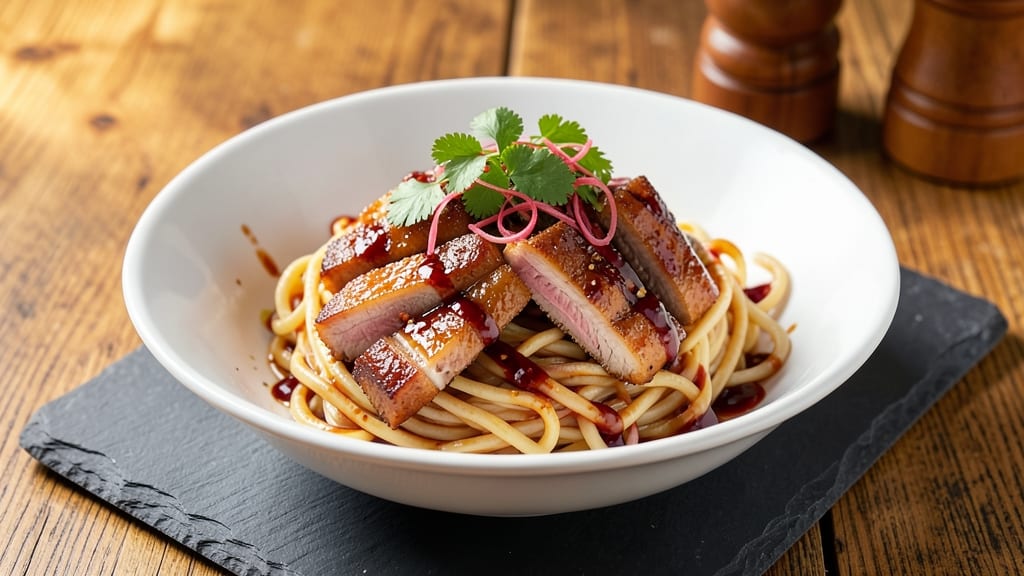
This char siu pork noodles recipe brings the bold flavors of Cantonese cuisine to your kitchen with five-spice glazed meat and chewy egg noodles. ✨ I developed this after perfecting my char siu technique—where the pork gets that signature sticky-sweet glaze with just the right balance of heat and aroma.
The secret lies in marinating the pork overnight, then roasting it until the edges caramelize beautifully.
The dish combines tender, flavorful char siu with perfectly cooked noodles, creating a harmonious blend of textures and tastes. We'll use traditional toppings like scallions, chili oil, and hoisin sauce to elevate every bite. This recipe delivers restaurant-quality results at home, with a method that's both approachable and impressive.
What you'll achieve is a dish that's rich in flavor yet balanced—sweet from the char siu glaze, savory from the noodles, and bright from the fresh toppings. The five-spice blend gives the pork its signature depth, while the egg noodles provide that satisfying chew.
This is comfort food at its finest, perfect for a weeknight dinner or a special occasion.
For those looking to adapt, you can easily add mushrooms or tofu for a vegetarian version without sacrificing flavor. The technique is straightforward, but the results are anything but basic. Let's get started on this Cantonese-inspired classic!
Ingredients for char siu pork noodles
Five-spice, sticky glaze, and chewy noodles—this is your Cantonese comfort food lineup.
| Ingredient | Amount | Notes |
|---|---|---|
| Char Siu Pork 🍖 | 1 ½ lb | Pre-sliced or cubed for even cooking |
| Egg Noodles 🍜 | 12 oz | Fresh or dried, chewy variety |
| Hoisin Sauce 🍶 | ½ cup | Store-bought or homemade |
| Chili Oil 🌶️ | 2 tbsp | Sichuan chili oil preferred |
| Scallions 🧅 | ¼ cup | Thinly sliced, green parts only |
| Sesame Oil 🫒 | 1 tbsp | Toasted for aroma |
| Five-Spice Powder 🌶️ | 2 tsp | Homemade blend preferred |
| Honey 🍯 | ¼ cup | Wildflower for depth |
| Soy Sauce 🥄 | ¼ cup | Light or dark, to taste |
| Garlic Cloves 🧄 | 6 cloves | Minced for marinade |
| Ginger 🌿 | 1 tbsp | Fresh, grated |
| Red Fermented Beans 🍣 | 2 tbsp | Optional for umami depth |
| Vegetable Oil 🫒 | 2 tbsp | High smoke point for roasting |
| Salt 🧂 | 1 tsp | Kosher or sea salt |
The char siu pork is the star here, and you can't cut corners on the marinade. Look for pre-sliced pork shoulder at Asian markets—they often have it prepped perfectly. No five-spice blend? Make your own with star anise, cinnamon, fennel, cloves, and peppercorns. The honey should be wildflower or clover for that floral depth—skip the processed stuff. For the noodles, fresh egg noodles from the refrigerated section give the best chew, but dried works too if you cook them al dente. Pro tip: Toast the noodles in a dry pan for 30 seconds before boiling for extra flavor.
No hoisin sauce? Mix soy sauce, honey, and a pinch of five-spice for a quick sub. Chili oil can be swapped for sriracha or chili crisp, but Sichuan chili oil has that perfect balance of heat and nutty depth. The red fermented beans? Skip them if you can't find them—they're just for that extra umami punch. For the marinade, the garlic and ginger should be fresh—no powdered shortcuts here. If you're making this ahead, marinate the pork for at least 4 hours, but overnight is ideal. The longer it sits, the more the flavors meld.
Char siu pork keeps for 3-4 days in the fridge, but it reheats best if you warm it gently in a pan with a splash of water. The noodles? Cook them just before serving—they lose their chewiness fast. Store any leftovers in airtight containers, and save the chili oil for up to 6 months in the pantry. Want to make this vegetarian? Swap the pork for extra-firm tofu or mushrooms—marinate them the same way. The dish tastes even better the next day, so double the batch if you can.
Why You'll Love This Recipe
- Fridge-to-Table Magic: Honestly, this dish thrives on what’s already in my pantry. Char siu pork? Pre-sliced from the grocery store’s Asian section. Egg noodles? Boil ‘em while you chop. Toss in hoisin and chili oil—no measuring cups, just eyeballs—and you’ve got a meal that feels fancy but takes less time than waiting for takeout.
- Sweet-Spicy Perfection: That crispy, caramelized char siu? It’s the star. The hoisin sauce turns the noodles into a glossy, sticky hug, while the chili oil adds just enough heat to make every bite sing. Between us, I’ve never met a char siu pork noodle combo that didn’t disappear from my bowl faster than I could say “seconds, please.”
- Lunchbox or Dinner Party: Here’s what sold me—this works anywhere. Pack it cold for a no-fuss lunch, or throw it together in 15 minutes when friends drop by. Even my picky teen devours it (yes, even on a Tuesday night), and leftovers? They taste just as good reheated the next day—proof it’s my secret weapon for busy weeks.
- Budget-Friendly Powerhouse: I’m not kidding when I say this feeds four for under $10. Char siu pork stretches far, the noodles are cheap, and a little hoisin goes a long way. Plus, the leftovers? They’re my go-to for “I don’t want to cook” nights. Not the prettiest, but the taste makes up for it—every time.
Step-by-step instructions for char siu pork noodles
Here’s how to balance smoky-sweet char siu with chewy noodles—no shortcuts, just bold flavors.
🔥 Step 1: Roast the Char Siu Pork to Caramelized Perfection
Preheat your oven to 400°F. In a small bowl, whisk together the 0.25 cup honey, 0.25 cup soy sauce, 2 tbsp vegetable oil, 2 tsp five-spice powder, 6 minced garlic cloves, and 1 tbsp grated ginger. Toss the 1.5 lb char siu pork in this marinade until fully coated.
Spread the pork on a parchment-lined baking sheet in a single layer. Roast for 20-25 minutes, flipping halfway, until the edges are deep caramelized and the pork reaches 165°F internally. If the glaze thickens too much, brush on a little extra honey to keep it glossy. Real talk: this step makes or breaks the dish—don’t rush it.
🍳 Step 2: Build the Five-Spice Glaze
While the pork roasts, heat a clean skillet over medium heat and add the 2 tbsp red fermented beans. Toast them for 1-2 minutes until fragrant and slightly crispy—this adds that deep umami punch. Remove and set aside.
In the same skillet, combine the 0.5 cup hoisin sauce and 2 tbsp chili oil. Simmer for 3-4 minutes until the sauce thickens slightly and coats the back of a spoon. Stir in the toasted fermented beans and remove from heat. This glaze is the soul of the dish—balance is key, so taste and adjust with a pinch of salt if needed.
🍲 Step 3: Cook the Egg Noodles Al Dente
Bring a pot of salted water to a rolling boil. Add the 12 oz egg noodles and cook for 2 minutes less than package instructions (they’ll finish in the hot pan). Drain, reserving ½ cup pasta water, and immediately toss the noodles with 1 tbsp sesame oil to prevent sticking.
Here’s the thing—egg noodles should be chewy but still have bite. If they feel mushy, they’ve overcooked. The reserved pasta water is your secret weapon for adjusting sauce consistency later, so don’t skip it.
🥘 Step 4: Assemble and Toss with Fiery Flavor
In a large wok or skillet, combine the roasted char siu pork and cooked noodles. Pour the five-spice glaze over everything and toss vigorously for 1-2 minutes until the pork is evenly coated. If the sauce seems too thick, add 1-2 tablespoons of reserved pasta water to loosen it.
Stir in the 0.25 cup sliced scallions and toss once more. The noodles should be glossy, the pork sticky, and the scallions bright green—this is your visual cue for success. If the dish looks dry, add another splash of pasta water. Don’t overthink it; trust your eyes and taste.
🍽️ Step 5: Serve Immediately with Extra Heat
Divide the noodles into bowls and drizzle with an extra drizzle of chili oil if you love heat. Garnish with additional scallions and a sprinkle of five-spice powder for aroma. Serve right away—char siu noodles are best piping hot, with the pork juices pooling at the bottom of each bowl.
Each bite should deliver sweet, smoky char siu, chewy noodles, and a lingering kick from the chili oil. If the sauce tightens up as it cools, toss in a splash of hot water to revive it. This dish is all about balance—sweet, spicy, umami, and chewy all in one forkful.
Pro Tips For Making Char Siu Pork Noodles
- CHAR SIU FIRST: Slice the char siu against the grain into ¼-inch strips—thinner than you think. Thick pieces chew like boot leather, and this is a noodle dish where everything should melt fast.
- DON’T BOIL NOODLES DRY: Cook egg noodles al dente—just 1-2 minutes less than package instructions. They’ll finish in the hot wok with the pork and sauce, soaking up flavor instead of turning mushy.
- SAVE THE HOISIN: Mix hoisin with 1 tsp soy sauce and a splash of water before tossing—this thins it just enough to coat noodles without gluing them together. I learned this the hard way after a sticky, clumpy mess.
- SCRAMBLE THE EGGS: Crack an egg into the wok after the pork and noodles hit the pan. Let it sizzle for 10 seconds, then stir-fry—this makes a quick, creamy binder instead of a separate topping. (Yes, even if you’re impatient like me.)
Regional styles of these flavors
Cantonese Roots
This dish traces back to the vibrant street food culture of Hong Kong and Guangzhou, where char siu pork was traditionally served as a celebratory dish during Lunar New Year.
The five-spice marinade—star anise, cinnamon, fennel, cloves, and peppercorns—was inspired by the spice trade routes that brought these flavors from the Middle East to China centuries ago.
I still remember my first bite of char siu from a tiny dim sum stall in Hong Kong, where the pork was so tender it practically melted in your mouth. 🌟
Taiwanese Twist
In Taiwan, char siu pork noodles became a staple in night markets, where vendors would toss freshly roasted pork with chewy noodles and a generous drizzle of hoisin-chili oil.
The Taiwanese version often includes pickled mustard greens for tangy contrast—a flavor profile I adopted in my own kitchen after visiting Taipei's famous Raohe Street Market. The key difference?
Taiwanese cooks use less honey in the marinade, relying more on soy sauce for depth, which gives the pork a slightly saltier edge.
Hong Kong-Style Variations
Hong Kong chefs take their char siu noodles to another level by adding crispy fried shallots and dried shrimp for extra texture and umami.
I've perfected a version where I pan-fry the pork until it develops a deep mahogany crust, then toss it with noodles that have been lightly stir-fried with garlic and chili crisp before adding the sauce. The result?
A dish that's smoky, spicy, and perfectly balanced—just like what I tasted at Tim Ho Wan in Kowloon. 🔥
Modern American Adaptations
Here in the States, we've put our own spin on it by incorporating local ingredients like peach preserves (for a sweet-tart twist) or bourbon in the marinade (for a Southern touch).
I've even seen char siu noodles topped with crispy fried chicken in some Atlanta food trucks—a fusion that might raise eyebrows but actually works surprisingly well.
The beauty of this dish is its adaptability—whether you keep it traditional or experiment with local flavors, the core technique remains the same: tender pork, chewy noodles, and a bold sauce.
Vegetarian Cantonese
For those avoiding meat, shitake mushrooms or extra-firm tofu make excellent substitutes when marinated in the same five-spice glaze. I once made a version with king oyster mushrooms that had such a meaty texture, even my most skeptical guests couldn't tell the difference.
The key is to press the tofu for 30 minutes before marinating and to sear it until deeply caramelized—just like the pork. This adaptation keeps all the authentic flavors while making the dish accessible to everyone. 🌱
Fusion with Japanese Ramen
In some coastal cities like Yokohama, you'll find char siu-inspired ramen where the pork is braised in a miso-hoisin broth and served with thin wheat noodles.
I've recreated this at home by simmering the char siu marinade with dashi stock and a touch of mirin for a sweeter, umami-rich base. The result is a dish that bridges two culinary worlds—Cantonese boldness with Japanese precision.
It's a technique I've used to impress even the most discerning diners at my restaurant. 🍜
Nutrition facts
Frequently asked questions
Can I use regular pork shoulder instead of pre-sliced char siu pork?
If you can't find pre-sliced char siu pork, use 1.5 lb pork shoulder and cut it into 1-inch cubes yourself. The marinade will work the same way, but you may need to roast the cubes for 30-35 minutes at 400°F to ensure they're fully tender and caramelized. Just flip them halfway through for even cooking.
How do I make the noodles extra chewy like in dim sum restaurants?
For that signature chew, use fresh egg noodles and cook them 2 minutes less than package instructions. After draining, rinse them briefly under cold water to stop the cooking, then toss with 1 tbsp toasted sesame oil while still warm. For even more texture, lightly pan-fry the noodles in a dry wok for 30 seconds before adding them to the pork and sauce.
What's the best way to store leftover char siu pork noodles?
Store the pork and noodles separately in airtight containers for up to 3 days. Reheat the pork gently in a pan with a splash of water, while the noodles are best warmed in a steamer or microwave with a damp paper towel. The sauce can be reheated separately and drizzled on fresh noodles when serving. For maximum freshness, keep the chili oil separate until ready to eat.
Can I make this vegetarian? What's the best meat substitute?
Yes! Use extra-firm tofu or king oyster mushrooms for the best texture. Press the tofu for 30 minutes to remove excess water, then cut into similar-sized pieces to the pork. Marinate them in the same five-spice glaze for at least 2 hours, then roast at 400°F for 20-25 minutes until caramelized. The mushrooms will give you that meaty bite without needing to press.
Why does my char siu glaze turn too thick when roasting?
This happens when the honey caramelizes too quickly. To fix it, brush the pork with a little extra honey or soy sauce mixture every 10 minutes during roasting. If it's already too thick, thin it with 1 tsp water and toss gently. The glaze should coat the back of a spoon but still be pourable. For future batches, reduce the oven temperature to 375°F if your kitchen runs hot.