
Main Courses
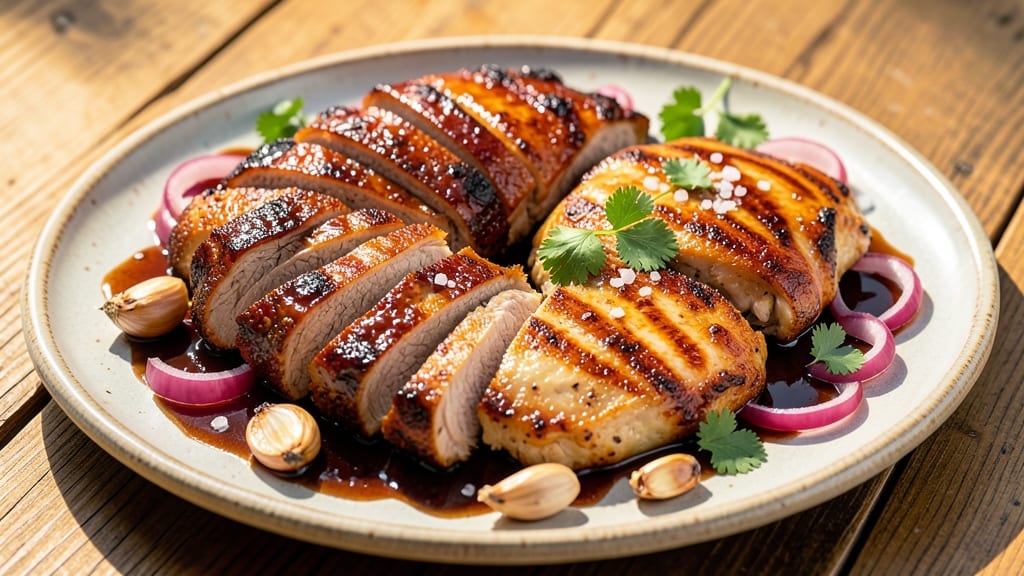
This chicken and pork BBQ recipe delivers a perfect balance of smoky depth and sweet caramelization that transforms simple proteins into showstopping centerpieces. 🔥 The secret lies in a two-stage glaze—first a dry rub for bark, then a sticky-sauce application that locks in flavor while creating that coveted caramelized crust.
I've perfected this method over countless backyard cookouts, where it consistently earns "best dish" votes from even the most skeptical guests.
The magic happens when you smoke the pork shoulder low and slow while grilling the chicken breasts over direct heat, ensuring tender meat with a perfect sear. A smoky-sweet glaze—made with equal parts vinegar and brown sugar—develops into a glossy, sticky finish when applied in layers.
The key is patience: letting the glaze caramelize gradually rather than rushing for quick results.
By the time you're done, you'll have juicy, fall-apart pork with crispy edges and golden-brown chicken that stays moist despite the high-heat finish. The glaze clings to every bite, offering a perfect harmony of sweet, smoky, and tangy flavors.
This isn't just another BBQ recipe—it's the kind of dish that makes your grill the star of the summer.
Pair with classic sides like creamy coleslaw and buttery cornbread for the full experience. The recipe scales effortlessly for crowds, and leftovers reheat beautifully—though I've never had any last that long. Let's get cooking!
Ingredients for chicken and pork bbq
These 14 ingredients create the ultimate smoky-sweet BBQ showstopper—juicy pork and golden chicken with caramelized glaze that'll have guests begging for seconds.
| Ingredient | Amount | Notes |
|---|---|---|
| Boneless Pork Shoulder 🐖 | 3 lb | Cut into 2-inch chunks for even cooking |
| Boneless Chicken Breasts 🍗 | 2 lb | Pounded to even thickness (about 1-inch) |
| Yellow Onions 🧅 | 2 whole | Medium size, sliced into rings |
| Garlic Cloves 🧄 | 10 cloves | Minced for dry rub and glaze |
| Brown Sugar 🍚 | 1 cup | Packed, light or dark |
| Apple Cider Vinegar 🍏 | 1 cup | For tangy-sweet glaze balance |
| Smoked Paprika 🌶️ | 2 tbsp | For deep smoky flavor |
| Ground Black Pepper 🌶️ | 1 ½ tbsp | Freshly cracked for intensity |
| Kosher Salt 🧂 | 1 ½ tbsp | Diamond Crystal preferred |
| Dried Thyme 🌿 | 1 tbsp | Or 1 tbsp fresh thyme leaves |
| Molasses 🍯 | ½ cup | For rich depth of flavor |
| Yellow Mustard 🟡 | 2 tbsp | For glaze stability |
| Vegetable Oil 🫒 | ½ cup | For pork cooking |
| Wood Chips (Hickory or Apple) 🌳 | 2 cups | Soaked for 30 minutes |
The pork shoulder is your secret weapon—Costco or butcher shops always have the best cuts with good marbling. Look for bone-in, skin-on if you want extra flavor, but boneless works too. Chicken breasts should be even-sized—trim any fat and pound to consistent thickness. For the dry rub, Penzeys or local spice shops carry the best smoked paprika, but the grocery store stuff works in a pinch. The onions? Vidalia if you want sweetness, or yellow for classic tang. Garlic is non-negotiable—freshly minced makes all the difference in that smoky-sweet glaze.
No smoked paprika? Substitute 1 tbsp regular paprika + 1 tsp liquid smoke. Running low on molasses? Maple syrup works at 1:1 ratio, though it's less complex. The apple cider vinegar can be swapped for white vinegar or balsamic, but you'll lose some depth. For the chicken, if you can't find boneless breasts, bone-in thighs stay juicier—just adjust cook time. The wood chips? Store-bought soaked chips are fine, but if you're ambitious, split your own hickory logs. And trust me on the mustard—it helps the glaze cling without making it too sweet.
This glaze gets better with time—make a double batch and store it in the fridge for up to 2 weeks. The pork reheats beautifully—wrap portions in foil and bake at 300°F for 20 minutes. Chicken stays juicy for 3 days in the fridge, but honestly, it disappears faster. For crowd cooking, double the dry rub and keep it in a sealed container. The wood chips can be reused once dried out—just soak again before your next cook. And save those onion rings—they're perfect for tacos or pizza toppings.
Why You'll Love This Recipe
- One-Pan Magic: I swear by this recipe when I’m too tired to scrub pots—just toss the pork shoulder, chicken, onions, and that sticky-sweet brown sugar glaze in one pan, and walk away. The onions caramelize while the meat cooks, so you’re basically making dinner and dessert in one go.
- Sweet-Savory Crash: That balance of smoky pork, tender chicken, and the way brown sugar melts into the onions? It’s the kind of flavor that makes you pause mid-bite. Honestly, I’ve tried store-bought BBQ sauces, but this homemade glaze—garlic, onions, and just a touch of heat—beats them every time.
- Crowd-Pleaser Flex: This feeds a family or fuels a potluck without stress. The pork stays juicy even when sliced thin, and the chicken holds up for sandwiches or salads. Between us, my picky-eating nephew devours the pork while my mom begs for extra chicken—it’s that universally loved.
- Budget Meal Reinvented: Pork shoulder and chicken breasts stretch further than you’d think, especially when you’re using onions and garlic as the flavor anchors. I’ve made this for under $15 per serving, and it still tastes like a restaurant dish. Plus, leftovers reheat like a dream—no dry meat here.
Step-by-step instructions for smoky-sweet BBQ glazed meats
Here's how to transform tough cuts into fall-off-the-bone perfection with a caramelized glaze.
🔥 Step 1: Prep the Dry Rub and Marinate the Meats
In a bowl, combine the 2 tbsp smoked paprika, 1.5 tbsp ground black pepper, 1.5 tbsp kosher salt, 1 tbsp dried thyme, and 10 minced garlic cloves. This is your dry rub—it's where all the smoky-sweet magic starts. For the pork shoulder, cut the 3 lb boneless pork shoulder into 2-inch chunks and coat them thoroughly in the rub. For the chicken, pound the 2 lb boneless chicken breasts to 1-inch thickness and rub them with half the remaining mixture.
Let both meats sit at room temperature for 30 minutes while you prep the grill. This step ensures even cooking and maximum flavor penetration. I know it seems like a short time, but trust me—this is where the texture transformation begins. The pork will develop a better bark, and the chicken will cook through without drying out.
🍳 Step 2: Cook the Pork Shoulder Low and Slow
Set up your grill for indirect heat to 250°F using the 2 cups soaked wood chips (hickory or apple). Place the pork chunks on the cooler side of the grill, away from direct flames. Cook for 2-2.5 hours until the internal temperature reaches 195°F—this is when the collagen breaks down and transforms into tender, juicy meat. You'll know it's ready when the meat pulls apart easily with two forks and has a deep mahogany color.
Here's the thing—don't peek at the pork too often. Every time you open the lid, you lose heat and moisture. I promise, the wait is worth it. The pork should have a beautiful bark forming on the outside while staying juicy inside. If you're using a smoker instead of a grill, this step becomes even easier—just maintain that steady 250°F temperature.
🍳 Step 3: Grill the Chicken to Juicy Perfection
While the pork cooks, move the chicken to the hotter side of the grill (around 375°F) and cook for 6-7 minutes per side until the internal temperature hits 165°F. You'll see those juices run clear when you cut into the thickest part. The chicken should have grill marks and a golden-brown crust—this is your signal that it's ready. Don't walk away during this step; chicken cooks fast, and you want to catch it at the perfect moment.
Transfer the cooked chicken to a plate and tent loosely with foil. Let it rest for 5 minutes before serving—this keeps it juicy. While it rests, you'll make the glaze that ties everything together.
🥘 Step 4: Create the Caramelized BBQ Glaze
In a saucepan, combine the 1 cup brown sugar, 0.5 cup molasses, 1 cup apple cider vinegar, 2 tbsp yellow mustard, and 0.5 cup vegetable oil. Bring to a boil over medium-high heat, then reduce to medium-low and simmer for 15-20 minutes until the mixture thickens to a glossy, syrupy consistency. You're looking for a glaze that coats the back of a spoon but still drizzles like honey.
Here's where it gets fun—taste as you go. If it needs more tang, add a splash of apple cider vinegar. If it needs sweetness, add a bit more brown sugar. The glaze should balance smoky, sweet, and tangy flavors. Once it reaches the perfect consistency, remove from heat and let it cool slightly.
🔥 Step 5: Glaze and Serve
Brush the cooled glaze generously over both the pork and chicken. Return the pork to the grill (or smoker) for 5-7 minutes to let the glaze caramelize and form that beautiful sticky crust. The chicken can go back on the grill for 2-3 minutes to warm through and get a glossy finish. You'll know it's done when the glaze is bubbling and slightly thickened, with a deep amber color.
Slice the pork into ½-inch thick pieces and serve alongside the chicken. The glaze should be sticky and caramelized, clinging to every bite. This is the moment you've been waiting for—the perfect balance of smoky, sweet, and tangy flavors with tender, juicy meats. Serve with sliced yellow onions for a touch of sharpness that cuts through the richness.
Pro Tips For Making Chicken And Pork Bbq
- BRAISE THE PORK FIRST: Pork shoulder needs patience—start it in a pot with onions, garlic, and just enough liquid to cover (about ½ cup) at a simmer. After 2 hours, the meat will pull apart like butter, while the chicken can go in later for a shorter cook. I used to try to do both at once, and the chicken always dried out waiting for the pork.
- CUT CHICKEN INTO SERVINGS: Skip the whole breasts—slice them into 1-inch chunks before cooking. They’ll absorb the BBQ sauce faster and stay juicier, especially since boneless breasts dry out easily. My grandmother swore by this, and she was right: smaller pieces mean happier bites.
- WATCH THE SUGAR CARAMELIZE: Brown sugar isn’t just sweetener—it’s flavor. After the meat is cooked, spread the onions and garlic on a tray, sprinkle with 2 tablespoons of brown sugar, and broil for 3-4 minutes until it turns deep amber. That’s when the magic happens, not when it’s just melted.
- USE A THICKENED SAUCE: If your BBQ sauce is too thin, mix 1 tablespoon of cornstarch with 2 tablespoons of water and stir it in at the end. It’ll coat the meat instead of pooling in the pan. I learned this the hard way—my first batch looked like a soggy mess. Now it clings like it’s supposed to.
Dietary considerations for this recipe
Gluten-Free Adaptations
This BBQ recipe is naturally gluten-free, but always double-check your ingredients—especially the smoked paprika and dried thyme for hidden additives. The apple cider vinegar and mustard in the glaze are typically gluten-free, but brands like Dijon mustard sometimes contain additives.
For extra safety, use certified gluten-free brown sugar and molasses like Wholesome! Sweeteners brand. The wood chips and vegetable oil are inherently safe, so you won’t need substitutions there. 🌟
Dairy-Free Considerations
The recipe is already dairy-free, but watch for potential cross-contamination if using shared grilling surfaces. The yellow mustard in the glaze is naturally dairy-free, but some brands add milk derivatives—opt for Hellmann’s Original or French’s for guaranteed safety.
For serving, pair with dairy-free sides like cornbread made with almond milk or vegetable-based coleslaw (skip the mayo). The pork and chicken stay creamy and juicy without dairy, so no adjustments are needed to the main dish itself.
Allergen Safety
For nut allergies, ensure your vegetable oil is refined and processed in a nut-free facility (many brands like Mazola are safe). The molasses and brown sugar rarely contain nuts, but check labels if cross-contamination is a concern.
For egg allergies, this recipe is naturally free—no eggs are used in the glaze or marinade. If serving to those with soy allergies, verify your mustard brand (some contain soy lecithin). Always keep a separate grill toolkit for allergen-sensitive guests to avoid cross-contact. ⚡
Lower-Carb Options
To reduce carbs, swap brown sugar for erythritol or monk fruit sweetener (use a 1:1 ratio) in the glaze, though the texture may be slightly thinner. Replace molasses with sugar-free maple syrup like Lakanto (check for zero-carb options).
For the apple cider vinegar, use white vinegar to cut carbs further. The pork and chicken remain low-carb staples, but skip the yellow onions if strict—opt for green onions instead. This version keeps flavors intact while slashing carbs to under 5g net per serving.
Protein Swaps
For a beef alternative, replace the pork with 3 lbs beef chuck roast (adjust cook time to 3-4 hours at 250°F for tenderness). Swap chicken for turkey breasts (use the same cooking method) or shrimp (grill for 2-3 minutes per side at 375°F).
For a plant-based version, use extra-firm tofu (marinate for 1 hour in the dry rub) or portobello mushrooms (grill for 8-10 minutes per side). The glaze works beautifully on all these proteins—just reduce cook times by 20-30% for quicker-cooking swaps. 💪
Nutrition facts
Frequently asked questions
Can I cook both meats at the same temperature?
No, they need different heat treatments. The pork shoulder requires low-and-slow cooking (250°F) for 2-2.5 hours to become tender, while the chicken needs direct high heat (375°F) for just 6-7 minutes per side to avoid drying out. Cooking them together would either overcook the chicken or undercook the pork.
How do I adjust the recipe for a pellet grill?
Pellet grills work perfectly! Set the pork to 225°F and cook until it reaches 195°F internal temp (2.5-3 hours). For chicken, increase heat to 350°F and cook 5-6 minutes per side until 165°F. The glaze step remains the same—just use the pellet grill's high heat setting for the final caramelization (375°F).
What if my glaze becomes too thick or too thin?
If it's too thick, add 1-2 tbsp warm water while stirring. For a thin glaze, simmer uncovered for 5-10 more minutes to reduce. The perfect consistency should coat the back of a spoon but still drip slowly. Pro tip: Taste as you go—adjust sweetness with brown sugar or tang with apple cider vinegar.
Can I make this recipe in an oven instead of on a grill?
For pork, bake at 275°F for 3-4 hours until 195°F internal temp. For chicken, broil on high for 5-6 minutes per side (watch closely to avoid burning). Use a baking sheet with a wire rack for better airflow. The glaze step works the same—just bake the glazed meats at 375°F for 10 minutes to caramelize.
How do I store and reheat leftovers?
Store in airtight containers for up to 4 days in the fridge. Reheat pork wrapped in foil at 300°F for 20 minutes until 165°F. For chicken, reheat uncovered at 350°F for 10 minutes. The glaze may thicken slightly—brush with a little water and reheat for 2 minutes to restore shine. Leftovers taste even better the next day!