
Main Courses
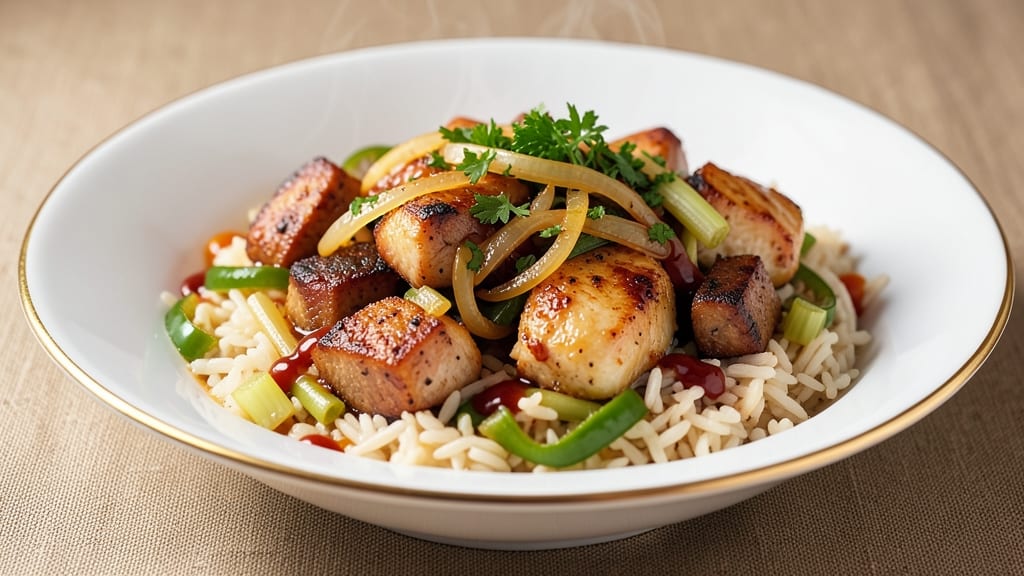
This one-pot chicken and pork jambalaya delivers the bold, smoky flavors of Cajun cuisine with minimal cleanup. The secret lies in properly browning the meats and building layers of flavor through slow simmering—creating a dish that's hearty enough for a weekend feast but simple enough for weeknight dinners.
I've perfected the balance between traditional techniques and modern shortcuts, ensuring restaurant-quality results without the fuss.
The foundation of great jambalaya starts with the holy trinity—bell peppers, onions, and celery—sautéed until soft and aromatic. Then comes the star: a blend of chicken, pork shoulder, and Cajun seasoning that develops deep, complex flavors as it cooks.
The rice absorbs all that smoky goodness, resulting in a dish that's perfectly tender yet packed with texture. This recipe maintains the soul of classic jambalaya while offering flexibility for modern adaptations like adding shrimp or swapping long-grain rice for quinoa.
What you'll end up with is a smoky spice-packed one-pot feast that smells as incredible as it tastes. The chicken stays juicy, the pork becomes fork-tender, and the rice soaks up every bit of flavorful broth.
Each bite delivers a perfect balance of heat, savory depth, and aromatic spices—making this jambalaya a showstopper for any table.
Whether you're feeding a crowd or meal prepping for the week, this jambalaya delivers consistent, flavorful results. The best part? Just one pot to clean, leaving you more time to enjoy the meal. Let's get cooking!
Ingredients for chicken and pork jambalaya
Six servings of smoky, spice-packed jambalaya—just one pot, endless flavor.
| Ingredient | Amount | Notes |
|---|---|---|
| Boneless Chicken Thighs 🍗 | 1 ½ lb | Trimmed of excess fat |
| Pork Shoulder 🐖 | 1 ½ lb | Cut into 1-inch cubes |
| Long-Grain White Rice 🍚 | 2 cups | Uncooked, not instant |
| Green Bell Pepper 🧅 | 1 whole | Diced, seeds removed |
| Yellow Onion 🧅 | 1 whole | Diced, medium size |
| Celery Stalks 🥬 | 3 whole | Diced, stringy kind |
| Garlic Cloves 🧄 | 4 cloves | Minced, fresh preferred |
| Cajun Seasoning 🌶️ | 2 tbsp | Homemade or store-bought |
| Smoked Paprika 🌶️ | 1 tbsp | For extra smokiness |
| Dried Thyme 🌿 | 1 tsp | Or 1 tbsp fresh |
| Bay Leaves 🍃 | 2 whole | Fresh or dried |
| Chicken Broth 💧 | 3 cups | Low-sodium preferred |
| Tomato Paste 🍅 | ½ cup | Smooth, not chunky |
| Lemon Juice 🍋 | 1 tbsp | Freshly squeezed |
| Olive Oil 🫒 | ½ cup | For browning meats |
| Salt 🧂 | 1 ½ tsp | Adjust to taste |
| Black Pepper 🌶️ | ½ tsp | Freshly ground |
The pork shoulder is your secret weapon here—it stays tender while developing deep, meaty flavor. Look for well-marbled cuts at the butcher counter or pre-cut pork shoulder at Costco or Whole Foods. The chicken thighs? Bone-in, skin-on if you can find them—they stay juicier. Prep ahead by dicing the pork and chicken into even 1-inch cubes (no bigger, or they'll stay tough). The holy trinity—bell pepper, onion, and celery—should be finely diced, almost like confetti. Trader Joe's sells pre-diced veggie mixes that save time, but fresh is always better. And don't skimp on the garlic: four cloves is the magic number for that authentic Cajun punch.
No Cajun seasoning? Mix your own with smoked paprika, cayenne, garlic powder, onion powder, dried thyme, and oregano. The tomato paste can be swapped for crushed tomatoes (use 1 cup), but paste gives you that concentrated umami depth. Short on chicken broth? Beef broth works too, just add a splash of Worcestershire for depth. The rice? Long-grain white is traditional, but jasmine or basmati add a nice aroma. For extra heat, add a pinch of cayenne or a dash of hot sauce at the end. And if you're feeling fancy, stir in Andouille sausage with the meats—just don't tell anyone it's not authentic.
This jambalaya tastes even better the next day—double the batch if you can. Store leftovers in an airtight container in the fridge for up to 4 days, or freeze for 3 months. The flavors meld beautifully overnight, so plan ahead. For meal prep, portion into containers with a sprinkle of fresh parsley on top—it keeps the rice from drying out. And if you're serving a crowd, double the recipe—this scales perfectly. Just use a larger pot (6-quart minimum) to avoid overflowing.
Why You'll Love This Recipe
- One-Pot Magic: I swear by this recipe—just toss everything in one pot (chicken, pork, rice, peppers) and let it simmer. No fancy techniques, no extra dishes. The rice soaks up all that smoky, savory goodness while you’re chopping veggies for dinner.
- Smoky, Savory Crunch: That crispy pork shoulder and chicken thighs? Chef’s kiss. The bell pepper adds a bright snap, and the onions caramelize just enough to make every bite feel like a hug. Honestly, the flavor builds as it cooks—better the longer you let it sit.
- Weeknight Workhorse: Make a big batch on Sunday, and you’ve got lunch, dinner, or a quick reheat for the next three days. My kids ask for it at school—yes, I pack leftovers in their thermoses. (Between us, it’s the only way I get them to eat veggies.)
- Budget-Friendly Feast: Pork shoulder and chicken thighs stretch across meals without breaking the bank. A single recipe feeds four for dinner and two more for lunch—no takeout splurges here. Plus, long-grain rice is cheap and keeps things light. Win-win.
Step-by-step instructions for chicken and pork jambalaya
This smoky, spice-packed one-pot masterpiece comes together with bold flavors and tender meats.
Sear the Meats for Deep Flavor
Heat the 0.5 cup olive oil in a large, heavy-bottomed pot over medium-high heat until shimmering. Add the 1.5 lb pork shoulder cubes and cook for 8-10 minutes, stirring occasionally, until they develop a deep golden crust. Remove them and set aside, leaving the rendered fat in the pot.
Increase heat to high and add the 1.5 lb boneless chicken thighs, searing for 4-5 minutes per side until golden brown. The chicken should release easily from the pot when ready. Remove and set aside with the pork. You're building layers of flavor here—don't skip this crucial step.
Sauté the Holy Trinity of Jambalaya
In the same pot, reduce heat to medium and add the diced yellow onion, diced green bell pepper, and diced celery stalks. Cook for 5-6 minutes, stirring occasionally, until the vegetables soften and begin to caramelize slightly. This classic combination forms the aromatic base of jambalaya.
Add the 4 minced garlic cloves and cook for 30 seconds until fragrant. Here's where it gets aromatic—you should smell that garlic releasing its sweet, pungent oils. Be careful not to burn it; garlic turns bitter quickly when overcooked.
Build the Spice Foundation
Stir in the 2 tbsp Cajun seasoning, 1 tbsp smoked paprika, 1 tsp dried thyme, 1.5 tsp salt, and 0.5 tsp black pepper. Cook for 1 minute to toast the spices and deepen their flavors. Add the 0.5 cup tomato paste and stir for 2 minutes until it darkens slightly and coats the vegetables.
This is where jambalaya gets its signature depth. The tomato paste adds richness while the spices meld together. If you're using fresh thyme, now's the time to add it—just 1 tbsp will do. The spices should be evenly distributed and smell intensely aromatic.
Simmer the Rice and Meats Together
Add the 2 cups long-grain white rice and stir to coat it with the spice mixture. Pour in the 3 cups chicken broth and add the 2 whole bay leaves. Return the pork and chicken to the pot, arranging them on top of the rice. Bring to a boil, then reduce heat to low and cover.
Simmer for 25 minutes without peeking—this allows the rice to absorb the liquid evenly. After 25 minutes, stir gently and check the rice. If it's still firm in the center, cover and cook for another 5-10 minutes. The rice should be tender but still have a slight bite—this ensures it doesn't turn mushy.
Finish with Lemon Juice and Rest
Remove from heat and stir in the 1 tbsp lemon juice. This brightens the flavors and cuts through the richness of the meats. Let the jambalaya rest, covered, for 10 minutes. This resting period allows the flavors to meld and the rice to finish cooking perfectly.
Before serving, give it one final taste and adjust seasoning if needed. The jambalaya should be rich, spicy, and full of smoky depth. Each bite should deliver tender chicken and pork, perfectly cooked rice, and that signature jambalaya flavor. Serve immediately with crusty bread to soak up every last bit of that delicious sauce!
Pro Tips For Making Chicken And Pork Jambalaya
- CRISP THE PORK FIRST: I learned this the hard way—skipping the initial sear on pork shoulder means you’ll end up with rubbery, unevenly cooked meat in your jambalaya. Cut the pork into 1-inch cubes, pat them very dry with paper towels, then hit them with a high-heat sear in oil until they’re golden and release easily from the pan. That crust locks in flavor and keeps them juicy while everything else simmers.
- SWEAT THE ONIONS LOW: After burning three batches of jambalaya, I finally figured out that onions need gentle love. Slice them thin, then cook them in the same pot you’ll use for the jambalaya over medium-low heat for 8-10 minutes—until they’re translucent and just starting to caramelize. Rushing this step means your dish will taste raw and sharp, not deep and savory.
- DON’T DROWN THE RICE: The golden rule: rice should always be covered with liquid, but never submerged. Use the 1:2 ratio (1 cup rice to 2 cups liquid) and stir it in after the meat and veggies are already simmering. If you add rice first, it’ll soak up all the broth and turn mushy. And for heaven’s sake, don’t peek under the lid—steam is your friend here.
- SAUTE THE PEPPERS LAST: Sounds weird, but it works: add the green bell pepper after the onions and meat are already cooked. The peppers release moisture when heated, which can dilute your jambalaya’s depth if tossed in too early. Sear them for just 3-4 minutes until slightly blistered—this keeps them crisp and bright, not soggy. (Yes, even if you’re impatient like me.)
Troubleshooting great chicken and pork jambalaya
Undercooked Rice Fix
If your rice is still firm after 25 minutes, don't panic—just add ¼ cup hot chicken broth and cover for another 5-10 minutes. Stirring too soon releases starches that can turn the rice mushy.
For next time, use 2 cups uncooked rice to 3 cups liquid ratio—this ensures perfect absorption without dry spots. 🥣
Meat Still Tough?
Overcooked pork or chicken happens when you rush the simmering. If your meats are tough, they likely didn't rest long enough after searing.
Next time, let the pork cook 8-10 minutes per side until it reaches 160°F internal temp, then remove it from the pot early and return it after the rice starts cooking. The residual heat will finish cooking it gently. 🍗
Broth Too Thin?
A watery jambalaya usually means too much liquid or rice that absorbed broth too quickly. For future batches, use 1 cup rice to 1.5 cups broth ratio instead. If it's already too thin, stir in 1 tbsp tomato paste or a pinch of cornstarch mixed with water to thicken it.
Simmer for 2-3 minutes until it reaches your desired consistency. 💧
Burnt Spices?
Those bitter, burnt notes from over-toasting spices can ruin your jambalaya. To fix it, add 1 tbsp lemon juice or a pinch of sugar to balance the bitterness. For next time, toast spices over low heat for just 30 seconds—they should smell fragrant, not smoky.
Remove the pot from heat if they start to darken too quickly. 🌶️
Rice Mushy?
Overcooked rice is usually from peeking too often or using the wrong rice type. For a quick fix, stir in 1 tbsp cold butter or olive oil to add body. For next time, use jasmine or basmati rice—they hold up better to long cooking.
Also, avoid stirring the rice while it cooks; just check the bottom layer with a fork. ✨
Not Spicy Enough?
If your jambalaya lacks heat, it's likely under-seasoned. Add ½ tsp cayenne pepper or 1 tbsp hot sauce and stir well. For next time, taste the spice blend before adding it to the pot—it should have noticeable heat.
I like adding ½ tsp cayenne directly to the Cajun seasoning** for extra kick. 🌶️🔥
Nutrition facts
Frequently asked questions
Can I use ground meat instead of pork shoulder cubes?
Yes, but texture will differ. Ground pork or chicken works well, but it won't have the same tender, melt-in-your-mouth quality as properly cooked pork shoulder. If using ground meat, brown it thoroughly first to develop deep flavor. For best results, combine 1 lb ground pork with 0.5 lb ground chicken to maintain moisture.
What's the best way to make this vegetarian?
Swap meats for 1.5 cups cooked chickpeas or 1 block firm tofu (pressed and cubed). Boost umami with 1 tbsp soy sauce and 1 tsp miso paste in the spice blend. For extra protein, add 1 cup cooked lentils with the rice. The tomato paste and Cajun seasoning will still deliver that signature jambalaya depth.
How do I adjust the heat level for kids?
Reduce cayenne to ¼ tsp or omit it completely. Use ½ tsp smoked paprika instead of 1 tbsp for smokiness without heat. For extra safety, serve their portion with plain rice on the side so they can control spice levels. Kids' taste buds develop over time—this gives them a gentle introduction to bold flavors.
Can I make jambalaya in a slow cooker?
Brown meats first in a skillet, then transfer everything to the slow cooker. Cook on low for 6-7 hours or high for 3-4 hours. The rice may need ¼ cup extra broth during cooking. For best texture, remove meats halfway through and return them at the end. The slow cooker method makes this perfect for meal prep.
What's the secret to restaurant-quality jambalaya?
Three things:
- Properly sear the meats until deeply browned,
- Toast the spices just until fragrant (not burnt), and
- Let it rest covered for 10 minutes before serving. The resting time allows flavors to meld and rice to finish cooking. And always use low-sodium broth—you can adjust salt at the end.