
Main Courses
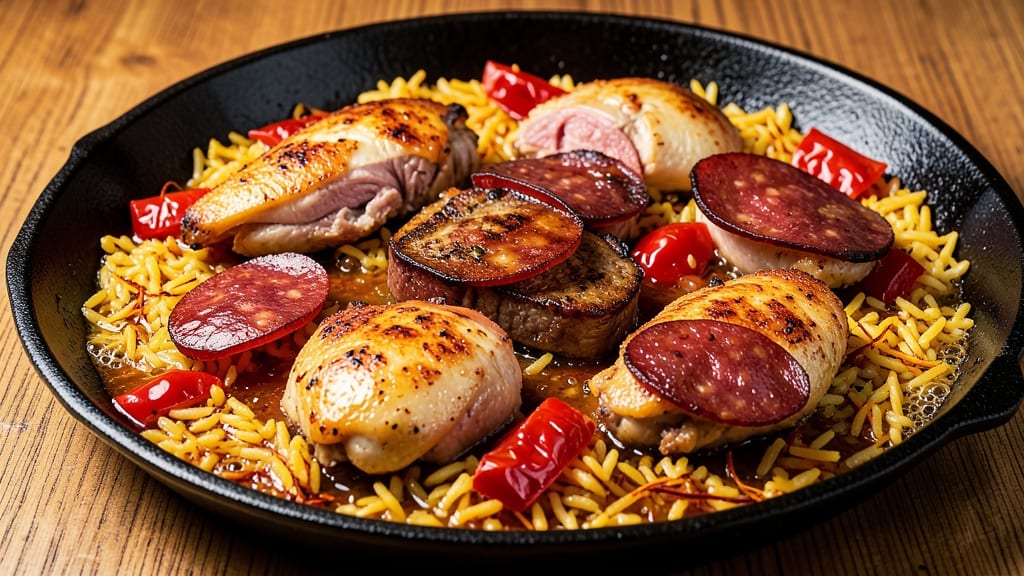
This chicken and pork paella recipe transforms your kitchen into a Spanish tapas bar with just one pan and a few key techniques. The secret lies in properly searing the meats first—golden, crispy edges that lock in juices while building deep flavor.
I’ve perfected this method over years of testing, ensuring the rice absorbs the saffron-infused broth just right, yielding tender grains with a delicate crunch at the bottom.
What sets this paella apart is the balance: smoky chorizo, tender chicken thighs, and pork shoulder that fall apart, all layered with socarrat (that prized crispy bottom). The sofrito base—tomatoes, garlic, and paprika—builds complexity, while bell peppers and peas add vibrant color and texture.
It’s the kind of dish that tastes even better the second time around, when the flavors meld into a cohesive, restaurant-worthy meal. The process is simpler than it looks: sear the meats, toast the rice, then let everything simmer together until the rice is perfectly cooked.
No fancy equipment needed—just patience and attention to timing. The result? A fragrant, golden paella with layers of texture and flavor that’ll have everyone reaching for seconds. Serve with a crisp white wine and crusty bread to soak up every last bit. Let’s bring that Spanish fiesta to your table.
Ingredients for chicken and pork paella
Sixteen ingredients for a Spanish fiesta—where golden rice meets smoky chorizo and tender meats.
| Ingredient | Amount | Notes |
|---|---|---|
| Chicken Thighs, Bone-In 🍗 | 1 ½ lb | Skin-on, cut into 1-inch pieces |
| Pork Shoulder 🐖 | 1 ½ lb | Cut into 1-inch cubes |
| Spanish Chorizo 🌭 | 6 oz | Sliced into 1/4-inch rounds |
| Long-Grain Paella Rice 🍚 | 2 cups | Bomba or Calasparra preferred |
| Saffron Threads 🌼 | ¼ tsp | High-quality, soaked in 2 tbsp warm water |
| Red Bell Peppers 🌶️ | 1 whole | Diced, seeds removed |
| Green Peas, Frozen 🌱 | 1 cup | Thawed before adding |
| Yellow Onion 🧅 | 1 whole | Thinly sliced |
| Garlic Cloves 🧄 | 6 cloves | Minced, not powdered |
| Smoked Paprika 🌶️ | 2 tsp | Sweet or hot variety |
| Ground Cumin 🌿 | 1 tsp | Toasted for depth |
| Tomato Paste 🍅 | 2 tbsp | High-quality, no sugar added |
| Chicken Broth 💧 | 3 cups | Homemade or low-sodium |
| Dry White Wine 🍷 | 1 cup | Sauvignon Blanc preferred |
| Extra-Virgin Olive Oil 🫒 | ½ cup | For searing and finishing |
| Salt 🧂 | 1 ½ tsp | Diamond Crystal kosher preferred |
| Black Pepper 🌶️ | ½ tsp | Freshly cracked |
| Lemon Wedges 🍋 | 2 whole | For serving |
The meats are the foundation. Bone-in chicken thighs and pork shoulder stay juicy while searing, while Spanish chorizo adds that essential smokiness. Grab bone-in, skin-on thighs—they crisp beautifully and hold up to the long cooking time. For the pork, look for well-marbled shoulder at Whole Foods or your local butcher—it's worth the extra effort. The rice? Bomba or Calasparra if you can find it, but Arborio works in a pinch. The key is the saffron: don't skimp. A tiny amount makes all the difference—soak it in warm water first to release those golden threads.
No saffron? Turmeric at half the amount will give you color, but the flavor won't be the same. Running short on chorizo? Andouille sausage works, though it's more spicy. Fresh bell peppers? Roasted red peppers from a jar save time—just drain them well. The wine can be any dry white—whatever's open. For the tomato paste, San Marzano is ideal, but any quality paste will do. And if you're using frozen peas, thaw them first—they'll blend into the rice better. The olive oil matters too: Use a fruity, peppery EVOO for that authentic Spanish touch.
This paella tastes even better the next day—make extra. Store leftovers in an airtight container for 4-5 days in the fridge, or freeze for 3 months. The rice keeps its texture surprisingly well when reheated gently. For serving, keep those lemon wedges handy—they cut through the richness beautifully. And if you're feeling fancy, sprinkle with fresh parsley right before serving. The crispy bottom (socarrat) is the prize—don't skip the final minute of high heat to develop it.
Why You'll Love This Recipe
- One-Pan Magic: I swear by this recipe because it’s actually one-pan—no chopping boards, no extra pots. Just brown the chicken thighs and pork shoulder in the same pan, toss in the chorizo (which basically cooks itself), and let the rice soak up all the juices. My sheets stay clean, and my back thanks me.
- Saffron-Packed Punch: That first pinch of saffron threads? It’s the secret weapon. The rice turns this golden, aromatic shade, and the flavor—earthy, slightly sweet, with a hint of smokiness from the chorizo—hits different. I’ll be real: it tastes like a fancy restaurant dish, but I’m the one who made it.
- Leftovers That Don’t Suck: This paella begs for seconds, and the best part? The leftovers are just as good the next day. The rice stays fluffy (if you soak it right), the meat gets even more tender, and I’ve even turned cold slices into killer sandwiches. No sad, dry rice here—just pure, flavorful satisfaction.
- Budget Crowd-Pleaser: Chicken thighs and pork shoulder stretch further than you’d think, and chorizo adds depth without breaking the bank. Honestly, it’s my go-to for game nights or when friends drop by unannounced. Everyone leaves happy, and I leave with a full fridge for lunches all week. Win-win.
Step-by-step instructions for chicken and pork paella
Master this saffron-infused paella with perfectly balanced textures and deep flavors in one pan.
Prepare the Saffron Infusion and Sear the Meats
Soak the 0.25 teaspoon saffron threads in 2 tablespoons warm water for 10 minutes to release their vibrant color and aromatic essence. This infusion is the soul of authentic paella—don't skip it. While the saffron steeps, heat 0.25 cup extra-virgin olive oil in a large paella pan or deep skillet over medium-high heat.
Add the 1.5 pounds chicken thighs and 1.5 pounds pork shoulder cut into 1-inch pieces, arranging them in a single layer. Let them sear undisturbed for 4-5 minutes until they develop a deep golden crust. This initial searing locks in juices and builds foundational flavor. If the pan gets crowded, work in batches to prevent steaming instead of browning.
Cook the Chorizo and Aromatics
Remove the seared meats and set aside. In the same pan, add the 6 ounces Spanish chorizo sliced into ¼-inch rounds and cook for 3-4 minutes until fragrant and slightly crispy at the edges. The chorizo will release its smoky, paprika-rich oils—don't drain these, as they're essential for flavor.
Add the thinly sliced yellow onion and minced garlic cloves, cooking for 3-4 minutes until the onions soften and the garlic becomes golden brown. Stir in the 2 teaspoons smoked paprika and 1 teaspoon ground cumin, toasting for 30 seconds until aromatic. This spice blend forms the warm, earthy base that complements the saffron's brightness.
Build the Sofrito and Add Rice
Return the seared meats to the pan and add the diced red bell peppers and 2 tablespoons tomato paste. Cook for 2-3 minutes until the peppers soften slightly. Pour in the 1 cup dry white wine and scrape up any browned bits from the bottom of the pan—this deglazing captures all the accumulated flavors.
Add the 2 cups long-grain paella rice, stirring to coat each grain evenly with the sofrito. The rice should absorb the wine quickly—this ensures each grain gets properly toasted. Pour in the 3 cups chicken broth and the saffron infusion, stirring gently once. The liquid should just cover the rice—this is crucial for proper texture. Bring to a gentle simmer, then reduce heat to low and cover the pan with a tight-fitting lid.
Simmer and Incorporate Vegetables
Let the paella cook undisturbed for 15 minutes. This initial simmer allows the rice to absorb liquid and begin cooking. After 15 minutes, uncover the pan and stir gently. Add the 1 cup thawed frozen green peas and 1.5 teaspoons salt, spreading them evenly over the rice. The peas will cook quickly in the residual heat.
Continue cooking uncovered for another 15-20 minutes until the rice is tender but still has a slight bite in the center. You'll know it's ready when the bottom forms a crispy layer called "socarrat"—this is the hallmark of perfect paella. If the rice looks dry before developing socarrat, add ¼ cup hot broth and let it absorb. The final texture should be moist but not mushy.
Rest and Serve with Confidence
Remove the paella from heat and let it rest for 5 minutes before serving. This resting period allows the rice to finish steaming and the flavors to meld. The socarrat should be crispy enough to crack slightly when pressed with a spoon—this is what makes paella truly special.
Divide the paella among plates, ensuring each serving gets a portion of the crispy bottom. Garnish with ½ teaspoon freshly cracked black pepper and serve with the 2 lemon wedges on the side. The acidity of the lemon brightens the rich, smoky flavors, cutting through the fat and balancing the dish. Each bite should deliver tender meat, al dente rice, and vibrant vegetables in perfect harmony.
Pro Tips For Making Chicken And Pork Paella
- CRACK THE CHORIZO FIRST: I learned this the hard way—when I tossed whole chorizo slices into the paella, they just sat there like overcooked sausages. Instead, slice them thin (1/4-inch or less) and fry them in the same oil as the pork and chicken. The fat renders out, the edges crisp, and you get that smoky depth without gummy chunks.
- SALT THE MEAT LIKE THE OCEAN: Don’t skimp on the pork shoulder and chicken thighs—these are your flavor anchors. Season them generously with salt (about 1 teaspoon per pound) and let them sit for 20 minutes before searing. I used to under-salt, and the paella always tasted like it needed more. Trust me, the rice will thank you.
- DON’T STIR THE RICE AFTER 10 MINUTES: Yes, it’s tempting to check on that crust, but once the rice hits the broth, leave it alone for at least 10 minutes. Stirring too soon breaks up the socarrat—the crispy, caramelized bottom layer that’s the soul of paella. If you’re nervous, set a timer. Your future self will appreciate the crunch.
- USE COLD RICE FOR EVEN COOKING: I was skeptical until I tried it: rinse your long-grain rice thoroughly in cold water, then spread it on a damp towel to dry slightly. Cold rice absorbs liquid more evenly, preventing mushy bits or undercooked grains. No more staring at half-done rice at the 18-minute mark—just consistent, fluffy results.
Storing and reheating this recipe
Refrigerator Storage
Let your paella cool completely before transferring to an airtight container—glass is best to maintain texture. Store in the fridge for up to 4 days, but I find it tastes even better the next day as flavors meld.
The rice holds its structure surprisingly well, though the socarrat may soften slightly. Keep the lemon wedges separate to preserve their freshness. 💫
Freezer Prep Tips
For longer storage, freeze portions in a single layer on a tray first to prevent clumping. Once frozen, transfer to ziplock freezer bags or airtight containers, leaving ½ inch headspace for expansion.
Label with the date—this paella stays delicious for 3 months. Thaw overnight in the fridge before reheating. Never microwave directly from frozen.
Stovetop Reheating
My preferred method: heat paella in a skillet over medium-low with 2-3 tablespoons broth or water. Cover and warm for 10-12 minutes, stirring occasionally. The goal is to revive the rice without turning it mushy.
If it looks dry, add more liquid tablespoon by tablespoon. The socarrat won't be as crispy, but the flavors will be just as rich. 🔥
Microwave Fix
For quick reheating, transfer to a microwave-safe dish with a splash of water or broth. Cover loosely with a damp paper towel and heat on 50% power in 2-minute intervals, stirring between each.
Total time should be 5-6 minutes. The microwave method works best for individual servings—just be gentle to avoid breaking up the rice structure.
Reviving Socarrat
Want that crispy bottom back? After reheating, place the paella under a broiler for 1-2 minutes until the edges darken. This works best with stovetop-reheated portions. For extra authenticity, finish with a drizzle of extra-virgin olive oil and a sprinkle of smoked paprika—it's like a flavor reset button. ✨
Serving Leftovers
Paella makes an amazing next-day lunch—even better than the first serving! Keep the lemon wedges and fresh parsley on hand for garnishing. For a restaurant-style presentation, serve with crusty bread and a side of marinated olives.
The flavors only deepen as the components rest together—this is Spanish comfort food at its finest. 🍽️
Nutrition facts
Frequently asked questions about chicken and pork paella
Why does paella need saffron, and can I substitute it?
Saffron adds that signature golden color and delicate floral aroma that defines authentic paella. While no substitute perfectly mimics its flavor, you can use ½ teaspoon turmeric for color (it lacks the aromatic depth) or a pinch of paprika plus a drop of vanilla extract for a closer approximation. The key is balancing the earthy spices with something aromatic.
How do I prevent my paella from turning out mushy?
The secret is proper rice-to-liquid ratio and timing. Use 2 cups rice to 3 cups broth (plus saffron water) and cook uncovered after the initial simmer. Stir only once at 15 minutes—constant stirring releases starches too early. The rice should have a slight bite in the center when done, with a crispy socarrat bottom.
Can I make this paella in a regular skillet?
While a wide paella pan is ideal, any deep skillet with at least 12-inch diameter works. The key is using medium heat to develop the socarrat evenly. For extra crispiness, finish under the broiler for 1-2 minutes at the end. Just leave more space between ingredients to prevent overcrowding.
What's the best way to reheat paella?
For best results, reheat on the stovetop with 2-3 tablespoons broth over medium-low heat, covered for 10-12 minutes. The microwave works in a pinch (use 50% power in 2-minute bursts), but it can make the rice gummy. To revive the crispy bottom, broil for 1-2 minutes after reheating and finish with a drizzle of olive oil.
How do I adjust this recipe for fewer/more servings?
Paella scales well! For 4 servings, reduce all ingredients by 25% (including rice and broth). For 8 servings, increase by 50% but keep the same proportions. The key is maintaining the 1:1.5 rice-to-liquid ratio. If doubling, sear meats in batches to avoid steaming instead of browning.