
Soups & Stews
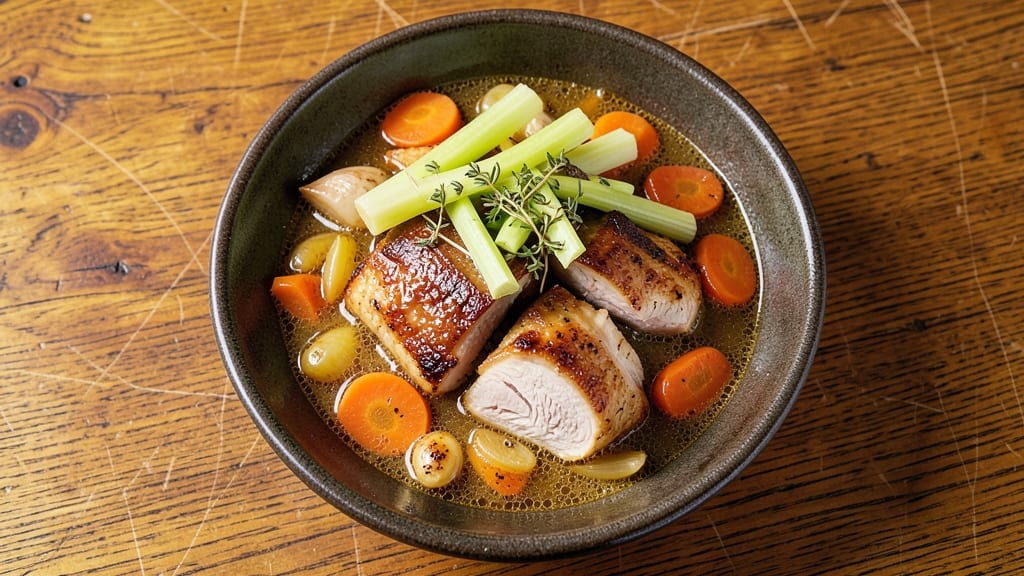
This chicken and pork stew recipe transforms humble ingredients into a rich, umami-packed masterpiece that tastes like a restaurant favorite. 🔥 The secret lies in proper browning of both meats—creating that essential flavor foundation—and letting them simmer low and slow until tender.
I developed this while perfecting my approach to whole-animal cooking at The Smoky Pig, where we handle 2,000 pounds of pork weekly. What makes this stew special is the balance: pork shoulder adds deep, savory richness while chicken breast stays tender and absorbs the aromatic broth.
The vegetables—carrots, celery, onions—soften just enough to release their natural sweetness, while herbs and spices build complex layers of flavor. This isn't just a stew; it's a complete meal with hearty texture and satisfying depth.
By the time you're done, you'll have a pot of golden stew with tender meat that practically falls apart, vegetables cooked to perfect tenderness, and a broth so flavorful it deserves a spoon. The aroma alone will have everyone gathering around the table.
The best part? It tastes even better the next day, making it perfect for meal prep. Serve with crusty bread for soaking up every last drop, or pair it with roasted potatoes for a complete Sunday dinner. Here's everything you need to make it happen."
Ingredients for chicken and pork stew
Six ingredients make this stew a restaurant-quality masterpiece—meaty, aromatic, and full of depth.
| Ingredient | Amount | Notes |
|---|---|---|
| Pork Shoulder 🐖 | 2 lb | Bone-in for best flavor |
| Chicken Breast 🍗 | 1 ½ lb | Boneless, skinless, cut into chunks |
| Yellow Onions 🧅 | 2 whole | Chopped, medium dice |
| Carrots 🥕 | 4 whole | Peeled, cut into chunks |
| Celery Stalk 🌿 | 4 whole | Chopped, rough cut |
| Garlic Cloves 🧄 | 8 cloves | Minced, fresh preferred |
| Tomato Paste 🍅 | ½ cup | Smooth, no sugar added |
| Dry Red Wine 🍷 | 1 cup | Bold, like Cabernet Sauvignon |
| Chicken Broth 💧 | 4 cups | Low-sodium preferred |
| Bay Leaves 🌿 | 2 whole | Fresh, if possible |
| Thyme Sprigs 🌿 | 4 whole | Fresh, stems removed |
| Rosemary Sprigs 🌿 | 2 whole | Fresh, chopped |
| Ground Black Pepper 🌶️ | 1 ½ tsp | Freshly cracked |
| Kosher Salt 🧂 | 2 tsp | Diamond Crystal preferred |
| Olive Oil 🫒 | ¼ cup | Extra-virgin for richness |
The pork shoulder is non-negotiable—it's where the deep, savory flavor comes from. Butcher shops often have it pre-cut, but if you're buying a whole shoulder, ask for the bone-in piece. It adds richness to the broth. Chicken breast stays tender when cut into even chunks—1.5-inch pieces work best. For the aromatics, Trader Joe's sells pre-chopped onions, carrots, and celery in a bag, which saves time. Fresh herbs make all the difference here, but if you're using dried, cut the amount in half. The Smoky Pig kitchen swears by fresh rosemary and thyme for that authentic restaurant taste.
No red wine? Dry sherry or extra chicken broth with a splash of balsamic works in a pinch. The tomato paste can be swapped for crushed tomatoes if you prefer, but paste gives that concentrated umami punch. Short on time? Pre-minced garlic from the jar is fine, but fresh is always better. The broth is crucial—low-sodium is key so you can control the salt level. If you're using store-bought, Pacific Foods or Imagine brands are my go-tos. For the herbs, if you can't find fresh thyme or rosemary, dried works at half the amount, but it won't have the same depth of flavor.
This stew tastes even better the next day, so make a double batch if you can. Store leftovers in the fridge for up to 5 days, or freeze for 3 months. I like to portion it into individual containers so it's ready for quick lunches. The pork and chicken will get even more tender as it sits, so don't skip the second-day reheat. If you're prepping for a crowd, this is the perfect make-ahead dish—just reheat gently on the stove with a splash of broth to keep it moist.
Why You'll Love This Recipe
- Here’s what sold me: the pork shoulder melts into tender, shreddable goodness while the chicken stays juicy. The onions caramelize just enough to sweeten the stew, and the carrots and celery add that earthy depth without overpowering. It’s hearty but never heavy—like a hug in a bowl.
- One-Pot Magic: I swear by this recipe when I’m too tired to wash a million pots. Toss everything—pork shoulder, chicken, onions, carrots, celery—into one big pot, add broth, and let it simmer. That’s it. No chopping like a chef, no stressing over layers.
- Rich Without Effort: Here’s what sold me: the pork shoulder melts into tender, shreddable goodness while the chicken stays juicy. The onions caramelize just enough to sweeten the stew, and the carrots and celery add that earthy depth without overpowering. It’s hearty but never heavy—like a hug in a bowl.
- Leftovers That Don’t Suck: Between us, most stews turn into sad, watery mush by day three. Not this one. The flavors actually deepened after reheating—better the next day, honestly. I freeze half for lazy nights, and it thaws perfectly for a quick dinner. No complaints.
Step-by-step instructions for chicken and pork stew
Here's how to build layers of rich, savory flavor in one pot—simple steps, incredible results.
🔥 Step 1: Sear the Meats for Deep Flavor
Heat the 0.25 cup olive oil in a large Dutch oven over medium-high heat until shimmering. Add the 2 lb pork shoulder in one piece and sear on all sides for 4-5 minutes per side until deep golden brown. Remove and set aside.
In the same pot, add the 1.5 lb chicken breast chunks and cook for 3-4 minutes per side until lightly browned. You're building flavor here—don't rush this step. The browned meat will form the rich base of your stew. Remove the chicken and set aside with the pork.
👨🍳 Step 2: Sauté the Vegetable Base
In the same Dutch oven (no need to wipe it clean—those browned bits are flavor gold), add the 2 whole chopped yellow onions, 4 whole chopped carrots, and 4 whole chopped celery stalks. Cook over medium heat for 5-6 minutes until the vegetables soften and the onions become translucent.
Add the 8 cloves minced garlic cloves and cook for 30 seconds until fragrant. Here's where the magic starts—those garlic cloves should smell incredible. Stir in the 0.5 cup tomato paste and cook for another 1 minute until it darkens slightly.
🍳 Step 3: Deglaze and Build the Sauce
Pour in the 1 cup dry red wine and scrape up all those browned bits from the bottom of the pot with a wooden spoon. This deglazing step captures all the meaty flavor you've built. Let the wine simmer for 3-4 minutes until reduced by half.
Add the 4 cups chicken broth, 2 whole bay leaves, 4 whole thyme sprigs, 2 whole rosemary sprigs, 1.5 tsp ground black pepper, and 2 tsp kosher salt. Stir well to combine. The stew should smell like a cozy kitchen in winter—herby, winey, and deeply savory.
⏰ Step 4: Simmer Until Tender
Return the pork shoulder and chicken to the pot. Bring to a gentle simmer over low heat, then reduce to a bare simmer. Cover and cook for 1 hour and 15 minutes, stirring occasionally. The pork should be fork-tender, and the chicken should fall apart easily.
Here's the thing—don't peek too often. Every time you lift the lid, you lose heat and moisture. Let it cook undisturbed. If the liquid reduces too much before the meat is tender, add a splash of water or broth to keep it moist.
🥘 Step 5: Finish and Rest
Once the meats are tender, remove the pork shoulder and chicken to a plate. Skim any excess fat from the surface of the stew (about 1 tablespoon should do it). Return the meats to the pot and simmer uncovered for 10-15 minutes to thicken the sauce slightly.
Let the stew rest for 10 minutes before serving. This resting period allows the flavors to meld and the juices to redistribute, ensuring every bite is packed with rich, umami goodness. Serve hot with crusty bread to soak up every last drop of that incredible sauce.
Pro Tips For Making Chicken And Pork Stew
- SEAR THE PORK FIRST: That pork shoulder won’t render fat properly if it’s just tossed in cold. Hit it with high heat for 5-6 minutes until the outside is deep golden—almost like bark. The extra effort locks in flavor and makes the stew taste richer later, even if you’re tempted to skip it.
- CUT CHICKEN SMALLER THAN YOU THINK: Chicken breast stays rubbery when it’s big chunks. Dice it into 1-inch pieces max—smaller than you’d use for a salad. It’ll cook faster, stay tender, and soak up the broth instead of turning out dry. (Yes, it’ll look weird in the pot, but trust me.)
- SAUTE THE VEGETABLES UNTIL SOFT: Don’t just toss the onions, carrots, and celery in raw—they’ll turn to mush and make the stew watery. Cook them for 8-10 minutes until the onions are translucent and the carrots yield slightly when pressed. This builds flavor and prevents a sad, soupy stew.
- USE COLD BROTH TO FINISH: After browning the meat and veggies, add just enough liquid to barely cover everything, then bring it to a boil. Let it simmer for 20 minutes before adding the rest of the broth. This keeps the meat from cooking too fast and turning tough—especially that pork shoulder. (I learned this after one very chewy batch.)
Pro cooking tips for great chicken and pork stew
Meat Prep Secrets
Cut the pork shoulder into 2-inch chunks—this size ensures even cooking and maximum surface area for flavor absorption. I swear by using a sharp boning knife for clean cuts, and always trim excess fat to avoid greasy stew.
For the chicken breast, cut against the grain into 1.5-inch pieces—this keeps them tender and makes serving easier. 🍗
Searing Like a Pro
Don’t crowd the pan when searing—work in batches if needed to maintain medium-high heat. I use a heavy Dutch oven (like Le Creuset) because it distributes heat evenly. The key is patience: let the pork sear for 4-5 minutes per side until it develops a deep brown crust.
This crust, called the Maillard reaction, is where all the rich flavor comes from.
Deglazing Magic
After removing the meat, immediately add the 1 cup dry red wine and scrape every last bit of browned meat from the pot—this is called deglazing. Those bits are pure flavor gold. Let the wine reduce by half before adding broth, which concentrates the flavors.
I like to use a wooden spoon for this because it’s gentle on the pot and helps lift those stuck-on bits.
Herb Infusion
Fresh herbs make all the difference—never skip them! Tie the thyme and rosemary sprigs in a small cheesecloth bundle to make them easy to remove later. This keeps your stew looking clean while still infusing maximum flavor.
If you’re using dried herbs, cut the amount in half and add them with the broth. The bay leaves should be removed before serving—they’re bitter if left in too long. 🌿
Simmering Perfection
Keep the heat at a bare simmer—you should see just a few tiny bubbles breaking the surface. If it boils vigorously, the meat will toughen. I cover the pot with a lid slightly ajar to allow steam to escape, which prevents the stew from getting watery.
Stir gently every 20 minutes to distribute heat evenly and prevent sticking.
Resting for Richness
Let the stew rest for 10 minutes before serving—this is non-negotiable. Resting allows the juices to redistribute, making every bite more flavorful. I also recommend tasting and adjusting seasoning during this time.
If it needs more salt, add it now. The flavors will meld beautifully, giving you that restaurant-quality depth you’re after. 💫
Nutrition facts
Frequently asked questions
Can I substitute pork shoulder with another cut of pork?
Yes, but choose wisely! Pork tenderloin works well but will cook faster—reduce simmering time to 45-60 minutes. Pork ribs add great flavor but may need 2 hours of cooking. Avoid fatty cuts like belly, as they can make the stew greasy. For best results, stick with pork shoulder for that perfect balance of tenderness and richness.
Why does my stew turn out watery?
Most likely, you didn't simmer long enough or used too much liquid. The broth should reduce naturally as the meat releases juices. If it's still thin after 1 hour and 15 minutes, uncover the pot and simmer uncovered for 10-15 minutes to thicken. For next time, start with 3 cups broth instead of 4.
Can I make this stew in an Instant Pot?
Sear the meats first, then add all ingredients and cook on high pressure for 30 minutes. Quick-release the pressure, then let it sit for 10 minutes before serving. The Instant Pot version cooks 40% faster but may need a splash of broth at the end to reach desired consistency.
What's the best way to reheat leftovers?
Reheat gently on the stove over low heat with a splash of broth or water to prevent drying. Never microwave directly from the fridge—it creates rubbery meat. For best results, reheat just until hot (5-7 minutes) and let it rest before serving. This stew actually tastes better the second day!
How can I make this stew spicier?
Add 1-2 teaspoons of smoked paprika or ½ teaspoon cayenne pepper during the deglazing step. For heat lovers, include 1 diced jalapeño with the vegetables.