
Soups & Stews
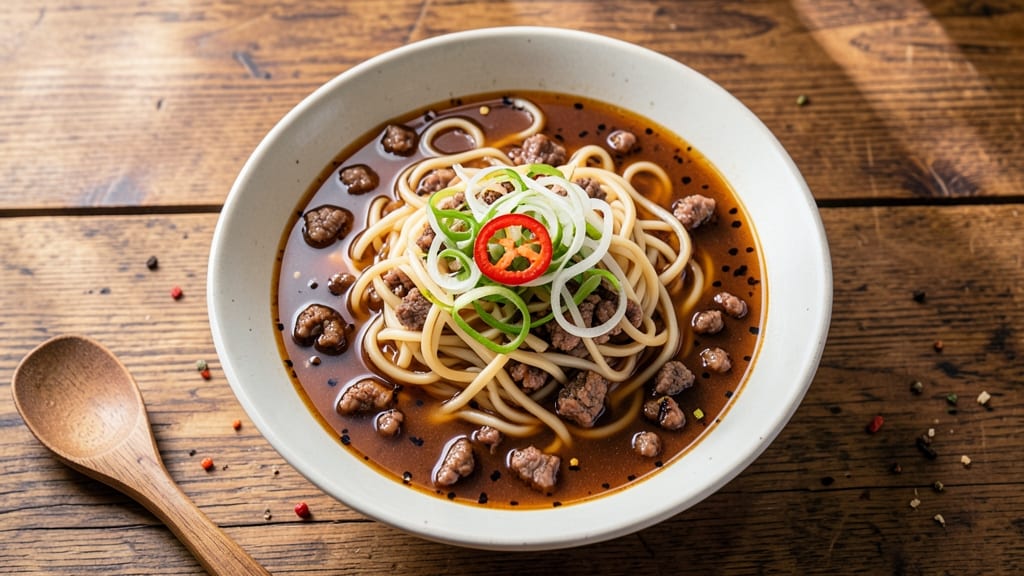
This Chinese minced pork noodle soup brings the smoky wok aromas and comforting broth of my Charleston kitchen to your table. 🔥 The secret lies in wok-fried aromatics—ginger, garlic, and scallions—that dance in the hot oil until fragrant, forming the soul of every slurp-worthy bowl.
I perfected this recipe during my apprenticeship, where we learned that proper broth reduction transforms simple ingredients into something deeply satisfying.
The magic happens in layers: tender minced pork infused with soy and sesame, a clear broth built from chicken stock and aromatics, and chewy wheat noodles that soak up every flavorful drop. What makes this recipe special is the balance—rich yet light, umami-forward without being overpowering.
The pork should be just cooked, not dried out, and the broth needs time to develop its depth through gentle simmering.
By the time you're done, you'll have a steaming bowl of soup with perfectly cooked noodles floating in a glossy, aromatic broth, topped with delicate pork pieces and fresh herbs.
Each spoonful delivers that perfect harmony of textures and flavors—slurpy noodles, tender pork, and a broth that's both comforting and complex. This is the kind of dish that warms you from the inside out.
Serve with a drizzle of chili oil and extra scallions for brightness, or pair it with a simple side salad for a complete meal. The leftovers taste even better the next day as the flavors meld further. Let's make this comforting classic!
Ingredients for chinese minced pork noodle soup
Fourteen ingredients create this aromatic, comforting Chinese minced pork noodle soup.
| Ingredient | Amount | Notes |
|---|---|---|
| Ground Pork 🐖 | 1 lb | Freshly ground for best texture |
| Dried Wheat Noodles 🍜 | 8 oz | Udon or ramen style preferred |
| Chicken Stock 💧 | 4 cups | Homemade or high-quality store-bought |
| Light Soy Sauce 🍶 | 2 tbsp | For umami depth |
| Dark Soy Sauce 🍶 | 1 tbsp | For rich color |
| Sesame Oil 🫒 | 1 tbsp | Toasted for aroma |
| Fresh Ginger 🧅 | 1 tbsp | Finely minced |
| Garlic Cloves 🧄 | 4 cloves | Minced for aromatic base |
| Scallions 🧅 | 3 whole | White and green parts separated |
| Vegetable Oil 🫒 | 2 tbsp | High smoke point preferred |
| Cornstarch 🌾 | 1 tsp | For broth thickening |
| Sesame Seeds 🌱 | 1 tsp | Toasted for garnish |
| Green Onions 🧅 | 2 whole | Sliced for garnish |
| Salt 🧂 | 1 tsp | Adjust to taste |
| White Pepper 🌶️ | ½ tsp | Freshly ground |
The pork is everything here—freshly ground makes all the difference. Butcher shops often have it pre-ground, or grab the finest cut from the meat counter. For the aromatics, Asian markets carry the best ginger and garlic—look for vibrant, firm pieces. I always double-check the soy sauce labels: light for flavor, dark for color. The noodles? Udon or ramen work best—they hold up to the broth without turning mushy. If you're using dried, soak them separately for 2-3 minutes before adding to the soup.
No fresh ginger? Powdered works at half the amount, but it lacks that bright punch. Short on sesame oil? Toasted sesame seeds mixed with neutral oil is a decent swap, though it's not quite the same. The chicken stock can be store-bought, but homemade or high-quality brands like Pacific Foods elevate the flavor. For the scallions, use the white parts for the broth and save the greens for garnish—they add a fresh finish. The cornstarch is key for that glossy, slightly thickened broth. If you're watching carbs, reduce the noodles to 4 oz per serving—it's still delicious.
This soup tastes even better the next day as the flavors meld. Store leftovers in the fridge for up to 4 days, or freeze for 3 months. I like to portion it into containers so I can reheat just what I need. The broth reduces slightly when chilled, so add a splash of water when reheating. For extra richness, stir in a teaspoon of sesame oil before serving. Garnish with toasted sesame seeds and green onions right before eating—they add that fresh crunch that makes it feel special.
Why You'll Love This Recipe
- No-Fuss Assembly: I swear by this one—just brown the pork, toss in the noodles and stock, and let it simmer. No chopping, no fussing, just 15 minutes of hands-off magic while the flavors meld together.
- Umami Bomb: That dark soy sauce? It’s the secret weapon—deep, smoky, and just a little sweet. Light soy adds brightness, and suddenly you’ve got a bowl that’s ridiculously satisfying without needing fancy ingredients.
- Lunchbox Hero: Between us, this is my go-to for meal prep. The noodles hold up perfectly, and the broth stays flavorful even cold. Pack it in thermoses, and you’ve got a lunch that’ll make coworkers jealous.
- Budget Powerhouse: Ground pork stretches far, dried noodles last forever, and a carton of chicken stock covers multiple batches. Honestly, it’s the kind of recipe that makes me feel like I’m feeding a crowd without breaking the bank.
Step-by-step instructions for wok-fried minced pork noodle soup
Here's how to build a rich, aromatic broth with perfectly wok-fried pork and chewy noodles.
🍳 Step 1: Wok-Fry the Pork with Aromatics
Heat the 2 tablespoons vegetable oil in a wok or large skillet over medium-high heat until shimmering. Add the 1 lb ground pork and cook, breaking it apart with a wooden spoon, until it loses its raw color and turns light golden brown (about 4-5 minutes). This should take longer than you think—don't rush or the pork will turn greasy instead of crispy.
Push the pork to one side of the wok and add the 1 tablespoon minced fresh ginger and 4 cloves minced garlic. Stir for 30 seconds until fragrant—you'll smell that fresh, zesty aroma that makes this soup sing. Add the white parts of the 3 whole scallions (chopped) and stir for another 1 minute until softened but not browned. Here's where the magic happens: the ginger and garlic release their oils and infuse the pork with layers of flavor.
🍳 Step 2: Build the Flavor-Packed Broth
Pour in the 4 cups chicken stock and bring to a gentle boil. Immediately reduce heat to medium-low and let it simmer for 5 minutes, allowing the flavors to meld. Stir in the 2 tablespoons light soy sauce and 1 tablespoon dark soy sauce—this combination creates the perfect balance of umami depth and rich color. The broth should now be golden brown with a glossy sheen, not murky or pale.
In a small bowl, whisk together the 1 tablespoon sesame oil and 1 teaspoon cornstarch. Slowly pour this mixture into the simmering broth while stirring constantly. The broth will thicken slightly and develop a beautiful silky, glossy finish—this is what makes the soup so satisfying. Taste and adjust seasoning with the 1 teaspoon salt and 0.5 teaspoon white pepper if needed. The broth should be savory, slightly sweet, and well-balanced—not overpowering with salt or pepper.
🥘 Step 3: Cook the Noodles to Perfection
While the broth simmers, prepare the 8 oz dried wheat noodles according to package instructions—usually 4-5 minutes in boiling water until al dente. Drain and rinse briefly under cold water to stop the cooking process. This prevents the noodles from becoming mushy when added to the hot broth. Divide the noodles among 4 bowls, one portion per serving.
Ladle the hot broth over the noodles in each bowl, making sure every strand is well-coated. The broth should be steaming gently and just covering the noodles—not drowning them. Here's a pro tip: if the broth looks too thin after ladling, you can thicken it further by mixing ½ teaspoon cornstarch with 1 tablespoon cold water, stirring it into the wok, and letting it simmer for 1 more minute. The noodles should float in a rich, flavorful broth with just enough body to cling to them.
👨🍳 Step 4: Finish with Garnishes and Serve
Return the wok with the pork mixture to low heat and stir in the green parts of the 3 whole scallions (chopped) and the 2 whole green onions (sliced). Keep the heat low to prevent the pork from overcooking—you want it to stay tender and slightly crispy at the edges. Spoon the pork mixture evenly over the noodles in each bowl.
Drizzle each serving with a few drops of sesame oil and sprinkle generously with 1 teaspoon sesame seeds. The contrast of the toasted sesame seeds against the smooth broth and chewy noodles adds a delightful crunch and nutty aroma. Serve immediately while the broth is steaming hot and the noodles are just firm enough to hold their shape. The aroma alone will make your kitchen smell like a bustling Chinese noodle shop—slurp-worthy and full of comfort.
Pro Tips For Making Chinese Minced Pork Noodle Soup
- STIR FAST, LOW HEAT: Don’t let that minced pork turn into mush—get it searing over medium-high heat for 30 seconds first, then drop the flame to medium-low. I used to rush this step, and the pork would either stick like glue or turn gray before browning. A quick sear locks in flavor and texture.
- SALT THE STOCK NOW: Taste that chicken stock before you add noodles and soy sauce—it’s usually bland. A pinch of salt (about ½ teaspoon) early on prevents you from over-salting later when you add soy sauces. Trust me, your noodles will thank you.
- DON’T SKIP THE WOK HEI: After frying the pork, crank the heat to max and wipe down the pan with a splash of Shaoxing wine (or dry sherry). The smoky char that forms—wok hei—adds depth the soy sauces alone can’t. Skip it, and your soup tastes flat.
- SOAK NOODLES SEPARATELY: Noodles in hot stock? Big mistake. Soak them in cold water for 5–7 minutes until pliable, then drain and add to the simmering broth. This keeps them from turning to glue and lets you control the texture—no more soggy, overcooked strands.
Flavor customization for these flavors
Spicy Kick Option
For heat lovers, add 1 teaspoon chili crisp or ½ teaspoon red pepper flakes to the wok with the pork. Stir for 30 seconds until fragrant—this adds smoky depth without overpowering.
I like to finish each bowl with an extra drizzle of chili oil (about ½ teaspoon per serving) for that signature Sichuan tang. 🌶️
Umami Boost
Deepening the umami profile transforms this soup from good to extraordinary. Add 1 tablespoon oyster sauce when you combine the soy sauces, or stir in 1 teaspoon fish sauce (like Red Boat) for a more authentic touch.
For a vegetarian twist, swap the pork with shiitake mushrooms (finely minced) and add 1 teaspoon mushroom powder to the broth.
Herb Variations
Fresh herbs brighten the soup and add complexity. Swap the green onions for cilantro (chopped) and garnish with Thai basil leaves for a Southeast Asian twist. For a more traditional Chinese flavor, use Chinese chives (sliced) and finish with toasted cilantro seeds (½ teaspoon per bowl).
These herbs add a fresh, aromatic finish that cuts through the richness.
Vegetable Add-Ins
Vegetables add texture and nutrition without overpowering the broth. Stir in ½ cup baby bok choy (chopped) or ¼ cup shiitake mushrooms (sliced) during the final 2 minutes of broth simmering.
For a heartier bowl, add ½ cup bean sprouts (rinsed) just before serving—they stay crisp and add a satisfying crunch. These additions keep the soup balanced and visually appealing.
Protein Swaps
Ground pork isn't your only option. For a seafood twist, use 1 lb finely chopped shrimp (cooked separately) and stir in 1 teaspoon white miso paste to the broth.
For a chicken version, replace the pork with 1 lb ground chicken thigh and add ½ teaspoon five-spice powder to the wok-frying step. Each swap brings a unique texture and flavor profile to the dish.
Sweet-Savory Balance
Sweetness rounds out the flavors beautifully. Stir in 1 teaspoon honey or ½ teaspoon rock sugar when adding the soy sauces for a subtle sweetness that complements the umami.
For a more pronounced sweet note, add 2 slices of canned lychee (chopped) to the broth during the final 5 minutes of simmering. This works especially well with the spicy kick option.
Nutrition facts
Frequently asked questions
Can I use beef or chicken instead of pork?
Ground beef or chicken work well, but adjust cooking times slightly. Beef needs 5-6 minutes to brown properly, while chicken cooks faster (3-4 minutes). For chicken, add ½ teaspoon five-spice powder during the wok-frying step to enhance flavor. The texture will differ, but the soup remains delicious.
How do I prevent the noodles from turning mushy?
Cook the noodles al dente (1-2 minutes less than package instructions), then rinse briefly in cold water to stop cooking. Add them to the hot broth just before serving so they absorb flavor without overcooking. For extra firmness, use fresh egg noodles instead of dried wheat.
What's the best way to make the broth more flavorful?
Simmer the broth uncovered for 10-15 minutes to deepen flavors. For extra richness, add 1 tablespoon oyster sauce or 1 teaspoon fish sauce when combining soy sauces. A splash of dry sherry (1 tbsp) during simmering adds complexity. Never boil vigorously—gentle simmering builds depth.
Can I make this soup ahead of time?
Yes! Assemble everything except the noodles and store in the fridge for up to 3 days. Reheat the broth separately, then add cooked noodles just before serving. For longer storage, freeze the broth mixture (without noodles) for 3 months. The flavors actually improve overnight as ingredients meld.
Why does my pork taste greasy?
Overcrowding the wok or cooking too quickly causes greasiness. Use medium-high heat and spread pork in a single layer, stirring constantly. Cook until light golden brown (4-5 minutes), not dark brown. For extra crispiness, pat pork dry before cooking and use a well-heated wok.