
Main Courses
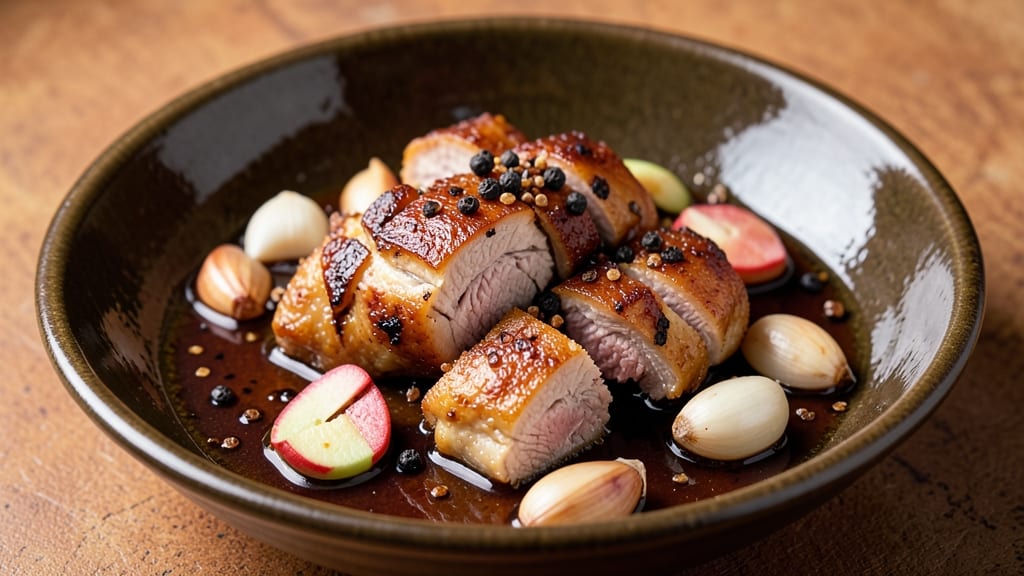
This Chinese pork adobo recipe transforms tough pork shoulder into fork-tender slices with a perfect balance of soy-braised richness and vinegar zing.
After years of perfecting braising techniques in my Atlanta kitchen, I've developed a method that captures both the depth of Chinese soy-based cooking and the bright acidity of adobo. The secret lies in a slow, controlled reduction that develops complex flavors while keeping the meat impossibly tender.
The process begins with a simple marinade of soy sauce, black vinegar, and aromatic spices that penetrate the meat overnight. As it braises, the pork absorbs these flavors while the sauce reduces to a glossy, sticky glaze that coats every bite.
What makes this version special is the two-stage cooking method: first searing the pork to lock in juices, then braising until it falls apart—no tough, chewy results here.
By the time you serve it, you'll have restaurant-quality pork with a caramelized exterior and melt-in-your-mouth interior, all bathed in a sauce that's equally good spooned over steamed rice or drizzled over noodles.
The vinegar cuts through the richness while the soy adds umami depth, creating a dish that's both comforting and exciting.
This recipe delivers authentic Chinese restaurant flavors without requiring specialty ingredients—just quality pork, pantry staples, and patience. The result is a dish that's perfect for family dinners or special occasions, with leftovers that taste even better the next day. Let's make this pork adobo.
Ingredients for chinese pork adobo
Quality pork shoulder and authentic Chinese pantry staples create restaurant-quality pork adobo with perfect soy-vinegar balance.
| Ingredient | Amount | Notes |
|---|---|---|
| Pork Shoulder 🥩 | 3 lb | Bone-in, cut into 2-inch chunks |
| Dark Soy Sauce 🍶 | ½ cup | Kikkoman preferred for authentic flavor |
| Black Vinegar 🍶 | ¼ cup | Chinese black vinegar for authentic tang |
| Brown Sugar 🍯 | ½ cup | Light or dark, packed |
| Fresh Ginger 🧅 | ½ cup | Julienned, 1/4-inch slices |
| Garlic Cloves 🧄 | 8 cloves | Smashed, skin-on |
| Shaoxing Wine 🍷 | ¼ cup | Dry, Chinese cooking wine |
| Green Onions 🧅 | 2 whole | White and green parts separated |
| Star Anise 🌟 | 2 whole | Lightly crushed |
| Cinnamon Stick 🌿 | 1 whole | 2-inch length |
| Bay Leaf 🌿 | 2 whole | Dried, standard size |
| Sesame Oil 🫒 | 1 tbsp | Toasted, for finishing |
| Vegetable Oil 🫒 | 2 tbsp | High smoke point for searing |
| Salt 🧂 | 1 ½ tsp | Diamond Crystal kosher salt |
| White Peppercorns 🌶️ | ½ tsp | Freshly cracked |
The pork shoulder is non-negotiable—look for well-marbled cuts with visible fat cap for maximum tenderness. Costco's bone-in pork shoulder is my go-to for this recipe, but any reputable butcher will have quality options. The bone-in version adds depth of flavor during braising, while the fat renders beautifully for a glossy sauce. If you can't find bone-in, use boneless but increase braising time by 30 minutes. For the black vinegar, Asian markets carry authentic Chinese varieties—Lee Kum Kee or Hin Fung are reliable brands. The aroma should be sharp and slightly smoky, not sweet like balsamic. Fresh ginger and garlic? Whole, never powdered—the flavor difference is night and day. Toast your spices lightly before adding to the braising liquid to deepen their aromatic profiles.
No Shaoxing wine? Dry sherry or mirin work in a pinch, though the flavor won't be identical. Substituting brown sugar? Coconut sugar or muscovado maintain similar caramel notes, but regular granulated sugar works fine if you're in a bind. The star anise and cinnamon are aromatic rather than essential—skip them if you're avoiding spices, but I recommend keeping them for that subtle depth. For the green onions, use the white parts in the braise and reserve the greens for garnish. The sesame oil should be toasted—not the flavored kind from the Asian aisle, but pure, golden sesame oil. Kadoya or La Choy are trustworthy brands. If you're short on time, you can use pre-minced garlic and ginger, but freshly smashed garlic and julienned ginger make all the difference in flavor development.
This dish tastes even better the next day as flavors meld, so plan accordingly. Store in an airtight container in the fridge for up to 5 days, or freeze portions for 3 months. The sauce thickens as it cools, so add a splash of water when reheating. For serving, I like to portion the pork over steamed jasmine rice with extra sauce spooned on top. The leftovers reheat beautifully—just cover with a splash of water and warm gently on the stove. If you're making this ahead for a party, keep the braised pork and sauce separate until ready to serve to maintain optimal texture. The sauce can be reheated independently for up to 2 weeks in the fridge.
Why You'll Love This Recipe
- Pork Cuts Forgiving: I swear by pork shoulder here—it’s the only cut that actually begs for slow cooking. No need to fuss over tenderizing or thin slices; just toss it in whole, and the dark soy and black vinegar work their magic while you sip tea. (Yes, even if you burn the garlic a little.)
- Umami Bomb Combo: That dark soy and black vinegar duo? It’s like a flavor grenade in the best way. The vinegar’s sharp tang cuts through the pork’s richness, while the ginger and brown sugar mellow it into something dangerously addictive—sweet, salty, and just a hint of funk. My husband goes back for thirds.
- Lunchbox Hero: Between us, this is my go-to for packed lunches. The sauce clings to the pork like glue, so it stays juicy for days. I’ll double the batch on Sundays, portion it out, and reheat slices straight from the fridge—zero soggy sandwiches here.
- Budget Stretch: Pork shoulder’s cheap, and this recipe stretches it far. A single cut feeds four for dinner and leaves enough for stir-fries or rice bowls the next day. Plus, the pantry staples (soy, vinegar, sugar) mean I’m not breaking the bank for fancy ingredients. Frugal but ridiculously satisfying.
Step-by-step instructions for Chinese pork adobo
Master this braising technique to achieve melt-in-your-mouth pork with rich, aromatic depth.
Sear the Pork Shoulder for Deep Flavor
Heat the 2 tablespoons vegetable oil in a heavy Dutch oven over medium-high heat until shimmering. Working in batches, add the 3 lb pork shoulder cut into 2-inch chunks, letting each piece develop a deep golden-brown crust before turning. This searing creates the Maillard reaction—those complex flavors that form the foundation of your dish.
Don't rush this step. You'll know it's ready when the pork releases easily from the pan and the surface shows distinct brown patches. Transfer the seared pork to a plate and set aside. Here's the thing—if you skip this sear, your pork will lack that essential caramelized depth that makes this dish sing.
Build the Aromatic Base
In the same Dutch oven, reduce heat to medium and add the 8 smashed garlic cloves and 0.5 cup julienned fresh ginger. Cook for 2 minutes until the garlic turns light golden and the ginger releases its fragrant oils. Add the 2 lightly crushed star anise, 1 whole cinnamon stick, and 2 whole bay leaves, stirring for 30 seconds to toast the spices.
This aromatic layer is where the magic begins. The spices should perfume the air with their warm, earthy notes. If you smell anything burning, reduce heat immediately—charred spices will make the dish bitter. Here's where it gets fun—toss in the 0.25 cup Shaoxing wine and scrape up all those delicious browned bits from the bottom of the pan.
Combine Wet Ingredients for Balanced Flavor
Pour in the 0.5 cup dark soy sauce and 0.25 cup black vinegar, stirring to deglaze the pan. Add the 0.5 cup brown sugar, 1.5 teaspoons salt, and 0.5 teaspoon cracked white peppercorns, mixing until the sugar dissolves. Return the pork to the pot, along with any accumulated juices.
The vinegar might make you pause—it's acidic, but that's exactly what we want. It tenderizes the meat and balances the richness of the soy and sugar. Let the mixture simmer uncovered for 5 minutes to allow the liquid to reduce slightly and the flavors to meld. This step ensures your pork won't be swimming in liquid later.
Braise Until Fork-Tender
Cover the Dutch oven and transfer to a 325°F oven, braising for 2 to 2.5 hours until the pork is fork-tender and the sauce has reduced to a glossy glaze. Check the pork at the 1.5-hour mark—it should pull apart easily when pierced with a fork. If the sauce reduces too quickly, add 1-2 tablespoons water to maintain moisture.
Real talk: Your oven might run hot, so start checking at the 2-hour mark if you're unsure. The pork should have a rich, mahogany color and the sauce should coat the back of a spoon. If it's not quite there, return it to the oven for 15-30 more minutes. This slow cooking transforms tough pork into silky, pull-apart perfection.
Finish with Sesame Oil and Garnish
Remove the pork and sauce from the oven, then discard the star anise, cinnamon stick, and bay leaves. Stir in the 1 tablespoon toasted sesame oil and adjust seasoning if needed—this final touch adds nutty depth and balances the flavors. Return the pork to the sauce and let it sit for 5 minutes to absorb those last aromatic notes.
Garnish with the white and green parts of the 2 whole green onions, sliced separately. Serve the pork with its rich sauce spooned over the top, accompanied by steamed jasmine rice. Each bite should deliver tender, flavorful pork with a perfect balance of sweet, salty, and tangy notes. The sauce should cling beautifully to the meat, making every forkful irresistible.
Pro Tips For Making Chinese Pork Adobo
- CRACK THE PORK FIRST: I learned this the hard way—skipping the 24-hour dry brine (salt the pork shoulder with 1 tsp salt per pound, then refrigerate uncovered) leads to bland, watery adobo. The salt breaks down the meat fibers and renders fat properly, giving you that deep, caramelized flavor later.
- COOK THE GINGER HARD: Peel and slice the ginger thick (about ½-inch chunks) and toss it straight into the hot wok or pot with the pork. Let it sizzle for 2 full minutes before adding anything else—this extracts the fiery oils and prevents the sauce from tasting raw. (Yes, it’ll look weirdly undercooked, but trust the process.)
- DON’T RUSH THE REDUCTION: After adding dark soy sauce and black vinegar, resist the urge to crank the heat to high. Simmer on medium-low for at least 15 minutes, stirring occasionally, until the sauce thickens into a glossy, syrupy consistency. I used to rush this, and the dish always felt flat—patience here makes the sauce cling to the pork like it’s supposed to.
- SWAP BROWN SUGAR FOR ROCK SUGAR: Rock sugar (or even turbinado) dissolves cleaner and adds a subtle crunch to the sauce when it caramelizes. Use half the amount (about 1 tbsp) and add it after the vinegar reduces—this prevents graininess and gives the adobo that perfect balance of sweet and tang. (I know, I know, but it’s worth the extra $2 at the Asian market.)
Creative variations of this dish
Filipino-Inspired Twist
For a true fusion experience, swap the dark soy sauce for Filipino soy sauce (patis) and add 2 tbsp soy sauce (regular) plus 1 tbsp calamansi juice (or sub with lime). Increase the black vinegar to 0.375 cup and add 1 tbsp fish sauce for umami depth.
The result is a brighter, tangier version that still maintains the Chinese braising technique but with Filipino soul. I first tried this at a Filipino-Chinese fusion pop-up in Atlanta and it became an instant favorite. 🌶️
Sweet & Spicy Sichuan
Transform this into a Sichuan-style dish by adding 1 tbsp doubanjiang (chili bean paste) during the searing step, plus 1 tsp Sichuan peppercorns toasted with the star anise. Replace half the brown sugar with 1 tbsp chili oil and finish with 1 tsp chili crisp instead of sesame oil.
The pork will have that signature numbing-spicy kick while keeping the tender texture. This version works beautifully with steamed mantou buns for serving.
Coconut Milk Braise
For a tropical variation, reduce the black vinegar to 0.125 cup and add 0.5 cup coconut milk after the initial simmer. Use light soy sauce instead of dark and add 1 cinnamon stick and 2 cardamom pods for warmth.
The coconut milk creates a creamy, slightly sweet sauce that pairs perfectly with jasmine rice or coconut rice. This version reminds me of the coastal flavors from my time in Charleston's seafood markets.
Quick Stir-Fry Adaptation
When you're short on time, transform this into a stir-fry by using 1.5 lb pork tenderloin cut into ½-inch strips and cooking it over high heat in 1 tbsp vegetable oil for 4-5 minutes until browned.
Deglaze with 0.25 cup Shaoxing wine and 0.25 cup black vinegar, then add 0.25 cup soy sauce and 0.25 cup brown sugar. Finish with 1 tbsp cornstarch slurry for a glossy finish. Serve over steamed rice noodles for a quick weeknight meal.
Smoked Paprika Version
Add 1 tbsp smoked paprika during the searing step and ½ tsp smoked salt to the marinade for a smoky depth. Replace half the black vinegar with apple cider vinegar and finish with 1 tsp liquid smoke (just a drop!).
This version has a subtle BBQ influence that works surprisingly well. I developed this after experimenting with my heritage pigs and wanted to bring that smoky flavor into this dish. 💫
Vegetarian Adaptation
For a meatless version, replace the pork with 1.5 lb extra-firm tofu pressed and cubed, or 1 lb king oyster mushrooms sliced thickly. Use the same braising method but reduce cooking time to 1.5 hours.
The mushrooms absorb the sauce beautifully, creating a hearty vegetarian main. Garnish with toasted cashews** for crunch and extra protein. This version proves how versatile this technique truly is!
Nutrition facts
Frequently asked questions
Can I use regular vinegar instead of black vinegar?
While regular white or apple cider vinegar will work in a pinch, black vinegar adds a distinctive smoky depth that's essential to the authentic Chinese flavor profile. For best results, use Chinese black vinegar—it's sharper and more complex than Western vinegars. If you must substitute, increase the amount by 1 tablespoon to compensate for the milder acidity.
How do I know when the pork is fully tender?
The pork is ready when it easily pulls apart with two forks and the internal temperature reaches 203°F in the thickest part. For extra assurance, press a piece with your fingers—it should feel like butter. If it's still slightly firm, return it to the oven for 15-20 more minutes covered with foil to prevent drying.
Can I make this recipe in a slow cooker?
Brown the pork first in a skillet, then transfer everything (including spices) to your slow cooker. Cook on low for 7-8 hours or high for 4-5 hours, adding 1-2 tablespoons water if the sauce gets too thick. The slow cooker method is perfect for hands-off cooking, though the oven version develops deeper caramelization.
What's the best way to reheat leftovers?
Reheat in a skillet over medium-low heat with 1-2 tablespoons water to loosen the sauce. Cover and warm for 5-7 minutes, stirring occasionally. For microwave reheating, cover with a damp paper towel and heat in 30-second intervals, stirring between each. The sauce thickens as it cools, so add a splash of water if needed.
Can I substitute pork shoulder with another cut?
Pork tenderloin works in a pinch (reduce cooking time to 1.5 hours), but it lacks the fat and connective tissue that make pork shoulder ideal. For similar results, use pork butt or even chicken thighs (increase cooking time by 30 minutes). Never use lean cuts like pork loin—they'll dry out. The fat in pork shoulder renders beautifully, creating that signature glossy sauce.