
Soups & Stews
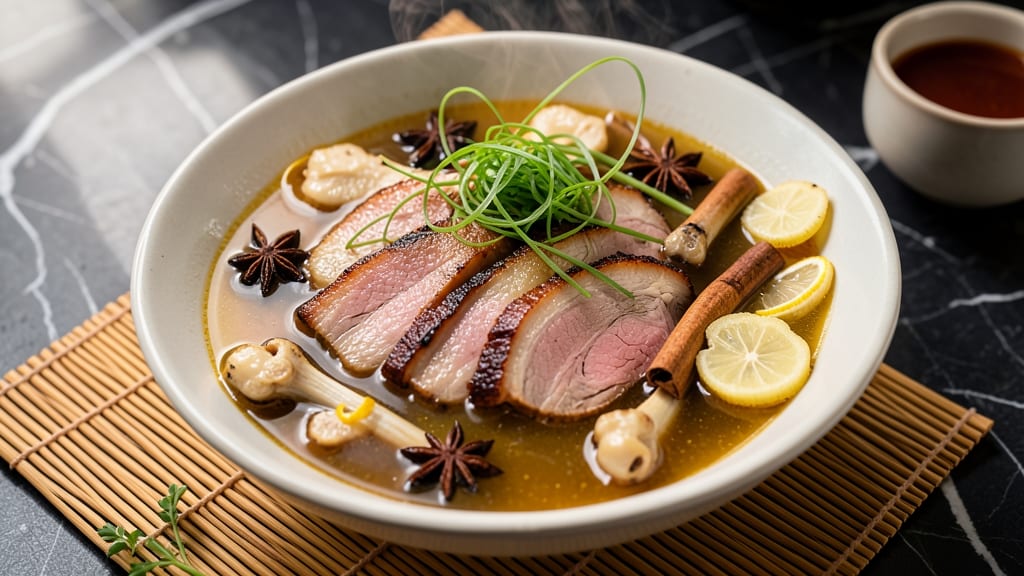
This Chinese pork belly soup recipe delivers the comforting, aromatic essence of home-cooked Chinese cuisine—rich five-spice broth that melts into tender, crisp-edged pork belly with every sip. 🔥 The secret lies in slow-simmering the pork until it achieves that signature contrast: shatteringly crisp skin and silky, pull-apart fat.
As someone who's spent years perfecting pork techniques, I can tell you this method transforms tough cuts into restaurant-quality results at home.
The foundation of an authentic Chinese pork belly soup begins with a double-boiled broth—first simmering pork bones and aromatics to extract deep, savory flavors, then adding the belly to cook gently in its own rendered fat.
Five-spice powder, star anise, and cinnamon build complex warmth, while ginger and scallions add brightness. This isn't just soup; it's a textural experience where every component plays a role—crispy edges, tender meat, and a broth so flavorful it should be served in a bowl.
What makes this recipe truly special is the technique—cooking the pork belly in stages ensures perfect doneness without sacrificing texture. The fat renders slowly, infusing the broth with unmatched richness, while the belly develops those coveted crisp edges.
Each bite delivers melty fat, tender meat, and aromatic broth in perfect harmony. This is the kind of soup that warms both body and soul, especially on chilly evenings.
Serve with steamed rice and fresh cilantro for garnish, or pair with pickled vegetables to cut through the richness. The leftovers? Even better the next day as the flavors deepen.
Here's how to make it—step by step, just like my grandmother taught me—so you can experience this Chinese classic at your own table.
Ingredients for chinese pork belly soup
Six servings of restaurant-quality pork belly soup with crisp edges and aromatic five-spice broth.
| Ingredient | Amount | Notes |
|---|---|---|
| Pork Belly (Skin-On) 🥓 | 3 lb | Thick-cut, skin intact for crisp edges |
| Pork Belly Bones 🦴 | 2 lb | For rich double-boiled broth |
| Fresh Ginger 🧅 | ½ cup | Julienned, skin removed |
| Scallions 🌿 | ½ cup | White and green parts separated |
| Star Anise Pods 🌟 | 4 whole | Whole, not ground |
| Cinnamon Sticks 🌿 | 2 whole | 2-inch pieces |
| Five-Spice Powder 🌶️ | 1 tbsp | Authentic Chinese blend |
| Garlic Cloves 🧄 | 6 cloves | Smashed, not minced |
| Dried Shiitake Mushrooms 🍄 | 4 whole | Rehydrated, stems removed |
| Light Soy Sauce 🥫 | ¼ cup | Kikkoman preferred |
| Shaoxing Wine 🍷 | ¼ cup | Or dry sherry substitute |
| White Rice Vinegar 🍶 | 1 tbsp | For brightness |
| Sesame Oil 🫒 | 1 tbsp | Toasted, for aroma |
| Salt 🧂 | 1 ½ tsp | Diamond Crystal preferred |
| Black Peppercorns 🌶️ | ½ tsp | Freshly cracked |
The pork belly is non-negotiable here—ask your butcher for thick-cut skin-on if the store doesn't carry it pre-cut. Costco and Whole Foods usually have the best quality, but any Asian market will carry it too. Look for good marbling—the more fat, the better the texture and flavor. The bones? Save them from your next pork roast—they're the secret to that deep, savory broth. Fresh ginger and scallions should be vibrant, not wilted or discolored, and star anise pods should smell sweet and aromatic. If you can't find Chinese five-spice, Penzeys Spices sells an authentic blend online.
No Shaoxing wine? Dry sherry or even a splash of rice vinegar works in a pinch, though the flavor will be slightly different. The shiitake mushrooms can be fresh if you prefer, but dried are more flavorful and cheaper. Rehydrate them in hot water for 20 minutes before using. For a quicker version, you can skip the double-boil and just simmer everything together, but trust me on the two-stage method—it makes all the difference. The sesame oil is purely for aroma, so don't overdo it—just a splash at the end. And if you're feeling fancy, add a splash of Chinese black vinegar for extra depth.
This soup tastes even better the next day as the flavors meld together. Store in the fridge for up to 4 days, or freeze for 3 months. The pork belly will crisp up beautifully when reheated—just cover with a splash of water and simmer gently. For serving, I like to garnish with fresh cilantro and extra scallions, and a drizzle of chili oil if you like it spicy. The broth reduces as it sits, so you might want to make a double batch—it disappears fast around here.
Why You'll Love This Recipe
- I’ll be real: this soup works for everything. Need a quick weeknight meal? Done. Hosting a dinner party? Even better. The bones make it hearty enough for a crowd, but the simplicity keeps it from feeling like a chore. Plus, the star anise and ginger give it a restaurant-worthy depth that makes it feel special—no matter the occasion.
- Foolproof Simplicity: Honestly, this soup is one of those rare recipes where you can’t mess it up. Toss the pork belly bones and skin-on pork belly into a pot with ginger and star anise, cover with water, and let it simmer. That’s it—no fancy techniques, no stress. The bones render their own rich broth while you’re busy with the rest of dinner.
- Crispy-Creamy Magic: Between us, the contrast in this soup is what makes it ridiculous good. The skin-on pork belly delivers that addictive crunch, while the tender meat inside melts like butter—all swimming in a broth that’s fragrant with star anise and brightened by fresh ginger. It’s the kind of flavor that lingers, and you’ll find yourself dipping scallions like they’re fries.
- Weeknight to Holiday: I’ll be real: this soup works for everything. Need a quick weeknight meal? Done. Hosting a dinner party? Even better. The bones make it hearty enough for a crowd, but the simplicity keeps it from feeling like a chore. Plus, the star anise and ginger give it a restaurant-worthy depth that makes it feel special—no matter the occasion.
Step-by-step instructions for Chinese pork belly soup
Here's how to build a deeply aromatic broth with melt-in-your-mouth pork belly and earthy shiitake mushrooms.
🔥 Step 1: Parboil the Pork Belly for Tender Edges
Place the 3 lb pork belly (skin-on) in a large pot and cover with cold water. Bring to a boil over high heat, then immediately reduce to a gentle simmer. Cook for 20-25 minutes until the pork belly reaches 160°F internally and the skin begins to wrinkle but isn't crisp.
Here's the thing—this initial parboil removes impurities and jumpstarts the cooking process without rendering all the fat. I like to use a meat thermometer for precision, but you can also test by gently pressing the pork belly with tongs. It should yield slightly but not fall apart. Drain and set aside on a wire rack.
🍳 Step 2: Build the Aromatic Broth Base
In the same pot, add 2 lb pork belly bones, 0.5 cup fresh ginger (julienned), 4 whole star anise pods, 2 whole cinnamon sticks, and 6 smashed garlic cloves. Cover with 8 cups cold water and bring to a boil over high heat. Once boiling, reduce to a simmer and skim off any foam that rises to the surface for 10 minutes.
This skimming removes impurities that can cloud your broth. The aroma should fill your kitchen with warm, spiced notes. After skimming, add 1 tbsp five-spice powder, 0.25 cup light soy sauce, and 0.25 cup Shaoxing wine. Let the broth simmer uncovered for 45 minutes to develop deep flavor.
🥘 Step 3: Add Shiitake and Pork Belly for Final Cook
Rehydrate the 4 whole dried shiitake mushrooms by soaking them in hot water for 20 minutes, then slice the caps (discard stems). Add the mushrooms to the simmering broth along with the parboiled pork belly. Return to a gentle simmer and cook for 1 hour to 1 hour 15 minutes, until the pork belly reaches 195-200°F and the skin is crispy.
I know it seems like a long cook time, but this is where the magic happens. The pork belly should be fork-tender with just a slight resistance, and the skin should crackle when you press it. The broth should reduce to about 6 cups and develop a rich, caramelized color. If the broth reduces too quickly, add hot water ½ cup at a time to maintain the right consistency.
👨🍳 Step 4: Finish with Bright, Fragrant Touches
Remove the pork belly and bones from the broth and let them rest for 10 minutes. Strain the broth through a fine-mesh sieve into a clean pot, pressing gently on the solids to extract flavor. Return the broth to the pot and stir in 1 tbsp white rice vinegar and 1 tbsp toasted sesame oil. Taste and adjust seasoning with 1.5 tsp salt and 0.5 tsp freshly cracked black peppercorns.
Here's where the soup comes together. The vinegar brightens the rich, umami flavors, while the sesame oil adds a nutty aroma. The broth should be deeply savory with a hint of sweetness from the reduced wine and soy sauce. If you prefer a clearer broth, you can strain it again through a cheesecloth-lined sieve.
🍽️ Step 5: Serve with Crispy Skin and Fresh Garnishes
Slice the pork belly into ½-inch thick pieces, ensuring you cut through the crispy skin. Ladle the hot broth into bowls, placing 2-3 slices of pork belly in each. Garnish with 0.5 cup scallions (white and green parts separated), sliced thinly. Serve immediately with steamed rice on the side.
Each bite should deliver a perfect balance of textures—crispy skin that gives way to tender, fatty meat, all swimming in a fragrant, five-spice-infused broth. The shiitake mushrooms add an earthy depth, while the fresh scallions cut through the richness. This is comfort food at its finest, where every spoonful tells the story of slow cooking and layered flavors.
Pro Tips For Making Chinese Pork Belly Soup
- CRACK THE SKIN FIRST: The pork belly skin isn’t just for looks—it’s the texture game-changer. After browning, hit it with a splash of hot water (about 1/4 cup) and let it steam for 3 minutes. The skin will puff up like a crispy cloud, but if you rush this, you’ll end up with sad, flat skin that sticks to your teeth.
- USE BONES FOR FLAVOR: Don’t just toss in the pork belly bones—split them open with a cleaver or heavy knife first. The marrow inside is where the deep, savory magic happens, and cracked bones release flavor faster. I used to skip this and wondered why my soup tasted thin compared to the versions I had at my aunt’s house.
- SIMMER LOW AND SLOW: This isn’t a race. Once the broth starts, keep it at a bare simmer—tiny bubbles, maybe one every 2-3 seconds. Too much heat, and the pork belly turns greasy; too little, and you’ll wait hours. I learned this the hard way after a pot of soup turned into a greasy, murky mess because I walked away for "just a minute."
- GINGER SLICES, NOT MINCE: Thinly sliced ginger (about 1/8-inch thick) infuses flavor without turning the broth bitter. Mincing it releases too much oil and can make the soup taste harsh. Plus, you’ll find whole slices at the end—easy to fish out and add to rice or noodles later. (Yes, even if you’re impatient like me.)
Perfect pairings for these flavors
Broth-Based Sides
Serve this pork belly soup alongside a small bowl of hot and sour soup—the tangy, chili-infused broth cuts through the richness beautifully.
I like to make a quick version with 1 cup chicken broth, 2 tbsp rice vinegar, 1 tbsp soy sauce, 1 tbsp chili crisp, and 1 chopped scallion. The contrast of textures and flavors elevates the whole meal. 🥗
Rice Pairings
Steamed jasmine rice is the classic choice, but don’t underestimate the power of congee (rice porridge) for soaking up the flavorful broth. Cook 1 cup jasmine rice in 4 cups water with a pinch of salt, then simmer until creamy.
Top with extra pork belly slices and a drizzle of chili oil for a cozy, hearty dish. 🍚
Vegetable Accompaniments
Add quick-pickled cucumbers to balance the richness—slice 1 English cucumber into half-moons, then toss with 2 tbsp rice vinegar, 1 tsp sugar, and ½ tsp salt. Let sit for 30 minutes before serving. The crisp, tangy crunch contrasts perfectly with the fatty pork belly. 🥒
Beverage Pairings
Pair this soup with a lightly chilled Chinese jasmine tea—its floral notes complement the five-spice broth without overpowering it. For something stronger, a dry Riesling from Germany adds acidity that cuts through the richness. Avoid heavy red wines; they’ll clash with the delicate broth. 🍷
Garnish Upgrades
Elevate your bowl with toasted sesame seeds and thinly sliced chili oil for heat lovers. Sprinkle 1 tsp sesame seeds over the soup just before serving, then drizzle 1 tsp chili oil—the nutty crunch and spicy kick take it to the next level. 🌶️
Make-Ahead Additions
Prep pickled red onions ahead of time for a pop of color and acidity. Thinly slice 1 small red onion, then soak in ¼ cup vinegar and 1 tsp sugar for 2 hours.
Drain and store in the fridge for up to 5 days. They add a bright, tangy contrast that keeps the flavors fresh. 🧅
Nutrition facts
Frequently asked questions
Why does the pork belly need two cooking stages?
The two-stage method is key for perfect texture. First, parboiling removes impurities and jumpstarts cooking without rendering all the fat. Then, slow-simmering in the broth builds that signature crisp skin while keeping the meat tender. The broth also infuses with pork fat, creating unmatched richness.
Can I substitute pork belly with another cut?
While pork belly is ideal, you can use pork shoulder or pork butt in a pinch. Trim excess fat and increase cooking time by 30-45 minutes to achieve tenderness. The skin won't be as crisp, but the meat will still be flavorful. For best results, stick with fatty cuts that render well.
How do I get extra crispy skin on the pork belly?
For restaurant-quality crispiness, pat the skin dry after parboiling and score it lightly with a knife. When simmering, ensure the broth barely covers the pork. In the last 10 minutes of cooking, increase heat slightly to medium-high to crisp the edges. A wire rack helps too—place it over a pot to let air circulate.
What's the best way to store leftovers?
Store in an airtight container with the broth and pork belly separated. Reheat broth separately to 165°F, then add pork belly for 5-10 minutes to crisp the skin again. Leftovers keep for 4 days in the fridge or 3 months frozen. The flavors actually deepen overnight!
Can I make this soup in an Instant Pot?
Yes, but with adjustments. Parboil the pork belly first, then add all ingredients to the Instant Pot. Cook on high pressure for 45 minutes, followed by a 10-minute natural release. For crispy skin, finish by broiling for 3-5 minutes. The broth will be less concentrated, so reduce it afterward on the stovetop.