
Main Courses
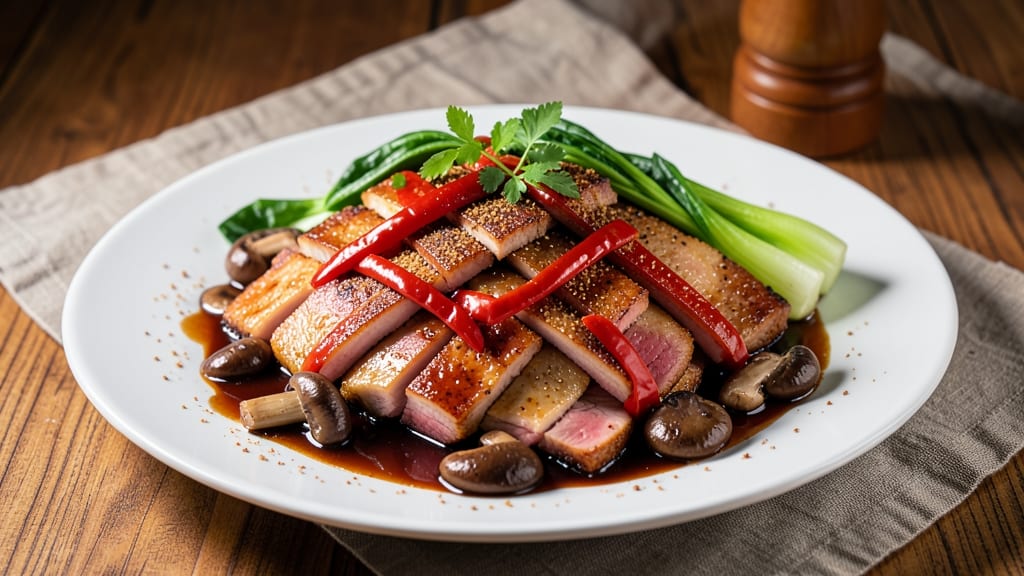
Mastering Chinese pork belly stir fry means achieving that perfect contrast: crispy, crackling edges that give way to silky, melt-in-your-mouth fat. This recipe combines traditional wok techniques with a sauce that balances sweet, salty, and umami—just like my mentor taught me in Charleston’s bustling kitchens.
The secret lies in rendering the fat properly and timing the stir-fry to lock in moisture while creating that coveted caramelized crust.
We’ll start with a simple marinade of soy sauce, hoisin, and five-spice powder to infuse flavor deep into the pork belly before it hits the wok. High heat is non-negotiable—this is where the magic happens, creating wok-hei, that signature smoky aroma.
The sauce, a blend of oyster sauce, chili bean paste, and a touch of honey, adds depth without overpowering the pork’s natural richness. Vegetables like bell peppers and bok choy join the dance midway, absorbing the pork’s rendered fat and sauce for maximum flavor.
What you’ll end up with is a dish that’s equal parts restaurant-quality and home-cook-friendly: golden, crispy pork belly with tender, juicy centers, surrounded by vibrant vegetables bathed in a glossy, slightly sticky sauce.
The texture contrast is what makes this dish unforgettable—crunchy on the outside, tender on the inside, with every bite delivering layers of flavor. Serve it over steamed jasmine rice to soak up every last drop of that aromatic sauce.
This recipe scales beautifully—whether you’re feeding a family or just craving a weeknight indulgence. The techniques are straightforward, but the results are anything but basic. Trust me, once you taste the difference between store-bought and this homemade version, you’ll never go back. Let’s get cooking.
Ingredients for chinese pork belly stir fry
Pork belly, aromatic sauces, and vibrant vegetables—this is your wok-hei toolkit.
| Ingredient | Amount | Notes |
|---|---|---|
| Pork Belly (Skin-On) 🥓 | 1 ½ lb | Thinly sliced, fat cap intact |
| Soy Sauce 🍶 | ½ cup | Light or dark preferred |
| Hoisin Sauce 🍶 | ¼ cup | For authentic umami depth |
| Five-Spice Powder 🌶️ | 1 tbsp | Toasted for enhanced aroma |
| Oyster Sauce 🦪 | ¼ cup | High-quality, no additives |
| Chili Bean Paste 🌶️ | 1 tbsp | For authentic heat profile |
| Honey 🍯 | 1 tbsp | Light variety preferred |
| Red Bell Peppers 🌶️ | 1 whole | Thinly sliced, seeds removed |
| Bok Choy 🥬 | 2 whole | Baby variety preferred |
| Garlic Cloves 🧄 | 6 cloves | Minced, fresh preferred |
| Sesame Oil 🫒 | 1 tbsp | Toasted, for finishing |
| Neutral Oil (Peanut or Vegetable) 🫒 | ½ cup | High smoke point required |
| Jasmine Rice 🍚 | 1 ½ cups | Uncooked, for serving |
| Salt 🧂 | 1 tsp | Kosher or sea salt |
| Black Pepper 🌶️ | ½ tsp | Freshly ground preferred |
The pork belly is non-negotiable here. Look for thick-cut, skin-on slices from a trusted butcher or Asian market—Costco or H Mart are my go-tos. The fat cap should be intact and plump, not dried out. If you can't find pre-sliced, ask for it cut 1/4-inch thick. For the five-spice powder, Penzeys or local Asian grocers carry the best blends—avoid the generic supermarket versions. The chili bean paste? Lao Gan Ma is the gold standard, but any brand with visible chili flakes will work. Pro tip: Toast your five-spice powder in a dry pan for 30 seconds before using—it intensifies the flavor instantly.
No hoisin sauce? Substitute 1 tbsp soy sauce plus 1 tsp molasses—it won’t be identical, but it’ll bridge the gap. Short on oyster sauce? Vegetarian oyster sauce or extra soy sauce works in a pinch, though the umami will be subtler. The honey can be swapped for maple syrup or agave if you’re avoiding it, but the caramelization won’t be as pronounced. For the bell peppers, any color works, but red adds natural sweetness that pairs beautifully with the pork’s richness. Bok choy can be subbed with Chinese broccoli or regular broccoli florets—just adjust cooking time since they’re denser. And if you’re feeling adventurous, swap half the pork for shiitake mushrooms for a vegetarian-friendly version.
Pork belly keeps best in the fridge for 3-4 days if stored in an airtight container with paper towels pressed against the fat to absorb moisture. The five-spice powder and chili bean paste last 6-12 months in a cool, dark pantry, while sesame oil should be refrigerated after opening to prevent rancidity. For the stir-fry itself, make the sauce ahead—it tastes better after flavors meld for 30 minutes. The cooked pork belly reheats beautifully; just crisp it again in a hot pan for 2-3 minutes per side to restore that coveted crunch. And if you’re prepping for a crowd, double the sauce and pork—this recipe scales effortlessly.
Why You'll Love This Recipe
- Crispy Without Fuss: I swear by the skin-on pork belly here—it renders into golden, crackling perfection with almost no effort. Just sear it skin-side down first, then flip and let the five-spice powder work its magic while you toss the veggies. No brining, no basting, just pure, addictive crunch that takes 10 minutes max.
- Umami Bomb: Between the hoisin’s sweet depth and the oyster sauce’s salty richness, this stir-fry hits flavor in a way that feels cheat-code good. The five-spice powder adds this warm, earthy kick that lingers—like someone sprinkled magic into your pan. Honestly, I’ve made simpler pork dishes that didn’t even come close.
- Leftover Goldmine: This recipe actually tastes better the next day. The pork belly stays tender, the sauce soaks in, and reheating it? Just a quick sizzle in the pan. I keep a container in the fridge for lazy lunches or late-night cravings—no one ever complains when I pull it out. (Yes, even on a Tuesday night.)
- Budget Meal Hero: Skin-on pork belly is cheaper than you think, and a single slab stretches across two meals. The sauce combo—soy, hoisin, oyster—uses pantry staples that cost pennies. I’ve fed four people for under $15 with this, and they all asked for seconds. That’s not just a meal; that’s a smart meal.
Step-by-step instructions for Chinese pork belly stir fry
Here's how to achieve wok-hot crispy edges and silky pork belly—every time.
Prepare the Pork Belly for Maximum Crisp
Slice the 1.5 lb pork belly (skin-on) into ¼-inch thick pieces, leaving the fat cap intact. This thickness ensures even cooking and that signature crispy exterior. Pat the slices completely dry with paper towels—moisture is the enemy of crispy skin. Arrange them on a wire rack set over a baking sheet and refrigerate uncovered for at least 1 hour (or overnight). This drying step is non-negotiable for that authentic wok-fried texture.
While the pork belly chills, toast the 1 tbsp five-spice powder in a dry skillet over medium heat for 1 minute until fragrant. This simple step deepens the aromatic profile of your dish. Transfer the toasted spice to a small bowl and set aside.
Marinate and Render the Fat
In a large bowl, combine the dried pork belly slices with the 0.5 cup soy sauce, 0.25 cup hoisin sauce, 0.25 cup oyster sauce, 1 tbsp chili bean paste, and 1 tbsp honey. Toss gently to coat evenly, ensuring the marinade penetrates the meat. Let it sit at room temperature for 30 minutes—this allows the flavors to meld and the marinade to work its magic.
Heat a 14-inch wok or skillet over high heat until smoking, then add the 0.5 cup neutral oil. Swirl to coat the bottom evenly. Add the marinated pork belly in a single layer, fat-side down. Cook undisturbed for 3-4 minutes until the fat begins to render and the bottoms turn golden brown. This is where the magic happens—don't rush it. The fat should sizzle audibly and begin to crisp.
Stir Fry to Crispy Perfection
Using tongs, carefully flip the pork belly pieces and cook for another 2-3 minutes until the other side is golden brown and the fat is crispy. Remove the pork and set aside on a plate. The rendered fat in the wok should now be deep golden with visible browned bits—this is your flavor base.
Add the 1 whole red bell peppers (sliced) and 2 whole bok choy (quartered) to the wok. Stir-fry for 2-3 minutes until the vegetables begin to soften but still retain their vibrant color. Add the 6 cloves minced garlic and cook for 30 seconds until fragrant. Return the pork belly to the wok and toss everything together for 1 minute to combine.
Finish with Umami and Serve
Drizzle the 1 tbsp sesame oil over the stir fry and toss gently to coat. The sesame oil adds a nutty finish that ties everything together. Taste and adjust seasoning with salt and black pepper if needed—your pork belly should be perfectly balanced between sweet, salty, and slightly spicy.
Serve the stir fry immediately over 1.5 cups cooked jasmine rice, garnished with any remaining crispy fat from the pork belly. The contrast of silky pork belly, crispy vegetables, and fragrant rice creates a dish that's both comforting and exciting. Each bite should deliver that wok-hot experience we all crave.
Pro Tips For Making Chinese Pork Belly Stir Fry
- CRISP THE SKIN FIRST: I used to ignore the skin until the very end, but that’s how you end up with soggy, greasy mess. Render the pork belly skin-side down in a cold pan—yes, cold—and let it sizzle undisturbed for 8-10 minutes until it’s golden and crackling. Flip only when the fat is bubbling like a tiny volcano; this locks in flavor and texture before you even touch the meat.
- SALT THE BELLY 24 HOURS EARLY: Skip this, and your pork belly will taste bland no matter how much soy sauce you drown it in. Generously salt the skin and meat, then refrigerate uncovered for a full day—this seasoning penetrates deeper than a last-minute sprinkle. Rinse briefly before cooking, but don’t wash it off; just pat dry.
- STOP STIRRING WHEN IT’S DONE: I was one of those people who kept tossing the pork belly like it was a salad, but that’s how you shred tender meat into mush. Once the fat renders and the meat hits 145°F (or it’s just almost cooked through), pull it out of the pan and let it rest for 5 minutes. Then slice—clean cuts every time.
- USE HOISIN LAST, NOT FIRST: Hoisin sauce burns faster than your patience if you add it too early. Save it for the final 30 seconds of cooking, when the pork belly is already out of the pan and you’re just tossing everything together. This keeps its sweetness bright and prevents that bitter, charred aftertaste that ruins the whole dish.
Creative variations of these flavors
Cantonese Style
For a more traditional Cantonese approach, swap the bell peppers for 1 cup Chinese cabbage (bok choy) and add ½ cup water chestnuts for crunch. Use 1 tbsp Shaoxing wine in the marinade and finish with 1 tsp white peppercorn instead of black.
The wine adds brightness while the peppercorn gives a subtle, aromatic kick—just like what I learned from Chef Chen’s Cantonese techniques. 🌶️
Sichuan Spicy Kick
Transform this into a fiery Sichuan stir-fry by adding 1 tbsp doubanjiang (fermented chili bean paste) and 1 tsp Sichuan peppercorns to the marinade. After cooking, toss in 1 tbsp chili oil and finish with 2 tbsp chopped scallions.
The numbing-spicy sensation from Sichuan peppercorns will make this dish unforgettable—trust me, it’s a game-changer. 🔥
Modern Fusion Twist
Give this a contemporary makeover by adding ½ cup diced pineapple and 1 tbsp fish sauce to the sauce. Top with ¼ cup crushed peanuts and 1 tbsp cilantro for a Southeast Asian-inspired fusion.
This version works brilliantly as a taco filling or over rice noodles for a lighter option. The sweetness of the pineapple cuts through the richness beautifully. 🌟
Vegetarian Adaptation
For a meat-free version, replace the pork belly with 1.5 lb extra-firm tofu (pressed and cubed) or shiitake mushrooms (sliced). Use the same marinade but reduce the cooking time to 2-3 minutes per side to avoid drying out.
Add 1 tbsp nutritional yeast to the sauce for extra umami depth. This vegetarian version still delivers that satisfying texture contrast—crispy edges with tender centers. 💚
Slow-Cooked Shortcut
If you’re short on time, try a slow-cooker adaptation. Sear the pork belly in a skillet first, then transfer it to the slow cooker with the marinade and ½ cup water.
Cook on low for 4-5 hours, then shred the pork and finish in a hot wok with the vegetables. The result is tender, flavorful pork without the fuss of stir-frying. Perfect for busy weeknights! ⏰
Breakfast Stir-Fry
Turn this into a hearty breakfast dish by adding 2 fried eggs on top of the rice before serving. Swap the bok choy for ½ cup chopped scallions and 1 cup bean sprouts for extra freshness.
The runny yolk adds richness that pairs perfectly with the crispy pork belly. This version is a Southern-inspired twist on a classic Chinese breakfast—just like the ones I grew up with in Georgia. 🍳
Nutrition facts
Frequently asked questions
Why does my pork belly turn out greasy instead of crispy?
The key is drying the pork thoroughly and cooking it undisturbed at high heat. Pat slices with paper towels until completely dry, then chill uncovered for at least 1 hour to remove excess moisture. Cook fat-side down for 3-4 minutes without stirring—this renders the fat and creates crispy edges. If your pork is still greasy, you may have overcrowded the pan or didn't render the fat long enough.
Can I use regular pork chops instead of pork belly?
Technically yes, but you'll lose the signature texture and flavor. Pork belly's fat cap is essential for that crispy skin and rich taste. If you must substitute, use thick-cut pork loin (at least 1-inch thick) and increase marinating time to 1 hour to compensate for the lack of fat. The result won't be identical, but it'll still be delicious with proper technique.
How do I achieve that smoky wok-hei flavor without a wok?
Use a carbon steel or cast iron skillet on the highest heat your stove offers. Preheat it until smoking, then work quickly to maintain high heat. Add a wooden chopstick to the pan when cooking—when it smokes, you've got wok-hei! Also, use neutral oil with high smoke point (like peanut or vegetable oil) and cook in batches to avoid steaming.
What's the best way to reheat leftover pork belly stir fry?
Reheat in a hot skillet or wok for 2-3 minutes per side to restore crispiness. Avoid microwaving as it makes the pork rubbery. For leftovers with sauce, reheat gently on low heat, adding 1 tsp water to prevent drying. The pork belly reheats beautifully this way—just watch for that golden crust to return!
Can I make this dish ahead of time?
Prepare the marinade and chop all vegetables the night before. Store pork belly and veggies separately in the fridge. Cook the pork belly fresh (it crisps best hot), but you can assemble the stir fry 1-2 hours ahead and reheat gently. Keep the sauce separate until reheating to maintain texture. The flavors actually improve when components rest together overnight!