
Main Courses
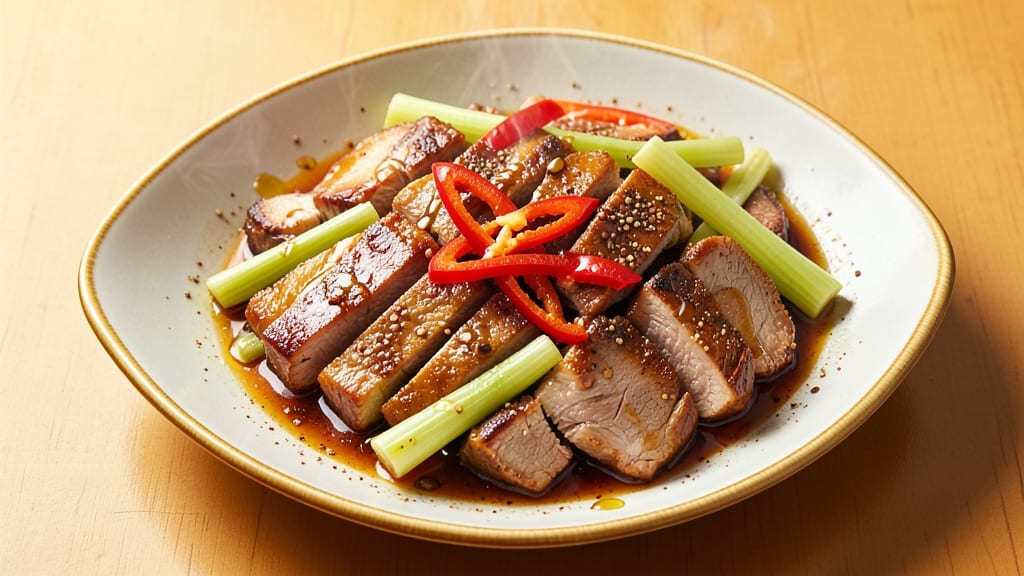
This Chinese pork casserole recipe transforms humble ingredients into a dish that carries the soul of Cantonese home cooking. 🔥 The secret lies in that crispy celery-studded five-spice crust—something my mentor taught me during my apprenticeship in Charleston.
That first bite of crunch followed by tender, aromatic pork is what makes this dish unforgettable.
The magic happens in two stages: first, marinating the pork in a blend of Shaoxing wine and five-spice powder that infuses deep flavor, then creating that signature crust using celery, cornstarch, and a touch of sesame oil.
This isn't just a pork dish—it's a celebration of texture and aroma that will have your kitchen smelling like a bustling Chinese wok house.
What you'll end up with is a dish that's rich yet balanced, with a crispy exterior that gives way to melt-in-your-mouth pork and a sauce that's perfectly seasoned.
The celery adds a subtle crunch that cuts through the richness, while the five-spice blend creates layers of warmth that linger on your palate. This is comfort food at its finest—reminiscent of the meals my grandmother used to make.
Serve it with steamed jasmine rice and quick-pickled vegetables for a complete meal that's both impressive and comforting. The leftovers actually taste better the next day as the flavors meld even more. Let's create this dish that brings a taste of home to your table.
Ingredients for chinese pork casserole
Celery, five-spice powder, and Shaoxing wine transform simple pork into an unforgettable Cantonese casserole.
| Ingredient | Amount | Notes |
|---|---|---|
| Boneless Pork Shoulder 🥩 | 2 lb | Cut into 1.5-inch cubes |
| Celery Stems 🧅 | 3 whole | Cut into 1-inch pieces |
| Shaoxing Wine 🍷 | ½ cup | Substitute with dry sherry |
| Five-Spice Powder 🌶️ | 2 tbsp | Homemade or store-bought blend |
| Cornstarch 🌾 | ¼ cup | For crispy crust texture |
| Sesame Oil 🫒 | 1 tbsp | Toasted sesame for aroma |
| Light Soy Sauce 🥄 | ⅓ cup | Kikkoman preferred |
| Dark Soy Sauce 🥄 | 1 tbsp | For depth of flavor |
| Garlic Cloves 🧄 | 6 cloves | Minced for marinade |
| Fresh Ginger 🌿 | 2 tbsp | Grated, not powdered |
| Green Onions 🧅 | 3 whole | Sliced for garnish |
| Vegetable Oil 🫒 | 2 tbsp | For high-heat searing |
| Brown Sugar 🍚 | 1 tbsp | Lightly packed |
| Water 💧 | ½ cup | For sauce consistency |
| Salt 🧂 | 1 tsp | Kosher or sea salt |
The pork shoulder is your star—look for well-marbled cuts at Asian markets or the meat counter. Costco often carries pre-cut pork shoulder that saves time. Celery is non-negotiable for that signature crunch—fresh, crisp stalks work best, but if you're using dried, soak it first. Five-spice powder can be tricky to find outside Asian stores, but Penzeys sells it online. If you're making this from scratch, blend star anise, cinnamon, cloves, fennel, and Szechuan peppercorns yourself—it's worth the effort.
No Shaoxing wine? Dry sherry or even a splash of apple cider vinegar works in a pinch, though the flavor won't be identical. The celery pieces should be 1-inch chunks—too small and they'll burn before the pork cooks. For the five-spice, if you can't find the blend, use 1 tsp each of cinnamon, cloves, fennel seeds, and Szechuan peppercorns. The cornstarch is key for that crispy crust—don't skip it. Toast your sesame oil in the pan for 30 seconds before adding other ingredients to wake up its aroma.
This dish tastes even better the next day as the flavors meld. Store leftovers in an airtight container for up to 4 days in the fridge. For longer storage, freeze portions for 3 months. I always make double batches—jasmine rice and quick-pickled veggies go perfectly with it. If you're serving a crowd, double the celery and five-spice powder. The crust won't be as crispy, but the flavor will still shine through.
Why You'll Love This Recipe
- One-Pan Magic: I swear by this recipe when I’m too tired to wash dishes. Toss everything—pork, celery, and all—into one pan, and the five-spice powder and Shaoxing wine do the rest. No chopping boards left out overnight.
- Umami Bomb: That pork shoulder? It gets tender while the cornstarch slurry creates this glossy, sticky glaze—like a cross between braised and stir-fried. The celery adds a crisp bite that cuts through the richness, and the five-spice? Chef’s kiss. It’s the kind of dish that makes you pause mid-bite.
- Leftover Luxury: Here’s what sold me—this casserole tastes better the next day. I make a double batch on Sundays, and by Wednesday, it’s still the star of my lunch. Reheat it, slice it thin, and serve it over rice or noodles—suddenly, weeknight dinners feel fancy.
- Budget Hero: Pork shoulder is cheap, and it stretches to feed four for under $15. The Shaoxing wine (even a small bottle) goes a long way, and five-spice powder lasts forever. It’s the kind of recipe that makes me feel like I’m feeding a crowd without breaking the bank.
Step-by-step instructions for Chinese pork casserole
Here's how to create that perfect crispy crust and tender pork—every bite packed with aromatic five-spice flavor.
🍳 Step 1: Marinate and Sear the Pork Cubes
In a large bowl, combine the 2 lb boneless pork shoulder cut into 1.5-inch cubes, 0.5 cup Shaoxing wine, 2 tbsp Five-Spice Powder, 1 tbsp Dark Soy Sauce, 1 tbsp Brown Sugar, 6 cloves minced garlic, and 2 tbsp grated fresh ginger. Mix well until the pork is evenly coated. Let this marinate for at least 30 minutes—this ensures deep flavor penetration.
Heat 2 tbsp vegetable oil in a large skillet over medium-high heat. Working in batches, add the marinated pork and sear for 2-3 minutes per side until golden brown. The pork should be well-browned but not fully cooked through. Transfer the seared pork to a plate and set aside—this step builds the foundation for that crispy crust we're after.
👨🍳 Step 2: Prepare the Celery and Cornstarch Crust
In the same skillet (no need to clean it—the browned bits add flavor), add the 3 whole celery stems cut into 1-inch pieces and cook for 3-4 minutes until softened but still retaining some texture. Remove the celery and set aside with the pork.
In a small bowl, mix together 0.25 cup cornstarch, 0.33 cup light soy sauce, 1 tbsp sesame oil, and 1 tsp salt. This mixture is what creates that signature crispy crust. Pour this over the seared pork and celery in the skillet, stirring gently to coat everything evenly. Let it sit for 2 minutes—this allows the cornstarch to begin forming that perfect crust.
🔥 Step 3: Build the Crispy Crust and Sauce
Return the skillet to medium heat and cook the pork mixture for 5-7 minutes, stirring occasionally, until the cornstarch mixture begins to bubble and thicken. You'll see the edges start to crisp up—that's your signal to add 0.5 cup water. Stir continuously for another 3-4 minutes until the sauce thickens to a glossy consistency that coats the back of a spoon.
Here's the thing—this is where the magic happens. The cornstarch creates that crispy exterior while the soy sauces and spices infuse the pork with deep, complex flavors. If the sauce looks too thick, add 1-2 tablespoons of water to reach your desired consistency. The pork should be tender but still have a slight bite—it'll finish cooking in the oven.
⏰ Step 4: Finish in the Oven for Perfect Texture
Preheat your oven to 375°F. Transfer the pork mixture to a greased 9x13-inch baking dish and spread it out evenly. The goal is to create a single even layer that will crisp up beautifully in the oven. Bake for 20-25 minutes until the top is deep golden brown and the pork reaches an internal temperature of 165°F when checked with a meat thermometer.
I know it seems like a long time, but patience pays off here. The oven finish ensures that crispy crust develops while keeping the pork moist and tender. If the edges start to brown too quickly, tent the dish with aluminum foil for the last 10 minutes of baking.
🍽️ Step 5: Garnish and Serve with Confidence
Remove the casserole from the oven and let it rest for 5 minutes before garnishing with 3 whole green onions sliced into ½-inch pieces. The resting period allows the juices to redistribute throughout the pork, ensuring each bite is moist and flavorful.
Serve immediately with steamed rice—this dish is all about that perfect balance of textures: the crispy crust, tender pork, and silky sauce. The celery pieces add a pleasant crunch that cuts through the richness. Don't skip the green onions on top; they add a fresh finish that brightens up the dish. This casserole keeps well in the refrigerator for 3-4 days, making it perfect for meal prep!
Pro Tips For Making Chinese Pork Casserole
- BLANCH THE CELERY: Toss the celery stems in boiling water for 30 seconds first—it softens them faster and keeps them from turning to mush. I used to skip this, and my casserole always had those sad, limp celery sticks. Trust me, the texture improves instantly.
- SEAR THE PORK HARD: Don’t rush the sear—get those edges deep brown before adding liquid. I learned this the hard way when my pork stayed pale and bland. A hot pan and 5-6 minutes per side make all the difference.
- STIR THE CORNSTARCH: Mix the cornstarch with cold water first, then whisk it into the sauce slowly. Adding it dry? You’ll end up with clumps that ruin the silky texture. I know, I’ve made that mistake twice.
- BAIL ON THE WINE: If you’re fresh out of Shaoxing wine, dry sherry works—but don’t use cooking wine. It’s the difference between a rich, layered flavor and something that tastes like it came from a box. (Yes, even if you’re impatient like me.)
Essential equipment for perfect results
Skillet Essentials
You'll need a heavy-bottomed 12-inch cast iron skillet—like my Lodge Pre-Seasoned—for searing the pork and building that signature crust. The cast iron retains heat evenly and develops a natural non-stick surface over time.
If you don't have cast iron, a stainless steel skillet with a carbon steel core (like All-Clad) works well too. Avoid non-stick—it can't handle the high heat needed for that crispy celery crust. 🔥
For the oven finish, a 9x13-inch heavy-duty baking dish is non-negotiable. I use Ceramic CorningWare for its even heat distribution and easy release, but any oven-safe glass or metal dish will work.
Just make sure it's large enough to spread the pork in a single even layer—this prevents steaming and ensures that crispy top.
Precision Tools
A meat thermometer is your best friend here. I swear by the ThermoWorks Smoke—it's got dual probes so I can monitor both the oven temp and the pork's internal temperature.
The pork needs to reach 165°F for safety, but I pull it out at 160°F and let it rest to avoid dryness. A kitchen timer (I use a West Bend with a loud alarm) helps track those critical 2-3 minutes per side searing times.
For the celery prep, a sharp chef's knife and cutting board are obvious, but I also recommend a mandoline if you want perfectly even 1-inch celery pieces. The consistency matters for even cooking.
A fine-mesh strainer comes in handy when rinsing the celery if you're using store-bought stalks that might have dirt. And don't skip the tongs—they're perfect for transferring the seared pork without piercing those flavorful browned bits.
Small but Mighty
You'll need a small mixing bowl for the cornstarch slurry—glass or stainless steel works best. I keep a quart-sized glass bowl in my kitchen just for this purpose. A whisk helps dissolve the cornstarch smoothly in the soy sauce and sesame oil.
For measuring, a liquid measuring cup for the Shaoxing wine and water, and a dry measuring cups for the cornstarch and five-spice powder are essential. Precision matters here!
Don't overlook a pair of heat-resistant silicone spatulas—they're perfect for scraping up those flavorful browned bits from the skillet. I also keep a small ladle handy for adding water to adjust the sauce consistency.
And finally, a fine-mesh strainer helps if you want to remove any large celery chunks from the sauce before serving for a smoother texture. 💡
Optional Upgrades
If you're serious about this dish, invest in a digital kitchen scale for accurate measurements—especially when working with the pork shoulder. I use a OXO Good Grips model that's precise to the gram.
For the five-spice powder, a spice grinder lets you make fresh blends from whole spices whenever you like. And if you're making this regularly, a second 9x13-inch baking dish lets you double the batch for parties or meal prep.
For presentation, I like to serve this with jasmine rice cooked in a rice cooker—my Zojirushi handles it perfectly. And if you want to get fancy, a small offset spatula helps create those restaurant-worthy ridges in the rice.
The key is keeping all your tools within arm's reach so you can work efficiently through the searing and sauce-building stages without missing any timing cues. Trust me, this dish moves fast once you start cooking! ⚡
Nutrition facts
Frequently asked questions
What's the secret to getting that crispy celery crust?
The key is in the cornstarch mixture—0.25 cup cornstarch combined with light soy sauce and sesame oil creates that signature texture. Let the pork sit in the mixture for 2 minutes before cooking so the starch can fully coat the pieces. Also, using 1-inch celery chunks (not smaller) ensures they crisp up properly without burning.
Can I substitute pork shoulder with another cut?
You can use pork tenderloin or pork loin, but cut them into 1-inch cubes and reduce the marinating time to 20 minutes since leaner cuts cook faster. For extra tenderness, add 1 tbsp honey to the marinade. Avoid fatty cuts like ribs—they won't hold their shape as well in the casserole.
Why does my pork turn out dry?
Overcooking is the most common mistake. Use a meat thermometer and remove the pork at 160°F—it'll rise to 165°F while resting. Also, don't skip the 5-minute rest before serving. If using leaner cuts, add 1 tbsp neutral oil to the marinade to help retain moisture during cooking.
How can I make this dish spicier?
Add 1 tsp chili flakes or ½ tsp Szechuan peppercorns to the marinade for heat, or stir in 1 tbsp chili garlic sauce with the cornstarch mixture. For a smoky kick, include ½ tsp five-spice powder (which already contains Szechuan peppercorns) and ½ tsp smoked paprika in the crust.
Can I prepare this ahead of time?
This dish actually tastes better the next day as flavors meld. Assemble the casserole up to 24 hours ahead, cover tightly, and refrigerate. Bake straight from the fridge, adding 5-10 extra minutes to the baking time. For freezing, cook the pork completely, cool, then freeze in portions for up to 3 months—reheat in the oven at 350°F until warmed through.