
Main Courses
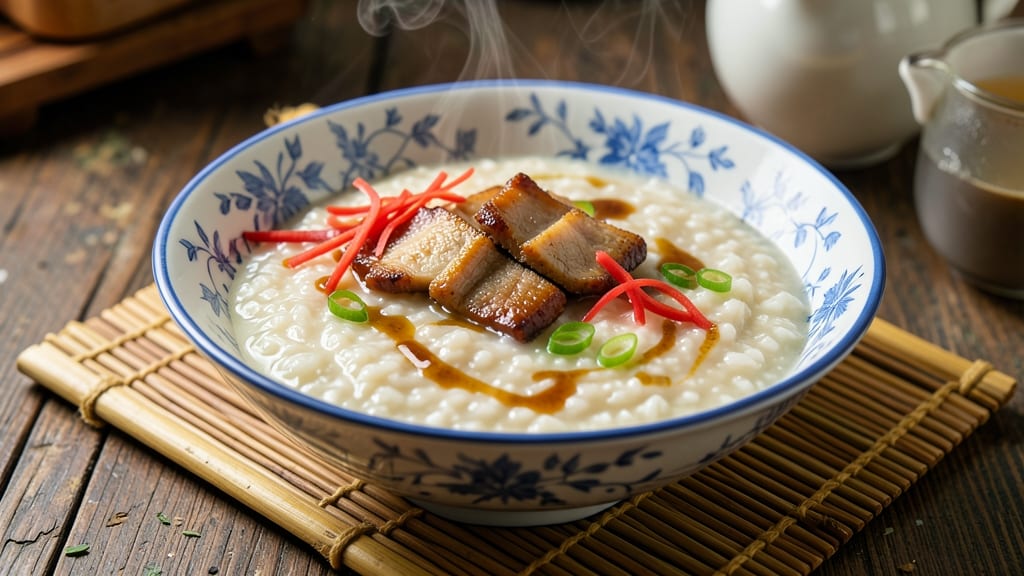
This Chinese pork congee recipe delivers the ultimate comfort food—silky rice porridge infused with tender pork and aromatic spices. 🌟 I first tasted it in a dim sum house in Shanghai, where the steam rising from the bowl felt like a warm hug.
The secret lies in slow-cooking jasmine rice until it dissolves into a velvety broth, then adding succulent pork that melts in your mouth.
What sets this recipe apart is the balance of textures and flavors: the creamy rice porridge contrasts perfectly with crispy pork bites, while ginger, scallions, and star anise create a fragrant depth that lingers.
I've perfected this version using pork belly for maximum tenderness, but ribs or shoulder work beautifully too. The slow simmer transforms tough cuts into melt-in-your-mouth perfection.
By the time you're done, you'll have a restaurant-quality dish that's both nourishing and deeply satisfying. The aroma alone will fill your kitchen with warmth, while the first spoonful delivers a harmony of savory, sweet, and umami notes.
This is the kind of meal that feels like coming home after a long day—simple yet extraordinary.
Serve it with pickled vegetables, a soft-boiled egg, or fresh cilantro for extra brightness. The leftovers taste even better the next day, making it ideal for meal prep or feeding a crowd. Let's bring this comforting classic to your table.
Ingredients for chinese pork congee
Silky rice, tender pork, and fragrant spices—just nine core ingredients for ultimate comfort.
| Ingredient | Amount | Notes |
|---|---|---|
| Pork Belly 🥓 | 1 ½ lb | Skin removed, cut into 1-inch cubes |
| Jasmine Rice 🍚 | 1 cup | Uncooked, long-grain preferred |
| Water 💧 | 8 cups | Filtered or spring water preferred |
| Pork Broth 🍲 | 4 cups | Homemade or high-quality store-bought |
| Fresh Ginger 🧄 | 2 tbsp | Grated, skin removed |
| Scallions 🧅 | ½ cup | Thinly sliced, white and green parts |
| Star Anise 🌟 | 2 whole | Whole pods, crushed lightly |
| Soy Sauce 🍶 | 2 tbsp | Light or dark, to taste |
| Sesame Oil 🌾 | 1 tbsp | Toasted, for finishing |
| Vegetable Oil 🫒 | 2 tbsp | For crisping pork |
| Salt 🧂 | 2 tsp | Kosher or sea salt |
| White Pepper 🌶️ | ½ tsp | Freshly ground preferred |
| Cilantro 🌿 | ¼ cup | Chopped, for garnish (optional) |
| Pickled Vegetables 🥬 | 1 cup | For serving (optional) |
Pork belly is the star here—look for thick-cut pieces at the butcher counter or pre-cut from Costco. If you can't find belly, pork shoulder works too, but it'll need more time to tenderize. For the rice, jasmine or short-grain is non-negotiable—it breaks down beautifully into that creamy texture. I always grab my pork broth from Trader Joe's because their homemade version has that depth you can't get from bouillon cubes. The star anise? Whole Foods carries it in their spice aisle, and it's worth having on hand for other Asian dishes too.
No pork belly? Pork shoulder or ribs are solid swaps—just cube them smaller for even cooking. Running low on star anise? Cinnamon sticks at half the amount mimic some of that aromatic warmth. The scallions can be subbed with regular onions, but they add that fresh brightness that's hard to beat. For the broth, chicken or vegetable broth in a pinch, but you'll lose some of that porky richness. Fresh ginger is ideal, but dried ginger at one-third the amount works if you're in a bind. And if you're feeling fancy, add a soft-boiled egg on top—it takes this dish to the next level.
This congee tastes even better the next day, so double the batch if you can. Store leftovers in the fridge for up to 5 days—just reheat gently on the stove with a splash of water. For freezing, portion into airtight containers and it keeps for 3 months. The pork cubes crisp up beautifully when reheated, so don't skip that final step. Serve with pickled veggies or chili oil for extra zing—both are easy to find at Asian markets or make in 10 minutes.
Why You'll Love This Recipe
- One-Pot Magic: I swear by this—just toss pork belly, jasmine rice, and ginger into simmering broth, then let it slow-cook. No chopping, no fussing, no extra pots. The rice breaks down into that silky, porridge-like texture all on its own while the pork gets impossibly tender.
- Rich, Deep Comfort: That first spoonful of ginger-infused pork broth with the melt-in-your-mouth pork belly? It’s the kind of flavor that makes you slow down. The slow simmer lets the pork belly render its own fat into the broth, creating a dish that’s both warming and deeply satisfying—no heavy sauces needed.
- Leftovers That Taste Better: Between us, my congee actually improves the second day. The rice softens further, the broth deepens, and I can reheat it with a quick stir. Perfect for lazy mornings or when I’m too tired to cook—just add a fried egg on top, and suddenly it’s dinner again.
- Budget-Friendly Luxury: Pork belly might sound fancy, but a few slices stretch across multiple servings, and the rest of the ingredients are pantry staples. I make a big pot on Sundays, and it feeds my family for days without breaking the bank. Plus, the leftovers freeze beautifully—no sad, soggy takeout nights here.
Step-by-step instructions for Chinese pork congee
Here's how to make this comforting porridge with tender pork and silky rice.
🔥 Step 1: Crisp the Pork Belly for Maximum Flavor
Heat 2 tablespoons vegetable oil in a deep pot over medium-high heat until shimmering. Add the 1.5 lb pork belly cut into 1-inch cubes and cook undisturbed for 4-5 minutes until the edges turn golden brown. This creates a crispy exterior that adds incredible texture to your congee.
Flip the pork pieces and continue cooking for another 3-4 minutes until they're golden on all sides. You'll smell the fat rendering—that's your signal the pork is ready. Remove the pork with a slotted spoon and set it aside. Don't drain the rendered fat from the pot; we'll use it later for cooking the rice.
🍳 Step 2: Sauté Aromatics and Prepare the Base
In the same pot with the pork fat, add the 2 whole star anise (lightly crushed) and 2 tablespoons fresh ginger. Cook for 30 seconds until fragrant—you should smell that warm, spicy aroma. Add the 1 cup jasmine rice and stir to coat it in the fat and aromatics.
Pour in the 8 cups water and 4 cups pork broth, then add 2 teaspoons salt and 0.5 teaspoon white pepper. Bring to a gentle boil, then immediately reduce heat to lowest setting. Here's the thing—congee needs patience. Cover the pot and let it simmer for 45-50 minutes without stirring. The rice will break down into a creamy porridge.
⏰ Step 3: Add Pork and Cook Until Silky
After 45 minutes, check the congee. It should be thick but still slightly liquidy. Return the crispy pork belly to the pot and simmer uncovered for another 10-15 minutes. The pork will soften slightly but maintain its tender texture. Taste and adjust seasoning with soy sauce if needed—about 1 tablespoon should do it.
Here's where it gets fun—the congee should have a velvety texture, almost like pudding. If it's too thick, add ½ cup hot water at a time until you reach your desired consistency. Real talk: your first attempt might be a little lumpy, but don't worry—just keep stirring gently until smooth.
🥘 Step 4: Finish with Garnishes and Serve Warm
Remove the pot from heat and stir in 1 tablespoon sesame oil. This adds a nutty aroma and rich flavor that ties everything together. Ladle the congee into bowls and garnish with 0.5 cup scallions and 0.25 cup chopped cilantro. The pickled vegetables make a great topping too—just add 1 cup on top for that tangy crunch.
I like to serve this with a side of steamed greens or a simple cucumber salad. The contrast of textures—creamy congee, crispy pork, crunchy pickles—makes every bite satisfying. Remember, congee tastes even better the next day, so make extra if you can!
Pro Tips For Making Chinese Pork Congee
- BLANCH THE PORK FIRST: I learned this the hard way—skipping the quick blanch in boiling water makes the pork belly release grease like a grease bomb later. Just 2-3 minutes in salted water removes impurities and keeps your congee from turning murky.
- USE HALF THE RICE: Congee isn’t rice soup—it’s rice dissolved into silk. For 4 servings, start with just ½ cup jasmine rice (not 1 cup). Too much rice = gluey, not creamy.
- SIMMER LOW AND LONG: The first 30 minutes can be medium heat to break down the pork, but after that? Drop to the lowest setting and resist the urge to stir constantly. I used to rush it, and the rice would either turn mushy or stay chalky.
- GINGER SLICES, NOT GRATED: Fresh ginger’s magic happens in thin slices (no need to peel) tucked into the broth early. Grating it releases too much bitterness and makes the congee taste medicinal. Just 2-3 slices, removed before serving.
Common mistakes when making great chinese pork congee
Overcooking the Rice
Congee is all about that silky, creamy texture—overcooking turns it into glue. 🌟 I’ve seen beginners walk away for hours, only to return to a pot of gummy rice. The magic happens at low heat for 45-50 minutes max.
If your rice starts looking too thick, add ½ cup hot water instead of letting it dry out. Trust me, the first time I burned a batch, I swore off congee for a week.
Skipping the Pork Crisp
That golden crust on your pork isn’t just for looks—it’s flavor gold. 🥓 Skipping the initial crisping means missing out on the texture contrast that makes congee special. Cook your pork belly at medium-high heat for 4-5 minutes per side until deeply browned.
The rendered fat also adds richness to the broth, so never drain it. I’ve made this mistake twice, and both times the dish felt flat.
Ignoring the Low-and-Slow Rule
Rushing congee is like trying to make a perfect steak on high heat—it just won’t work. 🔥 The rice needs time to break down gently, not boil aggressively. Keep your heat at the lowest setting possible (I use lowest on my gas stove) and maintain a gentle simmer.
If you see bubbles, you’re cooking too fast. Patience here makes all the difference.
Using the Wrong Rice
Not all rice is created equal for congee. 🍚 Short-grain or jasmine rice is non-negotiable—long-grain varieties like basmati won’t give you that creamy texture. If you’re desperate, you can use arborio rice as a substitute, but it’ll be slightly firmer.
I’ve tried it, and while it works, it’s not the same. Stick to what the pros use.
Overcrowding the Pot
Too much rice in one pot leads to uneven cooking and a lumpy mess. 🥄 For this recipe, 1 cup rice per 12 cups liquid is the golden ratio. If you’re feeding a crowd, use two separate pots instead of doubling up in one.
I learned this the hard way when I tried to make a double batch in my small pot—ended up with a gloppy disaster.
Forgetting to Taste
Seasoning congee is an art, not a science. 🧂 Taste as you go! The broth might seem bland at first, but the flavors develop as it cooks. Adjust with soy sauce or salt in small increments—you can always add more, but you can’t take it out.
I’ve ruined batches by assuming the seasoning was perfect without tasting first. Always check before serving.
Nutrition facts
Frequently asked questions
Can I use chicken or turkey instead of pork?
While pork is traditional, you can absolutely substitute with chicken thighs or turkey breast for a lighter version. Use the same crisping technique, but reduce cooking time by 5 minutes since poultry cooks faster. The flavor will be milder, so add an extra ½ teaspoon of star anise or a pinch of five-spice powder to compensate.
How do I make this gluten-free?
Swap regular soy sauce for tamari or coconut aminos to eliminate gluten. Also verify your broth is gluten-free, as many store-bought versions contain wheat. The rest of the recipe remains unchanged—just ensure all ingredients are certified gluten-free if needed.
What's the best way to reheat leftovers?
Reheat gently on the stove over low heat with 2 tablespoons water per serving to restore creaminess. Stir frequently to prevent sticking, and add a splash of sesame oil at the end for fresh aroma. Microwaving works in a pinch, but it can make the pork rubbery—always use the stovetop method for best results.
Can I add vegetables to this recipe?
Stir in shredded napa cabbage or bok choy during the final 10 minutes of cooking, or top with steamed greens before serving. For extra heartiness, add mushrooms when crisping the pork—they'll absorb all that delicious rendered fat.
Why does my congee turn out lumpy?
Lumpy congee usually means the rice didn't break down enough. Next time, stir gently with chopsticks every 10 minutes during cooking, or use a hand blender to smooth it out at the end. Also ensure you're using the right rice—jasmine or short-grain is crucial for that silky texture.