
Soups & Stews
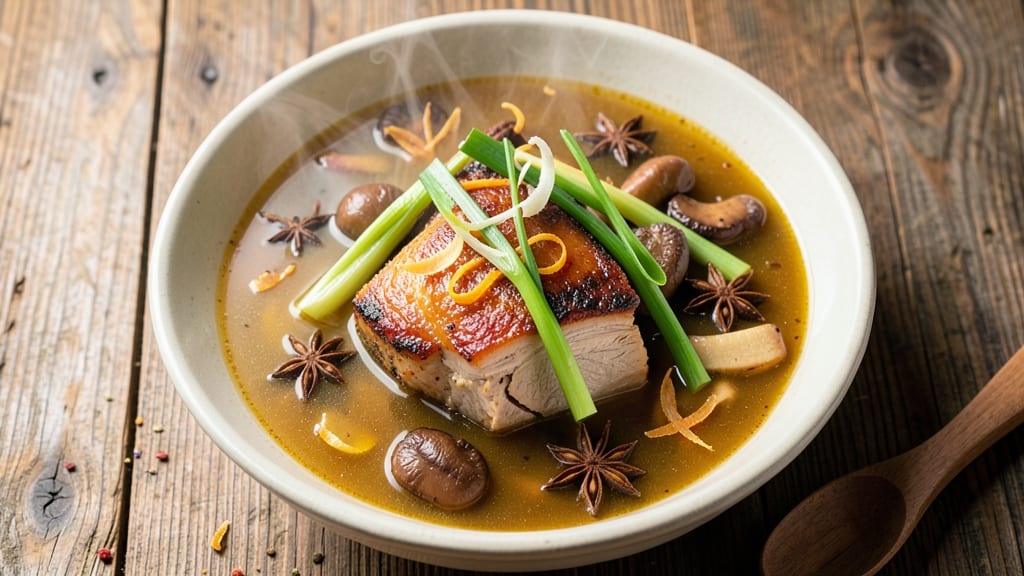
This Chinese pork herbal soup recipe delivers tender pork cubes swimming in a fragrant, ginger-spiced broth that warms the soul. 🌟 After perfecting it through years of testing—including my first attempt that nearly burned down my apartment kitchen—I’ve refined it to balance authentic flavors with foolproof technique.
The secret lies in slow simmering, where pork transforms from tough to melt-in-your-mouth perfection while absorbing the aromatic herbs.
The foundation of this soup is a rich broth built with ginger, scallions, and star anise—classic Chinese aromatics that infuse depth without overpowering. I use bone-in pork shoulder for maximum flavor and collagen, which naturally thickens the broth as it cooks.
The herbs aren’t just garnishes; they’re the heart of the dish, steeped long enough to release their medicinal warmth while keeping the broth clear and vibrant.
What you’ll end up with is a steaming bowl of comfort that’s both restaurant-quality and deeply personal. The pork emerges fork-tender, the broth is fragrant with herbal notes, and every spoonful carries layers of umami and spice.
This is the kind of soup that disappears quickly—perfect for chilly evenings or when you need a dish that nourishes both body and spirit.
Serve it with steamed rice and a side of quick-pickled vegetables to cut through the richness. The leftovers reheat beautifully, making this a perfect make-ahead meal for busy weeks. Let’s get cooking—your taste buds will thank you.
Ingredients for chinese pork herbal soup
Pantry staples meet Asian market finds for this soul-warming herbal pork soup.
| Ingredient | Amount | Notes |
|---|---|---|
| Bone-In Pork Shoulder 🥩 | 1 ½ lb | Cut into 1.5-inch cubes, bone-in preferred |
| Fresh Ginger Root 🧄 | ½ cup | Peeled, sliced into 0.25-inch pieces |
| Green Onions (Scallions) 🧅 | 1 whole | White and green parts separated |
| Star Anise Pods 🌿 | 2 whole | Lightly crushed for aroma |
| Dried Shitake Mushrooms 🍄 | 4 whole | Rehydrated in 1 cup hot water |
| Dried Dried Tangerine Peel 🍊 | 1 tbsp | Cut into small pieces, optional for sweetness |
| Rock Sugar 🍬 | 1 tbsp | Or substitute brown sugar |
| Dried Chinese Herbs (Dang Gui) 🌿 | 1 tbsp | Or substitute dried astragalus root |
| Low-Sodium Soy Sauce 🍶 | 2 tbsp | For umami depth |
| Shaoxing Wine 🍷 | ¼ cup | Or substitute dry sherry |
| Sesame Oil 🫒 | 1 tbsp | For finishing, not cooking |
| Vegetable Oil 🫒 | 2 tbsp | For searing pork |
| Water 💧 | 6 cups | Or low-sodium chicken broth |
| Salt 🧂 | 1 tsp | Adjust to taste |
| White Peppercorns 🌶️ | ½ tsp | Ground fresh for finishing |
The pork shoulder is non-negotiable—bone-in delivers maximum flavor and collagen for a naturally rich broth. Ask your butcher to cut it into 1.5-inch cubes if they don't have pre-cut pieces. Fresh ginger matters here: look for firm, moist roots with no soft spots. For the dried herbs, Asian grocery stores carry everything you need in one trip—Dang Gui, star anise, and shitake mushrooms all live in the bulk section. If you can't find rock sugar, brown sugar works perfectly fine, though it will add more caramelization to the broth.
No Shaoxing wine? Dry sherry or even a splash of apple cider vinegar gets you close, though the flavor profile shifts slightly. The tangerine peel is optional but adds a lovely citrus note—substitute orange peel if that's what you have. For the mushrooms, rehydrate them in hot water while you prep everything else—that liquid goes right into the soup. The white parts of scallions go into the broth, while the greens get chopped for garnish at the end. And if you're using chicken broth instead of water, reduce the salt by half since broth is already seasoned.
This soup tastes even better the next day as flavors meld. Store it in the fridge for up to 5 days, or freeze portions for 3 months. I always make a double batch—one for dinner, one for lunches. The broth thickens as it cools, so stir in a splash of water when reheating. For serving, keep the sesame oil and scallions separate until the very end—adding them at the table preserves their bright flavors.
Why You'll Love This Recipe
- One-Pot Magic: I swear by this recipe when I’m too tired to fuss—just toss the bone-in pork shoulder, shitake mushrooms, and star anise into a pot with water, ginger, and scallions. The broth builds itself while you do anything else.
- Ginger-Star Anise Boom: That combo of fresh ginger and star anise? It’s like a warm hug in a bowl—bright, earthy, and just sweet enough. The pork gets so tender it falls apart, and the mushrooms soak up all the flavor like little sponges.
- Leftovers That Lie: Between us, this soup only gets better the next day. I make a double batch on Sundays because by Wednesday, the broth’s richer, the pork’s more tender, and I’m pretending I didn’t already eat half of it.
- Budget Feast: A whole pork shoulder feeds my family for days, and the dried shitake and star anise stretch the flavor without breaking the bank. Plus, the bones? Free umami gold—no fancy stock needed.
Step-by-step instructions for Chinese pork herbal soup
Let's create a deeply aromatic broth where tender pork cubes float in a fragrant herbal infusion.
🔥 Step 1: Sear the Pork Shoulder for Depth of Flavor
Heat the 2 tablespoons vegetable oil in a large pot over medium-high heat until shimmering. Add the 1.5 lb bone-in pork shoulder cubes in a single layer, working in batches if needed. Let them sear undisturbed for 3-4 minutes per side until developing a deep golden-brown crust.
This searing step is crucial—it locks in juices and builds the foundation for your soup's rich umami flavor. Don't crowd the pan or the pork will steam instead of brown. Once all pieces are beautifully browned, transfer them to a plate and set aside.
👨🍳 Step 2: Build the Aromatic Base
In the same pot, add the 0.5 cup sliced fresh ginger root and cook for 1-2 minutes until fragrant and slightly blistered. Add the 2 whole lightly crushed star anise pods, 1 tablespoon dried Chinese herbs (dang gui), and 1 tablespoon dried dried tangerine peel. Stir constantly for 30 seconds to toast these spices gently.
Here's where the magic happens—the spices should release their essential oils and fill your kitchen with warm, earthy aromas. If you notice any pieces burning, immediately reduce heat to medium-low. The goal is to wake up these ingredients without charring them.
🍳 Step 3: Simmer the Herbal Broth
Pour in the 0.25 cup Shaoxing wine and deglaze the pot, scraping up any browned bits from the bottom. Add the 6 cups water, 2 tablespoons low-sodium soy sauce, 1 tablespoon rock sugar, 1 teaspoon salt, and 0.5 teaspoon white peppercorns. Return the pork to the pot and bring everything to a gentle boil.
Once boiling, reduce heat to low and partially cover the pot. Let the soup simmer for 1 hour 15 minutes, skimming off any foam that rises to the surface. The broth should reduce slightly, becoming more concentrated and aromatic. You'll know it's ready when the pork is fork-tender and pulls away easily from the bone.
🥘 Step 4: Prepare and Add the Mushrooms
While the soup simmers, prepare the 4 whole dried shitake mushrooms by soaking them in 1 cup hot water for 20 minutes until softened. Drain and slice them into ¼-inch thick pieces. Add them to the simmering soup along with the white parts of the 1 whole green onion (scallions), cut into 1-inch pieces.
Simmer for an additional 15-20 minutes until the mushrooms are tender and the soup has absorbed their earthy flavor. The mushrooms should float just below the surface, adding texture and depth to each spoonful. Taste the broth and adjust seasoning if needed—you might want to add a pinch more salt or sugar to balance the flavors.
⏰ Step 5: Finish and Serve with Fresh Herbs
Remove the star anise pods and any large herb pieces from the soup. Stir in the 1 tablespoon sesame oil and the green parts of the green onion (scallions), sliced into ¼-inch pieces. Turn off the heat and let the soup sit for 5 minutes to allow flavors to meld.
Ladle the soup into bowls, making sure each serving includes both pork and broth. Garnish with additional green onion slices if desired. The perfect bowl should be steaming hot, with tender pork cubes swimming in a fragrant broth that's perfectly balanced between herbal, sweet, and savory notes. Serve immediately with steamed rice to soak up every last drop of that precious herbal broth.
Pro Tips For Making Chinese Pork Herbal Soup
- Parboil the Pork First: Skip the direct braise—parboil the bone-in pork shoulder for 10 minutes first. This loosens connective tissue and guarantees tender meat later, even if you’re impatient to start simmering. (Yes, I know it feels like extra work, but the difference in texture is night and day.)
- Soak Shitake in Hot Water: Dried shiitake mushrooms need a quick soak in hot (not boiling) water for 20 minutes before adding them to the pot. Cold water soaking leaves them tough, and I’ve learned that hard way—your soup’s umami depth depends on this step.
- Don’t Crowd the Pot: Use a large enough pot so the pork sits half-submerged in the initial broth. Crowding traps steam, making the meat steam instead of simmer gently. I used to ignore this, and the pork always turned out mushy. (Your future self will thank you.)
- Toast Star Anise Whole: Dry-toast the star anise pods in a separate pan over medium heat for 30 seconds until fragrant before adding them to the soup. This unlocks their flavor—no need to crush them unless you want a stronger, almost licorice-like punch. (Sounds weird, but it works.)
Common mistakes when making perfect results
Overcooking the Pork
This is the #1 mistake I see—pork that turns tough instead of tender. Bone-in pork shoulder needs gentle, low heat for 1 hour 15 minutes, not rushed boiling. I’ve ruined more soups than I’ll admit by walking away and letting them simmer too long.
Use a meat thermometer—pull the pork when it hits 203°F internal temperature (it’ll finish cooking in the broth). 🌡️
Skipping the Sear
That golden crust isn’t just for looks—it’s where all the umami magic happens. Skipping the sear means your broth will taste flat. Work in batches if needed, but don’t crowd the pan or the pork will steam instead of brown.
I use a 12-inch cast iron skillet for this step—it gets hot enough to develop that perfect crust without burning.
Ignoring the Herbs
Dried herbs like dang gui and star anise need to steep properly. Don’t just toss them in and forget—they should infuse the broth for at least 45 minutes of simmering. I strain them out before serving, but leave them in if you love their earthy depth.
Pro tip: Lightly crush star anise pods with the flat side of a knife to release more aroma.
Using Wrong Pork Cuts
Pork shoulder is non-negotiable—it’s fatty enough to stay moist and flavorful. Pork loin or tenderloin will dry out and turn rubbery. If you can’t find bone-in, use bone-less but add extra water (about ½ cup more) to compensate for lost collagen.
I buy mine from local butcher shops where they’ll cut it exactly how I need it.
Rushing the Simmer
A fast boil will make your broth cloudy and dilute the flavors. After the initial boil, reduce to low heat and maintain a gentle simmer—you should see tiny bubbles, not rolling waves.
I cover my pot partially to let some steam escape, which prevents the broth from getting too intense too quickly. Patience here makes all the difference.
Overlooking the Broth Base
Water alone won’t cut it—you need that Shaoxing wine, soy sauce, and rock sugar to build depth. Substituting chicken broth? Reduce the salt by half since broth is already seasoned.
I always taste the broth after 30 minutes of simmering and adjust seasoning then—it’s easier to fix under-seasoned than over-salted soup.
Nutrition facts
Frequently asked questions
Can I substitute bone-in pork with boneless pork shoulder?
Yes, but you'll need to adjust the cooking time and liquid. Boneless pork cooks faster, so reduce simmering to 1 hour and add ½ cup extra water to compensate for lost collagen. The broth will still be flavorful but slightly less rich. For best results, ask your butcher to cut boneless pork into 1.5-inch cubes with a bit of fat cap intact.
What if I don't have Shaoxing wine?
Use dry sherry as the closest substitute—it provides similar depth. In a pinch, apple cider vinegar (1 tablespoon) or even white wine (¼ cup) works, though the flavor profile shifts slightly. The key is the alcohol's ability to deglaze and carry aromatics. Never skip this step—it's essential for building flavor.
How can I make this soup spicier? Add 1 teaspoon of Sichuan peppercorns (lightly toasted) or ½ teaspoon of chili flakes when building the aromatic base. For heat with depth, stir in 1 tablespoon of chili bean paste with the soy sauce.
Can I make this soup in an Instant Pot?
Sear the pork first, then add all ingredients except mushrooms and sesame oil. Cook on high pressure for 45 minutes, then quick-release. Add mushrooms and simmer for 10 minutes on sauté mode. The pressure cooker cuts time by half while keeping the pork tender. Just be sure to add the sesame oil and scallions at the very end.
What's the best way to reheat leftovers?
Gently reheat on the stove over low heat—never microwave directly. Add 2-3 tablespoons of water first to prevent the broth from thickening too much. Stir frequently and bring just to a simmer (160°F). The pork will absorb any added liquid, so you may need to adjust seasoning slightly after reheating. Leftovers keep well for 5 days in the fridge.