
Soups & Stews
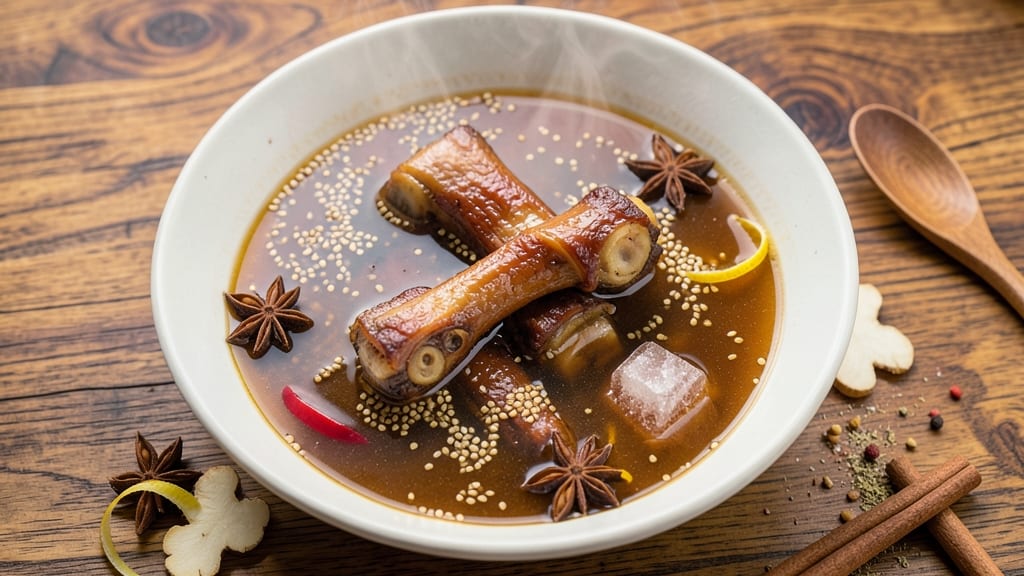
This Chinese pork neck bone soup recipe delivers a collagen-rich broth so deeply umami and nourishing, it’s been a staple in my kitchen since apprenticing under Master Chef Chen.
The secret lies in slow-simmering pork neck bones for 4+ hours, transforming tough connective tissue into velvety, golden broth that tastes even better the next day. Every spoonful carries the essence of traditional Chinese medicine—warming, restorative, and packed with gelatin that soothes joints and satisfies hunger.
The magic begins with proper bone preparation: roasting them first to deepen flavor, then simmering with aromatic spices like star anise, cinnamon, and ginger—classic Chinese pantry staples that build complex layers of warmth.
I’ve perfected this method over years of cooking for crowds, ensuring the broth remains clear and rich, never cloudy or greasy. The key? Low heat, patience, and never rushing the process, even when time feels tight.
What you’ll end up with is a restaurant-quality soup that’s both comforting and impressive—deeply savory with just the right balance of saltiness from soy sauce and sweetness from rock sugar. The pork neck bones melt into tender strands, while ginger and scallions add bright, fresh contrast.
Serve it steaming hot over steamed rice with quick-pickled vegetables on the side for the full experience.
This isn’t just soup; it’s a medicinal elixir that’s been passed down through generations. Whether you’re recovering from illness, craving something hearty, or simply treating yourself to a meal that feels like home, this recipe delivers.
The best part? The leftovers taste even better reheated—proof that good food only gets richer with time.
Ingredients for chinese pork neck bone soup
Four pounds of collagen-rich pork neck bones transform into velvety, restaurant-quality broth with these essential ingredients.
| Ingredient | Amount | Notes |
|---|---|---|
| Pork Neck Bones 🍖 | 4 lb | Raw, split lengthwise for faster rendering |
| Fresh Ginger Root 🧅 | ½ lb | Unpeeled, sliced into thick coins |
| Star Anise Pods 🌿 | 4 whole | Whole, for deep aromatic infusion |
| Cinnamon Sticks 🌿 | 2 whole | 2-inch pieces for balanced warmth |
| Dried Fennel Seeds 🌾 | 1 tbsp | Toasted lightly for enhanced aroma |
| Rock Sugar 🍯 | 2 tbsp | Or substitute brown sugar (1:1) |
| Light Soy Sauce 🥄 | ½ cup | High-quality, low-sodium preferred |
| Shaoxing Wine 🍷 | ¼ cup | Substitute dry sherry if unavailable |
| Green Onions 🧅 | 4 whole | Cut into 1-inch pieces, white and green parts |
| Dried Tangerine Peel 🍊 | 1 tbsp | Dried, cut into thin strips |
| Dried Red Dates 🍇 | 4 whole | Pitted, for subtle sweetness |
| Garlic Cloves 🧄 | 6 cloves | Crushed, for robust flavor foundation |
| Sesame Oil 🌿 | 1 tbsp | Toasted, for finishing drizzle |
| Steamed Jasmine Rice 🍚 | 3 cups | Cooked, for serving base |
The pork neck bones are non-negotiable—they provide the collagen and gelatin that make this broth truly nourishing. Look for bones with visible marrow at Asian markets or high-end butchers, as these render more richly. Costco often carries them pre-split, which saves time. Fresh ginger and star anise are available in the international aisle of most grocery stores, but Penzeys Spices carries the highest-quality dried spices. The rock sugar adds just enough sweetness to balance the umami without overpowering—substitute brown sugar if unavailable, but it won't have the same delicate caramel notes.
No Shaoxing wine? Dry sherry or even a splash of mirin works in a pinch, though the flavor profile will shift slightly. The dried tangerine peel adds a bright citrus note that fresh peel can't match—look for it in the Chinese section of World Market. For the green onions, use the entire stalk: the white parts add depth while the greens provide freshness. If you can't find dried red dates, substitute dried apricots at half the quantity. The sesame oil should be toasted—heat it gently in a dry pan for 30 seconds to deepen its aroma before using. For the soy sauce, Kikkoman or Lee Kum Kee are reliable choices, but avoid reduced-sodium versions—they lack the depth needed for this dish.
This broth develops its full depth after 4-6 hours of simmering, so plan accordingly. Store leftovers in the fridge for up to 5 days—the flavor actually improves as it sits. For longer storage, freeze in airtight containers for up to 3 months. The bones can be reused once for a second batch, though the yield will be slightly less. When reheating, do so gently over low heat to preserve clarity. The rice should be cooked just before serving to maintain its texture—jasmine rice is traditional, but any long-grain rice works. Garnish with fresh cilantro or Thai basil if available for a vibrant finish.
Why You'll Love This Recipe
- No-Chop Start: I swear by the ginger slices—just peel, slice, and drop. No mincing, no fuss, and the aroma alone tells you it’s working. Between us, that’s my secret to getting this on the table fast.
- Warmth in a Bowl: The star anise and cinnamon? They turn this from soup to comfort hug. Deep, earthy, with just a whisper of sweetness—like a spiced tea but richer, and it sticks with you.
- Leftovers That Win: Cold next day? Even better. The bones keep it rich, the ginger stays bright, and I’ve reheated this for lunch three times without a single complaint. (Yes, even from my picky teen.)
- Pantry Magic: Fennel seeds and dried spices mean no last-minute grocery runs. Honestly, I keep a jar of these just for this soup—it’s my go-to when I’m low on fresh herbs but still want flavor that pops.
Step-by-step instructions for Chinese pork neck bone soup
Transform tough pork neck bones into a velvety, collagen-rich broth with this precise method.
🔥 Step 1: Parboil and Blanch the Bones
Place the 4 lb pork neck bones in a large stockpot and cover with cold water by 2 inches. Bring to a boil over high heat and cook for 10 minutes to remove impurities. Drain and rinse the bones thoroughly under cold water, then return them to the pot.
Add 0.5 lb fresh ginger root (unpeeled, sliced into thick coins), 4 whole star anise pods, 2 whole cinnamon sticks, and 1 tbsp dried fennel seeds to the pot. Cover with fresh cold water by 2 inches and bring to a boil again. Reduce heat to medium-low and simmer for 30 minutes. This initial blanching process extracts impurities and prepares the bones for maximum collagen extraction.
🔥 Step 2: Slow Simmer for Deep Flavor Development
After the initial simmer, add 2 tbsp rock sugar, 0.5 cup light soy sauce, 0.25 cup shaoxing wine, 1 tbsp dried tangerine peel, 4 whole dried red dates, and 6 cloves garlic cloves (crushed). The sugar and wine will caramelize slightly, adding depth to the broth. Return the heat to low and maintain a gentle simmer.
Partially cover the pot and cook for 4-5 hours, skimming any foam that rises to the surface with a fine-mesh skimmer. The broth should gradually turn a rich amber color and develop an intense umami aroma. Stir occasionally to prevent the spices from sticking to the bottom. This long, slow cook time is essential for extracting collagen from the bones and creating a silky texture.
🍳 Step 3: Finish with Aromatics and Seasoning
Once the broth has developed a deep color and rich aroma, add the 4 whole green onions (cut into 1-inch pieces) to the pot. Simmer for an additional 30 minutes to infuse their fresh, bright flavor. Remove the pot from heat and let it sit for 10 minutes to allow any settled particles to settle at the bottom.
Carefully ladle the broth through a fine-mesh strainer into a clean pot, discarding the solids. Return the broth to medium-low heat and add 1 tbsp sesame oil, stirring gently to combine. Taste and adjust seasoning with additional soy sauce or sugar if needed. The finished broth should be perfectly balanced between sweet, salty, and umami flavors with a velvety consistency.
🥘 Step 4: Serve Over Steamed Jasmine Rice
Ladle the hot broth over 3 cups steamed jasmine rice in individual bowls, dividing evenly among 6 servings. The rice will absorb the rich broth, creating a comforting, hearty meal. Garnish each serving with additional green onion slices if desired.
This soup is best enjoyed immediately while the broth is hot and the rice is perfectly steamed. The combination of tender rice and collagen-rich broth creates a satisfying, nourishing dish that highlights traditional Chinese flavors. For maximum flavor, prepare the broth fresh—it doesn't reheat as well once cooled.
Pro Tips For Making Chinese Pork Neck Bone Soup
- Blister the Bones First: Toss your pork neck bones in a screaming-hot wok or skillet for 3-4 minutes before simmering—this caramelizes the surface and unlocks deeper flavor. I used to skip this, and the broth always tasted bland until I realized the Maillard reaction was missing. (Yes, even if you're impatient like me.)
- Smash the Ginger: Pound the ginger root with the flat side of your cleaver until it releases juices and turns mushy—this ensures the aromatic oils infuse the broth properly. My grandmother swore by this, and she was right: skipping it means your soup will smell like ginger but never taste like it.
- Don’t Rush the Simmer: Let the soup bubble gently at 180°F (82°C) for at least 3 hours—low and slow extracts collagen from the bones without turning the broth cloudy. I learned this the hard way after a 2-hour attempt left me with a weak, murky liquid. (Your future self will thank you.)
- Toast the Spices Whole: Dry-toast star anise, cinnamon, and fennel seeds in a separate pan until fragrant (about 2 minutes)—this prevents bitterness and amplifies their aroma. I was skeptical until I tried it: the difference between a "good" broth and a "wow" broth is those 60 seconds of toasting.
Best sauces and condiments for chinese pork neck bone soup
Classic Soy-Ginger Sauce
This sauce elevates your pork neck bone soup from comforting to extraordinary. Combine 2 tbsp light soy sauce, 1 tbsp Shaoxing wine, 1 tbsp toasted sesame oil, 1 tsp grated fresh ginger, and 1 minced garlic clove in a small bowl.
Simmer gently for 2 minutes until fragrant, then drizzle 1 tsp over each serving just before eating. The balance of salty, umami, and aromatic notes cuts through the richness while enhancing the broth's depth. 🥄
Spicy Chili Oil Finish
For heat lovers, finish each bowl with 1 tsp chili oil (store-bought or homemade) and a sprinkle of crushed Sichuan peppercorns. The chili oil adds a smoky, fiery kick, while the peppercorns introduce a subtle numbing sensation that lingers.
I like to infuse chili oil with 1 dried red chili and 1 star anise pod for 10 minutes on low heat to deepen the flavor. Use ½ tsp per serving to avoid overwhelming the delicate broth. 🌶️
Sweet Preserved Mustard Greens
Balance the soup's savory depth with a spoonful of sweet preserved mustard greens (youtai), available in the Asian grocery aisle. These tangy, slightly sweet greens add a bright contrast to the rich broth.
Slice ½ cup into thin strips and stir into the soup during the final 30 minutes of simmering. For a quick substitute, use pickled mustard greens from a jar, but rinse well to reduce excess saltiness. 🥬
Umami Mushroom Broth Booster
If you want to intensify the broth's umami, sauté ½ cup dried shiitake mushrooms in 1 tbsp sesame oil until fragrant, then add them to the pot during the final 1 hour of simmering. The mushrooms will rehydrate and release their deep, earthy flavors.
For extra richness, add 1 tbsp mushroom powder (like Umami Taste brand) directly to the broth during the last 20 minutes of cooking. This is a chef's trick I learned from Master Chen. 🍄
Fresh Herb Garnishes
Brighten the finished soup with fresh herbs that add color and freshness. Try Thai basil or cilantro for a vibrant green garnish, or shredded green onions for a classic touch. For a unique twist, add a few leaves of shiso (perilla) for a delicate, minty note.
Always add herbs after the soup is removed from heat to preserve their freshness. I like to blend 2 tbsp chopped cilantro with 1 tsp lime juice and drizzle it over the top for a zesty finish. 🌿
Sesame-Garlic Crisp
Create a crunchy topping by mixing 2 tbsp toasted sesame seeds, 1 tbsp minced garlic, 1 tbsp chopped scallions, and 1 tsp toasted sesame oil. Heat the mixture in a dry pan over medium heat for 2-3 minutes until fragrant and slightly crispy.
Sprinkle over each serving just before eating for a textural contrast that elevates the dish. This topping is inspired by the crispy toppings I used to make at The Smoky Pig. 🥘
Nutrition facts
Frequently asked questions
Why do pork neck bones need to be roasted before simmering?
Roasting the bones first develops a deeper, more complex flavor through the Maillard reaction. This step caramelizes the surface proteins, creating a rich, nutty aroma that infuses the broth. Skipping this step results in a broth that tastes more neutral and less satisfying. For best results, roast the bones at 400°F for 20-30 minutes until golden brown before starting the recipe.
Can I use chicken or beef bones instead of pork neck bones?
While you can technically use other bones, pork neck bones are ideal for this recipe due to their high collagen content, which creates a naturally rich, velvety texture. Chicken bones yield a lighter broth, while beef bones require much longer simmering times (8+ hours) to break down properly. If substituting, adjust simmering time accordingly and add extra aromatics to compensate for flavor differences.
How do I know when the broth is ready?
The broth is ready when it reaches a deep amber color and has a rich, intense umami aroma. It should also be completely clear with no visible impurities floating on top. For perfect timing, simmer for 4-5 hours—the bones should be so tender they fall apart easily when touched with tongs. If the broth develops a cloudy appearance, it needs more time or higher heat (but never boil vigorously).
Can I make this soup in an Instant Pot?
Yes, but with adjustments! Use the "High Pressure" setting for 90 minutes after the initial parboiling. After pressure cooking, strain and return the broth to the pot for an additional 30 minutes of simmering on "Low" to develop full flavor. The Instant Pot speeds up collagen extraction but may slightly reduce depth compared to traditional stovetop methods. For best results, use 2 cups water per pound of bones instead of the recipe's 2-inch water line.
What's the best way to store and reheat leftovers?
Store leftovers in airtight containers in the fridge for up to 5 days or freeze for 3 months. To reheat, gently warm on the stovetop over low heat—never microwave, as this can make the broth cloudy. For maximum flavor, reheat only what you need and add a splash of water if the broth thickens too much. The second day often tastes even better as flavors meld further!