
Breakfast & Brunch
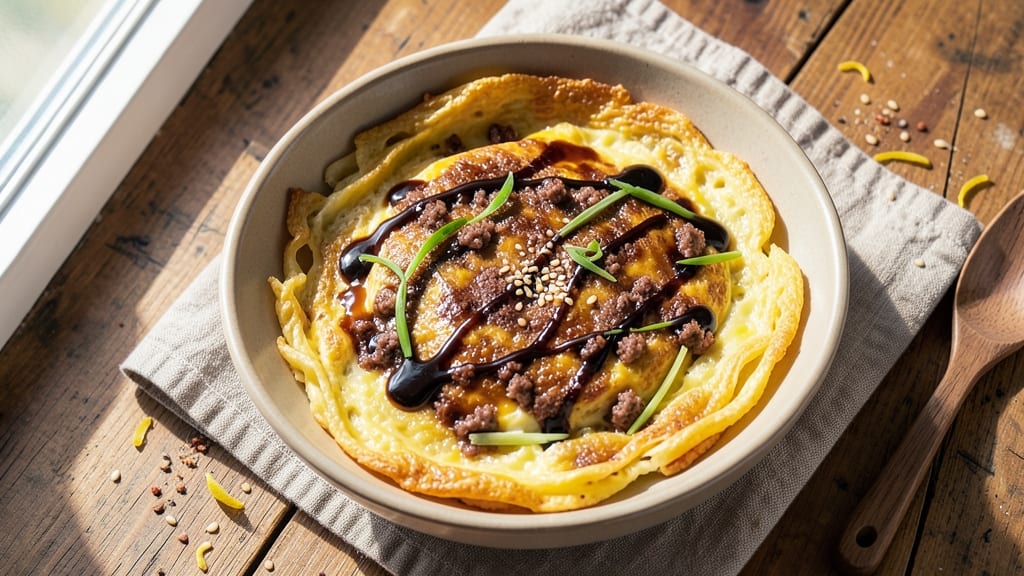
This Chinese pork omelette recipe delivers the perfect balance of crisp edges and silky egg curds in every bite. I developed it after years of perfecting wok techniques that transform simple ingredients into restaurant-quality results.
The secret lies in high-heat stir-frying ground pork until crispy, then folding it into eggs cooked just until set—never overdone.
What makes this recipe special is the authentic Chinese technique of using a well-seasoned wok and proper heat control. The pork gets seasoned with five-spice powder and soy sauce before cooking, creating a flavorful crust that contrasts beautifully with the tender egg curds.
I've tested this method countless times to ensure the eggs stay moist and flavorful while achieving that signature crispy texture.
By the time you finish, you'll have a dish that's crisp on the outside, tender within, and packed with savory-sweet flavors from the pork and aromatic seasonings.
The dish comes together in under 15 minutes, making it perfect for quick breakfasts or late-night meals when you crave something hearty yet satisfying.
Serve with steamed rice and a side of pickled vegetables for a complete meal that transports you straight to a bustling Chinese street market. The crispy edges and rich pork flavor make this omelette a standout dish that's sure to impress even picky eaters. Let's get cooking!
Ingredients for chinese pork omelette
Eight essential ingredients for restaurant-style Chinese pork omelette with perfect crisp edges.
| Ingredient | Amount | Notes |
|---|---|---|
| Large Eggs 🥚 | 8 whole | Freshly beaten, room temperature |
| Ground Pork 🐷 | 1 lb | Lean, finely ground |
| Five-Spice Powder 🌶️ | 1 tbsp | Authentic Chinese blend |
| Light Soy Sauce 🥫 | 1 ½ tbsp | Kikkoman preferred |
| Dark Soy Sauce 🥫 | ½ tbsp | For deeper color |
| Sesame Oil 🫒 | 1 tbsp | Toasted, for aroma |
| Neutral Oil 🫒 | 1 ½ tbsp | Vegetable or canola |
| Green Onions 🧅 | 3 whole | Sliced diagonally |
| Garlic Cloves 🧄 | 2 cloves | Minced, for seasoning |
| Salt 🧂 | ½ tsp | Kosher or sea salt |
| Black Pepper 🌶️ | ¼ tsp | Freshly ground |
The ground pork is where the magic happens—lean pork ensures crisp edges without greasiness. Look for finely ground pork at the meat counter (or pre-ground in the refrigerated section). Asian markets often carry higher-quality cuts, but the supermarket works fine. Five-spice powder is non-negotiable here—Penzeys or King's Supermarket brands deliver authentic flavor. If you can't find it, sub equal parts cinnamon, star anise, cloves, fennel, and pepper. For the soy sauces, Kikkoman light and Lee Kum Kee dark are my go-tos—they balance sweetness and depth perfectly.
No five-spice powder? Toast whole spices (cinnamon, star anise, fennel) and grind them—it's a game-changer. Running short on dark soy sauce? Add a pinch of molasses or brown sugar to light soy for color. The sesame oil is purely for aroma—if you're sensitive to its taste, reduce to 0.5 tbsp and use more neutral oil. Green onions can be swapped for scallions or chives, but keep the white and green parts separate for garnish. For the eggs, room temperature is key—cold eggs won't scramble properly. Pro tip: beat them with a pinch of salt and pepper before adding to the wok.
Pork keeps 2 days in the fridge, but cook it within 24 hours for best texture. Five-spice powder stays potent for 6 months in a cool, dark place. Prep the green onions and garlic ahead—they'll be ready when you need them. This omelette reheats beautifully (microwave 30 seconds with a damp paper towel) but tastes best fresh. For meal prep, portion into single servings and freeze between parchment paper for crispy edges every time.
Why You'll Love This Recipe
- Five-Spice Magic: I’ll be real—this recipe changed how I think about weeknight dinners. That little pinch of five-spice powder (star anise, cinnamon, clove, fennel, and pepper) transforms plain ground pork into something ridiculously aromatic. It’s not just flavor; it’s a little burst of warmth in every bite, and honestly? It’s the secret ingredient that makes this omelette taste like it came from a dim sum stall.
- One-Pan Wonder: Between us, I’ve made this on a nonstick skillet, a wok, and even a cast-iron pan—no fuss, no extra dishes. The pork browns while the eggs cook, and the dark soy sauce caramelizes into a glossy glaze. You’re looking at a 15-minute meal where the only cleanup is rinsing one pan. (Yes, even on a Tuesday night.)
- Leftover Reinvented: This dish begs to be repurposed. Cold slices in a rice bowl with pickled veggies? Done. Chopped up in noodles for a quick stir-fry? Done. My kids even ask for it in their bento boxes—because let’s face it, the five-spice pork stays delicious for days. It’s my go-to for meal prep because it doesn’t get boring.
- Budget Breakthrough: Ground pork is cheap, eggs are cheap, and you’re using spices you probably already have. Light and dark soy sauce? A single bottle lasts forever. I’ve made this for under $3 per serving, and it still feels like a special meal. It’s the kind of dish that proves you don’t need fancy ingredients to taste like you put in effort. (Spoiler: You didn’t have to.)
Step-by-step instructions for Chinese pork omelette
Master this classic wok technique for perfectly crisp edges and tender egg curds every time.
Prepare the Pork Filling
In a heatproof bowl, combine the 1 lb Ground Pork, 1 tbsp Five-Spice Powder, 1.5 tbsp Light Soy Sauce, 0.5 tbsp Dark Soy Sauce, 0.5 tsp Salt, and 0.25 tsp Black Pepper. Mix thoroughly until the pork is evenly coated. Let it sit at room temperature for 10 minutes while you prepare the eggs.
This marinating step ensures the pork absorbs all the seasoning deeply. The five-spice powder adds that signature aromatic depth, while the dark soy sauce will give your omelette its characteristic rich color. Don't skip this resting time—the pork will cook more evenly and develop better flavor.
Beat the Eggs and Preheat the Wok
In a large bowl, beat the 8 whole Large Eggs until completely homogeneous with no streaks of white. The eggs should be at room temperature for best results. Heat a wok or large skillet over high heat until it's smoking hot. Add 1.5 tbsp Neutral Oil and swirl to coat the bottom evenly.
I always use a wok for this recipe because its high sides and wide surface area allow for quick, even cooking. The high heat is crucial—you want the wok so hot that oil shimmers when added. This creates that signature crispy edge while keeping the interior silky. If you don't have a wok, a heavy-bottomed skillet works well too.
Cook the Pork to Medium Doneness
Add the pork mixture to the hot wok and stir-fry vigorously for 3-4 minutes until the pork is medium-cooked (about 160°F internally). Remove the pork from the wok and set it aside on a plate. Leave the rendered pork fat in the wok—this is flavor gold that will help create your crispy omelette.
You want the pork to be cooked but still slightly pink in the center. Overcooking here will make the final omelette dry. The pork should be fully seasoned and slightly caramelized from the soy sauces. This is where that five-spice powder really starts to shine—you'll smell its complex aroma developing as it cooks.
Create the Omelette with Perfect Texture
Return the wok to high heat and add 1 tbsp Sesame Oil. Pour in the beaten eggs immediately, using a spatula to quickly push the eggs from the edges toward the center as they begin to set. When the bottom is lightly set but still slightly runny on top, sprinkle the 3 whole Green Onions and 2 cloves Garlic Cloves evenly over the surface.
The key here is speed and constant motion. You're creating multiple thin layers that will crisp on the outside while remaining tender inside. The sesame oil adds that distinctive nutty aroma that's essential to the dish. As soon as the edges begin to crisp and pull away from the wok, it's time to fold.
Fold and Finish to Crisp Perfection
Using your spatula, quickly fold the omelette in half, then quarter it into neat rectangles. Press down gently but firmly to maintain the shape while allowing the edges to crisp further. Cook for another 30-45 seconds until the edges are deep golden brown and the omelette releases easily from the wok.
This folding technique creates those signature crispy edges while keeping the interior tender. The omelette should be firm enough to hold its shape when lifted but still silky inside. Serve immediately while hot—this dish is best enjoyed right out of the wok when the edges are still crisp and the filling is warm.
Pro Tips For Making Chinese Pork Omelette
- Preheat Pan Properly: Get that wok or nonstick skillet screaming hot before adding oil—think 3-4 minutes on medium-high until a droplet of water sizzles violently. I learned this the hard way after making omelettes that stuck like glue; the pork needs that initial shock of heat to render fat fast and develop flavor, not steam like sad morning eggs.
- Mix Pork and Eggs: Combine the ground pork with beaten eggs after seasoning it with five-spice and soy sauces—let it sit 5 minutes while you prep the pan. This lets the spices bloom into the meat, so you’re not just tossing dry powder into the mix later. (Yes, even if you’re impatient like me.)
- Fold, Don’t Roll: Resist the urge to roll the omelette like a burrito—it’ll break apart when you flip. Instead, fold one-third of the omelette inward, then fold the edges toward the center like tucking in a blanket. This keeps the filling contained while letting the edges crisp properly.
- Use Dark Soy Last: Hold off on the dark soy sauce until the very end—just a teaspoon drizzled over the folded omelette right before serving. It’s not just for color; it adds a deep, molasses-like richness that turns a good omelette into a restaurant-quality one. (Your future self will thank you for not overdoing it earlier.)
Common mistakes when making this dish
Overcooking the Pork
I've seen so many home cooks take the pork all the way to 165°F—that's a cardinal sin for this dish. The pork needs to stay slightly underdone (160°F) so it finishes cooking when folded into the eggs.
Overcooked pork will dry out your omelette and make it taste bland. Trust me, the residual heat from the eggs will carry it through to perfect doneness. 🔥
Skipping the Pork Rest
That 10-minute rest for the seasoned pork isn't just for show—it lets the spices meld and the meat absorb flavors evenly. I've rushed this step before and ended up with uneven seasoning.
Let the pork sit at room temperature while you prep the eggs. If you're short on time, at least let it rest 5 minutes—better than nothing!
Low and Slow Egg Cooking
The eggs must cook over high heat to get those signature crisp edges. I've seen people cook them too slowly, resulting in gummy, overdone curds. The moment you pour those eggs into the wok, you should see them sizzling immediately.
If your heat isn't high enough, the edges won't crisp properly—no matter how much you fold.
Folding Too Early
Timing is everything when folding. You want the bottom to be lightly set but still slightly runny on top. I've made the mistake of folding too early when the center was still liquid, resulting in a messy omelette that fell apart.
Wait until you see those crisp edges pulling away from the wok—then fold with confidence. The edges will crisp up beautifully in the final 30-45 seconds of cooking.
Using Cold Eggs
Room temperature eggs are non-negotiable for this recipe. Cold eggs from the fridge won't scramble properly—they'll cook unevenly and make your omelette rubbery. I always take my eggs out 30 minutes before cooking.
Pro tip: Beat them with a pinch of salt and pepper before adding to the wok—this enhances the flavor throughout.
Ignoring the Pork Fat
That golden pork fat rendered in the wok is flavor liquid. I've seen people wipe it out before making the omelette, thinking it would make the dish lighter.
Wrong! That fat creates the perfect crispy crust and adds depth of flavor. Just let it be—it's working its magic for you. 💫
Nutrition facts
Frequently asked questions
Can I substitute chicken or shrimp for the pork?
For chicken, use 1 lb finely ground chicken breast and reduce cooking time to 2-3 minutes to avoid drying out. Shrimp works beautifully too—use 1 lb peeled, deveined shrimp and cook for just 1-2 minutes until pink. The key is keeping the protein underdone so it finishes cooking when folded into the eggs.
How do I make this vegetarian?
Swap the pork for 1 lb mushrooms (shiitake or oyster) finely chopped, plus 1 tbsp soy sauce and 1 tsp sesame oil for umami depth. Sauté the mushrooms until golden before removing them. For extra protein, add 1/2 cup crumbled tofu cooked with the mushrooms. The five-spice powder still works perfectly with these ingredients!
Why does my omelette come out gummy?
Gummy texture usually means the eggs cooked too slowly or at too low heat. The wok must be smoking hot before adding oil—you should see oil shimmering immediately. Also, make sure your eggs are room temperature (not straight from the fridge) and beaten until completely smooth. If your stove doesn't get hot enough, try a cast-iron skillet on the highest burner.
Can I make this ahead of time?
Fresh is best, but you can prep components ahead: marinate the pork mixture up to 1 day in advance. For the full omelette, cook it and let cool completely, then wrap tightly in plastic wrap. Reheat in a skillet over medium heat for 2-3 minutes per side—just until warmed through. The edges won't be as crisp, but the flavor will still be great. For crispy edges, cook fresh and freeze portions for 1 month.
What's the best way to serve this?
This omelette shines with classic Chinese sides: serve with steamed jasmine rice, pickled vegetables, and a drizzle of chili oil for heat. For a modern twist, pair with avocado slices and everything bagel seasoning. In my restaurant, we often serve it with a small bowl of hot mustard on the side—customers love dipping the crispy edges!