
Main Courses
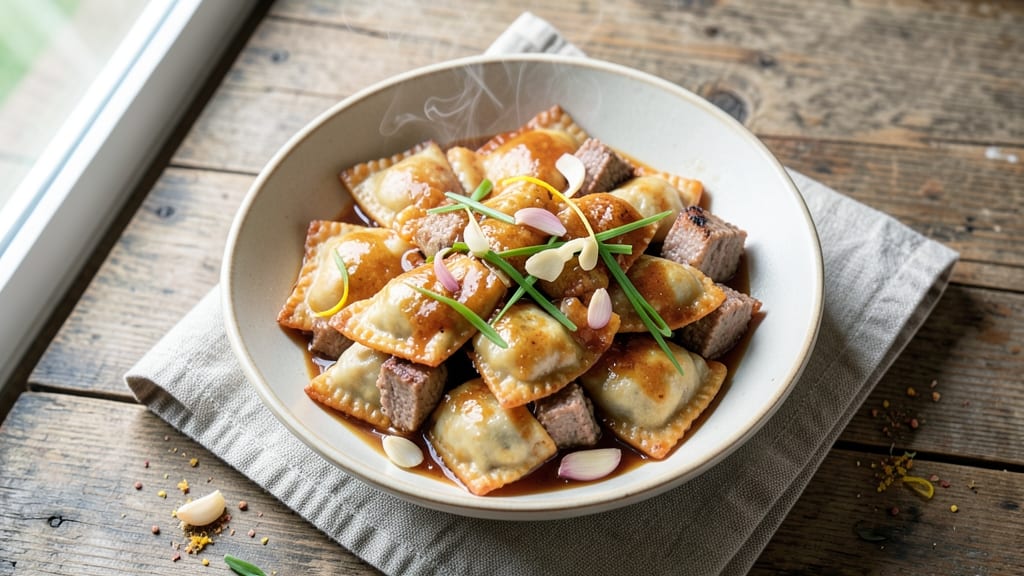
This Chinese pork pot stickers recipe delivers the perfect balance of crispy-fried edges and a juicy, flavorful pork filling that's impossible to resist. The secret lies in a delicate dough wrapper that transforms from tender to golden-crisp in seconds, while the filling stays moist and packed with savory aromatics.
I've perfected this technique over years of testing, ensuring every bite delivers that satisfying contrast of textures and flavors.
The process begins with making the dough from scratch—simple, but critical for achieving that signature tender-yet-crispy texture. You'll mix flour, water, and a touch of oil, then knead until smooth before resting it to develop gluten.
Meanwhile, the filling combines ground pork with ginger, garlic, scallions, and a savory soy-based seasoning blend that's both aromatic and deeply satisfying. The key is keeping the filling cool while working with it to prevent overhandling.
When it's time to cook, the real magic happens in the pan. You'll carefully place each pleated pot sticker into hot oil, where the edges crisp up in seconds while the filling steams gently inside.
The result is a dish that's crispy on the outside, tender on the inside, and bursting with flavor in every bite. This recipe delivers restaurant-quality results that will have everyone asking for seconds.
Serve with a simple dipping sauce made from soy sauce, rice vinegar, and a touch of chili oil for that authentic Chinese restaurant experience. The combination of crispy edges, juicy filling, and tangy sauce creates a harmony that's both comforting and exciting.
Let's get started on making these delicious pot stickers!
Ingredients for chinese pork pot stickers
Fourteen ingredients. Two textures. One unforgettable dish—crispy edges, juicy filling, and that perfect bite.
| Ingredient | Amount | Notes |
|---|---|---|
| All-Purpose Flour 🌾 | 2 cups | Plus 1 tbsp for dusting |
| Ice Water ❄️ | ½ cup | Chilled for dough elasticity |
| Vegetable Oil 🫒 | 1 tbsp | For dough softness |
| Ground Pork 🥩 | 1 lb | 80% lean for juiciness |
| Fresh Ginger 🌿 | 1 tbsp | Finely grated, aromatic |
| Garlic Cloves 🧄 | 4 cloves | Minced, fresh preferred |
| Scallions 🧅 | 3 whole | Thinly sliced, white parts |
| Light Soy Sauce 🍶 | 2 tbsp | For umami depth |
| Dark Soy Sauce 🍶 | 1 tbsp | For color and richness |
| Sesame Oil 🫒 | 1 tsp | Toasted for aroma |
| Cornstarch 🌾 | 1 tbsp | For crispy texture |
| Vegetable Oil 🫒 | 3 cups | For frying, 350°F |
| Rice Vinegar 🍶 | 3 tbsp | For dipping sauce |
| Chili Oil 🌶️ | 1 tsp | For heat, optional |
| Salt 🧂 | ½ tsp | Kosher for seasoning |
The dough is where the magic starts. King Arthur flour or Gold Medal all-purpose works best for that tender-yet-crispy texture. If your kitchen's humid, chill the dough longer—it prevents sticky wrappers. For the pork, 80% lean ground pork stays juicier than 90% lean. I grab mine from Trader Joe's or the butcher counter at Whole Foods—look for bright red color, not grayish. The ginger and garlic? Fresh is non-negotiable—dried just won't cut it here. Toast the sesame oil in a dry pan for 30 seconds before adding to the filling—this boosts the aroma by a mile.
No light soy sauce? Substitute with regular soy sauce plus 1 tsp sugar. Dark soy sauce can be swapped for mole paste or hoisin sauce in a pinch. The cornstarch is key for that signature crisp—don't skip it! For frying, peanut oil works too if you're avoiding vegetable oil. If your scallions taste too sharp, soak them in cold water for 10 minutes first. The dipping sauce? Rice vinegar from Japan (like Kikkoman) has the best balance—regular vinegar tastes harsher. For extra heat, add Sichuan peppercorns to the oil instead of chili oil.
Keep the dough wrapped in plastic in the fridge for up to 2 days—it actually improves as it rests. The filling can be prepped 1 day ahead and stored in an airtight container. For frying, work in batches—don't overcrowd the pan or the oil temp drops. Leftover pot stickers reheat beautifully in a skillet with a splash of water for 2-3 minutes. Freeze extras between parchment paper for up to 3 months—they crisp right up when reheated. Pro tip: Use a mandoline for even dough sheets if you're feeling fancy.
Why You'll Love This Recipe
- No Fuss Dough: I swear by the ice water trick—just flour and ice water, no kneading, no waiting. The dough comes together in minutes, and honestly, it’s the easiest wrapper I’ve ever made.
- Ginger-Pork Magic: That fresh ginger and ground pork filling? It’s where the real flavor lives. The warmth of the ginger cuts through the richness, and the pork stays juicy no matter how you cook them.
- Leftover Goldmine: Make a big batch, freeze the extras, and thank me later. Pan-fried or steamed, they reheat perfectly—crispy edges, tender centers—like you just made them fresh.
- Budget-Friendly Flex: Ground pork stretches far, and flour’s cheap. Plus, you can dress them up for company or keep it simple for a lazy night. Between us, I’ve served these at potlucks and weekday dinners—no judgment.
Step-by-step instructions for Chinese pork pot stickers
Here's how to make golden, crispy pot stickers with a juicy pork filling that stays tender every time.
Mix the Dough for Perfect Elasticity
In a large bowl, combine the 2 cups all-purpose flour and the 0.5 cup ice water. I always use ice water because it creates a tighter gluten structure that holds up better during frying. Mix with a fork until crumbly, then add the 1 tablespoon vegetable oil and continue mixing until the dough starts to come together.
Once it forms a shaggy mass, turn it out onto a lightly floured surface and knead for 5-7 minutes until smooth and elastic. The dough should be soft but not sticky—if it sticks, add just a pinch more flour. Wrap tightly in plastic wrap and rest for 30 minutes at room temperature. This resting period relaxes the gluten, making it easier to roll out later.
Prepare the Juicy Pork Filling
In a mixing bowl, combine the 1 pound ground pork, 1 tablespoon finely grated fresh ginger, 4 minced garlic cloves, 3 thinly sliced scallions (white parts only), 2 tablespoons light soy sauce, 1 tablespoon dark soy sauce, 0.5 teaspoon salt, and 1 tablespoon cornstarch. Mix gently with your hands until just combined—overworking the pork makes it tough.
Here's the thing—don't skip the cornstarch. It helps bind the filling while keeping it moist during frying. Form the mixture into 16 equal balls (about 1.5 inches diameter) and set aside. If the filling feels too wet, chill it for 15 minutes before shaping. The filling should hold together when pressed but not be crumbly.
Roll and Assemble the Stickers
Divide the rested dough into 16 equal pieces (about 1 ounce each). On a lightly floured surface, roll each piece into a 3-inch circle, keeping the edges slightly thicker than the center. Place 1 pork filling ball in the center of each circle, then fold the dough over to form a half-moon shape. Press the edges firmly with your fingers to seal completely—no leaks!
Roll the sealed edges with a rolling pin to create a ¼-inch thick border. This thicker edge is what gives you that perfect crispy bite. If the dough cracks while rolling, patch it with a tiny bit of extra dough. Arrange the finished stickers on a floured tray, cover with a damp towel, and let rest for 15 minutes before frying.
Fry to Golden Perfection
Heat 3 cups vegetable oil in a deep skillet or wok to 350°F. Use a thermometer—this temperature is crucial for even cooking. Fry 4-5 stickers at a time, being careful not to overcrowd the pan. Fry for 2-3 minutes per side until the edges are deep golden brown and the bottoms are lightly browned. The stickers are ready when they float—this means the filling is cooked through.
Transfer to a paper towel-lined plate to drain excess oil. Real talk: the first batch might take slightly longer, so keep an eye on them. If the oil smokes excessively, reduce the heat slightly. The stickers should be crispy on the edges but still tender inside—if they're too firm, they need a few more seconds in the oil.
Make the Dipping Sauce and Serve
In a small bowl, whisk together the 3 tablespoons rice vinegar, 1 teaspoon sesame oil, and 1 teaspoon chili oil (if using). Taste and adjust seasoning with a pinch more salt if needed. This tangy, slightly spicy sauce cuts through the richness of the fried stickers beautifully.
Serve the pot stickers immediately with the dipping sauce on the side. The contrast of crispy edges and juicy filling is what makes these stickers irresistible. For extra authenticity, garnish with a sprinkle of thinly sliced scallions (green parts). Enjoy them while they're hot—each bite should deliver that perfect textural contrast you're after!
Pro Tips For Making Chinese Pork Pot Stickers
- STEAM THE WRAPPERS FIRST: I learned this the hard way—skipping pre-steaming makes the wrappers soggy and hard to seal. Heat a pot of water until it’s actively bubbling, then steam the wrappers for 20 seconds (stack them in a bamboo steamer or between damp towels). They’ll be pliable, not sticky, and seal like a dream.
- GRIND THE GINGER FINE: Fresh ginger isn’t just for flavor—it’s for texture. Pulse it in a food processor until it’s almost paste-like, not just chopped. This way, it blends smoothly into the pork filling and adds that subtle heat without chunks. (Yes, even if you’re lazy like me, skip the mincer—it’s worth the 10 extra seconds.)
- DON’T OVERFILL THE WRAPPERS: I used to cram in as much filling as possible, thinking it’d make them juicier. Wrong. Overstuffed stickers burst when frying, and the filling leaks into the broth. Aim for a teaspoon of filling per wrapper—press it into the center, leave a ½-inch border, and fold neatly. Trust me, they’ll still be packed with flavor.
- SEAL THE EDGES WITH WATER: This isn’t the prettiest method, but it’s the tastiest. After folding the sticker, dip your finger in cold water and run it along the edges. The moisture helps the flour stick together, so they won’t unravel when frying or steaming. (Your future self will thank you when you’re not fishing out half-raw wrappers.)
Creative variations of this chinese pork pot stickers
Vegetarian Twist
Swap the pork for a mushroom and tofu mix—sauté 8 oz shiitake mushrooms and 1 block firm tofu with the same ginger, garlic, and scallions.
Add 1 tbsp hoisin sauce and 1 tsp sesame oil for umami depth. The texture stays juicy, and the earthy mushrooms mimic pork's savory richness. 🌱
Spicy Sichuan Style
Infuse the filling with 1 tbsp Sichuan peppercorns (toasted and ground) and 1 tsp doubanjiang (chili bean paste). Add ½ tsp white pepper> for a numbing-spicy kick. Serve with a dipping sauce of 2 tbsp rice vinegar, 1 tbsp chili oil, and 1 tsp sugar.
The heat wakes up every crispy bite! 🌶️
Korean Kimchi Pot Stickers
Replace the pork with ½ cup finely chopped kimchi> (squeeze out excess liquid) and ½ lb ground pork> (or tofu for vegetarian). Add 1 tsp gochujang> to the filling for tangy-spicy depth.
The kimchi adds a bright, fermented punch that pairs perfectly with the crispy edges. Garnish with extra kimchi flakes for color! 🥬
Air Fryer Shortcut
Skip deep-frying by brushing assembled stickers with 1 tbsp oil> and air-frying at 375°F> for 6-8 minutes, flipping halfway. The edges won’t be as crispy, but they’ll still be golden and tender inside. Perfect for weeknights! ⚡
Sweet and Sour Glaze
Drizzle fried stickers with a quick glaze of 2 tbsp honey, 1 tbsp rice vinegar, and ½ tsp sesame oil>. Toss in 1 tbsp chopped peanuts> for crunch. The sweet-tangy contrast elevates the dish to dim-sum level. Serve with extra glaze on the side! 🍯
Seafood Surprise
Replace pork with a mix of ½ lb shrimp> (finely chopped) and ½ lb ground scallops>. Add 1 tsp Old Bay seasoning> to the filling for a briny twist. The seafood stays delicate while the dough stays crispy—luxurious yet simple! 🦐
Nutrition facts
Frequently asked questions
Can I make the dough ahead of time?
The dough improves with time. Wrap it tightly in plastic and refrigerate for up to 2 days or freeze for 1 month. Let it sit at room temperature for 30 minutes before using to prevent cracking. The longer it rests, the easier it rolls out and the crispier the edges become when fried.
What's the best way to prevent leaks during frying?
Seal the edges tightly by pressing firmly with your fingers after folding. For extra insurance, dip your finger in water and run it along the sealed edge—this creates a stronger bond. If you notice any cracks while rolling, patch them with a tiny bit of extra dough. The filling should stay contained if the seal is airtight.
Can I use a different protein instead of pork?
Yes! Try ground chicken for a lighter option or shrimp for a seafood twist. For vegetarian versions, use a mix of mushrooms and tofu with extra seasoning. Just adjust cooking times—seafood cooks faster than pork, so monitor closely. The dough-to-filling ratio should stay the same for best texture.
Why did my pot stickers turn out soggy?
Soggy stickers usually mean the oil wasn't hot enough or the filling was overworked. Use a thermometer to maintain 350°F oil, and fry in small batches. Also, keep the filling cool while working to prevent excess moisture. If the dough feels too wet, add a pinch more flour during kneading.
How do I reheat leftover pot stickers?
Reheat in a skillet over medium heat for 2-3 minutes per side with a splash of water to steam the filling. For crispy edges, use an air fryer at 375°F for 3-4 minutes. Avoid microwaving—they'll turn rubbery. Freshly fried is best, but reheating works well for that crispy texture!