
Main Courses
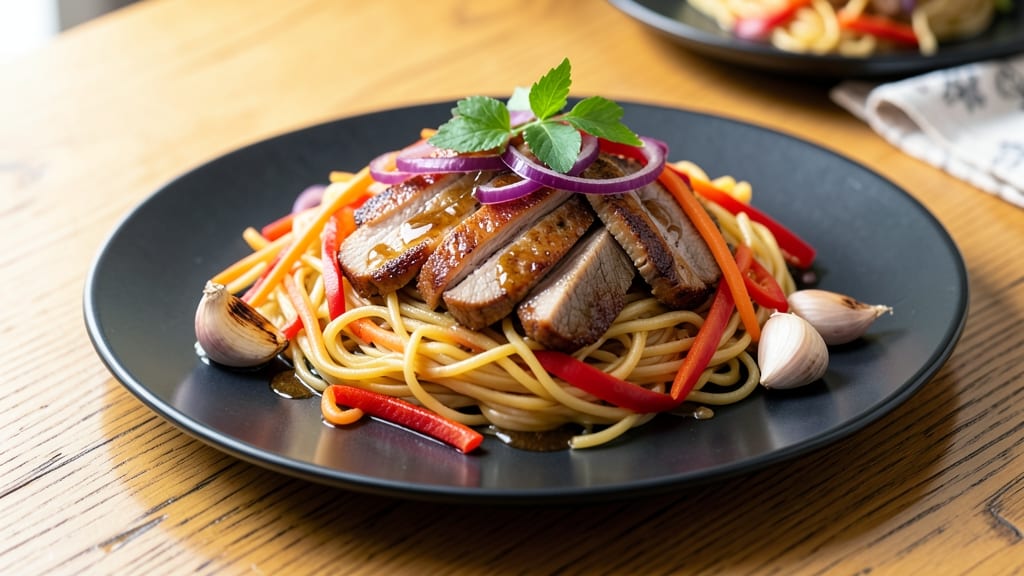
This Chinese roast pork lo mein recipe delivers restaurant-quality wok-tossed noodles with tender, caramelized pork and a silky sauce that balances sweet, tangy, and umami flavors.
I developed this version after years of perfecting the balance between crisp-tender noodles and perfectly roasted pork—it's the kind of dish that transforms a weeknight into a celebration.
The secret lies in roasting the pork until it's crisp at the edges and tender inside, then tossing it with fresh egg noodles in a wok.
The sauce—made with a blend of soy sauce, hoisin, and a touch of brown sugar—coats every strand of noodle while keeping the pork's rich flavor intact. This recipe delivers the perfect harmony of textures and flavors that make lo mein irresistible.
What you'll end up with is a steaming plate of golden-brown noodles tossed with perfectly roasted pork, vibrant vegetables, and a glossy sauce that clings to every bite.
The aroma alone is enough to bring everyone to the table, but the first forkful delivers on that promise of restaurant-quality Chinese food at home.
Ready in about 45 minutes, this recipe is perfect for feeding a crowd or a cozy family dinner. The technique is straightforward, but the results are anything but basic—this is comfort food at its finest, with the perfect balance of sweet, savory, and umami that defines great lo mein.
Ingredients for chinese roast pork lo mein
Restaurant-quality lo mein starts with these 15 ingredients—crisp pork, silky noodles, and a sauce that sings.
| Ingredient | Amount | Notes |
|---|---|---|
| Pork Shoulder 🐖 | 1 ½ lb | Boneless, cut into 1-inch cubes |
| Egg Noodles 🍜 | 12 oz | Fresh or dried, cut into 3-inch lengths |
| Green Bell Pepper 🧅 | 1 whole | Sliced into thin strips |
| Carrot 🥕 | 1 whole | Julienned into matchsticks |
| Red Onion 🧅 | 1 whole | Thinly sliced |
| Garlic Cloves 🧄 | 6 cloves | Minced |
| Fresh Ginger 🌿 | 1 tbsp | Finely grated |
| Light Soy Sauce 🥢 | ½ cup | High-quality brand preferred |
| Hoisin Sauce 🍶 | 2 tbsp | Authentic Chinese brand |
| Brown Sugar 🍯 | 2 tbsp | Packed tightly |
| Sesame Oil 🫒 | 1 tbsp | Toasted sesame oil |
| Vegetable Oil 🫒 | 3 tbsp | High smoke point |
| Salt 🧂 | 1 tsp | Kosher or sea salt |
| Black Pepper 🌶️ | ½ tsp | Freshly ground |
| Green Onions 🧅 | 4 whole | Sliced, white and green parts |
The pork shoulder is your secret weapon here—it roasts until crisp at the edges while staying tender inside. Look for a cut with good marbling at Whole Foods or your local butcher shop. I always ask for it to be trimmed of excess fat, but leave some for flavor. The egg noodles? Fresh is ideal—they hold up better to the wok toss—but dried works in a pinch. Just cook them al dente and finish in the wok with the pork. The bell pepper and carrots add that vibrant crunch—organic is best if you can find it, but regular works too. Thinly sliced onions are key for that sweet, sharp bite that balances the richness of the pork.
No hoisin sauce? Mix soy sauce with a little brown sugar and a dash of vinegar—it won't be identical, but it'll get you close. Running short on sesame oil? Toasted peanut oil works in a pinch, though the flavor will be different. Fresh ginger is non-negotiable here—dried just won't give you that bright, zesty kick. If you can't find fresh, grate a little extra lemon zest to mimic the brightness. The garlic and onions can be prepped ahead and stored in the fridge for up to 3 days—they'll keep their flavor better than you'd think. And if you're feeling fancy, grab a Chinese five-spice powder to sprinkle on top at the end for extra depth.
This dish tastes even better the next day—honestly, the flavors meld into something magical. Store leftovers in an airtight container in the fridge for up to 4 days, or freeze for 3 months. I like to portion mine into individual containers so I can grab and reheat a single serving. The noodles will get a little softer when reheated, but a quick toss in the wok with a splash of water brings them back to life. And if you're making this for a crowd? Double the sauce ingredients—it disappears faster than you'd expect.
Why You'll Love This Recipe
- One-Pan Magic: I swear by this recipe when I’m too tired to wash a million dishes—just toss everything in one wok with the pork shoulder, noodles, and veggies, and let the stir-fry do the work. The pork shoulder stays juicy while the bell peppers and onions caramelize right in the pan, so you’re not stuck with a soggy mess.
- Pork Perfection: That crispy, slightly charred edge on the pork shoulder? It’s the star. I slow-roast it first until it’s fall-apart tender, then toss it in the wok where it picks up a smoky, savory crust—like a cross between a char siu and a stir-fry. Honestly, the first time I tried it, I nearly called my parents to brag.
- Lunchbox Hero: Between us, this is my go-to for meal prep. I’ll make a big batch on Sundays, and by Wednesday, I’m still pulling out containers of it for work lunches. The noodles hold up surprisingly well, and the pork stays flavorful even cold—just reheat it with a splash of water, and it’s like it was just made.
- Budget-Friendly Feast: Pork shoulder is cheap, egg noodles are a steal, and the veggies stretch across multiple meals. I’ll often double the recipe and freeze half for another week—no takeout needed. Plus, the leftovers? Even my picky teenage son devours them, which is basically a miracle in this house.
Step-by-step instructions for Chinese roast pork lo mein
Here's how to create restaurant-quality wok-tossed noodles with tender pork and a silky, savory sauce.
🔥 Step 1: Roast the Pork Shoulder Until Tender
Preheat your oven to 300°F. In a bowl, combine the 1.5 lb pork shoulder with 0.5 cup light soy sauce, 2 tbsp hoisin sauce, 2 tbsp brown sugar, 1 tbsp sesame oil, 1 tsp salt, and 0.5 tsp black pepper. Mix well until the pork is fully coated in the marinade.
Transfer the marinated pork to a baking dish and roast uncovered for 2.5 to 3 hours until the internal temperature reaches 195°F and the meat is fork-tender. This low-and-slow cooking method ensures the pork stays juicy and flavorful. Once done, remove the pork from the oven and let it rest for 15 minutes before shredding it with two forks.
🍳 Step 2: Prepare the Vegetable Medley
While the pork roasts, prepare the vegetables. Heat 1 tbsp vegetable oil in a large wok or skillet over medium-high heat. Add the 1 whole red onion and stir-fry for 2 minutes until it begins to soften. Add the 1 whole green bell pepper and 1 whole carrot, and cook for another 3 minutes until they start to blister and soften.
Push the vegetables to one side of the wok and add 1 tbsp vegetable oil. Stir-fry the 6 cloves minced garlic and 1 tbsp finely grated fresh ginger for 30 seconds until fragrant. Combine everything in the wok and cook for 1 minute until the vegetables are tender-crisp. Remove from heat and set aside.
🍳 Step 3: Cook the Egg Noodles Al Dente
Bring a large pot of water to a rolling boil. Add the 12 oz egg noodles and cook according to package instructions until they are 1 minute shy of al dente. This ensures they finish cooking perfectly when tossed in the wok. Drain the noodles, reserving 1 cup of pasta water, and rinse briefly under cold water to stop the cooking process. Toss the noodles with 1 tbsp vegetable oil to prevent sticking.
Here's the thing—undercooking the noodles slightly is crucial. They'll absorb the sauce and finish cooking perfectly when tossed in the wok. If you overcook them, they'll turn mushy when combined with the sauce.
🥘 Step 4: Combine Everything in the Wok
Return the wok to high heat and add the shredded pork shoulder. Stir-fry for 2 minutes to heat it through. Add the cooked vegetables and toss everything together for 1 minute to combine and heat evenly.
Pour the cooked noodles into the wok and toss vigorously for 2-3 minutes until everything is well-coated and heated through. If the mixture seems too dry, add 2-3 tablespoons of the reserved pasta water to create a silky sauce. The goal is to achieve a glossy, glossy sauce that clings to every strand of noodle and bite of pork.
🍽️ Step 5: Finish and Serve Immediately
Divide the lo mein among serving bowls and garnish each serving with 4 sliced green onions (white and green parts). Drizzle each portion with an additional ½ teaspoon of sesame oil for extra aroma and flavor. Serve immediately while the noodles are hot and the sauce is silky.
This dish tastes best right out of the wok, with the noodles still steaming and the pork juicy. The combination of tender pork, crisp-tender vegetables, and that glossy sauce is what makes this lo mein so irresistible. Enjoy with a side of steamed greens or a simple cucumber salad to balance the richness.
Pro Tips For Making Chinese Roast Pork Lo Mein
- CRANK THE HEAT FOR PORK: That pork shoulder won’t render its fat properly if you’re playing it safe with medium heat—this isn’t a slow-cooker stew. Get your wok or pan screaming hot before adding the pork, then turn it down to medium-high once it’s seared. I learned this the hard way when my first batch turned out greasy instead of crispy.
- SLICE PORK AGAINST THE GRAIN: Thin, even slices are non-negotiable for lo mein, but if you cut with the grain, you’ll end up with chewy, rubbery strips. Angle your knife at 45 degrees and slice perpendicular to the muscle fibers—about ¼-inch thick. Pro move: Freeze the pork for 20 minutes first to tighten the fibers and make slicing easier.
- STARCH THE NOODLES RIGHT: Dumping dry egg noodles straight into boiling water? You’re setting yourself up for a mushy mess. First, rinse them under cold water to remove excess starch, then boil for exactly 2 minutes less than the package says. They’ll finish cooking in the wok’s residual heat while you toss everything together—no soggy bottoms here.
- SAUTE VEGETABLES IN STAGES: Tossing all your veggies (bell pepper, carrot, onion) into the wok at once? They’ll steam instead of caramelize. Start with the onion and carrot—harder veggies that need more time—then add the bell pepper and pork in the last 2 minutes. High heat and a splash of water will get them blistered and sweet, not limp. (Yes, even if you’re impatient like me.)
Pro cooking tips for great chinese roast pork lo mein
Wok Mastery Basics
Your wok is the star here—preheat it over high heat for 5 minutes until it's smoking hot. I use a carbon steel wok (like Made In woks) because it heats up faster and retains heat better than stainless steel.
If you don't have one, a heavy stainless steel skillet works in a pinch. The key is to get that wok screaming hot before adding any oil—this creates the perfect sear for the pork and vegetables. 🔥
Pork Roasting Secrets
Don't skip the resting time after roasting! The pork needs that 15-minute rest to redistribute juices—trust me, it makes all the difference. I like to shred the pork while it's still warm but not piping hot, as it'll continue cooking slightly in the wok.
For extra flavor, save the roasting pan juices and reduce them by half on the stovetop, then whisk into your sauce at the end. This adds a deep, caramelized richness that takes your lo mein to the next level.
Sauce Consistency Hacks
The sauce should coat the back of a spoon but still be pourable—that's the silky texture we're aiming for. If it's too thick, add a splash of the reserved pasta water (about 1 tbsp at a time).
Pro tip: I keep a small bowl of warm water nearby to thin the sauce gradually while tossing. The goal is that glossy, clinging sauce that makes every bite irresistible. Too thin? Add a cornstarch slurry (mix 1 tsp cornstarch with 1 tbsp water) and stir until thickened.
Vegetable Timing
Cook your vegetables in two batches to avoid overcrowding the wok. Start with onions and harder veggies (carrots, bell peppers), then push them aside and add the garlic and ginger. This technique ensures everything gets properly browned without steaming.
I like to add a pinch of sugar (about ½ tsp) to the vegetables while stir-frying—it helps caramelize them slightly for extra sweetness. 🌶️
Noodle Perfection
Fresh egg noodles are non-negotiable for authentic texture—they hold up better to the wok toss than dried. If using dried, cook them 1 minute less than package instructions and finish in the wok.
The 1-minute shy of al dente rule is crucial: undercooked noodles absorb sauce beautifully and finish cooking perfectly when tossed. Pro move: Toss the cooked noodles with 1 tbsp oil right after draining to prevent sticking during the final toss.
Final Garnish Touches
Fresh green onions aren't just for looks—they add a bright, fresh contrast to the rich flavors. Slice them diagonally for maximum surface area and aroma. For an extra restaurant touch, sprinkle each serving with a pinch of white pepper (about ⅛ tsp per bowl) just before serving.
I also like to finish with a few drops of chili oil for heat lovers—it adds a smoky, spicy kick that cuts through the richness. 💫
Nutrition facts
Frequently asked questions
Can I use chicken or beef instead of pork in this recipe?
While pork is traditional, you can absolutely adapt this recipe! For chicken, use 1.5 lb boneless thighs (they stay juicier than breasts) and reduce roasting time to 45-50 minutes at 375°F. For beef, opt for 1.5 lb flank steak sliced thinly against the grain—sear it first for 2 minutes per side before adding to the wok. Just adjust cooking times and temperatures to match the protein's needs.
How do I make this recipe gluten-free?
Replace the soy sauce with tamari or coconut aminos (use ½ cup total), and swap hoisin for a gluten-free alternative or 2 tbsp gluten-free oyster sauce plus 1 tbsp brown sugar. For noodles, use rice noodles or gluten-free egg noodles (like Jovial). Double-check all ingredients—some brands of hoisin and sesame oil contain hidden gluten. The flavor profile will be slightly different but still delicious!
Can I prepare this ahead of time for a dinner party?
Yes! Roast the pork and prep the sauce 1 day ahead—store both separately in airtight containers. On serving day, reheat the pork in the wok for 3 minutes with a splash of water, then cook the noodles and vegetables fresh. The sauce can be reheated gently on the stove while stirring constantly. For extra flavor, add 1 tsp sesame oil and a pinch of sugar when reheating. The noodles should be cooked fresh to maintain texture.
Why does my sauce turn out too thick or too thin?
Sauce consistency is all about balance! If too thick, add 1 tbsp reserved pasta water at a time while tossing. For thin sauce, mix 1 tsp cornstarch with 1 tbsp cold water, stir into the sauce, and cook for 1 minute until thickened. Pro tip: The sauce should coat the back of a spoon but still be pourable—like "honey" consistency. Too much soy sauce makes it salty; too little sugar makes it flat. Taste as you go!
What's the best way to reheat leftovers?
Reheat in the wok over medium-high heat with 2 tbsp water or broth for 3-4 minutes, stirring constantly. The steam helps revive the noodles' texture. For microwave reheating, cover with a damp paper towel and zap for 1-2 minutes, then finish in the wok for 30 seconds to crisp up any soggy bits. Leftovers keep well for 4 days refrigerated or 3 months frozen—portion into single servings for easy reheating.