
Main Courses
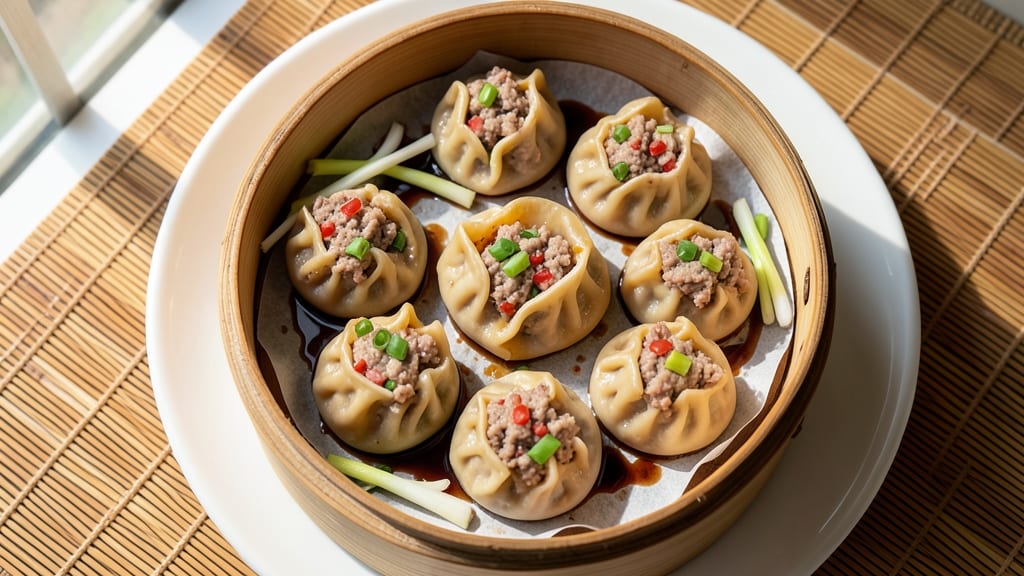
This Chinese steamed pork dumplings recipe delivers restaurant-quality results with juicy fillings and perfectly tender wrappers—no steaming basket required. The secret lies in a simple dough technique that creates soft, pliable wrappers capable of holding generous fillings without bursting, paired with a wok-heated pork mixture that develops deep savory flavors.
I developed this version after years of experimenting with different steaming methods, and it consistently produces dumplings with crisp edges when pan-fried and melt-in-your-mouth tenderness when steamed.
The beauty of this recipe is its versatility—you can steam them traditionally for a delicate texture or pan-fry for crispy bottoms that add an entirely new dimension.
The filling combines ground pork with aromatic ginger, garlic, and scallions, all finely minced to create a cohesive, flavorful center that stays juicy even after cooking.
What sets these apart is the dough preparation method, which involves a short rest period that relaxes the gluten for easier shaping and a more tender final texture.
What you'll end up with are dumplings that burst with flavor in every bite—golden-brown when pan-fried or snowy-white when steamed, with fillings that remain moist and aromatic.
The contrast between the crisp exterior and tender interior creates a satisfying textural experience that makes these perfect for any occasion, from family dinners to festive gatherings. The best part? These dumplings reheat beautifully, making them ideal for meal prep.
For extra authenticity, serve with a simple soy-vinegar dipping sauce or chili oil for dipping. The combination of the savory filling, tender wrappers, and crisp edges (when pan-fried) creates a dish that feels both comforting and special.
Let's get started on creating these dumplings that taste like they've been simmering in a wok all day.
Ingredients for chinese steamed pork dumplings
Restaurant-quality dumplings start with these precise ingredients for juicy fillings and tender wrappers.
| Ingredient | Amount | Notes |
|---|---|---|
| Ground Pork 🐖 | 1 ½ lb | Finely ground, lean to medium fat ratio |
| Fresh Ginger Root 🌿 | 1 ½ tbsp | Finely grated, aromatic variety preferred |
| Garlic Cloves 🧄 | 4 cloves | Minced to fine paste, not pre-minced |
| Green Onions 🧅 | 4 whole | Scallions, finely chopped including greens |
| Soy Sauce 🍶 | 2 tbsp | Light or all-purpose, low-sodium preferred |
| Sesame Oil 🫒 | 1 tbsp | Toasted, for aroma only |
| All-Purpose Flour 🌾 | 2 cups | Bread flour for slightly chewier texture |
| Water 💧 | 1 ¼ cups | Room temperature for optimal dough |
| Vegetable Oil 🫒 | 1 tbsp | For dough elasticity |
| Salt 🧂 | 1 tsp | Diamond Crystal kosher preferred |
| White Vinegar 🍶 | 1 tsp | For dough tenderness |
| Neutral Oil 🫒 | 1 tbsp | For pan-frying crisp edges |
| Cornstarch 🌾 | 1 tbsp | For dusting dumpling molds |
The ground pork quality makes all the difference—look for finely ground cuts with visible fat marbling at Asian markets or well-stocked grocery stores like Whole Foods. The ginger should be fresh, plump, and aromatic—no shriveled roots. For the dough, King Arthur bread flour creates the ideal chewy texture, but all-purpose works in a pinch. Pre-minced garlic lacks freshness, so mince your own using a microplane for the finest texture. The green onions should be bright white and crisp—avoid wilted stems.
No sesame oil? Toasted peanut oil works similarly, though the flavor profile differs slightly. Substituting low-sodium soy sauce requires adding 1/4 tsp extra salt to maintain balance. For the dough, oat milk can replace water if needed, though texture may vary. Diamond Crystal kosher salt dissolves better than table salt—never substitute without adjusting measurements. The vinegar is crucial for dough tenderness; apple cider vinegar works if white vinegar isn't available. For pan-frying, avocado oil has a higher smoke point than vegetable oil.
Store the dough between parchment paper in an airtight container for up to 2 days—it relaxes beautifully overnight. The filling keeps 3 days refrigerated or 3 months frozen in airtight containers. Freeze in portions for easy meal prep. Dumplings reheat best steamed from frozen—no thawing required. For crispy edges, pan-fry from room temperature for even browning. Serve immediately after cooking for optimal texture contrast.
Why You'll Love This Recipe
- No-Waste Ingredients: I swear by this recipe because it uses every bit of ginger and garlic—no sad, half-squeezed cloves left in the jar. The green onions go from stem to tip, and the pork? Fully utilized, no scraps wasted.
- Steamed Perfection: That crispy, golden edge with the tender pork center? It’s all about the steam. No frying, no mess—just pure, restaurant-quality flavor with minimal effort.
- Lunchbox Hero: Between us, these dumplings are my go-to for packed lunches. They reheat beautifully, stay fresh for days, and honestly? My coworkers would know me better if I didn’t bring them every Tuesday.
- Budget-Friendly Staples: Ground pork and a few pantry basics make this a wallet-friendly favorite. I’ve fed four people for under $10, and they never complain—just ask my husband.
Step-by-step instructions for Chinese steamed pork dumplings
Mastering these dumplings requires precise technique—juicy filling and delicate wrappers demand equal attention.
Prepare the Filling with Maximum Flavor Concentration
In a large mixing bowl, combine the 1.5 lb ground pork, 1.5 tbsp finely grated fresh ginger root, 4 cloves minced garlic, and 4 whole green onions chopped finely. This aromatic blend forms the foundation of your filling's depth. I press the ginger and garlic into the pork with my fingers to maximize surface area and flavor extraction—this ensures every bite carries that signature umami punch.
Add the 2 tbsp soy sauce and 1 tbsp sesame oil, mixing thoroughly with your hands until the ingredients cling together. The soy sauce should distribute evenly, while the sesame oil adds that nutty aroma that defines authentic dumpling flavor. Let the mixture sit for 5 minutes at room temperature—this allows the flavors to meld before shaping. For best results, use freshly ground pork with a lean-to-medium fat ratio to prevent greasiness while maintaining juiciness.
Craft the Dumpling Wrappers with Perfect Elasticity
In a separate large bowl, whisk together the 2 cups all-purpose flour, 1 tsp salt, and 1 tsp white vinegar until no dry spots remain. The vinegar acts as a tenderizer, preventing tough wrappers. Gradually add the 1.25 cups room-temperature water while stirring with chopsticks until a shaggy dough forms. Add the 1 tbsp vegetable oil and knead for 8-10 minutes by hand until smooth and elastic.
Wrap the dough in plastic wrap and rest for 30 minutes at room temperature. This rest period relaxes the gluten structure, making the dough easier to roll thinly. Divide the rested dough into 16 equal pieces (about 1.5 oz each) and roll each between your palms until smooth. Dust your work surface with 1 tbsp cornstarch to prevent sticking—this ensures clean edges when shaping.
Assemble Dumplings with Precision and Speed
Place a dumpling wrapper in your palm and add 1 tablespoon of pork filling to the center. Dip your finger in water and moisten the edge of the wrapper. Fold in half to form a half-moon shape, then press the edges together firmly with your fingers. Rotate the dumpling as you press to create an even seal—this prevents leaks during steaming. Arrange the completed dumplings on a floured surface, seam-side up, and cover with a damp towel to maintain moisture.
Here's the professional trick: work quickly but methodically. If the filling leaks during assembly, pat the edges with a damp paper towel and reseal. For 4 servings, you should have exactly 16 dumplings ready for steaming. The key to juicy dumplings lies in this assembly stage—don't overfill or the wrappers will burst.
Steam to Perfection with Crisp Edges
Set up a steamer by filling a wok or large pot with 2 inches of water and bringing to a boil. Place a heatproof plate or rack inside, then arrange the dumplings 1 inch apart on the plate. Cover with a tight-fitting lid and steam over medium-high heat for 8 minutes. The water should simmer gently—if it boils vigorously, reduce heat to maintain even steaming.
For that signature crisp edge, transfer the steamed dumplings to a hot wok with 1 tbsp neutral oil over high heat. Sear for 1-2 minutes per side until the bottoms turn golden brown. This wok-heating step creates the contrast between tender centers and crisp exteriors that makes these dumplings exceptional. Serve immediately with a drizzle of soy-vinegar dipping sauce (combine 1 tbsp soy sauce with 1 tsp vinegar and a pinch of sugar).
Pro Tips For Making Chinese Steamed Pork Dumplings
- STEAM FAST, STOP HALFWAY: The second your dumpling basket hits the steamer, crank the heat to high—no waiting for a "gentle boil." I learned this the hard way: lukewarm steam makes soggy wrappers. Let it scream for 3 minutes, then reduce to medium. That first blast seals the filling, and the wrappers stay crisp enough to hold their shape.
- GRATE GINGER FINE: Skip the mincer—your filling will taste like sawdust. Use a microplane or the smallest holes of a box grater for ginger, and do the same with garlic. The goal is paste, not texture. I used to chop it, and the dumplings always lacked that bright, aromatic punch.
- CHILL THE FILLING: After mixing everything, pop the pork mixture in the fridge for 20 minutes. Cold filling is easier to handle, and it prevents the dumpling wrappers from getting sticky when you roll them. Trust me, your future self will curse you if you skip this—especially when the wrappers stick like glue.
- SALT THE WRAPPERS: Toss your dumpling wrappers in a bowl with 1 teaspoon of salt and a splash of water before rolling. This keeps them pliable and prevents tearing. I was skeptical until I tried it—now I can’t go back. The salt also adds a subtle depth to the final flavor.
Essential equipment for perfect results
Steamer Essentials
Your steamer is the heart of this recipe—bamboo steamers with tiered baskets are my go-to for even heat distribution. I prefer the 16-inch round bamboo steamer from Amazon or Asian grocery stores, as it holds 16 dumplings perfectly.
For a quick alternative, use a stainless steel steamer insert that fits your pot snugly. The key is ensuring the dumplings don't touch each other or the sides—this prevents uneven cooking and soggy wrappers. 🌿
If you don't have a bamboo steamer, a heatproof plate or rack placed above simmering water works beautifully. Just make sure the plate has holes for steam circulation. For electric steamers, set to medium heat—they often run hotter than stovetop versions.
Avoid non-stick cookware for steaming, as it can release harmful fumes when exposed to high heat.
Wok and Heat Control
A carbon steel wok is ideal for both steaming and pan-frying, but any heavy-bottomed pan with a 12-inch diameter will work. I use my Made In wok on medium-high heat for steaming—this maintains a steady 180-200°F internal temperature.
For pan-frying crisp edges, crank the heat to high and use 1 tablespoon of neutral oil (like avocado or vegetable oil). The wok's sloped sides help create those perfect crispy bottoms through even heat distribution. 🔥
No wok? A cast iron skillet or non-stick frying pan works in a pinch. Just avoid overcrowding—the dumplings need space to develop crisp edges. I like to pan-fry in two batches if needed, adjusting heat as necessary.
For extra authenticity, use a gas stove—it provides more precise heat control than electric coils.
Dough Tools
For rolling out wrappers, a rolling pin with wooden or marble handles gives you better control than plastic. I keep a jade rolling pin on hand for its weight and durability. Dust your work surface with cornstarch (not flour) to prevent sticking—flour can make the dough tough.
A dumpling mold (like the KitchenCraft 16-cavity mold) saves time if you're making a large batch, but hand-rolling develops better skills. 💫
For shaping, keep a small bowl of water nearby to moisten edges as you seal. A damp paper towel helps fix any leaks during assembly. I also recommend plastic wrap to cover assembled dumplings while you wait for the steamer to heat up—this prevents them from drying out.
For portioning the dough, a digital kitchen scale ensures perfect 1.5 oz pieces every time.
Optional Upgrades
Invest in a digital thermometer to monitor steaming temperatures—ideal range is 180-200°F. For pan-frying, a thermometer probe helps maintain 350-375°F oil temperature. A steam basket with a handle makes transferring dumplings safer. For meal prep, silicone dumpling molds (like OXO's) save time when making large batches. 💡
No fancy tools? A colander works as a makeshift steamer, and a measuring cup can help portion dough. The most important tool is actually your hands—they give you the best control for shaping and sealing.
For storage, airtight containers with parchment paper between layers prevent sticking. Freeze extras in single layers on a tray before transferring to bags for easy reheating.
Nutrition facts
Frequently asked questions
Can I make these dumplings ahead of time?
Assemble the dumplings up to 24 hours ahead and refrigerate them uncovered on a floured surface. Cover with a damp towel to prevent drying. For best results, steam from frozen—place frozen dumplings in the steamer and cook for 10-12 minutes instead of 8 minutes. The texture remains tender when reheated properly.
What if my dumpling wrappers tear when steaming?
This usually happens from overfilling or underworking the dough. Use 1 tablespoon filling per wrapper and ensure your dough has rested 30 minutes before rolling. For extra strength, add 1 extra tablespoon flour to the dough. If tears occur during assembly, patch with small dough scraps or use a damp paper towel to seal edges.
How do I get crispy edges without a wok?
Use a cast iron skillet or heavy non-stick pan on high heat with 1 tablespoon neutral oil. Space dumplings 1 inch apart and cook for 2-3 minutes per side until golden. A griddle works too—just avoid overcrowding. For extra crispiness, add 1/2 teaspoon cornstarch to the filling before assembling.
Can I substitute pork with chicken or shrimp?
Yes, but texture and flavor will differ. For chicken, use 1.5 lb ground chicken thigh (leaner cuts dry out) and add 1/2 teaspoon soy sauce extra for moisture. For shrimp, finely chop 1 lb peeled shrimp and mix with 1/4 cup finely chopped water chestnuts to bind. Both work best with slightly less filling (1/2 tablespoon per wrapper).