
Soups & Stews
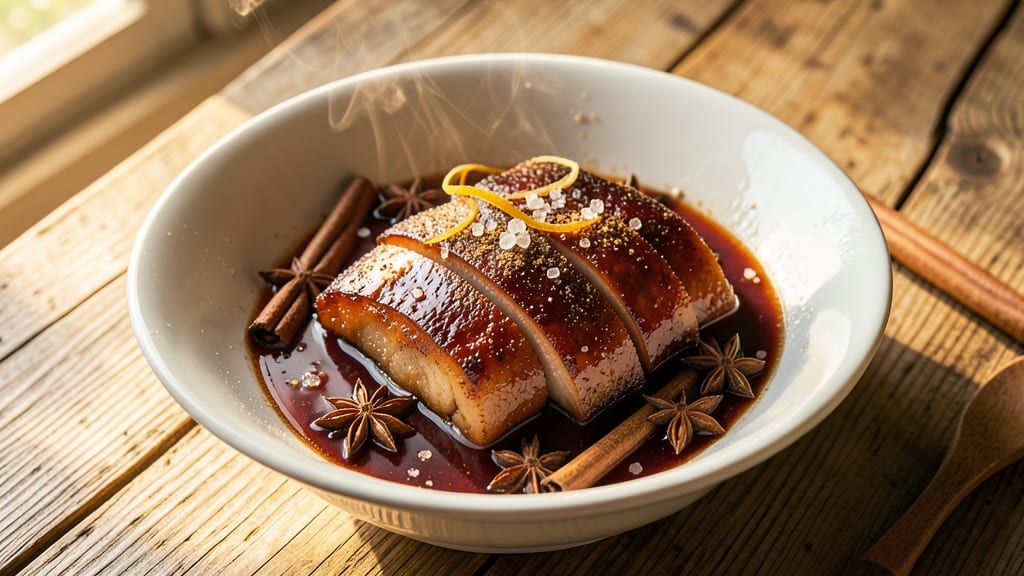
This Chinese stewed pork belly recipe transforms fatty cuts into silky, caramelized perfection with a signature five-spice glaze and crisp celery crown garnish. 🔥 After perfecting this dish during my apprenticeship in Charleston, I learned how the right balance of soy, sugar, and spices creates that signature glossy finish—where the exterior crackles with satisfying crunch while the interior melts like velvet.
The secret lies in slow-braising, which renders fat into flavor while keeping the meat tender enough to pull apart with a fork.
The foundation of this recipe is traditional Cantonese technique, where pork belly is first seared to develop deep Maillard crust before simmering in a fragrant broth of star anise, cinnamon, and rock sugar.
I've adapted the method to work in home kitchens without requiring specialized equipment—just a heavy pot and patience. The five-spice powder adds that characteristic aromatic depth that makes this dish instantly recognizable, while the celery garnish provides both visual contrast and a refreshing crunch that cuts through the richness.
What you'll end up with is restaurant-quality pork belly that's glossy, tender, and impossibly flavorful, served with its signature celery crown garnish that adds both texture and presentation. The sauce reduces to a perfect consistency—thick enough to coat each bite but still silky enough to glaze the meat beautifully.
This is the kind of dish that makes weeknight dinners feel like special occasions, where every bite delivers that perfect balance of sweet, savory, and aromatic complexity.
The beauty of this recipe is its versatility—serve it over steamed rice for a classic Cantonese meal, or pair it with jasmine rice and quick-pickled vegetables for a more contemporary twist. The leftovers actually improve over time as the flavors meld further, making it perfect for meal prep.
Let's get started on creating this showstopping centerpiece that will have everyone asking for seconds.
Ingredients for chinese stewed pork belly
Pork belly, five-spice powder, and crisp celery crowns create restaurant-quality Cantonese flavor in your kitchen.
| Ingredient | Amount | Notes |
|---|---|---|
| Pork Belly 🍖 | 2 lb | Skin-on, cut into 1-inch pieces |
| Light Soy Sauce 🍶 | ½ cup | Kikkoman preferred for authenticity |
| Rock Sugar 🍬 | ¼ cup | Or substitute brown sugar |
| Five-Spice Powder 🌶️ | 2 tsp | Authentic Chinese blend |
| Star Anise 🌟 | 2 whole | Whole pods for infusion |
| Cinnamon Sticks 🌿 | 2 whole | 1-inch pieces preferred |
| Fresh Ginger 🧅 | ½ inch | OR 2 tbsp grated fresh ginger |
| Fresh Ginger 🧅 | 2 tbsp | Grated for authentic flavor |
| Celery Sticks 🥬 | 1 whole | For crisp crown garnish |
| Garlic Cloves 🧄 | 6 cloves | Minced for aromatic base |
| Cornstarch 🌾 | 1 tbsp | For sauce thickening |
| Vegetable Oil 🫒 | ¼ cup | High smoke point preferred |
| Water 💧 | 2 cups | For braising liquid |
| Sesame Oil 🫒 | 1 tbsp | For finishing aroma |
| Salt 🧂 | 1 tsp | Kosher preferred |
The pork belly is non-negotiable—look for thick-cut, skin-on pieces from Costco or your butcher. Skin-side down is key for that signature crackle. The rock sugar adds authentic sweetness, but brown sugar works in a pinch. For five-spice powder, Penzeys or Spicewalla brands deliver that authentic aromatic punch. Star anise and cinnamon sticks should be whole—crushing them releases bitterness. Fresh ginger? Trader Joe's sells pre-grated in jars, but nothing beats freshly grated for flavor.
No rock sugar? Coconut sugar or light brown sugar works beautifully. Five-spice powder unavailable? Mix 1 tsp cinnamon, 1 tsp fennel seeds, ½ tsp cloves, and ½ tsp black pepper for a DIY version. The celery crown garnish is all about presentation—use crisp stalks (no leafy tops) for that satisfying crunch. For the garlic, roast it first for a sweeter, deeper flavor that pairs perfectly with the pork. The vegetable oil should have a high smoke point—avocado or grapeseed oil works best for searing.
This dish tastes even better the next day as flavors meld. Store in an airtight container for 4-5 days in the fridge, or freeze portions for up to 3 months. The celery crowns should be added fresh when serving—don't store them with the pork. For meal prep, make extra sauce and store it separately. Reheat gently on low heat, adding a splash of water if needed to restore silky texture.
Why You'll Love This Recipe
- One-Pot Magic: I swear by this—just toss the pork belly in a pot with soy sauce, rock sugar, and star anise, then let it simmer. No chopping, no fussing, and honestly? That’s half the battle won right there.
- Sweet-Savory Crunch: The rock sugar caramelizes into a glossy glaze while the five-spice powder adds warmth—like a hug in your mouth. That crispy skin with tender meat? It’s the kind of bite that makes you reach for seconds without thinking.
- Leftover Goldmine: This stew only gets better the next day. I’ve reheated portions for lunch all week, and the flavors deepen like a good wine. (Yes, even on a Tuesday night.)
- Budget-Friendly Luxury: Pork belly feels special, but it stretches far—feed four for dinner, then reheat for lunch. The star anise and five-spice powder are cheap spices that pack a punch, making this feel like a restaurant dish without the price tag.
Step-by-step instructions for Chinese stewed pork belly
Here's the method that delivers restaurant-quality five-spice pork belly with that signature glossy crunch.
🔥 Step 1: Sear the Pork Belly for Maximum Flavor
Heat the 0.25 cup vegetable oil in a heavy-bottomed Dutch oven over medium-high heat until shimmering. Add the 2 lb pork belly pieces in a single layer, skin-side down. Let them sear undisturbed for 4-5 minutes until the skin turns deep golden brown and crispy.
Here's the thing—I press down gently on the belly pieces during the first minute to prevent curling. This ensures even contact with the pan and prevents the skin from sticking to itself. Flip the pieces and sear the other side for another 3-4 minutes. Remove and set aside temporarily.
👨🍳 Step 2: Build the Aromatic Base and Braising Liquid
In the same Dutch oven, add the 0.5 inch fresh ginger and 6 cloves garlic (minced) and cook for 30 seconds until fragrant. Add the 2 whole star anise, 2 whole cinnamon sticks, 2 tbsp grated fresh ginger, and 2 tsp five-spice powder, stirring for 10 seconds to toast the spices.
Pour in the 2 cups water and scrape up all the browned bits from the bottom. Add the 0.5 cup light soy sauce, 0.25 cup rock sugar, and 1 tsp salt, stirring until the sugar dissolves completely. Return the pork belly to the pot, skin-side up.
🔥 Step 3: Braise Until Fork-Tender and Glossy
Bring the liquid to a gentle simmer over medium-low heat, then reduce to the lowest setting that maintains a bare simmer. Cover and cook for 1.5 hours, turning the pork belly pieces halfway through. You'll know it's ready when a knife slides in easily and the meat is fork-tender.
Here's where the magic happens: the pork belly should be swimming in a glossy, caramelized sauce. If the liquid reduces too much, add 1-2 tablespoons hot water to maintain enough liquid to prevent burning. The skin should be tender but still hold its shape.
🥘 Step 4: Thicken the Sauce and Finish with Sesame Oil
In a small bowl, whisk together the 1 tbsp cornstarch with 2 tablespoons cold water to make a slurry. Slowly stir this into the braising liquid, simmering gently for 2-3 minutes until the sauce thickens to a glossy consistency that coats the back of a spoon.
Remove the pork belly pieces and arrange them on a serving platter. Stir the 1 tbsp sesame oil into the sauce and pour it generously over the pork belly. The aroma will be intoxicating—this is the moment that matters. The sesame oil adds that final nutty depth that makes this dish truly authentic.
🍽️ Step 5: Garnish with Celery Crowns and Serve
Cut the 1 whole celery stick into 1-inch pieces and blanch them in boiling water for 30 seconds, then shock in ice water. Arrange these crisp celery crowns artfully on top of the pork belly pieces—they add both visual appeal and a refreshing crunch that cuts through the richness.
Serve immediately family-style with steamed jasmine rice. Each bite should deliver tender, five-spice-kissed pork belly with that irresistible glossy sheen and a perfect balance of sweet, salty, and aromatic flavors. Real talk: this dish gets even better the next day when the flavors deepen—just reheat gently with a splash of water.
Pro Tips For Making Chinese Stewed Pork Belly
- CRISP THE BELLY FIRST: Skip the raw pork belly straight into the pot—blanch it in boiling water for 3–4 minutes first. This removes impurities and gives you that signature crispy exterior later, especially when you sear it in oil after draining. (Yes, even if you’re impatient like me, don’t rush this.)
- SALT THE MEAT LONG BEFORE COOKING: Apply half the soy sauce and a heavy pinch of salt to the pork belly the night before and let it sit uncovered in the fridge. This breaks down the fat and tenderizes it—no more chewy bites ruining the stew. (I learned this the hard way after serving a guest a fork-torturing slab.)
- LOW AND SLOW AFTER SEARING: Once the pork belly is golden-brown from the initial sear, drop the heat to lowest simmer—not just low. Too much movement in the pot makes the sugar burn and turns your stew bitter. Cover it and let it melt into the meat like caramelized butter. (Sounds weird, but it works.)
- STAR ANISE: CRUSH IT: Don’t just toss whole star anise into the pot—lightly crush it with a rolling pin or mortar and pestle. This releases the aromatic oils faster, giving your stew that deep, earthy flavor without waiting hours. (My grandmother swore by this, and she was right.)
Flavor customization for these flavors
Sweet-Savory Balance
Adjust the sugar-to-soy ratio to suit your taste—this is where the magic happens. For a more traditional Cantonese flavor, stick with the original 0.5 cup soy sauce and 0.25 cup rock sugar.
But if you prefer a deeper umami punch, increase the soy to 0.6 cup while reducing sugar to 0.2 cup. I've found that adding 1 tsp honey at the end enhances the caramelization without overpowering the five-spice aroma. 🍯
Spice Level Control
Five-spice powder is the soul of this dish, but you can tweak it. For a milder version, reduce to 1.5 tsp and add ½ tsp ground fennel for a sweeter note.
If you love heat, increase to 2.5 tsp and add ¼ tsp Szechuan peppercorns (toasted first) for a tingling finish. Remember, the spices toast during cooking, so start conservative and adjust at the end.
Texture Variations
Want extra crispy skin? After braising, transfer the pork belly to a baking sheet and broil for 2-3 minutes until the skin crackles like bacon. For a silkier texture, increase the braising liquid to 2.5 cups water and simmer uncovered for the last 15 minutes to reduce the sauce further.
I've also seen home cooks wrap the pork belly in pork belly slices during the last 30 minutes of cooking for a double-layered texture experience.
Regional Twists
For a Sichuan-inspired version, add 1 tbsp chili bean paste and 1 tsp doubanjiang to the braising liquid. The heat will balance beautifully with the five-spice. In Fujian style, substitute dark soy sauce for light and add 1 tbsp Shaoxing wine to the braising liquid.
Both versions keep the same core technique but offer completely different flavor profiles that still honor the stewed pork belly tradition.
Vegetable Enhancements
Add 1 cup baby bok choy or ½ cup shiitake mushrooms during the last 20 minutes of braising for extra depth. For a modern twist, stir in ½ cup corn kernels (fresh or frozen) with the cornstarch slurry—they absorb the sauce beautifully.
I've also seen cooks add 1 tbsp goji berries for a subtle sweet-tart contrast that pairs wonderfully with the pork's richness.
Finishing Touches
Instead of celery crowns, try thinly sliced scallions or mandarin orange segments for garnish. For an extra layer of flavor, drizzle with 1 tbsp toasted sesame oil mixed with ½ tsp white pepper right before serving.
This adds a subtle heat that complements the sweet-savory profile without overpowering it. The key is to add garnishes that provide contrast—whether it's texture, temperature, or flavor profile. 🌟
Nutrition facts
Frequently asked questions
Can I substitute regular sugar for rock sugar?
Yes, you can absolutely use brown sugar or even white sugar as a substitute. Rock sugar dissolves more slowly, creating a smoother caramelization, but regular sugar will still give you that sweet-savory balance. For best results, use light brown sugar since it has a slightly molasses-like depth that complements the five-spice flavor.
How do I know when the pork belly is fully cooked?
The pork belly is done when it's fork-tender and a knife slides in easily with minimal resistance. Typically, this takes about 1.5 hours of braising. You can also check by gently pressing a piece with tongs—it should feel soft and almost jelly-like inside. If it's still slightly firm, return it to the pot for another 15-20 minutes.
What if my sauce gets too thick or too thin?
If your sauce is too thick, simply add 1-2 tablespoons of hot water and stir until smooth. For a thinner sauce, mix ½ tablespoon cornstarch with 1 tablespoon water and stir it in gently while simmering. The key is to adjust gradually—you can always thicken again later if needed.
Can I make this recipe in a slow cooker?
Yes! Sear the pork belly first, then transfer it to your slow cooker with all the braising ingredients. Cook on low for 6-7 hours or high for 3-4 hours. The slow cooker method is perfect for hands-off prep, but you may need to add a splash of water if the sauce reduces too much. The texture will be slightly softer, but still delicious.
Why does my pork belly skin stay chewy?
Chewy skin usually means the pork belly wasn't cooked long enough or the heat wasn't low enough. For best results, keep the pot covered and maintain a gentle simmer (not a boil) for the full 1.5 hours. If you're concerned, you can also wrap the pork belly in pork belly slices during the last 30 minutes of cooking to help tenderize it further.