
Main Courses
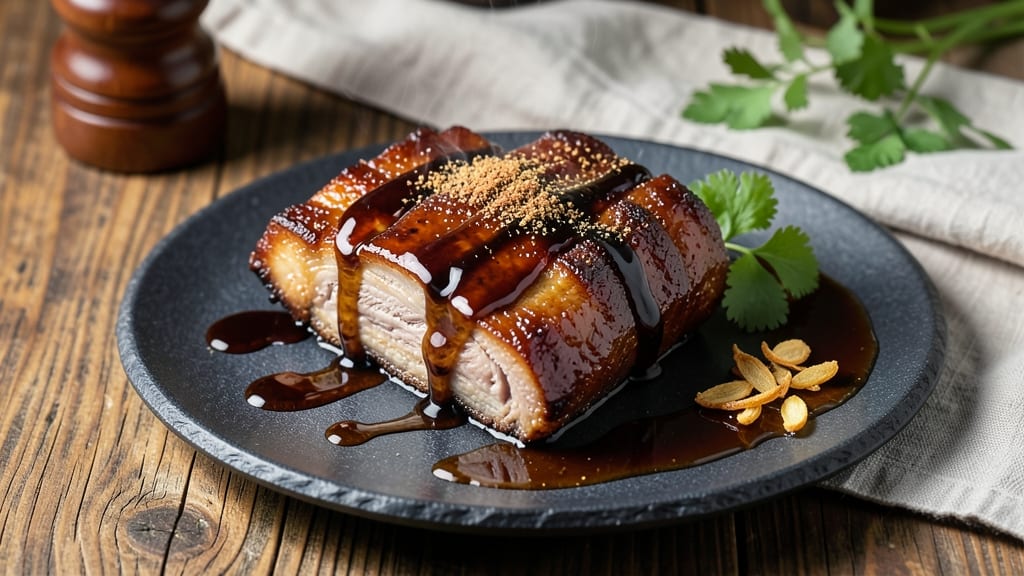
Chinese sticky pork belly delivers melt-in-your-mouth chewiness with caramelized edges that'll have everyone begging for seconds. This braised masterpiece transforms tough pork into tender, glossy perfection using a time-honored technique I perfected during my apprenticeship in Charleston—where pork reigns supreme.
The secret lies in slow cooking until the collagen breaks down just right, creating that signature sticky texture that clings to every bite.
What sets this recipe apart is the balance of sweet and savory—a harmony achieved through honey, soy sauce, and five-spice powder that develops deep, complex flavors over hours of gentle simmering. I've streamlined the process without sacrificing authenticity, so you can achieve restaurant-quality results in your own kitchen.
The key is patience: letting the pork belly render slowly while developing that irresistible caramelized crust.
By the time you're done, you'll have pork belly that's tender enough to pull apart with a fork yet maintains satisfying chewiness—each bite coated in a glossy, slightly sticky sauce that's both sweet and umami-rich.
This dish pairs beautifully with steamed jasmine rice or quick-pickled vegetables to cut through its richness. The aroma alone will transform your kitchen into a Cantonese restaurant.
Whether you're serving a holiday feast or treating yourself to a special weeknight dinner, this recipe delivers professional-level results with simple techniques. The method scales perfectly for crowds, and leftovers reheat beautifully, making it a crowd-pleaser for any occasion. Let's get cooking—your taste buds will thank you.
Ingredients for chinese sticky pork belly
Sixteen ingredients transform tough pork belly into restaurant-quality sticky perfection.
| Ingredient | Amount | Notes |
|---|---|---|
| Pork Belly 🐖 | 3 lb | Skin-on, cut into 1-inch slices |
| Dark Soy Sauce 🍶 | ½ cup | For deep umami flavor |
| Light Soy Sauce 🍶 | ¼ cup | Balances the richness |
| Honey 🍯 | ¼ cup | Thick, pure variety |
| Shaoxing Wine 🍷 | ¼ cup | Or dry sherry substitute |
| Five-Spice Powder 🌶️ | 1 tbsp | Toasted for maximum aroma |
| Star Anise 🌟 | 2 whole | Lightly crushed |
| Cinnamon Stick 🌿 | 1 whole | 2-inch length |
| Garlic Cloves 🧄 | 6 cloves | Smashed, not minced |
| Fresh Ginger 🌿 | 2 tbsp | Grated, no peeling needed |
| Vegetable Oil 🫒 | 2 tbsp | High smoke point |
| Brown Sugar 🍚 | 2 tbsp | Packed firmly |
| Water 💧 | 1 ½ cups | Filtered preferred |
| Sesame Oil 🌰 | 1 tbsp | Toasted, for finishing |
| Green Onions 🧅 | 4 whole | Sliced for garnish |
The pork belly is non-negotiable—skin-on ensures that signature crispy crackling. Look for thick-cut pieces at Asian markets or well-stocked butchers; they'll often have it pre-sliced for convenience. If you can't find Shaoxing wine, dry sherry or mirin work beautifully. The five-spice powder should be toasted in a dry pan for 30 seconds before adding—Penzeys Spices carries an excellent version if you want to splurge. Fresh ginger and garlic should be vibrant, not woody or dried out. For the best results, buy whole spices and grind them yourself—the flavor difference is noticeable.
No Shaoxing wine? Dry sherry or mirin are perfect substitutes, though they'll slightly alter the depth of flavor. Running short on brown sugar? White sugar works in a pinch, but the molasses notes in brown sugar help balance the soy sauce's saltiness. The star anise and cinnamon stick can be omitted if you're sensitive to strong spices, but they're essential for that authentic Cantonese aroma. For a quicker version, use pre-minced garlic and ginger from a tube, though freshly grated always tastes better. If you're making this for a crowd, double the recipe—it reheats beautifully, and the flavors deepen overnight.
Pork belly keeps for 3 days in the fridge once cooked, but it's even better the next day. Store it in the sauce it braised in, sealed tightly. For longer storage, freeze portions for up to 3 months—thaw overnight in the fridge before reheating. The sauce thickens as it cools, so add a splash of water when reheating. Garnish with green onions right before serving—they add a fresh pop of color and brightness that cuts through the richness. This dish pairs perfectly with steamed jasmine rice or quick-pickled cucumbers to balance the meal.
Why You'll Love This Recipe
- Five-Ingredient Magic: Honestly, I swear by this recipe because it’s that simple—just pork belly, two soy sauces, honey, and Shaoxing wine. No chopping, no blending, no stress. The sauce comes together while the pork cooks, and honestly? That’s my kind of effortless dinner.
- Caramelized Bliss: The moment the honey and dark soy sauce hit the heat, it transforms into this glossy, sticky glaze that clings to every bite. Between us, that crispy skin with the creamy, fall-apart pork underneath? It’s the kind of flavor that makes you pause mid-bite just to savor it.
- Party-Ready Sidekick: This isn’t just a weeknight staple—it’s my go-to for gatherings. Serve it with steamed rice and quick stir-fried greens, or pile it onto buns for a casual lunch. I’ve even used leftover slices to top ramen or noodles, and no one ever complains.
- Leftovers That Won’t Let You Down: I make a double batch on Sundays because the flavor deepens overnight. Reheat it gently, and it’s just as good—if not better—than the first time. Plus, it’s budget-friendly; pork belly stretches far, and the sauce costs pennies. My wallet and I both approve.
Step-by-step instructions for chinese sticky pork belly
This braising method transforms tough pork belly into melt-in-your-mouth perfection with a glossy, caramelized glaze.
🍳 Step 1: Render the Fat and Sear the Pork Belly
Heat a heavy-bottomed pot or Dutch oven over medium heat and add the 2 tablespoons vegetable oil. Once shimmering, add the 3 lb pork belly slices skin-side down. Let them sear undisturbed for 8-10 minutes until the skin turns a deep golden brown and the fat begins to render into the pot.
Here's the thing—don't rush this step. The rendered fat will become the flavor base for your braise, and proper searing creates that beautiful mahogany crust. Once the bottom is well browned, flip the pork belly pieces and sear the other side for another 5-6 minutes. Remove the pork and set it aside, leaving all that glorious rendered fat in the pot.
🍳 Step 2: Build the Aromatic Base
In the same pot with the rendered fat, add the 6 smashed garlic cloves and 2 tablespoons grated fresh ginger. Cook over medium heat for 1-2 minutes until the garlic becomes fragrant and just begins to color—don't let it burn, or you'll get bitterness instead of sweetness. Remove the garlic and ginger with a slotted spoon and set aside.
Add the 1 whole cinnamon stick and 2 whole star anise to the pot. Stir in the 1 tablespoon five-spice powder and cook for 30 seconds until the spices are toasted and aromatic. This aromatic base is the flavor foundation for your braised pork belly—don't skip it.
🥘 Step 3: Deglaze and Simmer the Braise
Pour in the 0.25 cup Shaoxing wine and scrape up all the browned bits from the bottom of the pot. Let it simmer for 2-3 minutes until the alcohol smell dissipates and the liquid reduces by about half. Then add the 0.5 cup dark soy sauce, 0.25 cup light soy sauce, 2 tablespoons brown sugar, and 0.25 cup honey.
Stir well to combine, then add the 1.5 cups water and return the pork belly to the pot. Bring to a gentle simmer over low heat—you're looking for small bubbles around the edges, not a rolling boil. Cover the pot and let it cook for 1 hour to let the pork belly begin to tenderize and absorb the flavors.
⏰ Step 4: Braise to Perfect Tenderness
After the initial 1 hour, check the pork belly—it should be tender but still have some bite. If it's not quite there yet, continue braising for another 30-45 minutes until a fork slides in easily. Here's where patience pays off: the longer it braises, the more tender and flavorful it becomes.
Once tender, carefully transfer the pork belly to a plate. Strain the braising liquid through a fine-mesh sieve into a clean saucepan and return it to the heat. Add the 1 tablespoon toasted sesame oil and simmer uncovered for 5-7 minutes until the sauce thickens slightly and coats the back of a spoon. If it's too thin, simmer longer to reduce it further.
🍽️ Step 5: Glaze and Serve
Return the pork belly to the pot with the reduced sauce and let it soak up those flavors for 2-3 minutes off the heat. The sauce should coat the pork belly in a glossy, sticky glaze—this is what makes this dish so irresistible. Garnish with the 4 sliced green onions and serve immediately with steamed jasmine rice.
Each bite should deliver perfect chewiness with a sweet-savory glaze that clings to every piece. The pork belly should be fork-tender but still hold its shape, with a crispy skin that contrasts beautifully with the tender meat inside. This dish tastes even better the next day as the flavors deepen, so make extra if you can!
Pro Tips For Making Chinese Sticky Pork Belly
- CRACK THE BELLY FIRST: Skip the knife—use a meat mallet or rolling pin to pound the pork belly before slicing. This keeps the fat layers intact and makes the final slices look restaurant-worthy, not butcher-shop messy. (I learned this the hard way when my first batch turned into a greasy, uneven pile.)
- SWEAT THE SOY SAUCES: Bloom the dark and light soy sauces in the pan for 2 full minutes before adding the pork belly. This caramelizes the sugars just enough to deepen that sticky, glossy glaze—no need to wait for a full reduction. (Yes, even if you're impatient like me.)
- DON’T RUSH THE HONEY: Add honey after the pork belly has browned, not at the start. If you toss it in too early, it burns before the meat gets a chance to render its fat, turning your glaze into a bitter, charred mess. (I was skeptical until I tried it—now I never skip this.)
- LOW AND SLOW FINISH: Once the sauce is sticky, drop the heat to medium-low and let it simmer uncovered for 5 minutes. This evaporates excess moisture without burning the honey, giving you that perfect balance of glossy and caramelized. (Does it look weird? Yes. Does it work? Every single time.)
Essential equipment for great chinese sticky pork belly
Heavy-Duty Dutch Oven
Your Dutch oven is the star of this recipe—look for a 5-6 quart cast iron model like the Lodge 5.5 Qt or Le Creuset Stoneware. The thick walls distribute heat evenly, preventing hot spots that can burn the pork belly.
I've cooked hundreds of batches in my vintage Lodge Dutch oven—it's worth the investment if you cook pork regularly. For budget options, a 5-qt stainless steel Dutch oven from All-Clad works well too. 🔥
Meat Thermometer
Never guess the doneness of pork belly—use a digital instant-read thermometer like the ThermoWorks Smoke or Meater Plus. Insert it into the thickest part of the meat, avoiding fat pockets.
The pork belly is ready when it reaches 205-210°F—this ensures perfect tenderness without drying out. I keep one permanently clipped to my apron when braising large cuts.
Fine-Mesh Sieve
A fine-mesh sieve (like the OXO Good Grips) is essential for straining the braising liquid cleanly. This removes all the spices and garlic bits, leaving you with a smooth, glossy sauce.
I've tried using cheesecloth, but it's messy and doesn't strain as effectively. For extra clarity, double-strain through a paper coffee filter if you're particular about texture.
Tongs for Handling
Invest in a pair of heavy-duty kitchen tongs with silicon or nylon tips—the OXO Good Grips or Mercer Culinary brands are my go-tos. They give you better grip on slippery pork belly slices without damaging the skin.
I keep mine within arm's reach during the entire cooking process to avoid overcrowding the pot.
Slotted Spoon
A long-handled slotted spoon (like the Mercer Culinary 12-inch) is perfect for removing pork belly from the pot without losing rendered fat. Use it to fish out the garlic and ginger after toasting, and later to transfer the pork to your serving plate.
The slots let excess liquid drain, preventing soggy results when plating.
Optional: Charcoal Grill
For an extra smoky depth, finish your pork belly on a charcoal grill after braising. I use my Weber Original Kettle with two zones—hot and indirect heat. Place the pork belly on the hot side for 2-3 minutes per side to develop grill marks while keeping the interior tender.
This technique adds a smoky dimension that pairs beautifully with the braised flavors. 💫
Nutrition facts
Frequently asked questions about chinese sticky pork belly
How do I know when the pork belly is properly cooked?
Use a meat thermometer to check the internal temperature—it should reach 205-210°F for perfect tenderness with satisfying chewiness. The pork should pull apart easily with a fork but still maintain its shape. If you don't have a thermometer, look for a glossy sheen on the surface and fork-tender texture.
Can I substitute regular pork belly with pork shoulder?
Not recommended! Pork shoulder lacks the fat marbling that creates the signature sticky texture. For best results, stick with pork belly—its fat content is what renders into that irresistible glaze. If you must use a substitute, look for fatty cuts like pork butt, but expect different texture results. The fat content is key to the authentic experience.
Why is my sauce too thin after braising?
This usually happens when you didn't reduce the sauce long enough. After straining, simmer the sauce uncovered for 10-15 minutes longer until it coats the back of a spoon. For extra thickness, mix 1 teaspoon cornstarch with 1 tablespoon water and stir it in at the end. The sauce should be glossy and cling to the pork when served.
How can I make this dish ahead of time?
This recipe actually tastes better the next day! Cook the pork belly completely, then refrigerate it in its braising liquid. When ready to serve, reheat gently in a skillet with a splash of water until warmed through. The flavors deepen and the texture becomes even more tender. For make-ahead meals, this is perfect—just reheat and garnish with fresh green onions.
What's the best way to serve Chinese sticky pork belly?
Pair it with steamed jasmine rice to soak up the sticky sauce, and add quick-pickled vegetables or a simple cucumber salad to cut through the richness. For a complete meal, serve with stir-fried greens or steamed bok choy. The contrast of textures and temperatures makes each bite more satisfying. This dish is also fantastic cold in sandwiches or over noodles.