
Main Courses
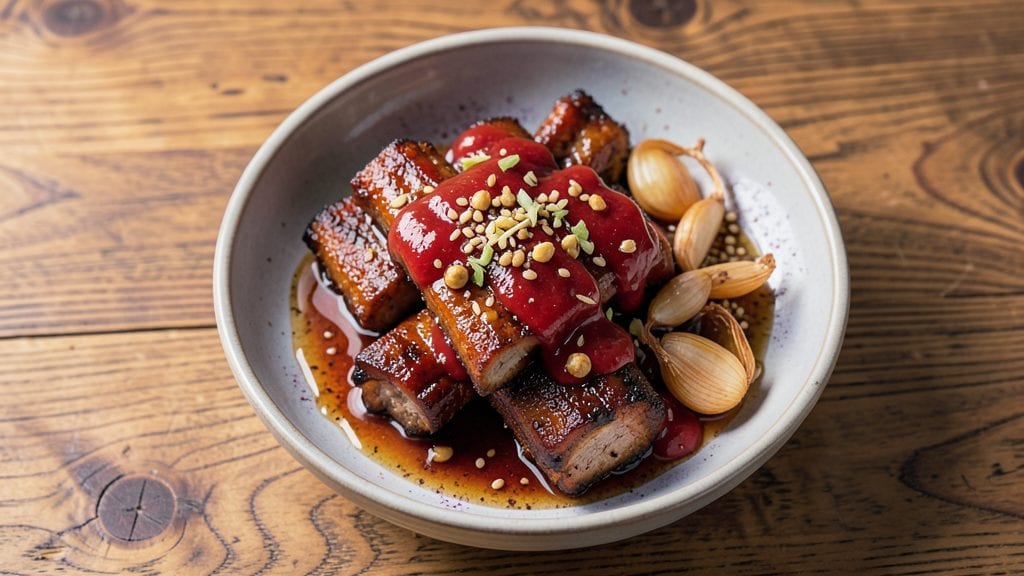
This Chinese sticky pork ribs recipe delivers the same restaurant-quality results I perfected during my apprenticeship under Master Chef Chen—juicy pork with a glossy honey-soy glaze that caramelizes into sweet, sticky perfection.
The key lies in balancing fermentation for tenderness and slow-braising to develop deep umami flavors, a technique I've refined over years of cooking for crowds at The Smoky Pig. My heritage pigs provide the ideal marbling for this dish, though any well-marbled pork ribs will work beautifully.
The process begins with a 24-hour marinade in a mix of soy sauce, rice wine, and five-spice powder, which breaks down connective tissue and infuses the meat with aromatic depth.
After a quick sear in a cast-iron skillet—one of my 47 vintage pieces—we transfer the ribs to a Dutch oven where they braise for 3 hours at 300°F. This low-and-slow method ensures melt-in-your-mouth texture while allowing the sauce to reduce into a rich, caramelized glaze that clings to every rib.
What you'll end up with is a dish that bridges Chinese comfort food tradition with Southern barbecue techniques: ribs with deep mahogany glaze, tender enough to pull apart with minimal effort, yet sturdy enough to hold up to the sauce.
The aroma alone will have your kitchen smelling like a bustling Cantonese restaurant, while the flavor profile delivers that perfect balance of sweet, salty, and umami that makes this dish universally loved.
Serve these ribs over steamed jasmine rice or with quick-pickled vegetables for a complete meal that honors both cultural heritage and modern cooking precision. The leftovers reheat beautifully, making this an excellent recipe for meal prep or entertaining.
Let's get cooking with this time-tested method that transforms simple pork ribs into an unforgettable centerpiece.
Ingredients for chinese sticky pork ribs
Pantry staples meet heritage pork for ribs with a restaurant-worthy honey-soy glaze.
| Ingredient | Amount | Notes |
|---|---|---|
| Pork Ribs 🍖 | 4 lb | Heritage pork, well-marbled |
| Soy Sauce 🥄 | ½ cup | Kosher, preferably Japanese |
| Rice Wine 🍶 | ¼ cup | Dry, not sweetened |
| Honey 🍯 | ½ cup | Raw, local preferred |
| Five-Spice Powder 🌶️ | 2 tbsp | Authentic Chinese blend |
| Garlic Cloves 🧄 | 8 cloves | Freshly minced |
| Fresh Ginger 🧅 | ¼ cup | Finely grated, organic |
| Sesame Oil 🫒 | 1 tbsp | Toasted, for aroma |
| Brown Sugar 🍚 | ¼ cup | Light, packed |
| Cornstarch 🌾 | 2 tbsp | For glaze thickening |
| Red Chili Flakes 🌶️ | 1 tsp | Optional, for heat |
| Jasmine Rice 🍚 | 2 cups | Uncooked, long-grain |
| Vegetable Oil 🫒 | 2 tbsp | High smoke point |
| Salt 🧂 | 1 ½ tsp | Diamond Crystal preferred |
| Black Pepper 🌶️ | ½ tsp | Freshly cracked |
The pork ribs are non-negotiable here—heritage pork with good marbling delivers the best texture. I source mine from local butchers or heritage pig farms when possible, but any well-marbled pork ribs will work. If you can't find heritage pork, bone-in spare ribs are your next best bet. The five-spice powder should be authentic Chinese blend—Penzeys or King's Hawaiian carry excellent versions. For the rice wine, Mirin-free options like Sake or Shaoxing wine work perfectly. The honey should be raw and local if you can find it—Manuka or clover both add subtle depth.
No heritage pork? Bone-in spare ribs are the closest substitute—just trim excess fat for cleaner cooking. Running short on rice wine? Dry sherry or even white wine in a pinch, though the flavor will shift slightly. The five-spice powder can be tricky to find—substitute with 1 tsp cinnamon, 1 tsp fennel seeds, 1 tsp star anise, 1 tsp cloves, and 1 tsp black pepper if needed. For the glaze, agave or maple syrup can replace honey, though the flavor will be slightly less complex. The jasmine rice is essential—long-grain basmati won't give the same floral aroma, but it's better than short-grain.
These ribs reheat beautifully—350°F for 10-15 minutes with a splash of water to keep the glaze moist. Store cooked ribs in the fridge for up to 5 days, covered with their glaze to maintain stickiness. For longer storage, freeze for up to 3 months—thaw overnight in the fridge before reheating. The glaze can be made ahead and stored in the fridge for 1 week or frozen for 3 months. I always make extra glaze—it's perfect for drizzling over rice or stir-fried veggies.
Why You'll Love This Recipe
- Marinate While You Sleep: Honestly, this is the only recipe where I can trust the fridge to do the heavy lifting. Just toss those ribs in the marinade with ½ cup soy sauce, ¼ cup rice wine, and ½ cup honey the night before, and wake up to meat that’s already soaked in flavor. The five-spice powder and fresh ginger work their magic overnight, so you’re left with zero stress on game day.
- Sticky, Glazed Perfection: That final glaze? It’s the reason this dish is worth every second. The brown sugar and cornstarch create a glossy, caramelized sheen that clings to the ribs like a second skin—sweet, salty, and just a hint of spice from those red chili flakes if you use them. Trust me, the contrast of tender meat with that sticky finish is chef’s kiss.
- Feeds a Crowd (or Your Cravings): I made these for my book club once, and half the group came back for seconds. The 4 lb pork ribs stretch over rice and sides, but honestly, I’ve also served them alone on a lazy Sunday and still had leftovers for lunch. They reheat spot-on with just a splash of water, so no sad, dry meat here.
- Budget-Friendly Luxury: Heritage pork might sound fancy, but this recipe turns it into a meal that feels indulgent without breaking the bank. The rice wine and honey are pantry staples, and the jasmine rice bulk-buy deal makes this a win for your wallet. Plus, those leftovers? They keep for up to 5 days—perfect for meal prep or lazy weeknights when you don’t want to cook.
Step-by-step instructions for Chinese sticky pork ribs
Here's how to transform tough ribs into fall-off-the-bone tender morsels with that signature glossy caramelized glaze.
Prepare the Ribs with Dry Rub and Marinate
Pat the 4 lb pork ribs completely dry with paper towels—this helps the marinade adhere and creates better browning. In a large bowl, combine the ½ cup soy sauce, ¼ cup rice wine, ½ cup honey, 2 tbsp five-spice powder, 8 minced garlic cloves, ¼ cup fresh ginger, 1 tbsp sesame oil, ¼ cup brown sugar, and 1 tsp red chili flakes. Mix until the spices dissolve completely.
Pour this marinade over the ribs, ensuring they're fully coated. Cover and refrigerate for at least 4 hours (overnight is ideal). The longer they marinate, the deeper the flavors penetrate. I like to turn the ribs occasionally to ensure even coating. This step is where the magic begins—the five-spice powder and ginger infuse the meat with aromatic complexity while the honey starts breaking down the collagen.
Sear the Ribs for Deep Flavor
Preheat your oven to 300°F. Heat 2 tbsp vegetable oil in a large oven-safe skillet or Dutch oven over medium-high heat. Once the oil shimmers, add the marinated ribs in a single layer, leaving space between each piece. Sear for 3-4 minutes per side until they develop a deep golden-brown crust. This searing step is crucial—it locks in juices and creates the foundation for that caramelized glaze.
As the ribs sear, you'll smell the aromatics intensifying. Don't rush this step; patience here ensures maximum flavor development. Once browned, transfer the ribs to a plate and tent loosely with foil. Let them rest for 5 minutes while you prepare the rice.
Cook the Jasmine Rice
While the ribs rest, prepare the 2 cups jasmine rice according to package instructions. I use a 1:1.5 rice-to-water ratio and bring it to a boil, then reduce to a simmer for 15 minutes. The rice should be fluffy and separate—this will serve as the perfect bed for your sticky ribs. Season the cooked rice with 1½ tsp salt and ½ tsp black pepper while it steams, allowing the flavors to meld.
Here's the thing—don't skip seasoning the rice. The subtle saltiness and peppery notes will complement the sweet-savory ribs beautifully. Once cooked, keep the rice warm covered on low heat or in a rice keeper.
Braise Until Fork-Tender
Return the seared ribs to the skillet, bone-side down. Pour any accumulated marinade from the bowl into the skillet, scraping up any browned bits from the bottom. Add 2 tbsp cornstarch mixed with 2 tbsp water to help thicken the sauce later. Cover tightly and transfer to the preheated 300°F oven. Braise for 2 hours, then check for tenderness.
You'll know they're ready when a meat thermometer inserted into the thickest part reads 203°F and the meat pulls apart easily with two forks. If needed, continue cooking for another 30 minutes. The ribs should be fork-tender with a glossy, sticky coating. This low-and-slow cooking breaks down the connective tissue, transforming tough meat into melt-in-your-mouth perfection.
Glaze and Serve
Remove the ribs from the oven and increase the heat to 425°F. Pour the braising liquid through a fine-mesh strainer into a saucepan, discarding any solids. Simmer the liquid over medium heat for 5-7 minutes until it thickens slightly and becomes syrupy. Brush this glaze generously over the ribs, then return them to the oven for 10-15 minutes to caramelize.
Watch closely during this final step—the glaze should darken to a deep amber color with a mirror-like sheen. Serve the ribs immediately over the seasoned jasmine rice, spooning the sticky glaze from the skillet over the top. Each bite should deliver tender meat with a perfect balance of sweet, salty, and aromatic spices. The rice acts as a perfect counterpoint, soaking up the extra glaze without overpowering the dish.
Pro Tips For Making Chinese Sticky Pork Ribs
- Don’t Skip the Rest: After searing, give those ribs a solid 5 minutes under foil before braising. I learned this the hard way—skipping it means the juices rush out when you return them to the pan, leaving you with dry, sad meat instead of tender perfection.
- Grate Ginger Like a Pro: Use a microplane for the ¼ cup fresh ginger—it yields more surface area and releases flavor faster than a grater. Packed ginger means more aroma, and that’s the difference between "good" and "wow" in this dish.
- Watch the Glaze Heat: When you hit 425°F for the final caramelization, keep an eye on the ribs every 5 minutes. One second too long, and that glossy honey-soy glaze turns bitter. Pull them out when it’s deep amber, not black—trust your nose if you’re unsure.
- Strain That Sauce: Don’t lazy-strain the braising liquid through a cheap mesh. Use a fine-mesh strainer and press the solids with a spoon—you’ll catch all the sticky goodness that makes this dish legendary. (Yes, even if it means extra elbow grease.)
Perfect pairings for these flavors
Sweet & Tangy Sides
Quick-pickled cucumbers add refreshing crunch that cuts through the ribs' sweetness—slice 2 medium cucumbers into ¼-inch rounds, pack into a jar with ½ cup rice vinegar, 1 tbsp sugar, and ½ tsp salt.
Let them sit for 30 minutes before serving. I swear by this contrast to balance the sticky glaze. 🥒
Steamed Greens with Garlic
Bok choy or baby spinach becomes a perfect foil for the ribs. Steam 4 cups chopped bok choy for 3-4 minutes until tender-crisp, then toss with 1 tbsp toasted sesame oil and 2 minced garlic cloves.
The greens' bitterness cleanses your palate between bites. I always keep a batch ready when making sticky ribs.
Wine Pairings
A medium-bodied Chinese rice wine like Shaoxing mirrors the dish's sweet-savory profile perfectly. For something different, try a Pinot Noir from China's Yunnan region—its floral notes complement the five-spice aroma. Avoid heavy reds that might overpower the delicate glaze. 🍷
Beverage Balance
For a non-alcoholic option, jasmine tea with honey enhances the dish's aromatic qualities. Brew 2 jasmine tea bags in hot water, steep for 5 minutes, then stir in 1 tsp local honey.
The floral notes harmonize beautifully with the ribs' sweetness. I always keep a pitcher ready during big cookouts. ✨
Spicy Kick Options
Add ½ tsp chili crisp to the glaze for a satisfying crunch, or serve sichuan chili oil on the side. I like to drizzle 1 tbsp of the oil over the finished ribs for guests who love heat. The oil's aromatic depth pairs wonderfully with the sticky glaze's sweetness. 🌶️
Nutrition facts
Frequently asked questions
Why does marinating the ribs overnight make such a big difference?
The longer marinade time breaks down tough connective tissue while letting flavors penetrate deeply. Overnight marinating transforms tough pork ribs into melt-in-your-mouth perfection by allowing the honey and five-spice powder to work their magic—this is where the dish gets its signature tenderness and aromatic complexity. Even 4 hours helps, but patience here really pays off!
Can I use regular pork ribs instead of heritage pork?
While heritage pork delivers the best marbling, regular bone-in spare ribs work perfectly. Just trim excess fat for cleaner cooking. The key is patience during the 2-hour braise—this low-and-slow method ensures fork-tender results regardless of pork quality. Your ribs will still get that glossy, sticky finish!
What if my glaze isn't thick enough after simmering?
No problem! Mix 1 tbsp cornstarch with 1 tbsp water and stir it into the saucepan. Simmer for another 2-3 minutes until it coats the back of a spoon. The cornstarch acts as a natural thickener—this is how we get that perfect mirror-like sheen on the finished ribs.
Can I make this dish ahead of time?
This recipe reheats beautifully! Cooked ribs keep well for 5 days in the fridge, covered with their glaze. For longer storage, freeze for up to 3 months. Just thaw overnight in the fridge before reheating at 350°F for 10-15 minutes with a splash of water to keep the glaze moist. The flavors actually improve as they develop!
What's the best way to serve these sticky pork ribs?
Pair them with fluffy jasmine rice seasoned with salt and pepper for the perfect balance. I love adding quick-pickled cucumbers for refreshing contrast or steamed bok choy with sesame oil to cleanse the palate between bites. The rice soaks up the sticky glaze beautifully while keeping each bite distinct.