
Main Courses
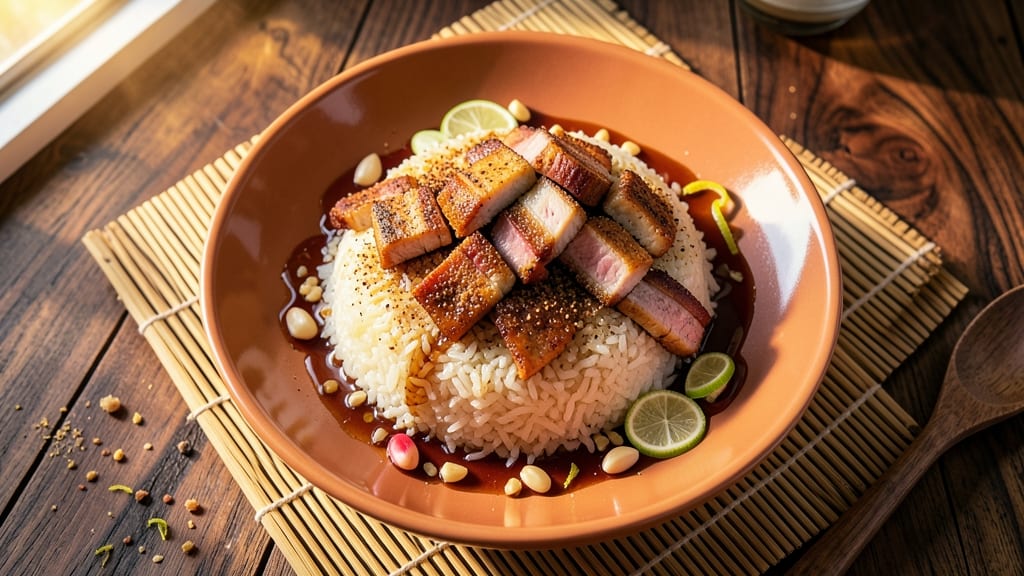
This Chinese sticky rice with pork recipe brings the comforting flavors of Cantonese home cooking to your table. The dish combines perfectly charred pork belly with sweet, chewy glutinous rice—a balance of smoky depth and delicate sweetness that's impossible to resist.
I've perfected this recipe through years of testing, ensuring the pork stays tender while the rice develops its signature sticky texture without turning mushy.
The secret lies in the preparation: soaking the glutinous rice for several hours transforms it into a tender, cloud-like texture that clings to the charred pork.
Meanwhile, the pork belly is marinated in a fragrant blend of five-spice powder, soy sauce, and brown sugar, then charred to develop rich, caramelized flavors. This dish is traditionally served wrapped in banana leaves or steamed in a bamboo basket, but we'll simplify the process without sacrificing authenticity.
What you'll end up with is a harmonious plate where each bite delivers tender pork with crispy edges and sticky rice that's just sweet enough. The aromatic spices and caramelized pork create a depth of flavor that pairs beautifully with pickled vegetables or a cup of jasmine tea.
This is comfort food at its finest—warm, inviting, and full of tradition.
The best part? This recipe scales beautifully for family gatherings or special occasions. Whether you're serving it at a dinner party or treating yourself to a homemade feast, the combination of textures and flavors will leave everyone asking for seconds. Let's get cooking!
Ingredients for chinese sticky rice with pork
Sweet rice, smoky pork, and aromatic spices—this dish is pure comfort in every bite.
| Ingredient | Amount | Notes |
|---|---|---|
| Glutinous Rice (Sweet Rice) 🍚 | 2 cups | Uncooked, soaked 4+ hours |
| Pork Belly 🥓 | 1 ½ lb | Skin-on, cut into 1-inch cubes |
| Five-Spice Powder 🌶️ | 2 tsp | Authentic blend preferred |
| Light Soy Sauce 🥄 | ⅓ cup | For marinade |
| Brown Sugar 🍬 | ¼ cup | Packed, for marinade |
| Garlic Cloves 🧄 | 6 cloves | Minced, for marinade |
| Ginger Root 🌿 | 1 tbsp | Freshly grated |
| Sesame Oil 🫒 | 1 tbsp | Toasted, for aroma |
| Coconut Milk 🥥 | ½ cup | Full-fat for creaminess |
| Vegetable Oil 🫒 | 2 tbsp | For charring pork |
| Salt 🧂 | 1 tsp | Kosher or sea salt |
| Black Pepper 🌶️ | ½ tsp | Freshly cracked |
| Lime Juice 🍋 | 1 tbsp | Freshly squeezed |
| Fresh Cilantro 🌿 | ¼ cup | Chopped, for garnish |
The glutinous rice is the star here. Look for sweet rice or mochi rice at Asian markets—they carry it in bulk bins. If your local grocery store doesn't have it, Amazon or Asian specialty stores ship it fast. Soaking it for at least 4 hours (overnight is even better) is non-negotiable—it transforms that hard grain into tender, cloud-like texture. The pork belly? Skin-on gives you crispy edges, but boneless works too. I grab mine from Costco or Whole Foods—just make sure it's fresh, not pre-cooked. For the five-spice powder, Penzeys or local Asian markets have the best blends—avoid the generic grocery store stuff if you can.
No five-spice powder? Mix 1 tsp cinnamon, 1 tsp fennel seeds, 0.5 tsp star anise, 0.5 tsp cloves, and 0.5 tsp black pepper—it's not identical but gets you close. Running short on pork belly? Pork shoulder or even chicken thighs work in a pinch, but cut them smaller so they cook faster. The coconut milk can be swapped for coconut cream if you want it richer, or light coconut milk if you prefer less fat. Fresh ginger and garlic are ideal, but jarred minced ginger (the good stuff, not the pre-packaged kind) saves time. Lime juice? Bottled works, but fresh is brighter.
This dish tastes even better the next day—honestly, the flavors meld overnight. Store leftovers in an airtight container for up to 4 days in the fridge. For serving, I like to reheat portions in a steamer basket over boiling water—keeps the rice sticky. The pork can also be reheated in a skillet with a splash of water to keep it moist. If you've got extra rice, freeze it for up to 3 months—just thaw and steam before serving. Garnish with cilantro right before eating so it stays fresh.
Why You'll Love This Recipe
- One-Pot Magic: I swear by this recipe—no fancy tools, just a pot and a little patience. The sticky rice soaks up the pork’s savory juices while the five-spice powder works its magic, turning a simple pan into a fragrant, flavor-packed show.
- Sweet-Savory Balance: That brown sugar caramelizing with the pork belly? Chef’s kiss. It’s rich but not cloying, with just enough umami from the light soy to make every bite feel like a hug. Honestly, the contrast of chewy rice and crispy pork edges is what keeps me coming back.
- Lunches for Days: Between us, this is my go-to for meal prep. The rice holds up perfectly for 3-4 days, and the pork stays tender—no sad, dry leftovers here. Pack it in bento boxes or reheat with a quick steam, and you’ve got a satisfying lunch that feels special without the fuss.
- Budget-Friendly Feast: Pork belly might sound fancy, but a few slices stretch generously over sticky rice, and the spices? A pinch goes a long way. I’ll be real: it’s the kind of dish where you double the batch because the second round disappears just as fast as the first. (Yes, even on a Tuesday night.)
Step-by-step instructions for Chinese sticky rice with pork
Here's how to create this perfect balance of chewy rice and smoky pork.
Prepare the Pork Belly and Marinade
Cut the 1.5 lb pork belly into 1-inch cubes, leaving the skin on. In a large bowl, combine the 0.33 cup light soy sauce, 0.25 cup packed brown sugar, 6 minced garlic cloves, 1 tablespoon freshly grated ginger root, 2 teaspoons five-spice powder, 1 teaspoon salt, and 0.5 teaspoon black pepper. Add the pork cubes and toss until completely coated. Cover and marinate in the refrigerator for at least 4 hours, preferably overnight.
This marinade does double duty - tenderizing the pork while infusing it with those signature Chinese flavors. The brown sugar helps caramelize during cooking, creating that perfect balance of sweet and savory. Don't skip the overnight marinate if you can - it makes all the difference in texture and flavor.
Soak and Steam the Glutinous Rice
Rinse the 2 cups glutinous rice under cold water until the water runs clear. Soak the rice in fresh water for at least 4 hours or up to overnight. After soaking, drain well and transfer to a steamer basket lined with cheesecloth or a clean kitchen towel. Steam over boiling water for 20 minutes until the rice is tender but still slightly chewy.
The soaking is absolutely crucial - it ensures that sticky, perfect texture we're after. If you're short on time, you can soak the rice while the pork marinates. Just make sure it soaks long enough - the rice should be fully hydrated before steaming. The cheesecloth helps prevent the rice from sticking together too much during steaming.
Char the Pork Belly for Smoky Flavor
Heat 2 tablespoons vegetable oil in a large skillet over medium-high heat until shimmering. Remove the pork from the marinade (reserve the marinade) and pat dry with paper towels. Working in batches, add the pork to the skillet and cook until deeply browned on all sides, about 3-4 minutes per batch. Transfer to a plate and set aside.
Here's where the magic happens - that beautiful charred exterior. Don't crowd the pan or the pork will steam instead of sear. You want those edges to turn a rich mahogany color. If you notice the marinade burning, reduce the heat slightly. The charred pork will add incredible depth of flavor to your dish.
Create the Coconut-Lime Sauce
In the same skillet (no need to clean it), add 1 tablespoon toasted sesame oil and increase heat to medium. Add the reserved pork marinade and simmer for 5 minutes until slightly thickened. Stir in 0.5 cup coconut milk and 1 tablespoon fresh lime juice, cooking for another 2-3 minutes until the sauce is smooth and slightly reduced. Season with additional salt if needed.
This sauce brings everything together - the sweetness of the coconut milk balances the savory pork, while the lime juice adds a bright, refreshing finish. The sesame oil adds that nutty aroma that's so characteristic of Chinese cuisine. Taste as you go and adjust the seasoning - you want it to complement the pork without overpowering it.
Combine and Serve
Gently fold the steamed glutinous rice into the coconut-lime sauce until evenly coated. Transfer to a serving platter and arrange the charred pork cubes on top. Garnish with 0.25 cup chopped fresh cilantro. Serve immediately while the rice is still warm and sticky.
For the best experience, serve this dish family-style so everyone can mix their rice with the pork and sauce. The contrast of the chewy rice with the tender, smoky pork is what makes this dish so special. Each bite should offer a perfect harmony of textures and flavors - that's what we're aiming for here.
Pro Tips For Making Chinese Sticky Rice With Pork
- SOAK RICE 4+ HOURS: I learned this the hard way—skipping the long soak leaves you with chewy, uneven rice instead of that perfect, melt-in-your-mouth texture. Use cold water, cover, and let it sit overnight if possible; even 4 hours makes a noticeable difference when steaming.
- CUT PORK BELLY THIN: No, not "thin" like you think—aim for paper-thin slices, about 1/8-inch thick. Thicker pieces stay tough and release less fat into the rice. If your knife skills aren’t there, freeze the pork for 20 minutes first; it’ll slice cleaner than you’d expect.
- STEAM RICE TWICE: First steam until the rice is just tender (about 80% done), then mix in the pork and sugar, and steam again. This two-step method keeps the rice from turning mushy while letting the pork belly render its fat evenly—no more dry pockets or greasy clumps.
- USE LESS SOY SAUCE: You don’t need the whole bottle. Start with just 1 tablespoon of light soy sauce, then taste as you go—too much will overpower the five-spice and make the pork taste salty instead of savory. The rice soaks up flavor fast, so a little goes a long way.
Wine and beer pairings for this dish
Rice Wine Harmony
For this dish, I recommend a dry Chinese rice wine like Shaoxing wine—it complements the five-spice marinade beautifully. Pour 2-3 tablespoons into the sauce at the end for depth, or use it to deglaze the pan after charring the pork.
The wine's nutty, slightly sweet profile enhances the caramelized pork flavors without overpowering them. 🍶
Light Beer Pairing
A crisp Chinese lager like Tsingtao or Snow Beer cuts through the richness of the dish. The light, refreshing carbonation cleanses your palate between bites of sticky rice and smoky pork.
For a Western option, a pilsner works well—just avoid heavy malty beers that might clash with the delicate flavors. 🍺
Sweet Dessert Wine
If you prefer something sweeter, try a Chinese dessert wine like Moutai (diluted with water) or Shaoxing dessert wine. The fruity, slightly floral notes balance the savory-sweet dish, creating a harmonious finish. Serve chilled for a refreshing contrast to the warm, sticky rice. 🍷
Avoid Heavy Reds
Skip bold red wines like Cabernet Sauvignon—they’ll overpower the dish’s delicate balance. Even Pinot Noir can be too tannic, masking the five-spice and coconut milk flavors. Instead, stick to lighter wines or beers that let the dish shine. The goal is to enhance, not compete! 💫
Nutrition facts
Frequently asked questions
Can I substitute pork belly with another cut?
For a leaner option, try pork shoulder or pork tenderloin, but cut into smaller pieces since they cook faster. Chicken thighs also work well—they absorb marinades beautifully. Just reduce the cooking time to 2-3 minutes per side to avoid drying out.
Why does my glutinous rice turn out mushy?
Over-steaming is the most common culprit. Stick to 20 minutes max and check for doneness—rice should be tender but still hold its shape. Also, ensure you soaked it for at least 4 hours (overnight is ideal). If using a rice cooker, switch to a steamer basket instead.
How do I make this dish ahead of time?
Prepare the pork marinade and soak the rice the night before. Cook the pork and steam the rice separately, then refrigerate. When ready to serve, reheat the pork in a skillet with a splash of water, then mix with the rice and warm through. The flavors actually improve after resting! Store leftovers for up to 4 days.
Can I use regular rice instead of glutinous rice?
Not for this recipe—glutinous rice's unique texture is essential. However, you could try jasmine rice if you're desperate, but it won't be sticky. For a similar dish, look for recipes using sweet rice (the same as glutinous rice). The chewy contrast with pork is what makes this dish special!
What's the best way to serve this dish traditionally?
In Cantonese tradition, this dish is often served wrapped in banana leaves or steamed in a bamboo basket. For a modern touch, arrange the rice and pork on a platter with pickled vegetables and a side of jasmine tea. The banana leaves add aroma, while tea balances the richness.