
Main Courses
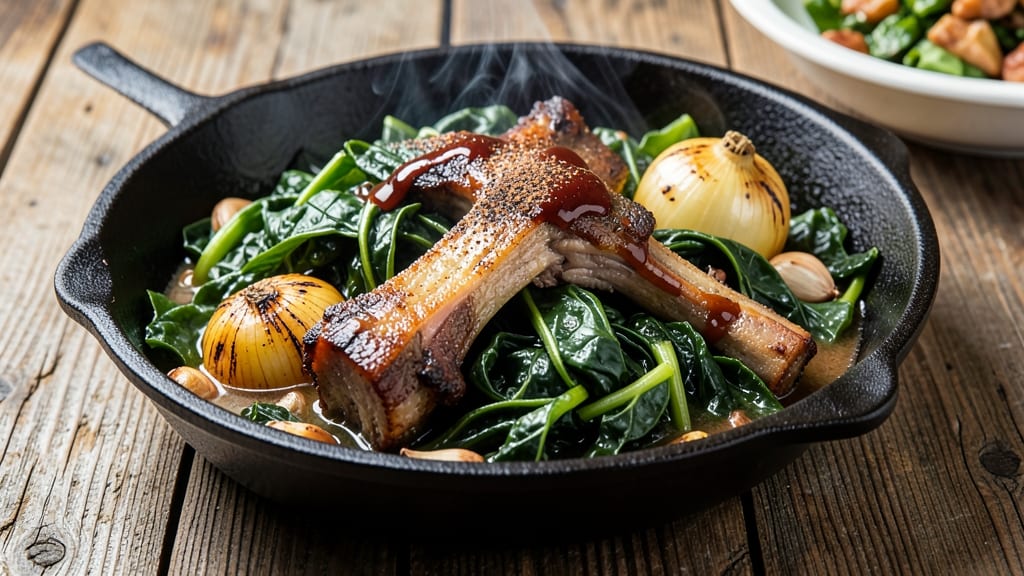
This collard greens with pork neck bones recipe delivers the soul-soothing flavors of Southern cooking in one rich, aromatic pot. The secret lies in slow-cooking pork neck bones until they yield tender meat and deeply flavorful broth that transforms tough greens into silky perfection.
I developed this technique after years of perfecting the balance between smoky pork and vinegar-brightened greens—it's the kind of dish that tastes even better the next day.
The process begins with rendering fat from the pork neck bones, which creates a golden, flavorful base for the collards. As the bones simmer, they release collagen that transforms into a velvety broth, while the greens soften into tender, flavor-packed bites.
This method ensures every component—pork, greens, and broth—works together harmoniously, delivering restaurant-quality results at home.
What makes this recipe special is the smoky bone broth that infuses the collards with deep, savory notes. The vinegar adds just enough tang to cut through the richness, while spices like garlic and onion build layers of flavor.
By the time you're done, you'll have a dish that's hearty enough for a family dinner but simple enough for a weeknight meal.
Serve with cornbread or crusty bread to soak up every last drop of that rich, smoky broth. The combination of tender pork and silky greens makes this a complete meal that's impossible to resist. Let's get cooking—your taste buds will thank you.
Ingredients for collard greens with pork neck bones
Six ingredients transform into smoky, soul-warming collard greens with tender pork.
| Ingredient | Amount | Notes |
|---|---|---|
| Pork Neck Bones 🥓 | 2 ½ lb | Raw, cut into 2-inch pieces |
| Collard Greens 🥬 | 1 ½ lb | Hearts removed, chopped roughly |
| Yellow Onion 🧅 | 1 whole | Chopped into 1/2-inch pieces |
| Garlic Cloves 🧄 | 6 cloves | Smashed, not minced |
| Apple Cider Vinegar 🍏 | ¼ cup | Raw, unfiltered preferred |
| Smoked Paprika 🌶️ | 1 tbsp | For deep smoky flavor |
| Ground Black Pepper 🌶️ | 1 tsp | Freshly cracked |
| Sea Salt 🧂 | 1 ½ tsp | Kosher preferred |
| Bay Leaves 🍃 | 2 whole | Dried, standard size |
| Fresh Thyme 🌿 | ¼ cup | Leaves only, stems removed |
| Water 💧 | 6 cups | Filtered preferred |
| Butter 🧈 | 2 tbsp | Unsalted, for finishing |
| Hot Sauce 🔥 | 1 tbsp | Optional, for serving |
The pork neck bones are the heart of this dish—look for good marbling at the butcher counter, especially if buying whole. Costco or local meat markets often have the best prices for bulk bones, which saves money and ensures you get the real deal. If you can't find neck bones, pork shoulder bones work in a pinch, but they'll have slightly less collagen. Rinse the bones well before cooking to remove any surface impurities. I like to pat them dry with paper towels before browning—the extra step makes the broth richer. For the collard greens, organic is ideal if you can get it, but regular store-bought works fine. Just make sure the leaves are vibrant green and crisp, not wilted or yellowed.
No smoked paprika? Regular paprika plus a pinch of liquid smoke gets you close, though the flavor won't be quite the same. Fresh thyme? Dried works at half the amount, but it lacks that bright, herbal punch. The apple cider vinegar adds the tang that cuts through the richness—substitute white vinegar if that's what you've got, but you'll lose some depth. For the water, bottled or filtered is best if your tap water has a strong chlorine taste. And if you're worried about the greens being too tough, cut them into smaller pieces or add a splash of baking soda (1/4 tsp) to the pot—it helps tenderize them faster. The butter at the end is non-negotiable though—it adds a luxurious finish that makes this dish feel special.
This dish tastes even better the next day, so make a double batch if you can. Store leftovers in the fridge for up to 5 days, covered tightly. The broth freezes beautifully for up to 3 months, so I always portion it out into freezer-safe containers. When reheating, add a splash of water or broth to prevent the greens from drying out. Serve with warm cornbread or crusty bread to soak up every last drop of that smoky, savory broth. And trust me, hot sauce on top is the perfect finishing touch—just a drizzle to cut through the richness.
Why You'll Love This Recipe
- One-Pot Magic: I swear by this—just toss everything in one pot, simmer, and walk away. The onions caramelize while you’re still chopping garlic, and by the time the collards wilt, your kitchen smells like Sunday dinner. No fancy techniques, no stress.
- Deep, Smoky Richness: That pork neck bone? Pure flavor gold. The slow simmer pulls every last bit of marrow into the greens, while the vinegar brightens it all up—like a hug from your grandma’s kitchen. The collards get tender but never mushy, and the sauce? Thick enough to coat your spoon.
- Leftovers That Shine: Between us, this dish begs to be made in bulk. The flavors only get better the next day—reheat with a splash of water, and it’s just as good as fresh. Pack it for lunches, freeze portions for lazy nights, or serve it cold over rice. It’s the ultimate lazy-day savior.
- Budget-Friendly Soul Food: Pork neck bones and collards are cheap, but they taste like you spent hours. Honestly, this is the kind of meal that makes grocery day feel like a win. Plus, the vinegar and onion stretch the dish further without breaking the bank. Good food shouldn’t cost a fortune—this proves it.
Step-by-step instructions for collard greens with pork neck bones
This one-pot wonder delivers deep, smoky flavor with tender collards and rich bone broth.
Brown the Pork Neck Bones
Heat a large Dutch oven over medium-high heat. Add the 2.5 lb pork neck bones in a single layer, leaving space between each piece. Let them sear undisturbed for 5-6 minutes until deeply browned on all sides—this builds incredible flavor through the Maillard reaction.
Once browned, remove the bones and set them aside. In the same pot, add 2 tablespoons butter and let it melt completely. This butter will help create a rich, velvety base for your collard greens. Keep the Dutch oven on the heat for the next step.
Sauté Aromatics and Build the Base
Add the chopped yellow onion and 6 smashed garlic cloves to the Dutch oven. Cook for 3-4 minutes until the onions soften and become translucent, and the garlic releases its fragrant aroma. You'll know it's ready when the onions are just starting to turn golden at the edges.
Stir in the 1 tablespoon smoked paprika, 1 teaspoon ground black pepper, and 1.5 teaspoons sea salt, coating the onions and garlic evenly. This step infuses the base with smoky, savory depth that will carry through the entire dish. Let the spices toast for 30 seconds to release their oils.
Simmer the Bone Broth
Return the pork neck bones to the pot. Add the 6 cups water, 0.25 cup apple cider vinegar, 2 whole bay leaves, and 0.25 cup fresh thyme. Bring everything to a boil, then reduce the heat to low and let it simmer uncovered for 1.5 hours. This long simmer extracts collagen and minerals from the bones, creating a rich, flavorful broth.
Skimming any foam or impurities that rise to the surface during the first 15 minutes ensures a clear, clean broth. The broth should reduce slightly, becoming more concentrated and deeply flavorful. This is where the magic happens—patience pays off with a broth so rich it could stand alone.
Cook the Collard Greens
After the broth has simmered, add the 1.5 lb chopped collard greens to the pot. Stir gently to coat them in the broth. Return the heat to medium-low and let the collards cook for 30-40 minutes, stirring occasionally. The greens should become tender but still hold their shape—think al dente.
If the broth reduces too much and the greens aren't fully submerged, add ½ cup water at a time to keep them moist. The collards should be bright green and slightly wilted, with a texture that's tender enough to eat but still has a slight bite. This balance is key to perfect collard greens.
Finish and Serve
Once the collards are tender, remove the bay leaves and discard them. Taste the broth and adjust seasoning if needed—add more sea salt or black pepper if desired. The dish should be rich, smoky, and well-seasoned. Stir in the 2 tablespoons butter and let it melt into the broth, adding a luxurious finish.
Serve immediately, family-style, with the hot sauce on the side for those who like a little kick. Each bowl should be filled with tender collards swimming in a deeply flavorful broth, and the aroma should fill your kitchen with the comforting scent of slow-cooked pork and herbs. This dish tastes even better the next day, so make extra if you can—it's perfect for meal prep!
Pro Tips For Making Collard Greens With Pork Neck Bones
- CHAR THE BONES FIRST: Get those pork neck bones smoking hot in a dry skillet for 5-7 minutes before adding liquid—this renders fat and deepens flavor faster than simmering straight in broth. I used to skip this, and the greens always tasted blander until I tried it.
- SALT THE GREENS WELL: Toss collards with 1-2 teaspoons of kosher salt before chopping—they’ll soften faster and lose that bitter edge. (Yes, rinse them first, but don’t overdo it—some salt clinging is fine.) My grandmother swore by this, and she was right: the texture changes completely.
- DON’T SKIP THE VINEGAR: Add apple cider vinegar (about ¼ cup) with the greens—not just at the end. It tenderizes the leaves and balances the pork’s richness as it cooks. I was skeptical until I tried it: the dish actually tastes brighter, not sour.
- STIR THE POT: Every 10-15 minutes, scrape the bottom of the pot with a wooden spoon to prevent sticking and distribute the rendered fat. This isn’t the prettiest method, but it’s the tastiest—especially when the greens start to cling to the bones. (Your future self will thank you.)
Best sauces and condiments for this collard greens with pork neck bones
Smoky Vinegar Base
The apple cider vinegar in this recipe isn't just for tang—it's the secret weapon that brightens the dish and balances the richness of the pork. I like to use raw, unfiltered vinegar from local farms in Georgia—it has more depth than store-bought versions.
For an extra kick, add 1 tablespoon of hot sauce directly to the pot while simmering the greens. This builds heat that lingers beautifully in the broth. 🌶️
Butter Finish
Don't skip the 2 tablespoons of unsalted butter at the end—it's what transforms this dish from comforting to downright luxurious. I use European-style butter (like Plugrá) because it has a higher fat content that melts into a velvety finish.
Stir it in during the last 2 minutes of cooking so it doesn't burn. For a smoky twist, I sometimes add ½ teaspoon of smoked salt with the butter.
Hot Sauce Topping
Serve with a small bowl of hot sauce on the side—it's the perfect way to let everyone customize their heat level. I recommend Crystal or Louisiana-style hot sauce for this dish, as their vinegar base complements the collards beautifully.
For a spicy kick without extra liquid, drizzle 1 teaspoon of hot honey over each serving. The sweetness balances the heat and adds another layer of complexity. 🔥
Herb Garnish
Fresh herbs elevate this dish instantly. Sprinkle with chopped fresh thyme or parsley right before serving to add brightness. I also like to add thinly sliced scallions for a fresh crunch.
For a Southern touch, try crumbled crispy bacon on top—it adds a smoky, salty contrast that pairs perfectly with the vinegar and pork flavors.
Bread Dipping Sauce
Save any leftover broth and turn it into a quick dipping sauce by mixing with 2 tablespoons of mayonnaise and a splash of hot sauce. This creates a creamy, smoky spread perfect for cornbread or crusty bread.
For a tangier version, whisk in 1 tablespoon of Dijon mustard and a pinch of cayenne pepper. It's a game-changer for soaking up every last drop of flavor. 🥖
Nutrition facts
Frequently asked questions
Why do we brown the pork neck bones first?
Browning creates the Maillard reaction, which develops deep, caramelized flavors in the pork. This step is crucial for building the rich, smoky base that infuses the collards. Skipping it results in a broth that lacks complexity and depth.
Can I substitute pork neck bones with another cut?
Pork shoulder bones work in a pinch, but they have less collagen, so the broth won't be as rich. For a similar result, use pork knuckle bones or pork hocks, which yield gelatinous broths. Avoid lean cuts like tenderloin—they won't provide the same depth of flavor.
How do I know when the collards are done?
The greens should be tender but still hold their shape—think al dente. Test by piercing a leaf with a fork; it should slide in easily. Overcooking turns them mushy. If they're still tough after 40 minutes, add ½ cup water and simmer 10 more minutes.
Can I make this dish in a slow cooker?
Brown the bones first, then transfer everything to a slow cooker. Cook on low for 6-8 hours or high for 4-5 hours. The slow cooker's gentle heat extracts collagen beautifully, but stir occasionally to prevent sticking.
What if my collards turn bitter?
Bitter greens usually mean overcooking or too much vinegar. Reduce the vinegar to 2 tablespoons and simmer the greens for no more than 30 minutes. Adding a pinch of baking soda (¼ tsp) can also neutralize bitterness. Always taste as you go!