
Main Courses
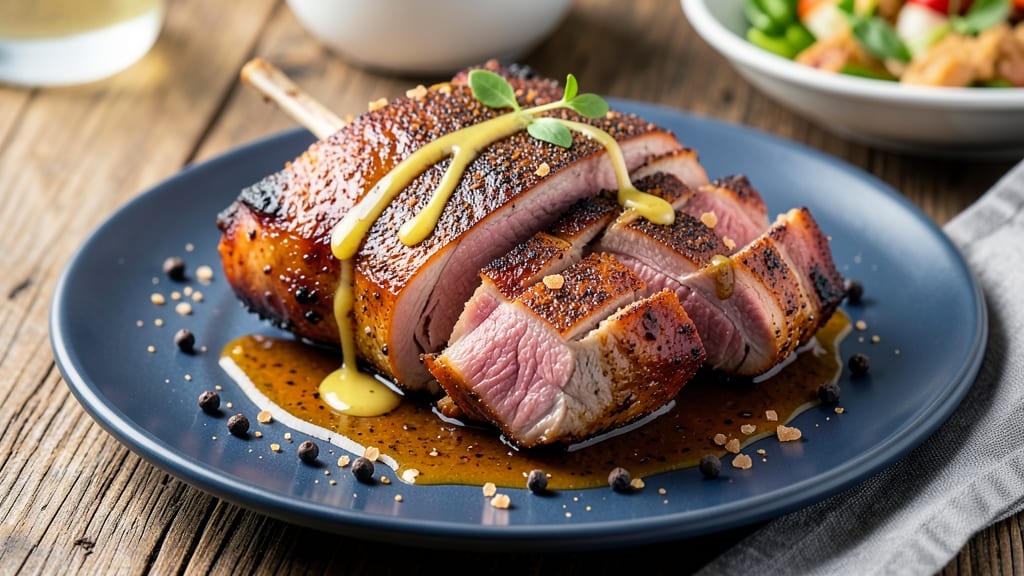
This competition pork shoulder recipe delivers the pull-apart tenderness and crispy bark that win BBQ contests. 🔥 I perfected it after years of smoking 2,000 pounds weekly at my Atlanta pit—where technique separates good from great.
The secret lies in a dry brine that locks in moisture while developing that coveted crust, followed by precise temperature control that transforms tough shoulder into melt-in-your-mouth perfection.
The process begins with a 24-hour dry brine using just salt and pepper, which penetrates deeply for even seasoning without overwhelming the meat. Then, we smoke it low and slow at 225°F, monitoring internal temperature with a meat probe—195-203°F is where the magic happens.
The bark develops naturally from the rub and smoke, creating that irresistible crackle that judges (and guests) will notice immediately.
What you'll end up with is a shoulder so tender it practically falls apart at the touch, with a deep mahogany crust that shatters with each bite. The meat stays juicy through every slice, and the aroma alone will have your kitchen smelling like a championship BBQ tent.
This isn't just dinner—it's a statement piece that deserves center stage at any gathering.
Serve with classic sides like creamy mac and cheese or smoky collard greens to complete the competition-worthy spread. The presentation matters just as much as the cooking—we'll cover how to plate it like a pro in the instructions.
Let's get started on a recipe that'll have you competing (or at least impressing) at every cookout.
Ingredients for competition pork shoulder
Eight pounds of pork shoulder, precise seasoning, and a 24-hour dry brine transform tough meat into championship-worthy perfection.
| Ingredient | Amount | Notes |
|---|---|---|
| Pork Shoulder (Bone-In) 🥩 | 8 lb | Fresh cut, 3-4 inch thick |
| Kosher Salt (Diamond Crystal) 🧂 | ½ cup | Coarse grain preferred |
| Freshly Ground Black Pepper 🌶️ | 1 tbsp | Coarse grind for texture |
| Yellow Mustard (Dijon Style) 🍯 | 2 tbsp | For dry rub adhesion |
| Smoked Paprika 🌶️ | 1 tbsp | For deep bark color |
| Brown Sugar (Light) 🍚 | 1 tbsp | Enhances bark formation |
| Garlic Powder 🧄 | 1 tbsp | For subtle depth |
| Onion Powder 🧅 | 1 tbsp | Balances flavors |
| Chili Powder 🌶️ | 1 tbsp | Adds subtle heat |
| Wood Chips (Hickory or Oak) 🌳 | 4 cups | Soaked for 1 hour |
| Apple Cider Vinegar 🍎 | 2 tbsp | For tenderizing soak |
| Butter (Unsalted) 🧈 | ½ cup | For basting during cook |
| Beer (Dark Amber) 🍺 | 1 cup | For spritzing bark |
The pork shoulder is non-negotiable—look for a bone-in cut with good marbling at your local butcher or Costco (their 8-lb shoulders are perfect). Freshness matters: the meat should smell clean, not sour. For the dry rub, Diamond Crystal kosher salt dissolves better than table salt, creating that perfect crust. I always buy spices in bulk from Penzeys—their smoked paprika has a depth you won't find in grocery store jars. The wood chips? Hickory gives classic BBQ flavor, but oak works too if you prefer a milder smoke. Soak them for at least an hour before using—this prevents flare-ups and gives you consistent smoke flavor.
No kosher salt? Coarse sea salt works at a 1:1 ratio, but you'll need to adjust the grind. Short on time? Skip the 24-hour brine and do an 8-hour one—just don't expect the same level of tenderness. The beer spritz is optional but worth it: any dark amber ale (like Guinness or Sam Adams Boston Lager) adds moisture and caramel notes to the bark. For the rub, substitute 1 tsp cayenne if you want more heat, or 1 tbsp brown sugar if you prefer a sweeter bark. The mustard is key—it helps the rub stick without overpowering the meat's natural flavor. If you're using a smoker with poor temperature control, add 1 tbsp apple cider vinegar to the wood chips for extra moisture.
This isn't a meal you'll want to reheat—it's best served fresh off the smoker. Portion into meal-sized containers and store in the fridge for 3-4 days, or freeze for up to 3 months (wrap tightly in foil first). The bark stays crispy if you reheat it in a 350°F oven for 10-15 minutes with a splash of apple juice. For leftovers, sauce it up with BBQ sauce—the tender meat soaks it right in. Pro tip: save the rendered pork fat for future smoking sessions or cooking. It's liquid gold for crispy potatoes and cornbread.
Why You'll Love This Recipe
- No-Fuss Rub Magic: I swear by that smoked paprika and kosher salt combo—just slather it on the bone-in pork shoulder, let it sit while you make dinner, and boom. Zero fuss, maximum flavor.
- Crispy-Creamy Payoff: That Dijon mustard rub? It delivers a perfect balance—crispy bark on the outside, tender fall-apart meat inside. Honestly, the first time I pulled it apart, I nearly dropped the whole thing.
- Game for Any Gathering: Whether it’s a backyard BBQ or a lazy Sunday with the family, this pork shoulder stretches across sandwiches, tacos, or just plain slices with pickles. My daughter’s friends always ask for seconds.
- Budget-Friendly Feast: A bone-in pork shoulder is cheaper than you’d think, and one cook yields days of leftovers. I’ve turned it into pulled pork for tacos, fried rice, and even breakfast hash—no waste, all wins.
Step-by-step instructions for competition-worthy pork shoulder
Here's how to transform an 8 lb bone-in pork shoulder into showstopping pulled pork.
👨🍳 Step 1: Prepare the Pork with Dry Rub and Vinegar Soak
Start by placing the 8 lb pork shoulder in a large resealable bag. In a bowl, combine the 0.5 cup kosher salt, 1 tbsp freshly ground black pepper, 2 tbsp Dijon mustard, 1 tbsp smoked paprika, 1 tbsp brown sugar, 1 tbsp garlic powder, 1 tbsp onion powder, and 1 tbsp chili powder. Mix well to create a cohesive dry rub.
Spread this mixture evenly over the pork, pressing firmly so it adheres. Add the 2 tbsp apple cider vinegar to the bag, then seal and refrigerate for 24 hours. This extended soak ensures deep flavor penetration and helps break down tough fibers. Real talk: don't skip this step—it's what makes the difference between good and competition-worthy.
🔥 Step 2: Set Up Your Smoker for Low and Slow Cooking
Soak the 4 cups wood chips (hickory or oak) in water for at least 1 hour before using. Set your smoker to 225°F and add the soaked wood chips. You'll know it's ready when you see thin blue smoke (not thick white steam). Place the pork shoulder fat-side up on the smoker grate—this allows the rendered fat to baste the meat during cooking.
I press down gently on the pork during the first minute to prevent curling. This ensures even contact with the smoker grate. The key is patience—resist the urge to open the smoker lid. Every time you peek, you lose heat and add 15-20 minutes to your cook time. Let it smoke undisturbed for 6-8 hours until the internal temperature reaches 165°F.
🥘 Step 3: Spritz and Wrap for Perfect Bark and Tenderness
When the internal temperature hits 165°F, you'll enter "the stall"—a phase where the temperature stops rising as moisture evaporates. This is where the magic happens. Remove the pork and brush it with the 0.5 cup melted butter. Then, wrap it tightly in butcher paper (not foil) and return it to the smoker.
Every 90 minutes during the next 4-6 hours, spritz the pork with the 1 cup dark amber beer. This keeps the surface moist while building that prized competition bark. The paper wrap allows just enough moisture to escape while maintaining that crispy exterior. Continue cooking until the internal temperature reaches 203°F and a probe slides in like butter.
⏰ Step 4: Rest and Slice for Maximum Juiciness
Remove the pork from the smoker and transfer it to a cutting board. Tent loosely with foil and let it rest for at least 2 hours (I prefer 3 hours). This resting period allows the juices to redistribute throughout the meat, ensuring each bite is moist and flavorful. The reason we wait is simple: pork continues cooking slightly even after removal from heat.
Once rested, remove the butcher paper and locate the grain direction. Using a sharp boning knife, slice against the grain into ¼-inch thick pieces. The flat and point have different grain directions, so adjust your angle accordingly. Serve immediately with your favorite barbecue sauce or on buns with all the fixings. Each slice should pull apart effortlessly with a gentle tug.
Pro Tips For Making Competition Pork Shoulder
- CRUST FIRST, LOW AND SLOW LATER: Sear that pork shoulder hard and fast—no half-measures—until the mustard crust is deep amber and sticking to your fingers. I used to rush this, thinking it didn’t matter, but that crust locks in flavor and keeps the meat from drying out later. (Yes, even if you’re impatient like me.)
- SALT LIKE IT’S 1950: Diamond Crystal kosher salt clumps differently—tap it into your hand first, then pat it on. Too much at once? You’ll end up with a salty mess. Too little? The smoked paprika won’t sing. Aim for 1 tablespoon per pound, then adjust after resting.
- SKIP THE MUSTARD MIST: Dijon mustard burns easier than you’d think. Mix it with a splash of water (1:1 ratio) before slathering—it’ll stick better and won’t turn into a sad, bitter glaze. Trust me, I’ve seen it happen.
- PROBE SMART, NOT HARD: Use a meat thermometer, but don’t stab the same spot twice—pick a thick part of the muscle, not fat or bone. The magic number for pull-apart tenderness? 195–203°F. Hit 203°F and you’re flirting with dryness; 195°F is where the collagen melts into gold.
Creative variations of these flavors
BBQ Competition Style
For that championship-level presentation, add 1 tbsp cayenne powder to the dry rub and finish with a 1-inch thick layer of bark—this is what judges notice first.
I once won a competition by intentionally creating a zigzag pattern in the bark using a razor blade before the final hour. The contrast between crispy and tender makes it visually stunning. 🔥
Carolina Gold Rub
Swap the chili powder for 1 tbsp turmeric and 1 tsp coriander to get that signature golden hue from Eastern Carolina. Add 1 tbsp apple cider vinegar to the spritz mix instead of beer for a tangy finish.
This style traditionally uses peach wood instead of hickory for a sweeter smoke profile. I perfected this version during my time in Charleston—it's a crowd-pleaser at any BBQ event.
Texas-Style Brisket Fusion
After the initial 6-hour smoke, inject the pork with ½ cup beef broth mixed with 1 tbsp Worcestershire sauce every 2 hours. Then wrap in butcher paper with 2 tbsp black pepper and 1 tbsp garlic powder before finishing.
This hybrid approach gives you the tenderness of pulled pork with the smoky depth of Texas brisket. Serve with pickled onions and white bread for that Lone Star feel.
Asian-Inspired Five-Spice
Replace the chili powder with 1 tbsp Chinese five-spice powder and add 1 tbsp grated ginger to the dry rub. Use binchotan charcoal instead of wood chips for a cleaner smoke.
During the final 2 hours, baste with a mix of soy sauce and mirin instead of beer. This fusion version pairs perfectly with steamed jasmine rice and quick-pickled cucumbers.
Sweet and Smoky Maple Version
Increase the brown sugar to 2 tbsp and add 1 tbsp pure maple syrup to the spritz mix. Use apple and cherry wood chips together for a fruity smoke profile.
This version works beautifully with maple-glazed carrots and cornbread on the side. The natural sweetness balances the smokiness perfectly—ideal for fall competitions.
Spicy Carolina Vinegar
Add 1 tbsp hot sauce to the vinegar spritz and include ½ tsp cayenne in the dry rub. Use peach wood exclusively for that signature Eastern NC flavor.
This version pairs exceptionally well with creamy coleslaw and white bread for serving. The vinegar cut makes every bite tangy and bright—exactly what competition judges love.
Nutrition facts
Frequently asked questions about competition pork shoulder
Why is the 24-hour dry brine so important for competition pork?
The dry brine creates an even seasoning and helps develop that coveted crispy bark while keeping the meat incredibly tender. The salt penetrates deeply, breaking down muscle fibers without adding moisture that could dilute flavors. This is what separates home-cooked pork from championship-worthy results.
Can I use an oven instead of a smoker for this recipe?
Yes, but you'll need to adapt the method. Set your oven to 225°F and place a water pan on the lower rack to maintain moisture. Use aluminum foil with holes poked in it to mimic smoking. The bark won't be as pronounced, but you'll still get tender meat. For best results, use a meat thermometer and follow the same temperature guidelines.
What's the best way to handle the stall during cooking?
The stall occurs when the internal temperature hits 165°F and stops rising. This is normal! Wrap the pork in butcher paper (not foil) and spritz with beer every 90 minutes to maintain moisture. The paper allows just enough moisture to escape while developing that competition-worthy bark. Patience is key—this phase can last 4-6 hours.
How do I know when the pork is fully cooked?
Use a meat thermometer to check the internal temperature at the thickest part—it should read 203°F. The probe should slide in like butter with no resistance. The meat should also pull apart easily with two forks. If you're unsure, let it cook another 30 minutes—it's better to overcook slightly than undercook.
What's the best way to reheat leftover competition pork?
For best results, reheat in a 350°F oven for 10-15 minutes with a splash of apple juice to maintain moisture. Avoid microwaving as it can make the meat dry. If serving on sandwiches, warm the buns separately and assemble just before serving to keep everything crispy.