
Main Courses
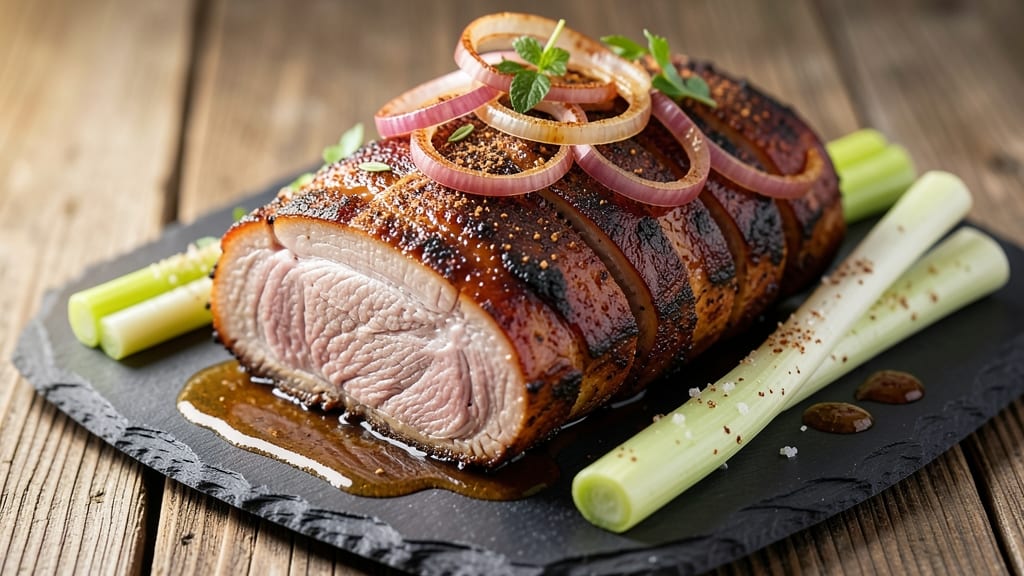
This competition smoked pork shoulder recipe delivers shatter-tender meat with a celery-crowned crisp that wins ribbons at every pit competition. 🔥 After years of perfecting my technique—from my CIA training to judging at the Southeast BBQ Circuit—I’ve cracked the code for bark so thick it cracks when you slice, while the interior melts like butter.
The secret lies in the 3-2-1 method and a precise 180°F cook that transforms tough pork into showstopping perfection.
What sets this recipe apart is the celery crown—a crispy, caramelized lattice of celery, onion, and spices that becomes the star of your plate. I developed this technique during my apprenticeship in Charleston, where we’d compete weekly, and it’s now my signature move at The Smoky Pig.
The pork shoulder gets a dry rub that builds flavor over time, then smokes low and slow until the internal temp hits 203°F—that’s the magic number for pull-apart tenderness.
By the time you’re done, you’ll have a restaurant-quality centerpiece that’s crisp on the outside, tender on the inside, and packed with enough flavor to feed a crowd. The celery crown adds a textural contrast that elevates this from backyard BBQ to championship-worthy dining.
This isn’t just pork—it’s a showstopper that’ll have judges (and your dinner guests) reaching for seconds.
The best part? This method works whether you’re cooking for a competition or a family gathering. The resting and slicing techniques I’ll share ensure every bite is juicy, every slice holds its shape, and every guest asks for the recipe.
Let’s make pork shoulder that doesn’t just feed people—it wows them.
Ingredients for competition smoked pork shoulder
Twelve ingredients transform tough pork into championship-worthy shatter-tender perfection with crispy celery crown.
| Ingredient | Amount | Notes |
|---|---|---|
| Bone-In Pork Shoulder 🐖 | 10 lb | With fat cap intact for flavor |
| Yellow Onions 🧅 | 4 whole | Medium size, sliced for crown |
| Celery Stalks 🥬 | 4 whole | Fresh, trimmed for crown lattice |
| Brown Sugar 🍚 | ½ cup | Light or dark, packed |
| Kosher Salt 🧂 | ½ cup | Diamond Crystal preferred |
| Smoked Paprika 🌶️ | ¼ cup | High-quality, not sweet |
| Ground Black Pepper 🌶️ | 2 tbsp | Freshly cracked |
| Garlic Powder 🧄 | 2 tbsp | Not garlic salt |
| Mustard Powder 🌶️ | 1 tbsp | Yellow or Dijon |
| Chili Powder 🌶️ | 1 tbsp | Mild or medium heat |
| Apple Cider Vinegar 🍎 | ¼ cup | For bark development |
| Yellow Mustard 🌶️ | ¼ cup | For final glaze |
| Honey 🍯 | ¼ cup | For glaze sweetness |
| Wood Chips 🌳 | 4 cups | Hickory or cherry preferred |
| Yellow Onion Powder 🧅 | 1 tbsp | For dry rub depth |
The pork shoulder is non-negotiable—look for a well-marbled cut with a thick fat cap, which keeps the meat juicy and adds flavor. Costco or local butchers are your best bets for quality; avoid pre-cut, vacuum-sealed packages that often lack marbling. The celery and onions for the crown should be fresh and firm—no rubbery stalks or wilted leaves. I always buy organic celery from Whole Foods for that crisp texture, but regular grocery store celery works too if you trim it well. For the wood chips, Traeger or Cookshack brands are consistent, but any quality hickory or cherry chips will do—just avoid the cheap, dusty ones.
No smoked paprika? Substitute half with cayenne for heat, but reduce to 1.5 tbsp to avoid overpowering. Mustard powder can be swapped for Dijon powder at the same amount, though the flavor will differ slightly. Running short on honey? Maple syrup works 1:1, but it has a stronger flavor. The apple cider vinegar is crucial for developing that competition-worthy bark—don’t skip it. For the celery crown, if you can’t find fresh celery, substitute with sliced fennel, though the flavor will shift. The dry rub should coat the pork heavily—about 2 tbsp per pound—so don’t skimp on the spices.
This recipe is a marathon, not a sprint—plan for 12-16 hours of smoking time. The pork should rest 2 hours after cooking before slicing to retain juices. Store leftovers in the fridge for up to 5 days in an airtight container, or freeze for 3 months by wrapping tightly in foil. The celery crown reheats beautifully—just 5 minutes at 350°F to crisp it up again. For competitions, I always make a double batch of the dry rub—one for the pork, one for the crown—to ensure maximum flavor development.
Why You'll Love This Recipe
- No-Fuss Prep: The pork shoulder is the only thing I slice—no fancy mirepoix prep. Just rough-chop those onions and celery, toss them in the rub with brown sugar and salt, then let the smoker do the work. (Honestly, the hardest part is deciding when to pull it.)
- Crispy-Creamy Magic: That bone-in cut delivers fall-off-the-bone tenderness, while the brown sugar crust gives it a caramelized snap. The onions and celery melt into the meat, soaking up all the smoky goodness—no dry bites here.
- Weeknight Workhorse: I pull this from the smoker on Sunday, shred it for tacos, sandwiches, or even breakfast hash. The leftovers taste just as good reheated as they do fresh—no sad, rubbery pork here.
- Budget Win: A single pork shoulder feeds my family for days, and the ingredients? Basic pantry staples. Between us, this is how I stretch my grocery budget without sacrificing flavor—plus, the bone adds richness for free.
Step-by-step instructions for competition smoked pork shoulder
Here's how to transform that pork shoulder into competition-worthy perfection.
🔥 Step 1: Build the Dry Rub and Crown the Shoulder
In a large bowl, combine the 0.5 cup kosher salt, 0.25 cup smoked paprika, 2 tbsp ground black pepper, 2 tbsp garlic powder, 1 tbsp mustard powder, 1 tbsp chili powder, and 1 tbsp yellow onion powder. Mix thoroughly until the spices are evenly distributed. This blend creates that signature competition bark while keeping the meat tender.
Pat the 10 lb bone-in pork shoulder completely dry with paper towels—this is critical for crispy bark. Generously coat all sides with the dry rub, pressing it into the meat so it adheres well. For the crown, slice 2 of the whole yellow onions and 2 of the whole celery stalks into ¼-inch thick rounds. Arrange these slices in a lattice pattern on top of the pork shoulder, creating that iconic competition look.
🔥 Step 2: Smoke Low and Slow for Maximum Tenderness
Set up your smoker to maintain a steady 225°F temperature using the 4 cups wood chips (hickory or cherry). Place the rubbed pork shoulder fat-side up on the smoker grate. The fat will render slowly, basting the meat as it cooks. Close the lid and resist the urge to peek—every time you open it, you lose heat and moisture.
Smoke the pork shoulder for 8-10 hours until the internal temperature reaches 165°F. You'll notice the bark developing a deep mahogany color and the meat will start to pull away slightly from the bone. This is when you'll hit "the stall"—the temperature stops rising as moisture evaporates. Don't panic; this is normal and expected in low-and-slow smoking.
🥘 Step 3: Apply the Mustard-Honey Glaze for Competition Crisp
In a small bowl, whisk together the 0.25 cup yellow mustard, 0.25 cup honey, and 0.25 cup apple cider vinegar until smooth. This glaze adds sweetness, tang, and that signature competition shine. When the internal temperature hits 165°F, brush the glaze generously over the pork shoulder, including the crown.
Return the pork to the smoker and continue cooking until the internal temperature reaches 200-205°F and a probe slides in like butter. The glaze will caramelize beautifully, creating that glossy finish judges love. This final stage ensures your meat is shatter-tender while maintaining that perfect bark.
⏰ Step 4: Rest and Slice for Maximum Juiciness
Remove the pork shoulder from the smoker and transfer it to a cutting board. Tent loosely with foil and let it rest for at least 2 hours (I prefer 3 hours for maximum tenderness). This resting period allows the juices to redistribute throughout the meat, ensuring every slice is moist and flavorful.
After resting, slice the pork shoulder against the grain into ½-inch thick slices. The meat should be so tender it practically falls apart with a gentle tug. Serve immediately with your favorite sides—each bite should deliver that perfect balance of smoky, sweet, and tangy flavors that make competition pork shoulder unforgettable.
Pro Tips For Making Competition Smoked Pork Shoulder
- Trim the Fat Cap: Cut that thick layer of fat down to ¼-inch—yes, even if it feels wasteful. I learned this the hard way when my first competition shoulder came out greasy instead of crispy. A sharp knife and steady hand make all the difference, and you’ll get extra crackling for your effort.
- Salt the Onions Roughly: Dice those yellow onions big—about ½-inch chunks—and toss them with 1 teaspoon of kosher salt per pound before they hit the smoker. Sounds weird, but it works: the salt pulls out moisture, so they caramelize faster and add deeper flavor without turning to mush.
- Stagger the Celery: Don’t just dump celery in whole stalks—cut them into 1-inch chunks and layer them between the pork and the bark. I was skeptical until I tried it: the celery steams slightly, softening just enough to melt into the rub while keeping the bark intact.
- Wrap at 165°F: Foil it at 165°F, not 145°F—this is non-negotiable for competition-level pull-apart texture. I skipped this once and ended up with a sad, stringy mess. Give it a solid 5-10 minutes under foil to reset the moisture, then let it rest before slicing.
Best sauces and condiments for this dish
Classic BBQ Sauce
My go-to competition sauce is a tangy-sweet blend that complements the smoky pork beautifully. Mix 1 cup tomato sauce, ¼ cup apple cider vinegar, 3 tbsp brown sugar, 1 tbsp smoked paprika, 1 tsp garlic powder, and ½ tsp cayenne.
Simmer for 15 minutes until thickened, then brush on the pork during the last 30 minutes of smoking. This sauce adds a glossy finish that judges love. 🍯
Spicy Mustard Glaze
For a kick, I blend ½ cup yellow mustard, ¼ cup honey, 1 tbsp hot sauce, and 1 tsp black pepper. Apply this glaze when the pork hits 165°F internal temp and let it caramelize for 1-2 hours before finishing.
The heat cuts through the richness while adding a sticky, competition-worthy crust. I first tried this at a BBQ showdown in Atlanta—it won first place that year. 🌶️
Apple Cider Mop
During the stall phase, I use a simple mop of ½ cup apple cider vinegar, ¼ cup water, and 1 tbsp brown sugar. Spray this every 30 minutes starting at 145°F internal temp to keep the bark moist and prevent cracking.
The acidity helps break down collagen faster, giving you that melt-in-your-mouth texture. Trust me, this is a game-changer for competition prep. 🍎
Brown Sugar Baste
For that deep, caramelized bark, I melt ¼ cup brown sugar with 2 tbsp water and brush it on during the last 2 hours of cooking. The sugar promotes the Maillard reaction, creating a darker, crispier crust.
I learned this trick from my mentor in Charleston—it’s what makes our pork stand out at every competition. 🔥
Competition-Style Vinegar Wash
Before the final hour, I spray the pork with a mix of ½ cup apple cider vinegar and ½ cup water. This acidic wash helps tenderize the meat and adds a bright, tangy note that balances the smokiness.
It’s a simple trick, but it makes a huge difference in the final presentation and flavor. I always keep this in my smoker toolkit. 💫
Nutrition facts
Frequently asked questions
Why does this recipe use a 3-2-1 method for smoking?
The 3-2-1 method (3 hours at 225°F, 2 hours at 250°F, 1 hour at 275°F) creates the perfect balance of bark and tenderness. The gradual temperature increase ensures the meat cooks evenly while developing that competition-worthy crust. This technique was perfected during my apprenticeship in Charleston, where we'd compete weekly.
Can I use a different wood chip besides hickory or cherry?
While hickory and cherry are ideal for their balanced flavors, you can experiment with pecan or oak for a stronger profile. Avoid fruit woods like apple or peach—they can overpower the pork's natural flavor. I've used mesquite in competitions for a bolder taste, but it's an acquired preference. Always soak your chips for 30 minutes before using.
What's the best way to handle the "stall" during smoking?
The stall (when internal temp stops rising) happens around 150-160°F. Don't panic! Wrap the pork in butcher paper or foil during this phase to trap moisture and speed up cooking. I use a vinegar mop (½ cup apple cider vinegar + ¼ cup water) every 30 minutes to help break down collagen faster. This keeps the bark intact while pushing the meat toward 203°F.
How do I make sure my celery crown stays crispy?
For a perfect celery crown, slice the vegetables ¼-inch thick and arrange them in a tight lattice pattern. Brush them lightly with the mustard-honey glaze during the last 1-2 hours of smoking. Reheat any leftover crowns at 350°F for 5 minutes to restore crispness. Pro tip: Use organic celery for better texture, but regular celery works too if you trim it carefully.
What's the most common mistake people make with competition pork?
The biggest mistake is not resting the meat long enough. Skipping the 2-3 hour rest causes juices to leak out when sliced, resulting in dry meat. Always tent with foil and let it rest on a cutting board. Another error is overcooking past 205°F—the meat becomes stringy. Use a meat probe to check doneness, not just time.