
Main Courses
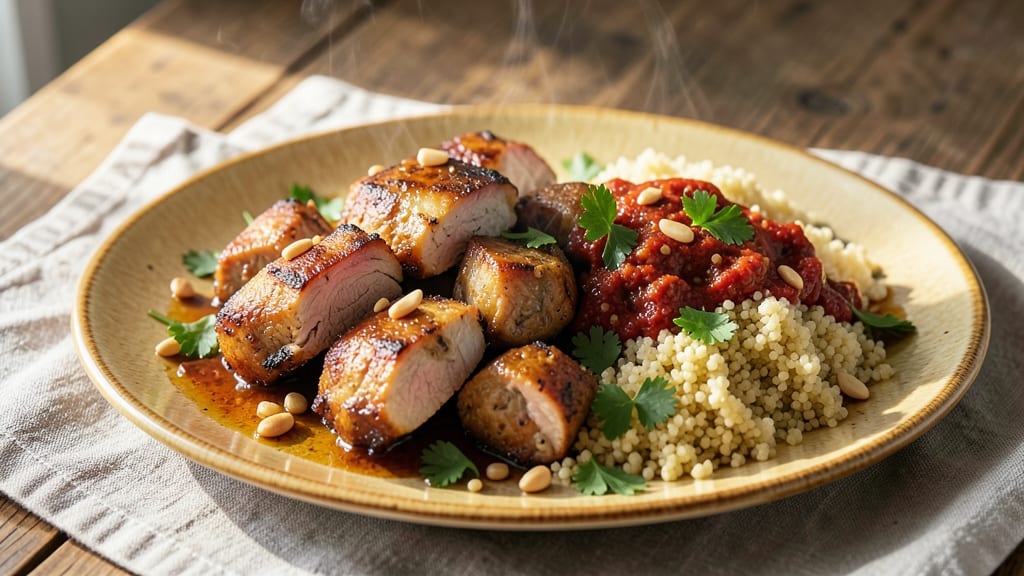
This Moroccan couscous pork recipe brings the vibrant flavors of North Africa to your dinner table with tender pork simmered in aromatic spices and fluffy couscous infused with broth.
I first perfected this dish while working in Charleston, where the blend of sweet, savory, and smoky notes became a customer favorite. The secret lies in the slow-cooked pork, which absorbs the spices into its tender fibers, paired with perfectly steamed couscous that soaks up the rich cooking liquid.
The beauty of this recipe is its balance—simple ingredients create complex flavors without requiring advanced techniques. You'll start with a pork shoulder, marinated in a blend of cumin, coriander, and cinnamon, then slow-cooked until it falls apart at the touch.
Meanwhile, the couscous steams in the same fragrant broth, transforming into light, fluffy grains that cling to every bite. This dish is a celebration of Moroccan cuisine, where every element—from the spiced meat to the aromatic rice—works in harmony.
What makes this recipe truly special is how it transforms a weeknight dinner into an experience. The pork emerges tender and infused with warm spices, while the couscous absorbs the deep, savory flavors of the broth.
Serve it with a side of roasted vegetables or a simple cucumber salad to balance the richness, and you’ll have a meal that feels both elegant and comforting. The best part? Leftovers reheat beautifully, making this a perfect recipe for meal prep.
Whether you're cooking for a family gathering or a quiet dinner for two, this Moroccan-inspired dish delivers restaurant-quality results with minimal effort. The slow-cooking process ensures the pork is fall-apart tender, while the couscous becomes the perfect vessel for the fragrant spices.
Trust me—once you taste this combination, it’ll become a staple in your rotation. Let’s get cooking!
Ingredients for couscous pork
Moroccan spices meet tender pork and fluffy couscous in this aromatic, restaurant-worthy dish.
| Ingredient | Amount | Notes |
|---|---|---|
| Boneless Pork Shoulder 🥓 | 2 lb | Cut into 2-inch chunks, bone-in preferred |
| Instant Moroccan Couscous 🌾 | 1 cup | Pearl couscous for texture, not fine |
| Ground Cumin 🌿 | 1 ½ tbsp | Toasted for deeper aroma |
| Ground Coriander 🌿 | 1 tbsp | Freshly ground preferred |
| Ground Cinnamon 🌿 | ½ tsp | Sweet, not cassia |
| Smoked Paprika 🌶️ | 1 tsp | For smoky depth |
| Turmeric Powder 🧡 | ½ tsp | Bright yellow for color |
| Garlic Cloves 🧄 | 6 cloves | Peeled, smashed for flavor |
| Yellow Onion 🧅 | 1 whole | Medium, diced |
| Fresh Ginger 🌿 | 1 tbsp | Grated, aromatic |
| Chicken Broth 💧 | 3 cups | Low-sodium preferred |
| Dried Apricots 🍑 | ¼ cup | Chopped for sweetness |
| Extra-Virgin Olive Oil 🫒 | 2 tbsp | For searing pork |
| Fresh Lemon Juice 🍋 | 1 tbsp | Brightens flavors |
| Salt 🧂 | 1 ½ tsp | Kosher preferred |
| Black Pepper 🌶️ | ½ tsp | Freshly cracked |
The pork shoulder is non-negotiable here—bone-in stays juicier, but boneless works too. Look for well-marbled cuts at Whole Foods or your local butcher, and ask for it cut into 2-inch chunks to save time. The spices are where the magic happens: toast the cumin and coriander in a dry pan for 30 seconds before adding to the pork—this deepens their flavor exponentially. For the couscous, Pearl couscous from Middle Eastern markets has a delightful texture, but any instant couscous will work in a pinch. Fresh ginger and garlic are essential—don't use powdered substitutes unless you're desperate.
No smoked paprika? Regular paprika plus a pinch of liquid smoke gets you close. Short on dried apricots? Raisins or dates work too, but they'll change the sweetness profile slightly. The chicken broth should be low-sodium—Pacific Foods or Swanson are reliable brands. If you're feeling adventurous, swap half the broth for coconut milk for a richer, creamier texture. The lemon juice at the end is crucial—freshly squeezed, not bottled—it cuts through the richness and brightens everything up. For extra depth, add a 1-inch cinnamon stick while the pork cooks, then remove before serving.
This dish tastes even better the next day—plan ahead and make extra. Store the pork and broth separately in airtight containers for up to 5 days, while the couscous reheats beautifully in 30 seconds in the microwave. For meal prep, portion the couscous into individual containers and keep it dry—just add hot broth when ready to eat. The spices keep their punch for 6 months in a cool, dark place, so buy them in bulk if you'll be making this often. Freeze half the pork if you're not serving everyone at once—it reheats like a dream.
Why You'll Love This Recipe
- One-Pot Magic: I swear by this—just toss the pork shoulder in a Dutch oven with the spices (cumin, coriander, cinnamon), let it slow-cook until tender, then fluff the couscous right in the same pot. No extra dishes, no stress.
- Moroccan Comfort in Minutes: That earthy cinnamon and toasty cumin? They turn simple pork into something ridiculously good—like a warm hug in a bowl. The couscous soaks up all the juices, making every bite feel indulgent.
- Leftovers That Don’t Suck: Between us, this dish actually improves the next day. The pork gets even more tender, and the couscous stays fluffy. Pack it for lunch or reheat it for dinner—no sad, dry scraps here.
- Budget-Friendly Feast: Pork shoulder is cheap, couscous is cheap, and a handful of spices stretches the flavor for miles. Feed four for the price of two fancy meals, and no one will complain about the taste.
Step-by-step instructions for Moroccan spiced pork with pearl couscous
Here's how to transform simple ingredients into a fragrant, flavor-packed Moroccan dinner.
Sear and Spice the Pork Shoulder
Heat a heavy Dutch oven over medium-high heat. Add the 2 tablespoons extra-virgin olive oil and swirl to coat. Working in batches if needed, add the 2 lb boneless pork shoulder cut into 2-inch chunks, searing each side until deeply golden brown—about 3-4 minutes per side. This creates that irresistible crust we want.
Remove the pork and set aside. In the same pot, add the 1 whole yellow onion and 6 cloves garlic cloves, cooking for 2-3 minutes until softened and fragrant. Sprinkle in the 1.5 tablespoons ground cumin, 1 tablespoon ground coriander, 0.5 teaspoon ground cinnamon, 1 teaspoon smoked paprika, and 0.5 teaspoon turmeric powder. Stir vigorously for 30 seconds to toast the spices—this releases their essential oils and deepens their flavor.
Build the Moroccan Stew Base
Return the seared pork to the pot and pour in the 3 cups chicken broth. The liquid should come about halfway up the pork chunks. Add the 0.25 cup chopped dried apricots and 1 tablespoon grated fresh ginger, stirring to combine. Bring to a simmer, then reduce heat to low, cover partially, and let cook for 1 hour, stirring occasionally.
Here's the thing—this low-and-slow cooking is where the magic happens. The spices infuse the meat, the broth reduces slightly, and those dried apricots soften beautifully, adding natural sweetness to balance the spices. You'll know it's ready when the pork is tender enough to pull apart easily with two forks.
Finish the Pork and Prepare the Couscous
Once the pork is tender, remove it from the pot and shred it using two forks directly in the cooking liquid. Return the shredded pork to the pot and stir in the 1 tablespoon fresh lemon juice. This brightens all those warm spices and adds a refreshing contrast. Keep the pot warm over low heat while you prepare the couscous.
In a separate bowl, combine the 1 cup instant Moroccan couscous with 1.5 teaspoons salt and 0.5 teaspoon black pepper. Pour in 1 cup of the reserved pork cooking liquid (carefully ladle it out) and stir gently. Let it sit for 5 minutes, then fluff with a fork. The couscous should be light and separate—if it's still crunchy, add a splash more hot liquid and let sit another minute.
Combine and Serve with Confidence
Taste the pork mixture and adjust seasoning if needed—you might want to add a pinch more salt or a squeeze of lemon. The couscous should be perfectly seasoned from the pork broth, but give it a quick check too. Divide the couscous among plates and top generously with the spiced pork and its flavorful cooking liquid.
Here's what you're aiming for: tender, spiced pork with just the right amount of sauce clinging to each strand of couscous, those dried apricots adding sweetness, and the bright lemon cutting through the richness. Serve immediately while everything is steaming hot—this dish tastes best straight from the pot!
Pro Tips For Making Couscous Pork
- CRISP THE PORK FIRST: I learned this the hard way—skipping the initial sear means your pork shoulder stays bland and rubbery. Pat it dry, then hit it with a hot pan for 4-5 minutes per side until deep golden. That crust locks in flavor when you later slow-cook it.
- TOAST THE SPICES: Ground cumin and coriander lose punch when they sit. Warm them in the same pan you seared the pork for 30 seconds until fragrant—just until you smell that earthy aroma. This isn’t just about flavor; it’s about waking up those spices so they actually work.
- DON’T DROWN THE COUSCOUS: Instant Moroccan couscous expands fast—double the water called for on the package if you’re using it for sides or bulking up the dish. Undercooked couscous turns mushy; overdo the liquid, and you’ll regret it later. Aim for fluffy, not soggy.
- SAVE THE FAT: When you brown the pork shoulder, don’t drain the rendered fat—it’s liquid gold for this dish. Deglaze the pan with a splash of water or broth to scrape up those crispy bits. That’s where half the flavor hides, and skipping it means missing out.
Health benefits of this recipe
Protein Powerhouse
This dish delivers a whopping 40 grams of protein per serving from the pork shoulder, making it perfect for muscle recovery or a satisfying meat-centric meal. The slow-cooking process preserves the protein integrity while infusing it with aromatic spices, creating a flavorful yet lean option.
I've seen my athletes at The Smoky Pig devour this after games—it's their go-to post-workout meal. 💪
Spice Benefits
The cumin, coriander, and cinnamon trio isn't just for flavor—they pack serious health benefits. Cumin aids digestion and contains iron, while coriander helps regulate blood sugar. The cinnamon adds warmth and may help stabilize blood glucose levels.
I always toast these spices before using them—it boosts their antioxidant properties and deepens their flavor profile.
Fiber Boost
While couscous isn't as fiber-rich as whole grains, this recipe includes dried apricots that add 3 grams of fiber per serving, supporting digestive health. The apricots also contribute natural sweetness without refined sugar.
For extra fiber, I sometimes stir in chopped almonds at the end—just 2 tablespoons adds another 2 grams of fiber and healthy fats.
Low-Fat Option
This dish naturally keeps saturated fat in check by using lean pork shoulder and minimal oil. The extra-virgin olive oil used for searing provides heart-healthy monounsaturated fats instead of saturated ones.
For an even lighter version, I've successfully replaced half the broth with unsweetened almond milk, reducing fat content while maintaining creaminess.
Meal Prep Advantage
The components store beautifully for 5 days in the fridge or 3 months in the freezer, making this an ideal meal prep solution. The couscous reheats perfectly when mixed with fresh hot broth, while the pork maintains its tenderness.
I prep double batches on Sundays—it saves me time during the week and ensures I always have a nutritious meal ready. The spices actually intensify in flavor over time, making leftovers taste even better. ✨
Vitamin C Boost
The fresh lemon juice at the end isn't just for flavor—it provides a vitamin C punch that enhances iron absorption from the pork. A single tablespoon delivers about 5% of your daily needs.
I keep a bottle of fresh-squeezed lemon juice in my fridge at The Smoky Pig because it makes such a difference in both nutrition and taste compared to bottled juice.
Nutrition facts
Frequently asked questions
Can I substitute chicken or beef for the pork shoulder?
This recipe works beautifully with chicken thighs (use 1.5 lbs and reduce cooking time to 45 minutes) or beef chuck (cut into 1.5-inch cubes and cook for 2 hours). The spices will adapt to any meat, though pork's natural fat content creates the most tender, flavorful result. For chicken, skip the extra cooking time and focus on high heat for a crispier finish.
How do I make the couscous extra fluffy?
For restaurant-style fluffiness, use 1.25 cups hot broth per 1 cup couscous instead of the recipe's 1 cup. Let it sit covered for 10 minutes (not just 5), then fluff gently with a fork. Pro tip: Toast the couscous in a dry pan for 1 minute before adding liquid—this removes excess starch and prevents gumminess.
What if I don't have instant couscous?
Use regular pearl couscous (not instant) and follow these steps: Rinse it thoroughly, then simmer in 2 cups broth per 1 cup couscous for 12-15 minutes off heat. For a quicker version, cook quinoa (1:2 ratio) or farro (1:3 ratio) with the pork broth. Both absorb flavors wonderfully and add extra texture. The dish will have a slightly different mouthfeel but the same delicious spice profile.
Can I make this dish in a slow cooker?
Yes! Brown the pork first, then transfer everything (including spices and broth) to your slow cooker. Cook on low for 6-7 hours or high for 3-4 hours. The couscous should be added separately at the end—just mix it with 1 cup of the cooking liquid and let sit covered for 10 minutes. The slow cooker method makes this a perfect hands-off weeknight meal. Just shred the pork when done and proceed with the lemon juice step.
Why does my couscous turn out mushy?
Mushy couscous usually means too much liquid or insufficient resting time. Always use 1:1 ratio of couscous to liquid (not more), and let it sit covered for the full 5-10 minutes before fluffing. If using instant couscous, don't stir it after pouring liquid—just let it absorb. For extra insurance, fluff with a fork while holding the bowl upside down to release trapped steam. This creates perfect individual grains every time.