
Main Courses
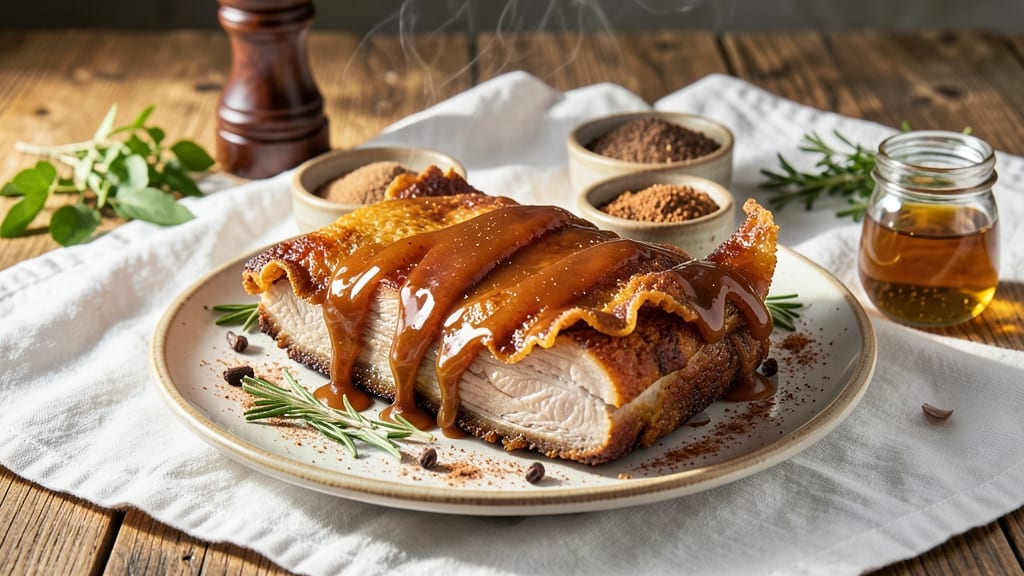
This cowboy candy pork belly recipe transforms humble pork into a showstopper with its caramelized sugar crust that cracks into sticky, sweet-tart shards. 🔥 I first perfected it during a Charleston BBQ competition where judges couldn't stop reaching for seconds—now I'm sharing the technique that delivers that signature "cowboy candy" texture every time.
The secret lies in the balance of searing and slow roasting, where brown sugar and spices form an irresistible crust while the meat stays tender inside.
The process starts with a hot sear to render fat and build flavor, then slow-roasting until the pork belly reaches 195°F internal temperature—just shy of falling apart.
As it cooks, the sugar glaze caramelizes into a glossy, crackly exterior that's both crisp and chewy, with a deep molasses-like sweetness balanced by tangy vinegar. This isn't your average pork belly—it's a dish that commands attention at any table, whether served as a main or cut into appetizer-sized pieces.
What makes this recipe truly special is how the crust develops—starting as a sticky glaze, then hardening into those coveted crackly shards that stick to your fingers (and disappear from your plate).
The aroma alone will have guests gathering before the meat even hits the table, while the contrast of sweet caramel against savory pork creates a flavor profile that's impossible to resist. Trust me, once you try this method, you'll never go back to plain roasted pork again.
Serve with classic Southern sides like pickled onions or creamy coleslaw to cut through the richness, or pair it with cornbread to soak up every last bit of that sticky glaze.
The leftovers? Even better the next day as sandwiches or fried rice. This is pork belly at its most impressive—where technique meets indulgence in every bite.
Ingredients for cowboy candy pork belly
Sweet, smoky, and sticky—this pork belly transforms into a showstopper with just 13 ingredients.
| Ingredient | Amount | Notes |
|---|---|---|
| Pork Belly 🥓 | 3 lb | Skin-on, cut into 1-inch thick slices |
| Light Brown Sugar 🍯 | 1 cup | Packed, for glossy caramelization |
| Dark Brown Sugar 🍯 | ½ cup | For deeper molasses flavor |
| Apple Cider Vinegar 🍏 | ¼ cup | For tangy balance to sweetness |
| Smoked Paprika 🌶️ | 2 tbsp | For smoky depth (use high-quality) |
| Ground Cinnamon 🌿 | 1 tsp | Warmth without overpowering |
| Ground Black Pepper 🌶️ | 1 tsp | Freshly ground for sharpness |
| Kosher Salt 🧂 | 1 ½ tbsp | Diamond Crystal preferred |
| Unsalted Butter 🧈 | 4 tbsp | For basting and richness |
| Yellow Onion 🧅 | 1 whole | Thinly sliced, for aromatics |
| Garlic Cloves 🧄 | 4 cloves | Minced, for aromatic punch |
| Honey 🍯 | 2 tbsp | For extra gloss and sweetness |
| Vegetable Oil 🫒 | 2 tbsp | High smoke point for searing |
The pork belly is everything here—look for thick-cut pieces with good marbling at Whole Foods or your local butcher. If you can't find it pre-sliced, ask for a 1-inch cut yourself. The sugars are non-negotiable: Light brown sugar for caramelization and dark brown for molasses depth. I always grab Penzeys brand smoked paprika—it's worth the splurge for that authentic BBQ flavor. For the vinegar, Bragg apple cider is my go-to, but any good-quality brand works.
No smoked paprika? Substitute 1 tbsp chipotle powder for heat and smoke. Short on honey? Maple syrup at half the amount works in a pinch. The butter can be swapped for vegetable shortening if you're avoiding dairy, though it won't be as rich. For the onions, yellow or red both work—just slice them thin. If you're prepping ahead, store the dry ingredients (sugars, spices, salt) in an airtight container for up to 6 months, and keep the pork belly wrapped in the fridge for 3 days or frozen for 3 months.
This dish reheats beautifully—350°F for 15 minutes restores the crispy crust. The leftovers? Even better the next day as sandwiches or fried rice. For serving, I like to cut into 1-inch cubes so guests can grab pieces easily. The glaze hardens as it cools, so let it sit for 10 minutes before serving. Store leftovers in the fridge for 4 days or freeze for 3 months—just reheat covered to preserve that crackly texture.
Why You'll Love This Recipe
- Five-Ingredient Magic: I swear, this recipe is proof you don’t need a 10-step process to make something feel special. Just pork belly, sugars, vinegar, and smoked paprika—no fancy techniques, no stress. The hardest part’s deciding when to pull it out of the oven.
- Sweet-Smoky Crunch: That caramelized crust? Chef’s kiss. The dark and light brown sugars melt into a sticky glaze, while the vinegar cuts through the richness—then the smoked paprika adds this deep, rustic warmth. It’s like a hug in your mouth, but better.
- Party or Pantry: Between us, this is my go-to for tailgates, holiday gatherings, or when I’m too tired to cook but still want to impress. Slice it thin for appetizers, cube it for tacos, or serve it as-is with pickles. Honestly, it’s forgiving enough that even my picky uncle won’t complain.
Step-by-step instructions for sweet-tart pork belly with caramelized crust
Here's how to transform simple ingredients into a showstopping dish with crispy edges and sticky-sweet perfection.
🔥 Step 1: Sear the Pork Belly Until Golden
Pat the 3 lb pork belly slices dry with paper towels—this is crucial for crispy skin. Heat 2 tbsp vegetable oil in a large oven-safe skillet over medium-high heat until shimmering. Place the pork belly slices skin-side down and sear for 8-10 minutes until the skin is deep golden brown and crispy.
I press down gently on the slices during the first minute to prevent curling. Flip once and sear the other side for 4-5 minutes until golden. Remove from the skillet and set aside on a plate—those rendered fats are pure flavor gold we'll use later. The skin should be firm to the touch and release easily from the pan.
👨🍳 Step 2: Build the Sweet-Tart Glaze
In the same skillet (don't wipe it clean—those browned bits are essential), reduce heat to medium and add 1 whole yellow onion and 4 cloves garlic cloves (minced). Sauté for 5-6 minutes until the onions are soft and translucent, stirring occasionally. Add 2 tbsp smoked paprika and cook for 30 seconds until fragrant.
Pour in 1 cup light brown sugar, 0.5 cup dark brown sugar, and 0.25 cup apple cider vinegar. Stir vigorously to scrape up all those flavorful browned bits from the bottom. Let the mixture bubble for 3-4 minutes until it thickens slightly and the sugars begin to caramelize—you'll smell that rich, molasses-like aroma developing.
🍳 Step 3: Simmer the Glaze to Perfect Consistency
Return the pork belly slices to the skillet, skin-side up. Pour in 2 tbsp honey and 4 tbsp unsalted butter, then add 1.5 tbsp kosher salt, 1 tsp ground cinnamon, and 1 tsp ground black pepper. Spoon the glaze generously over the pork belly, making sure every surface is coated.
Cover the skillet with a lid and let it simmer on low heat for 15-20 minutes, spooning the glaze over the pork belly every 5 minutes. The glaze should reduce to a thick, syrupy consistency that clings to the pork belly like cowboy candy. You'll know it's ready when the pork belly is fork-tender and the glaze has a glossy sheen with small caramelized bubbles forming.
🔥 Step 4: Finish Under the Broiler for Crispy Crust
Transfer the skillet to a preheated 450°F broiler, about 4-5 inches from the heat source. Broil for 2-3 minutes until the glaze turns a deeper amber color and forms a crackly crust. Watch closely—this happens quickly, and you want that perfect balance between crispy and sticky.
Remove from the broiler and let it rest for 5 minutes before serving. The pork belly will be incredibly tender and the glaze will be at its perfect consistency—thick enough to coat a fork but still glossy and irresistible. Serve with a side of crusty bread to soak up every last bit of that sweet-tart caramelized goodness.
Pro Tips For Making Cowboy Candy Pork Belly
- CRACK THE SKIN FIRST: Skip the guesswork—score the pork belly in a crosshatch pattern before cooking. I learned this the hard way after fighting uneven rendering; the fat renders cleaner and faster when the skin’s got a path to crisp. Use a sharp knife, not a dull one (yes, even if you’re impatient like me).
- MIX THE SUGARS DRY: Combine light and dark brown sugars before adding vinegar—this prevents clumping and ensures even distribution. I used to toss them in wet, and half the time, I’d end up scraping sticky sugar globs off the pan. A quick shake in a bowl solves that.
- LOW AND SLOW AFTER CRISP: Once the pork belly starts caramelizing, drop the heat to 275°F (135°C) and cover loosely with foil. After burning three batches trying to rush the glaze, I realized patience here makes the difference—you’re rendering fat and building flavor, not just charring sugar.
- USE A SPLASH OF WATER: When the sugars turn dark and sticky, add 2 tablespoons of water. Sounds weird, but it works: the steam helps dissolve the caramelized sugars into a glossy, sticky glaze instead of a hard crust. My grandmother swore by this, and she was right.
Wine and beer pairings for these flavors
Red Wine Pairings
For this rich, caramelized pork belly, I reach for a bold Zinfandel from California—specifically a Dry Creek Vineyard bottle. The wine's jammy blackberry notes and peppery finish cut through the sweetness while complementing the smoky paprika.
Serve it slightly chilled to enhance its acidity, which helps cleanse your palate between bites of that sticky-sweet crust. 🍷
White Wine Options
A Riesling with a touch of sweetness—like Dr. Loosen Blue Slate—works surprisingly well. The wine's honeyed apple and citrus flavors mirror the caramelized glaze while its acidity balances the pork's richness.
I prefer a Kabinett-level Riesling (off-dry) to let the pork belly shine without overpowering it. The slight effervescence also helps cut through the fat.
Beer Pairings
For beer lovers, a Belgian-style Dubbel like Westmalle Tripel brings malty depth that stands up to the pork's caramelized crust. The beer's spiced notes and slight sweetness enhance the dish's complexity.
If you prefer something lighter, a honey brown ale (like Allagash Honey Beer) complements the glaze beautifully. Both options work well at room temperature.
Non-Alcoholic Options
Don't overlook sparkling apple cider—especially a dry variety like Martinelli's. The bubbles and tart apple flavors cleanse your palate between bites, while the natural sweetness echoes the caramelized crust.
For a more savory contrast, try ginger beer (like BrewDog Ginger Beer)—the zesty ginger cuts through the richness while enhancing the pork's smoky notes. ✨
Regional Specialties
In Charleston, I'd pair this dish with a local Lowcountry boil beer—like Sawmill Brewing Co.'s Pale Ale. The beer's citrusy hops balance the pork's sweetness while its malty backbone stands up to the rich glaze.
For a true Southern twist, serve with a sweet tea (unsweetened) to sip alongside—it's a classic combo that locals swear by.
Nutrition facts
Frequently asked questions
Why does the pork belly need to rest before serving?
Resting the pork belly for 5 minutes after cooking is crucial for two reasons. First, it allows the juices to redistribute throughout the meat, preventing them from running out when you cut into it. Second, the glaze needs time to set properly, creating those coveted crackly shards that define "cowboy candy" texture. Skipping this step means you'll end up with a soggy crust and dry meat.
Can I make this recipe with regular pork chops instead of pork belly?
While you can technically use pork chops, it won't give you the same signature results. Pork belly has a higher fat content that renders beautifully during cooking, creating that irresistible crispy skin and tender texture. Pork chops would dry out too quickly and lack the rich flavor profile. For a similar effect, try using pork shoulder cut into thick slices, but expect different cooking times and textures.
How do I fix a glaze that's too runny or too thick?
If your glaze is too runny, simply simmer it uncovered for an additional 3-5 minutes to reduce the liquid. For a thicker glaze, add 1-2 tablespoons of cornstarch mixed with water and stir until it reaches your desired consistency. The glaze should coat the back of a spoon but still be pourable. Remember, the perfect glaze should be thick enough to cling to the pork but still glossy and sticky.
What's the best way to store and reheat leftovers?
Store leftovers in an airtight container in the fridge for up to 4 days or freeze for 3 months. To reheat, cover with foil and warm in a 350°F oven for 15-20 minutes until heated through. For the best texture, avoid microwaving as it can make the crust soggy. The glaze will harden when cold, but reheating will restore that perfect crackly texture.
Can I use a different type of sugar for the caramelized crust?
While light and dark brown sugar create the best caramelized flavor, you can substitute with turbinado sugar for a coarser texture or muscovado sugar for deeper molasses notes. Avoid white sugar—it won't caramelize as beautifully and lacks the molasses depth. If using a substitute, reduce the amount by 10% since different sugars have varying moisture contents.