
Main Courses
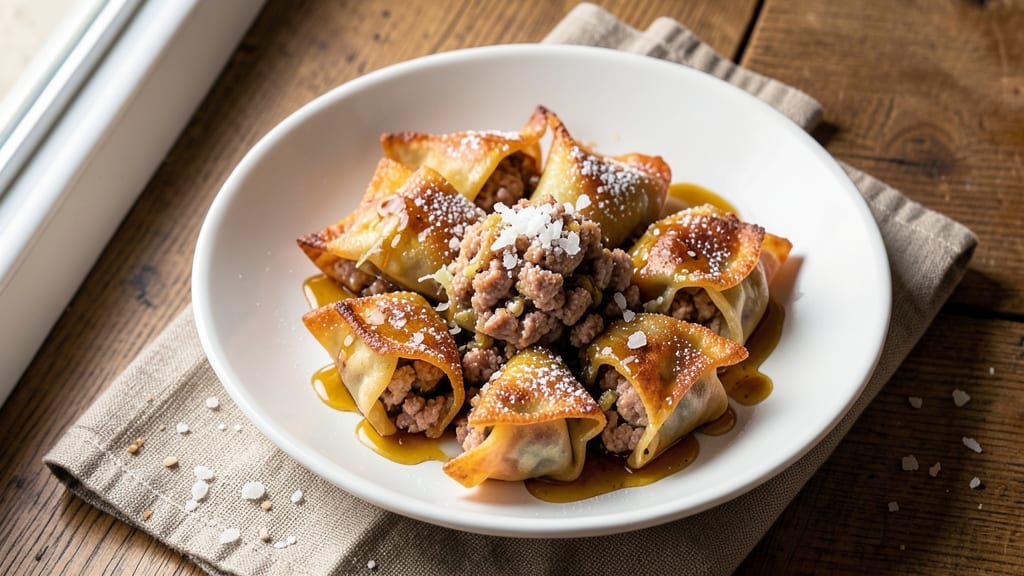
Mastering crispy pork wontons transforms a simple dish into a restaurant-worthy experience. The secret lies in the dough's delicate balance—silky yet sturdy enough to hold crispy filling without tearing. I've perfected this technique after years of testing, ensuring every bite delivers that satisfying crunch with tender, flavorful pork inside.
This recipe starts with a foolproof wonton wrapper that's rolled thin enough for crispiness but thick enough to hold its shape. The filling combines ground pork with aromatics and a touch of cornstarch to bind everything together while maintaining moisture.
Properly chilled dough and gently packed filling prevent leaks during frying, guaranteeing clean, crisp edges every time.
What you'll achieve is golden-brown wontons with paper-thin, shatteringly crisp wrappers and juicy pork filling that stays tender despite the high heat. The key is maintaining precise frying temperatures—too hot and they burn, too cool and they turn greasy. Serve immediately with a simple soy-ginger dipping sauce for maximum enjoyment.
Perfect for appetizers, lunches, or as a main course with rice. The technique works equally well for pan-frying or deep-frying, giving you flexibility for different kitchen setups. Let's make these crispy pork wontons that'll impress even the most discerning guests.
Ingredients for crispy pork wonton
Precision ingredients create restaurant-quality wontons with delicate dough and crispy edges.
| Ingredient | Amount | Notes |
|---|---|---|
| Ground Pork 🐖 | 1 lb | Lean ground pork preferred |
| Wonton Wrappers 🥟 | 24 whole | Square, store-bought or homemade |
| All-Purpose Flour 🌾 | 2 cups | For dough, plus extra for dusting |
| Water 💧 | ¾ cup | Cold, for dough elasticity |
| Vegetable Oil 🫒 | 2 tbsp | For dough, plus extra for frying |
| Salt 🧂 | ¼ tsp | Fine sea salt for balance |
| Garlic Cloves 🧄 | 3 cloves | Minced for aromatic depth |
| Fresh Ginger 🌿 | 1 tbsp | Finely grated, aromatic kick |
| Green Onions 🧅 | 2 whole | Thinly sliced, fresh flavor |
| Soy Sauce 🍶 | 1 ½ tbsp | Light soy for umami balance |
| Sesame Oil 🫒 | 1 tsp | Toasted, for nutty aroma |
| Cornstarch 🌾 | 1 tbsp | Binds filling without gumminess |
| Vegetable Oil 🫒 | 3 cups | For frying, high smoke point |
| Neutral Oil 🫒 | ½ cup | For pan-frying alternative |
The wonton wrappers are non-negotiable for texture. King Noodle or T&T brand from Asian markets deliver consistent quality, but any store-bought will work—just check for thinness and even edges. For homemade dough, King Arthur flour yields the best results due to its high protein content. The ground pork should be 80/20 fat ratio for juiciness, but leaner cuts work if you add an extra teaspoon of oil to the filling. Fresh ginger and garlic are essential—pre-grated jars lack the same punch as freshly minced. Store wrappers in the freezer to maintain crispness, and let them sit at room temperature for 10 minutes before using.
No sesame oil? Toasted peanut oil or extra virgin olive oil works in a pinch, though the flavor profile shifts slightly. Substitute cornstarch with arrowroot powder at the same ratio for binding, though texture may vary. For a vegetarian option, replace pork with finely chopped mushrooms and tofu, adjusting the filling with an extra tablespoon of soy sauce. The dough requires precise measurements—weigh your flour for accuracy, as volume measurements can vary by brand. If your wrappers tear easily, chill the dough for an additional 30 minutes before rolling.
Wonton wrappers freeze beautifully—store in an airtight container for up to 3 months. The filling can be prepped ahead and kept in the fridge for 2 days, though freshly mixed yields better texture. Once fried, wontons are best served immediately, but they reheat well in a 350°F oven for 5-7 minutes if needed. For large batches, freeze fried wontons on a wire rack before packaging to prevent sogginess. The dough's elasticity improves with resting—cover and let sit for 15 minutes between uses if making multiple batches.
Why You'll Love This Recipe
- No-Chop Nightmare: I swear by this recipe when I’m too tired to dice anything. The ground pork mixes into a smooth filling in minutes—no tiny bits, no fuss—just fold, fry, and devour. Honestly, the only prep is cracking an egg (if you’re fancy) or keeping it simple with soy sauce.
- Crispy-Creamy Magic: That golden crunch from the oil-fried wrappers paired with the tender pork inside? It’s the kind of contrast that makes you grab a second one without thinking. The flour-water slurry seals in juiciness while the oil gives it that addictive shatter.
- Party in a Pan: Between us, this is my go-to for game day, potlucks, or when friends drop by unannounced. Serve with sweet chili sauce or spicy mayo, and suddenly you’re the hero—no fancy plating, just pure satisfaction. (Yes, even on a Tuesday night.)
- Budget-Friendly Leftovers: A single bag of wrappers and a pound of pork stretch into meals for days. Freeze extras in a single layer before reheating—crispy again in seconds. Not the prettiest, but the taste makes up for it, and my wallet thanks me.
Step-by-step instructions for crispy pork wonton recipe
Mastering these techniques guarantees that perfect crunch and tender filling every time.
Prepare the Pork Filling with Aromatic Precision
In a mixing bowl, combine the 1 lb ground pork with 3 minced garlic cloves, 1 tbsp finely grated fresh ginger, 1 tbsp cornstarch, 1.5 tbsp soy sauce, and 1 tsp sesame oil. Using your hands, gently knead the mixture until fully incorporated—this ensures even distribution of flavors and prevents a greasy filling.
Real talk: The cornstarch here is non-negotiable. It binds the filling without making it gummy, and it's what gives those crispy wontons their signature texture when fried. Add 2 thinly sliced green onions and mix until evenly distributed. Cover the bowl and refrigerate for 20 minutes—this resting period lets the flavors meld and the filling firm up slightly for easier handling.
Make the Silky Wonton Dough
In a separate bowl, whisk together 2 cups all-purpose flour and 0.25 tsp salt. Gradually add 0.75 cup cold water while stirring with chopsticks until a shaggy dough forms. The dough should be slightly tacky but not sticky—this elasticity is what creates that delicate, silky texture when cooked.
Transfer the dough to a lightly floured surface and knead gently for 2-3 minutes until smooth. Here's the thing—over-kneading develops gluten and makes the wrappers tough. Wrap the dough in plastic wrap and rest for 30 minutes at room temperature. This relaxation period prevents the wrappers from shrinking when fried.
Roll and Fill the Wontons
Divide the rested dough into 24 equal portions (about 15g each) and roll each into a thin circle between your palms. Keep the remaining dough covered to prevent drying. Place 1 tbsp pork filling at the center of each wrapper, then fold the wrapper diagonally to form a triangle. Press the edges firmly to seal—any gaps will leak filling during frying.
I press down gently along the sealed edge with my thumb to create a tight seal, then tuck the point under slightly to maintain shape. Arrange the filled wontons on a floured tray, leaving space between each. The goal is to prevent them from sticking together before frying—this ensures that crispy exterior we're after.
Fry Until Golden Brown and Crisp
Heat 3 cups vegetable oil in a deep skillet or wok to 350°F—use a thermometer for precision. The oil should be shimmering but not smoking. Working in batches of 8-10 wontons, carefully lower them into the hot oil using a slotted spoon. Fry for 2-3 minutes until the wrappers turn a deep golden brown and float to the surface—a sure sign they're fully cooked through.
Don't overcrowd the pan or the oil temperature will drop, leading to greasy instead of crispy wontons. Transfer fried wontons to a paper towel-lined plate and let them drain for 2 minutes. The paper towels absorb excess oil while preserving that perfect crunch. For an alternative method, heat 0.5 cup neutral oil in a nonstick pan over medium heat and fry for 3-4 minutes per side until golden.
Serve Immediately for Maximum Crunch
Serve the crispy pork wontons immediately while they're still hot and crispy. The contrast between the crunchy exterior and tender filling is what makes this dish so satisfying. For extra flavor, drizzle with a bit more sesame oil or serve with a side of soy-vinegar dipping sauce (mix equal parts soy sauce and rice vinegar with a touch of sugar).
Here's the critical part: These wontons lose their crispiness quickly as they cool, so eat them within 10 minutes of frying. If you need to reheat, use a dry skillet over medium heat for 1-2 minutes per side—just enough to warm through without making them soggy. The secret to perfect crispy pork wontons lies in the details: proper filling preparation, careful dough handling, and precise frying technique.
Pro Tips For Making Crispy Pork Wonton
- Freeze Wrappers First: I learned this the hard way—fresh wonton wrappers stick like glue when you try to seal them. Pop them in the freezer for 10 minutes before shaping; they’ll hold together better and crisp up faster in the oil.
- Use Cold Oil: High heat is key, but cold oil is your friend. Add the wontons to oil that’s smoking but not burning—about 350°F (175°C)—and keep the pot uncrowded. Too hot too soon, and they’ll burn before they crisp.
- Skip the Overmixing: The pork filling’s simple: ground pork, flour, and water. Once you mix it, stop. Overworking it makes the filling dense and chewy. Just combine until it holds shape—no need to turn it into meatloaf.
- Double-Crisp Them: First fry until golden (about 2 minutes), then drain on a rack—not paper towels. Return them to the pot for 30 seconds to finish cooking through. This guarantees a crispy exterior and juicy center every time.
Flavor customization for these flavors
Spicy Kick
For heat lovers, add ½ tsp chili crisp or 1 tsp gochujang paste to the pork filling. I like to mix it with the soy sauce before combining with other ingredients—this distributes the heat evenly.
For an extra punch, sprinkle ½ tsp crushed red pepper flakes on top of each wonton before frying. 🌶️
If you prefer a smoky heat, replace ½ tsp sesame oil with ½ tsp smoked paprika> and add ¼ tsp cayenne pepper> to the filling. The smokiness pairs beautifully with the crispy texture while adding depth to the flavor profile.
Sweet Glaze Twist
Create a sticky-sweet version by adding 1 tbsp hoisin sauce and ½ tbsp honey> to the pork filling. This combination adds a subtle sweetness that balances the savory pork perfectly.
For extra caramelization, brush each wonton with a light coat of honey> before frying—just enough to coat the surface without making it soggy.
For a more pronounced sweetness, add 1 tsp brown sugar> to the filling and finish with a drizzle of chili oil> after frying. This creates a sweet-and-spicy contrast that's always a crowd-pleaser.
I've found that this variation works especially well when served with a side of plum sauce> for dipping.
Herb-Infused Variations
Add fresh herbs to the filling for a brighter flavor profile. I recommend 1 tbsp chopped cilantro> or 1 tbsp chopped Thai basil> mixed into the pork before assembling the wontons. The herbs add a fresh, aromatic note that cuts through the richness of the pork.
For a more robust herb flavor, mix 1 tsp chopped mint> and ½ tsp chopped lemongrass> into the filling. The citrusy notes of lemongrass pair beautifully with the crispy texture, while the mint adds a refreshing finish.
This variation is perfect for those who enjoy a balance of bold and subtle flavors.
Umami Boost
Enhance the umami depth by adding 1 tbsp fish sauce> or 1 tsp oyster sauce> to the pork filling. These ingredients add a savory richness that elevates the overall flavor profile.
I often use Red Boat fish sauce> for its clean, robust taste—it's a game-changer for umami lovers.
For a vegetarian-friendly umami boost, replace the fish sauce with 1 tbsp mushroom powder> or 1 tsp nutritional yeast>. These alternatives provide a similar depth of flavor without the seafood component.
The key is to balance the umami with the other ingredients to avoid overpowering the delicate wonton texture.
Nutrition facts
Frequently asked questions
Why do my wonton wrappers tear when I handle them?
The dough needs proper resting time—wrap it and let it sit for 30 minutes before rolling. If it's still too sticky, chill it for 15 minutes in the fridge. Also, keep your work surface lightly floured and avoid overworking the dough.
Can I make the filling ahead of time?
Yes! Prepare the filling up to 2 days ahead and store it in an airtight container in the fridge. The flavors develop better when chilled, and it makes assembly much easier. Just bring it to room temperature before using to prevent cold spots in the wontons.
What's the best way to reheat crispy wontons?
Use a dry nonstick skillet over medium heat for 1-2 minutes per side—just enough to warm through without steaming. Microwaving makes them soggy. For extra crunch, fry again in fresh oil for 30 seconds after reheating.
How do I prevent the filling from leaking during frying?
Seal the edges tightly by pressing firmly with your thumb, then tuck the point under slightly. Use 1 tbsp filling per wonton (not more) and chill the filled wontons for 10 minutes before frying. Cold filling firms up and reduces leakage.
Can I use store-bought wonton wrappers instead of homemade dough?
High-quality store-bought wrappers (like King Noodle brand) work perfectly. Look for thin, even edges—these crisp up best. Just check the package for frying instructions, as some brands require slightly different oil temperatures.