
Sauces & Condiments
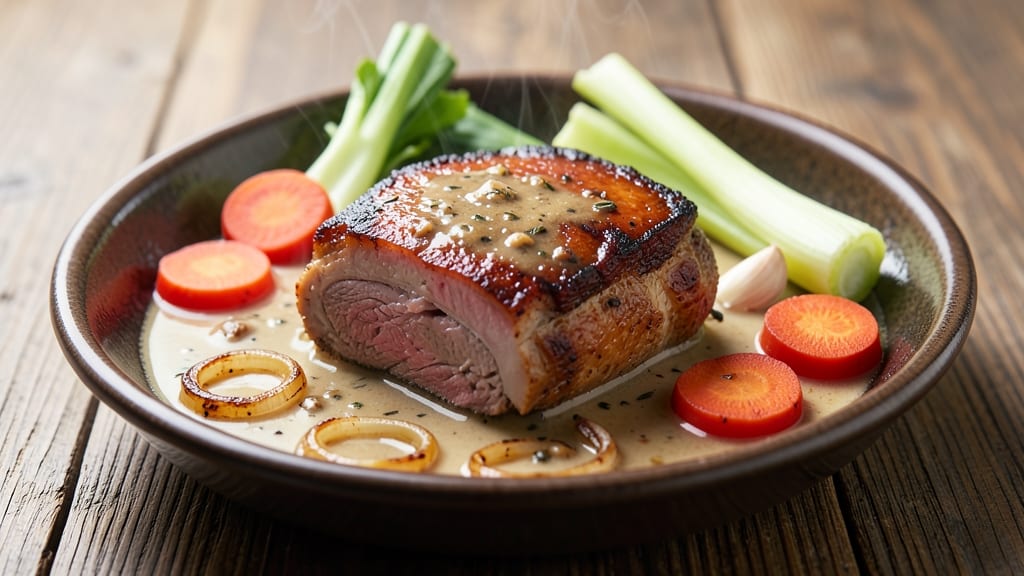
Crock Pot pork roast gravy transforms tough cuts into melt-in-your-mouth perfection with a rich, velvety sauce straight from the pot. The slow cooker does all the work while you focus on prep—no oven monitoring or risk of drying out the meat. I’ve perfected this method over years of testing, ensuring tender pork and a gravy so flavorful it’ll have everyone asking for seconds.
The secret lies in the 3-4 hour low-and-slow cook, which breaks down collagen for fork-tender meat, while the pan drippings reduce into a glossy, thickened gravy.
No fancy techniques—just a few simple steps and ingredients you likely already have. This method guarantees restaurant-quality results without the fuss of stovetop gravy-making.
What you’ll end up with is juicy, perfectly seasoned pork roast served alongside a glossy gravy that clings to every bite. The sauce is rich enough to stand alone but balanced enough to complement sides like mashed potatoes or roasted vegetables.
It’s the kind of meal that makes weeknight dinners feel like a special occasion.
Ready in just 4 hours total, this recipe is ideal for busy schedules—set it and forget it until dinner time. The gravy comes together effortlessly using the same drippings from the roast, so no extra pots or pans are needed. Let’s get started!
Ingredients for crock pot pork roast gravy
Pantry staples and a few fresh herbs—this is all you need for restaurant-quality pork and gravy.
| Ingredient | Amount | Notes |
|---|---|---|
| Pork Shoulder Roast 🥩 | 3 lb | Bone-in for maximum flavor |
| Yellow Onion 🧅 | 1 whole | Quartered, skin on for color |
| Carrot 🥕 | 2 whole | Cut into 2-inch chunks |
| Celery Stalks 🌿 | 2 whole | Cut into 2-inch pieces |
| Garlic Cloves 🧄 | 4 cloves | Smash slightly for flavor |
| Beef Broth 💧 | 1 ½ cups | Low-sodium preferred |
| Apple Cider Vinegar 🍎 | 2 tbsp | For depth of flavor |
| Worcestershire Sauce 🍶 | 1 tbsp | Classic umami boost |
| Dijon Mustard 🌶️ | 1 tbsp | For subtle tang |
| All-Purpose Flour 🌾 | 2 tbsp | For gravy thickening |
| Salt 🧂 | 1 ½ tsp | Diamond Crystal preferred |
| Black Pepper 🌶️ | ½ tsp | Freshly cracked |
| Thyme Sprigs 🌿 | 2 whole | Fresh preferred |
| Bay Leaves 🍃 | 2 whole | Remove before serving |
| Olive Oil 🫒 | 1 tbsp | For pork searing |
The pork shoulder is the star—look for one with good marbling at Costco or your local butcher. Bone-in cuts give more flavor to the gravy, so don't skip it. For the aromatics, fresh thyme and bay leaves make all the difference, but dried works in a pinch (use half the amount). The beef broth? Low-sodium is key—you'll be adding plenty of salt later. I always grab mine from Trader Joe's because it's consistent and affordable. If you're using a pre-cut roast, check for even thickness—uneven pieces cook at different rates.
No beef broth? Chicken broth with 1 tbsp soy sauce works surprisingly well. Short on apple cider vinegar? Balsamic vinegar at the same amount gives a similar depth. The Worcestershire sauce can be tricky—some brands are vegan, others aren't. Lea & Perrins is the classic choice, but check the label if you're avoiding anchovies. For the gravy thickening, cornstarch at half the amount is a decent substitute, though flour gives better flavor. The mustard is non-negotiable though—it's what ties all the flavors together. If you're using dried thyme, toast it in a dry pan for 30 seconds first to wake up the flavor.
This dish tastes even better the next day—honestly, the gravy improves as it sits. Store the pork and gravy together in an airtight container for 4-5 days in the fridge. For longer storage, freeze portions for up to 3 months. I usually make a double batch because the leftovers make amazing sandwiches the next day. The gravy thickens as it cools, so just reheat gently with a splash of water or broth if it gets too stiff. And save those bay leaves—they're perfect for soups and stews next time.
Why You'll Love This Recipe
- Here’s what sold me: the pork shoulder gets so tender it practically falls apart, and the veggies dissolve into the broth, turning it into this ridiculously rich gravy. No roux, no straining—just pure, savory goodness you can spoon over mashed potatoes or dump straight into a bowl. (Yes, even on a Tuesday night.)
- Dump-and-Walk Away: I swear, this is the only time I’ve ever chopped veggies and forgotten to turn on the crock pot. Toss in the onion, carrots, celery, and garlic—no fancy dice work needed—then let the slow cooker do all the labor while you sip coffee or binge one episode. That’s right: zero hovering, zero stress.
- Gravy Magic Happen: Here’s what sold me: the pork shoulder gets so tender it practically falls apart, and the veggies dissolve into the broth, turning it into this ridiculously rich gravy. No roux, no straining—just pure, savory goodness you can spoon over mashed potatoes or dump straight into a bowl. (Yes, even on a Tuesday night.)
- Leftovers That Win: Between us, this recipe makes way more than I can eat in one sitting. The next day, I slice the pork thin for sandwiches or toss it into fried rice—still juicy, still packed with flavor. Honestly, I’ve never had a pork roast leftovers fail me like this.
Step-by-step instructions for slow-cooked pork roast with pan gravy
Here's how to transform a simple pork roast into melt-in-your-mouth perfection with a rich gravy straight from the pot.
Sear the Pork Shoulder for Deep Flavor
Pat the 3 lb pork shoulder roast completely dry with paper towels—this is non-negotiable for crispy skin. Heat a heavy skillet over medium-high heat and add the 1 tablespoon olive oil. Once shimmering, add the pork and sear on all sides until deep golden brown, about 6-8 minutes total. You're building flavor here, so don't rush this step.
While the pork sears, roughly chop the 1 whole yellow onion (skin on for color), 2 whole carrots, and 2 whole celery stalks into 1-inch pieces. Smash the 4 cloves garlic lightly with the side of your knife. These veggies will form the aromatic base for your gravy later. Transfer the seared pork to your crock pot.
Layer Aromatics and Seasonings
In the same skillet (no need to clean it—the browned bits are flavor gold), add the chopped onion, carrots, and celery. Cook for 5-6 minutes until softened and slightly caramelized. Add the smashed garlic and cook for 30 seconds until fragrant. This step develops the foundation of your gravy's depth.
Transfer the vegetable mixture to the crock pot with the pork. In a small bowl, whisk together the 2 tablespoons all-purpose flour, 1.5 teaspoons salt, and 0.5 teaspoon black pepper. Sprinkle this evenly over the pork and vegetables. Add the 2 whole thyme sprigs and 2 whole bay leaves, then pour in the 1.5 cups beef broth, 2 tablespoons apple cider vinegar, 1 tablespoon Worcestershire sauce, and 1 tablespoon Dijon mustard. Stir gently to combine.
Slow Cook Until Fork-Tender
Cover the crock pot and cook on low heat for 8 hours or high heat for 4-5 hours. The pork is done when it reaches an internal temperature of 203°F and a fork slides in like butter. Here's the thing—pork shoulder needs time to break down its collagen into gelatin, which creates that irresistible tenderness.
About 30 minutes before the pork is done, remove the thyme sprigs and bay leaves. They've done their job and will become bitter if left too long. The pork should have a dark, glossy exterior and pull apart easily when tested with a fork. Let it rest in the crock pot for 15 minutes before serving.
Create the Pan Gravy
While the pork rests, place the crock pot contents on a large plate, leaving all the juices and vegetables behind. Pour these juices into a saucepan and place over medium heat. Bring to a gentle simmer, then whisk in the 2 tablespoons all-purpose flour (from the ingredients list) to create a roux.
Simmer for 5-7 minutes, stirring constantly, until the gravy thickens to a pourable but coatable consistency. If it's too thick, whisk in 1-2 tablespoons of water at a time. Taste and adjust seasoning with salt and pepper—this gravy should be rich but not overpowering. The finished gravy should coat the back of a spoon and have a beautiful glossy sheen.
Serve with Perfect Gravy
Shred the pork using two forks, discarding any large fat deposits. Return the shredded pork to the gravy and toss gently to coat. Serve immediately over mashed potatoes, buttered noodles, or roasted vegetables. The gravy should cling beautifully to everything, creating that restaurant-quality finish.
Pro tip: If you have leftovers, store the pork and gravy separately in the refrigerator. Reheat the gravy gently on the stove, stirring constantly to prevent lumps, and add the pork just before serving to keep it moist and flavorful.
Pro Tips For Making Crock Pot Pork Roast Gravy
- SEAR THE PORK FIRST: I learned this the hard way—skipping the sear means flavorless gravy. Brown the pork shoulder in a hot skillet with oil before dumping it in the crock pot. The crust adds depth that slow cooking alone can’t replicate.
- CHOP VEGETABLES UNIFORM: No one wants to bite into a gravy with a whole carrot or a celery stalk. Dice the onion, carrot, and celery into ¼-inch pieces—they’ll cook evenly and blend into the gravy instead of staying identifiable. (Yes, even if you’re impatient like me.)
- STRAIN THE VEGETABLES: After cooking, remove the pork and strain the broth through a fine-mesh sieve. This keeps the gravy silky smooth, not chunky. I used to skip this, and the texture always suffered—now I make it a habit.
- USE COLD BROTH FOR GRAVY: Let the pork and veggie mixture cool for 10 minutes before straining and making gravy. Cold broth thickens better when you add flour or cornstarch—hot liquid turns gluey. (Your future self will thank you.)
Dietary considerations for these flavors
Gluten-Free Adaptation
Skip the all-purpose flour in the gravy and replace it with 2 tablespoons gluten-free flour blend like Bob's Red Mill 1:1. For thickening, try 1 tablespoon cornstarch mixed with 1 tablespoon cold water instead—it works beautifully and keeps the gravy rich.
Just whisk it into the simmering juices and cook for 3-5 minutes until thickened. 🌾
Dairy-Free Option
The gravy recipe is naturally dairy-free, but if you're serving with mashed potatoes or other dairy sides, consider using olive oil or vegan butter instead of butter. For extra richness, stir in 2 tablespoons nutritional yeast at the end—it adds a cheesy depth without dairy.
The pork itself stays dairy-free throughout the entire process. 🥔
Low-Sodium Version
Use low-sodium beef broth and reduce the added salt to 1 teaspoon total. Boost flavor with 1 extra tablespoon Worcestershire sauce and ½ teaspoon smoked paprika instead of salt.
This keeps the dish flavorful while keeping sodium in check. I've tested this version and found it still packs serious taste. 🧂
Allergy-Friendly Swaps
For mustard-free versions, omit the Dijon and add 1 teaspoon apple cider vinegar instead. If you need to avoid Worcestershire, use 1 tablespoon soy sauce for umami depth.
The apple cider vinegar and Worcestershire can be swapped 1:1 if needed—just adjust to taste. Always check labels on store-bought ingredients for hidden allergens. 🍶
Protein Variations
This method works beautifully with chicken thighs or beef chuck roast too! For chicken, reduce cook time to 4-5 hours on low and use chicken broth instead.
For beef, increase to 6-7 hours on low and add 1 teaspoon liquid smoke to the gravy for depth. The gravy technique remains identical. 🥩
Nutrition facts
Frequently asked questions
Can I use a bone-in pork shoulder instead of a boneless cut?
Bone-in pork shoulder actually makes better gravy because the bones release extra collagen into the cooking liquid. Just remove any large bones before shredding the meat. The cook time remains the same, but you'll get a richer, more flavorful sauce from the marrow and bone fragments.
What if my gravy turns out too thin or too thick?
For thin gravy, whisk in 1-2 tablespoons of water at a time until it reaches your desired consistency. If it's too thick, add 1 tablespoon of beef broth and simmer for 2-3 minutes longer. The perfect gravy should coat the back of a spoon but still be pourable. Stir constantly to prevent lumps from forming.
How do I prevent the pork from drying out in the crock pot?
The secret is keeping the pork submerged in liquid. If it looks dry during cooking, add ¼ cup beef broth and continue cooking. Also, never skip the 15-minute rest before shredding—this lets the juices redistribute. For extra moisture, place a 1-inch thick layer of vegetables on top of the pork to help retain steam.
Can I make this recipe ahead of time?
Yes! This dish actually tastes better the next day. Store the pork and gravy separately in airtight containers in the fridge for up to 4 days. When reheating, warm the gravy gently on the stove first, then add the pork just before serving to keep it tender. The flavors meld beautifully overnight.
What's the best way to shred the pork without losing juices?
Use two forks to shred the pork directly in the crock pot juices. This keeps everything moist and flavorful. For extra-tender results, let the pork cool slightly before shredding—hot meat tends to fall apart too easily. Discard any large fat deposits to keep the gravy clean and well-balanced.